
Celebrating the Art of Siamese Culinary Wisdom and Thai Cuisine
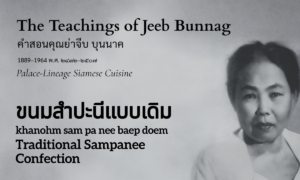
Traditional Sampanee Confection (ขนมสำปะนีแบบเดิม; khanohm sam pa nee baep deerm)
Khanom sampanee, dry-roasted glutinous rice flour and coconut milk set by sugar recrystallization, scented with jasmine. Jeeb Bunnag, 1933.
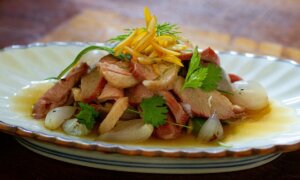
Salad of smoked grilled duck breast with roasted shallots and bitter yellow eggplants (พล่าอกเป็ดรมควันกับมะเขือเหลืองและหอมเผา ; phlaa ohk bpet rohm khwan gap ma kheuua leuuang lae haawm phao)
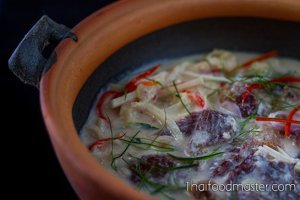
Coconut-Braised Sun-Dried Salted Beef with Bamboo Shoots (แกงต้มกะทิเนื้อโคเค็ม ; gaaeng dtohm gathi neuua khoh khem)
แกงต้มกะทิเนื้อโคเค็ม - In this dish, umami-charged, salted sun-dried beef is gently grilled over charcoal, adding smoke and caramelized elements that emerge in the core of the flavor profile, alongside the umami and the savor of fat. The meat is then cut into bite-size pieces, and slowly braised in thick coconut milk. The coconut fits perfectly onto the triangle of umami, fat and smoke. It brings its own umami and fatty shades, and introduces a rich sweetness that pairs seamlessly with the caramelized character of the grilled beef. The braising also rehydrates the beef and softens it. Bamboo shoots, shallots, galangal, lemongrass and kaffir lime leaves are added, perfecting the dish with a complementary sweetness, echoing the umami hues, and cutting citrusy notes while creating hidden astringent layers. The dish is finished with fresh chili peppers and hair-thin julienned kaffir lime for a fresh aroma and piquant bite.
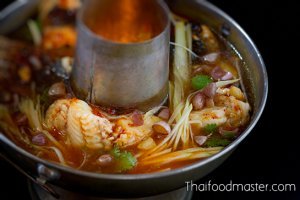
An Ancient Siamese Recipe for Tom Yum Soup (First Published in 1890). Sour Spicy Tom Yum Soup with Snakehead Fish, Roasted Chili Jam and Green Mango (Dtohm Yam Bplaa Chaawn, ต้มยำปลาช่อนแบบโบราณ อย่างหม่อมซ่มจีน ราชานุประพันธุ์ ร.ศ.๑๐๙)
Tom yum soup from the late 19th-century Siam to present days. Including a step-by-step recreation of tom yum soup with snakehead fish (dtohm yam bplaa chaawn, ตัมยำปลาช่อน) as recorded by Maawm Sohm Jeen (Raa Chaa Noopraphan) (หม่อมซ่มจีน, ราชานุประพันธุ์) in her book “Tam Raa Gap Khao” (ตำรากับเข้า), published in 1890 (2433 BE, 109RE).
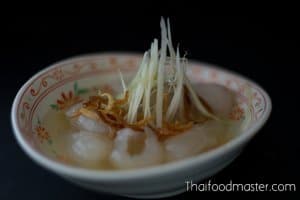
Sohm Choon Fruit Dessert of Lychee, Green Mango, Young Ginger in Jasmine, Bitter Orange, and Pandan-Scented Sweet and Salty Syrup, Topped with Grilled Shallots, Peanuts and Roasted Coconut
(ส้มฉุน ; sohm choon) The first reference to sohm choon as a dessert appears in in the early 1800s, in the culinary poetry of King Rama II gaap heh chohm khreuuang khaao waan (กาพย์เห่ชมเครื่องคาว - หวาน). The poetry was sung during the royal barge’s procession, and this verse refers to sohm choon as a dish made of lychees. A closer look at other foods that are mentioned in the verse also reveals other dishes that are clearly of Chinese origin, such as boiled pork spleen (dtohm dtap lek ต้มตับเหล็ก), steamed bird’s nests (rang nohk neung รังนกนึ่ง) and persimmons (luuk phlap ลูกพลับ).
(ส้มฉุน ; sohm choon) The first reference to sohm choon as a dessert appears in in the early 1800s, in the culinary poetry of King Rama II gaap heh chohm khreuuang khaao waan (กาพย์เห่ชมเครื่องคาว - หวาน). The poetry was sung during the royal barge’s procession, and this verse refers to sohm choon as a dish made of lychees. A closer look at other foods that are mentioned in the verse also reveals other dishes that are clearly of Chinese origin, such as boiled pork spleen (dtohm dtap lek ต้มตับเหล็ก), steamed bird’s nests (rang nohk neung รังนกนึ่ง) and persimmons (luuk phlap ลูกพลับ).
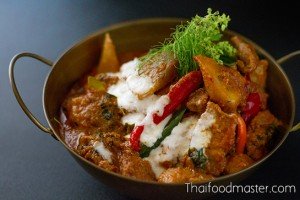
Old-Fashioned Thai Red Curry of Grilled & Smoked Pork Neck and Unripe Green Bananas (แกงหมูย่างกับกล้วยดิบ ; gaaeng muu yaang gap gluay dip)
Thai red curry is a broad term describing any curry that is red in color, although variations exist among the dish’s ingredients or their ratios. Today’s menu features a Thai red curry paste to which we add higher quantities of coriander root and kaffir lime zest; this creates a more aromatic character that will enhance the smokiness of the grilled pork meat and the mild sweetness of the unripe green bananas.
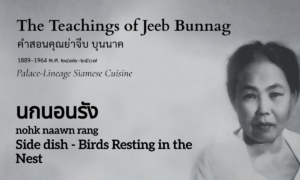
Side dish - Birds Resting in the Nest (นกนอนรัง; nohk naawn rang)
Birds Resting in the Nest, baya weavers stuffed with peppery pork and draped in fine duck egg threads. From Jeeb Bunnag, 1933.
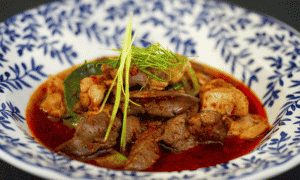
c1933 Water-based spicy curry of fatty chicken and seven spices (แกงเผ็ดไก่น้ำมัน พ.ศ. 2476; gaaeng phet gai naam man)
This water-based, spicy chicken curry is made with corn-yellow rendered chicken fat instead of coconut cream. Dark reddish-brown in color, this full-bodied and fatty beak-to-tail curry presents the chicken identity and personality in both a corporeal and tasty manner. Spices such as cardamom, nutmeg, mace and clove are added into the curry paste to temper the gamey-irony flavor of the offal and deodorize the meat, resulting in a luscious dish that is beautifully layered with textures and flavors.
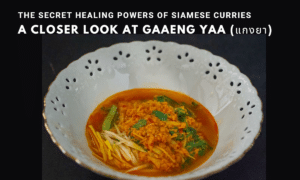
The Secret Healing Powers of Siamese Curries – A Closer Look at Gaaeng Yaa (แกงยา)
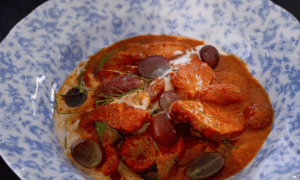
c1941 Roasted Duck Curry with Grapes (Gaaeng Ho) (แกงเป็ดเหาะใส่องุ่น อย่างคุณถนอม ปาลบุตร พ.ศ. 2484; gaaeng bpet haw sai angoon)
Grapes have long been associated with prosperity, fertility and abundance across various cultures and historical periods due to the fruit’s large clusters and bountiful growth. In ancient China, grapes were considered a symbol of wealth and nobility, and often deployed as a status symbol among the elite. In Greek mythology, Dionysus, the god of wine and fertility, was often depicted holding a bunch of grapes, further emphasizing the connection between grapes and abundance. This association is also likely rooted in the fact that grapes were a valuable crop in antiquity – used to produce wine and other fermented products, and an important source of food and nutrition. In Indian Ayurvedic texts, grapes are referred to as vineaksha and utilized in treating a variety of ailments, including fever and indigestion.
From the Siamese perspective, the incorporation of fruits in culinary preparations was viewed as a luxurious indulgence, as many fruits commonly available today were once difficult to obtain. Thus the pairing of an extravagant ingredient – such as fruit – with an equally opulent and exclusive delicacy like roasted duck resulted in a dish fit for royalty.
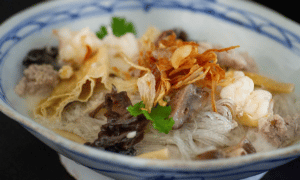
Gaaeng Raawn (แกงร้อน)
Gaaeng raawn (แกงร้อน) is a colloquial Thai term that refers to ‘hot curry’. Today, gaaeng raawn is used to denote soups or curries served with steamed rice. While the precise origin of the term is unclear, gaaeng raawn (แกงร้อน) was deployed in the 1800s for a specific dish – a Siamese soup featuring glass noodles, cooked as either a coconut or a water-based soup with an assortment of dry ingredients revered in Chinese cuisine. The soup’s potential health benefits, combined with its ease of preparation and subtle yet profound flavor, made it a popular choice for entertaining large groups of people, of all ages and backgrounds. The soup is often augmented with fresh proteins: in its more luxurious versions, multiple proteins may be added, including a combination of chicken, pork, shrimp, squid, and crab meat. Thus, over the years, gaaeng raawn (แกงร้อน) was established as a staple source of comfort and warmth for people of all walks of life in Siamese society.
Goon Saa Lime-Cured Pork (กุญซ่า; goon saa)
Goon saa: lean pork cured by lime juice and salt without fire, shredded and tossed with its own reduced pressing liquid. From Maawm Ying Soophaa, 1949.
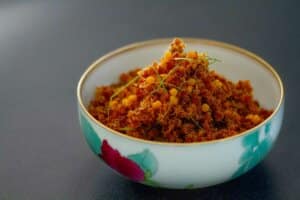
Old-Fashioned Phat Phrik Khing, Yesteryear's Travel Food (ผัดพริกขิง อาหารคนเดินทาง)
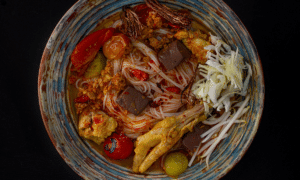
Khanohm Jeen Naam Ngiaao - Shan-Style Tomato Broth over Fermented Rice Noodles with Pork, Chicken Feet and Chicken Blood Cakes (ขนมจีนน้ำเงี้ยว)
A popular noodle dish originating from the Northern region of the Kingdom, khanohm jeen naam ngiaao (ขนมจีนน้ำเงี้ยว) is characterized by its light – yet profound – multi-layered broth. This hearty broth includes an assortment of proteins braised with the dried pollens of cotton tree flowers, and Northern Thai sour cherry tomatoes (มะเขือส้ม); the tomatoes infuse the broth with a subtle tartness that refreshes a full-bodied profile comprising a multitude of fermented ingredients.
The naam ngiaao broth is served over fermented rice noodles and features minced pork, and braised baby back pork ribs with their tender meat clinging to the bone. As well, there are succulent, slow-cooked whole chicken feet, and cubes of slightly bouncy, mauve-hued chicken blood cakes. Served alongside the soup are various toppings, which can include shredded cabbage, bean sprouts, chopped coriander leaves, and spring onions, while dark red chili oil and glossy, charred-fried dried bird’s eye chilies offer a fiery intensity dialed up to your preferred spiciness. In addition, I like to add wok-smoked sour cherry tomatoes and broom-like, crispy-fried dried cotton tree pollen for a surprising textural contrast.
Though the dish is often described as “Shan style”, the word ‘ngiao’ was a derogatory expression for the Shan people. As the disparaging – and outdated – label suggests, the recipe might reflect societal biases and prejudices; thus, at least from the culinary perspective, the ‘ngiao’ in the name of the dish may simply be a nod to the flavors or ingredients favored by The Shan, rather than a claim of authenticity – which could also explain why the dish is based on a Siamese curry paste.
The Art of Siamese Duck Curries - Theory and Practice (แกงเป็ด - ศิลปะ ทฤษฎี และ การปฏิบัติ)
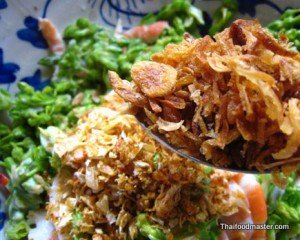
Salad of Thai milkweed flower buds (yam daawk khajaawn ; ยำดอกขจร)
The first Thai restaurant in London was opened during the 1960's by HRH Princess Jurairat Nasiriman (1910-2000) (พระเจ้าวรวงศ์เธอ พระองค์เจ้าจุไรรัตนศิริมาน), the granddaughter of HRH King Mongkut (Rama IV). Princess Jurairat chose to offer this salad on the menu and named it "Salad of Thai Milkweed Flower". (Other names: Cowslip creeper, Telosma Cordata).
This fresh and tasty salad is so vibrant and easy for us to enjoy, it takes in the very basic flavors, sweet, salty, hot and sour and wrap them in a creamy coat of reduced coconut cream. The milkweed flower buds retain their crunchiness and their pleasant fragrance with only a gentle and very quick blanching in sweet boiling water.
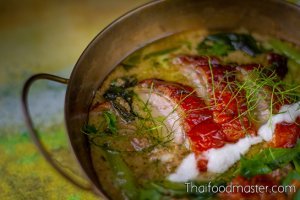
Thai Green Curry with Roasted Duck and Young Chilies (แกงเขียวหวานเป็ดย่าง ; gaaeng khiaao waan bpet yang)
Green curry, with its mellow, creamy green color and rich coconut base, has both fresh and mature flavors. Like new growth on plants, it brings brightness, youthfulness, spring and rebirth to the meltdown of flavors created in the curry paste.
The green curry paste uses mainly the same standard ingredients as Thai spicy-red curry paste: lemongrass, coriander roots, kaffir lime zest, galangal, garlic, shallots, white peppercorns, coriander seeds, cumin seeds, salt and kapi.
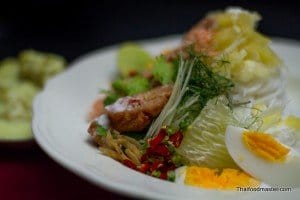
Fermented Rice Noodles Served with Pineapple, Fish Balls in Coconut Milk, Grilled Curried Fish Cakes, Young Ginger and Dry Shrimp Powder
(ขนมจีนซาวน้ำ ; khanohm jeen saao naam ) For the khanohm jeen saao naam version that we present today, we turn again to the writing of Thanpuying (Lady) Gleep Mahithaawn for her unique take on the dish. Her version is quite similar to the common recipe encountered nowadays, but Lady Gleep enhances it with more ingredients, elevating the dish yet another notch to the level of a majestic masterpiece.
(ขนมจีนซาวน้ำ ; khanohm jeen saao naam ) For the khanohm jeen saao naam version that we present today, we turn again to the writing of Thanpuying (Lady) Gleep Mahithaawn for her unique take on the dish. Her version is quite similar to the common recipe encountered nowadays, but Lady Gleep enhances it with more ingredients, elevating the dish yet another notch to the level of a majestic masterpiece.
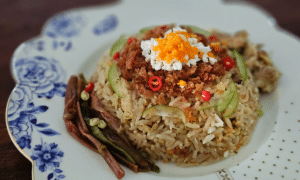
Rice Seasoned with Young Tamarind Relish, Sweetened Fish and Pickled Morning Glory (ข้าวคลุกน้ำพริกมะขามอ่อน ผักบุ้งดอง ปลาแห้งผัดหวาน และ ปลาดุกย่าง; Khaao Khlook Naam Phrik Makhaam Aawn Phakboong Daawng Bplaa Haaeng Phat Waan Lae Bplaa Dook Yaang)
Seasoned rice dishes have been a staple of rice-consuming societies almost since the first grains were cultivated. Adapted according to local resources, traditions and individual preferences, seasoned rice dishes are relished and savored across all walks of life. Within Siamese society, these dishes offer insight into the flavor instincts and eating habits across all demographics, revealing which food items were locally available and valued.
In this delicious seasoned rice recipe from the kitchens of the daughter of King Chulalongkorn, Princess Yaovabha Bongsanid (พระเจ้าบรมวงศ์เธอ พระองค์เจ้าเยาวภาพงศ์สนิท) (1884-1934), the Princess uses a variety of common preserved and inexpensive ingredients, clearly drawing inspiration from the cuisine of the Central Plains with nods to the rural and coastal living atmosphere.
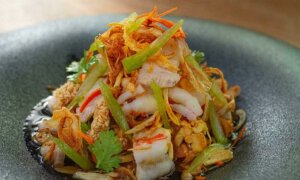
c1933 Sour bilimbi fruit and crispy candied peanut salad with pork, shrimp and pork fat (ยำตะลิงปลิง ; yam dtaling bpling)
A candied peanut bar might be considered an unlikely ingredient for an old-fashioned Siamese-style salad. Yet, peanut bars were familiar to the Siamese as early as the Ayutthaya period and were part of a broader set of Teochew Chinese sweets called, in Thai, “khanohm janap (ขนมจันอับ)”.
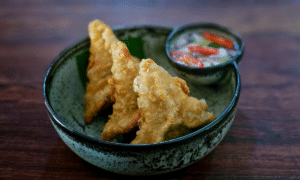
The Elegance of Khanohm Khaang Khaao (ขนมค้างคาว)
If palaces represent grandeur and wealth within a society, and poems often focus on emotional experience or the beauty of language, then the significance of a dumpling may be inferred by its structured elegance and minimalism – each fold and pleat a deliberate act, and each filling a curated experience constructing comfort in its most elemental form.
Khanom khaang khaao (ขนมค้างคาว) is a traditional Siamese fried, triangular-shaped dumpling with obvious Chinese origins. Its earliest recorded recipe can be traced back to Jao Khraawk Thaawng Yuu (เจ้าครอกทองอยู่), a distinguished aristocrat from the royal court of Ayutthaya. Historical records indicate that, from the early days of the Rattanakosin era, her recipe was a favored snack within the Siamese royal court.
These dumplings are shaped like triangles and, according to some, resemble bats: For this reason, they are called khanom khaang khaao (ขนมค้างคาว) – ‘the bat’s treat’. The dumpling’s dough is made from rice and mung bean flours; its filling is prepared by combining grated coconut and shrimp meat, which are cooked together into a dense, flavorful mixture that brings out the nutty-sweet taste of the grated coconut and the savory-sweet flavors of the shrimp. Kaffir lime leaves, sliced into hair-thin juliennes, add a hint of citrus.
1
2
3
4
5
6
7
8
9
10


Get Access – Join Thaifoodmaster Today
Practical and kitchen-tested recipes with a mix of theory, history, psychology, and Siamese culture tidbits.
-
Get access to everything right away. Unlock more than 50 Masterclasses, over 700 recipes and Articles
Access to Thaifoodmaster’s constantly growing library of prime professional classes, articles, recipes and videos on Siamese culinary topics, available nowhere else in English.
-
GET EXTRA - New Masterclasses and Daily Recipes
Gain access to NEW masterclasses as they become available. Access DAILY translations of heritage-recipes.
-
1-1 support from Hanuman
1-1 support from Hanuman to help you achieve your professional Thai culinary goals
-
Live Q&A Sessions
The opportunity to join a monthly live two-hour videoconference where I can answer your questions.
-
Great Value!
one year access for the price of 3 days in-person training.
You will get everything you need to:
-
To Get inspired
When you design or build a new menu for an event or restaurant or even prepare for dinner with friends.
-
To Satisfy your curiosity.
Finally !
-
To Master Your Craft
Master your Thai cooking skills and expand your repertoire.
It is truly brilliant with a revolutionary approach introducing aspects and concepts never broached by cookbooks.

Ian Westcott
Sourcing Wines for Discerning Private Clients
© 2008 – 2026 Thaifoodmaster


