
Celebrating the Art of Siamese Culinary Wisdom and Thai Cuisine
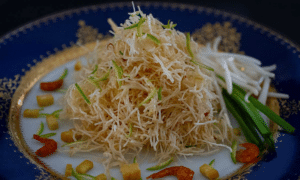
Sour-Sweet Savory Crispy Rice Vermicelli with Bitter Orange (Mee Krob) (หมี่กรอบส้มซ่าทรงเครื่อง ; Mee Graawp)
mee graawp sohng khreuuang (หมี่กรอบทรงเครื่อง), is an exquisitely regal dish of crispy rice vermicelli. The delicate noodles strands are washed and dried, then fried to a crisp light-golden hue. They retain their brittle crunch and airy texture even after being stir-fried with a clinging sticky sauce that encases the noodles in a thin layer of sheen. This sauce, mixed into the noodles together with other ingredients such as thin slices of pickled garlic and bitter orange peel, impart the dish with a light, fresh sweet and sour, and slightly salty and citrusy glaze.
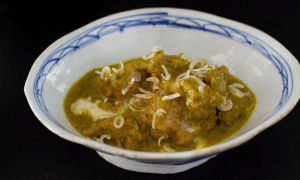
The Contrasting Histories of Gaaeng Rawaaeng (แกงระแวง) - Turmeric-Infused Coconut-Based Thick Curry of Braised Duck and Lemongrass
Gaeng rawang (แกงระแวง) is a curry bearing an unusual name and contradictory accounts regarding its appearance, lineage and origins. When I cook this dish, it is a rich and thick coconut-based curry made with a paste of fresh chilies, aromatics, spices and generous amounts of fresh turmeric, which adds warmth and gives the green chili color a slightly earthier, muted tone that resonates beautifully with the duck meat.
The duck meat is prepared separately and slow-braised in coconut cream before being cooked in the curry. This slow-braising process allows the coconut cream and duck’s fattiness to melt together, resulting in moist and flavorful meat with a hint of sweetness. The curry itself is seasoned to a salty and slightly sweet flavor profile.
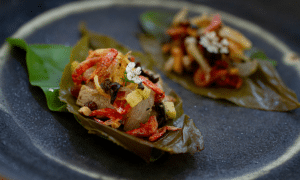
Miang Sot (เมี่ยงซด) - Miiang Soht, circa 1928
The word ‘miang’ is often used to designate Thai hors d’oeuvre-like snacks consisting of various ingredients wrapped in leaves. To chew on a miang parcel delivers a delightful melee of flavors and textures, each triumphing over the other in a continuous transformation, creating a captivating and ever-evolving taste experience throughout the bite.
Miang sot is a fermented leaves dish that appeared in a cookbook published in honor of Thao Suphatigaanapakdee (also known as Prik Sirisamphan) (ท้าวสุภัติการภักดี (ปริก ศิริสัมพันธ์)), in 1928. Titled Gap Khaao Thai (กับข้าวไทย), the book features a collection of recipes that were once prepared and served to King Chulalongkorn Rama V. The author, Sohmboon Sirisamphan (เถ้าแก่ สมบุญ ศิริสัมพันธ์) a respected elder (known as thao gaae (เถ้าแก่) in Thai), was a distinguished businessman of Chinese origins.
The dish is composed of fermented tea leaves; it is perhaps the closest tea leaves wrap to the ‘miang’ style introduced to the Siamese court by Princess Dara Rasami in the late 1800s. The dish gives us a glimpse of flavor of what her household, which participated in the informal marketplace events within the palace, might have to offer.
The popularity of miang in Siamese cuisine is tied to the history of two kingdoms, Siam and Lanna, and the life of one princess, Princess Dara Rasami. The daughter of King Inthawichayanon of Chiang Mai and the fifth consort of King Chulalongkorn, the princess was selected at the age of thirteen, in 1886, to serve as a consort to King Chulalongkorn in the Inner Palace; the decision was shaped by both political strategy and personal transition. At the time, Siam was consolidating its power and extending its influence over neighboring regions, including Lanna. As the ruler of Chiang Mai, Princess Dara Rasami’s father, Intawichayanon, viewed the move as a strategic alliance. In return, King Chulalongkorn presented him with the medal of the Order of Chula Chom Klao, which is the Siamese equivalent of a knighthood.

Fried fermented shrimp paste relish with green apples by Princess Jongjittanom Dissakul (น้ำพริกลูกแอปเปิ้ลผัด อย่าง หม่อมเจ้าหญิงจงจิตรถนอม ดิศกุล ; naam phrik luuk aaep bpeern phat)
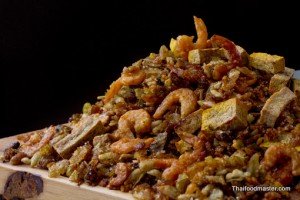
ข้าวเม่าหมี่ - ข้าวเม่าทรงเครื่อง - ขนมข้าวเม่าราง
ตำรับ "ข้าวเม่าหมี่" หรือ "ข้าวเม่าทรงเครื่อง" หรือ "ขนมข้าวเม่าราง" นี้เป็นตำรับแต่ดั้งเดิม ปัจจุบันส่วนใหญ่จะไม่ใช้น้ำปลา ใช้เกลือป่น และ เห็นที่ทำขาย เขาใส่ถั่วลิสงคั่วด้วย บ้างก็ไม่ผัด ใช้วิธีทอดเครื่องแล้วค่อยมาคลุกเคล้าให้เข้ากัน เวลาใส่ภาชนะแล้ว เม็ดน้ำตาลและเกลือจะร่วงไปกองที่ด้านล่าง ทำให้เสียรสชาติ อีกทั้งยัง ผิดขนบของการทำข้าวเม่าหมี่ ใครทำตามตำรับนี้ได้ รับรองรสชาติ ไม่เป็นสองรองใคร และเม็ดน้ำตาล ก็ไม่ค่อยร่วงลงกองอยู่ด้านล่าง ลองทำพิสูจน์ดูได้เลย !!!
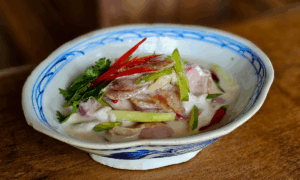
c1935 Princess Yaovabha's Sweet Chinese Sausage in Coconut Cream Soup (แกงไส้กรอกหมูแห้ง; gaaeng sai graawk muu haaeng)
A 1935 Thai palace recipe preserving Princess Yaovabha's Chinese sausage coconut curry. This ivory-colored soup features sweet goon chiang sausage in creamy coconut with lemongrass, kaffir lime, and tamarind. The dish represents a historic culinary shift when Chinese ingredients entered royal Thai kitchens, transforming from street food to palace cuisine.
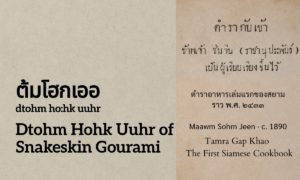
Dtohm Hohk Uuhr of Snakeskin Gourami (ต้มโฮกเออ; dtohm ho:hk uuhr)
Dtohm hohk uuhr, snakeskin gourami soup soured with young tamarind leaves and twenty to thirty bruised bird chilies. From Maawm Sohm Jeen, 1890.
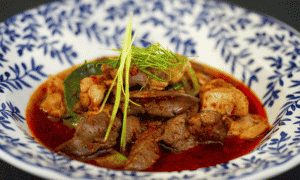
c1933 Water-based spicy curry of fatty chicken and seven spices (แกงเผ็ดไก่น้ำมัน พ.ศ. 2476; gaaeng phet gai naam man)
This water-based, spicy chicken curry is made with corn-yellow rendered chicken fat instead of coconut cream. Dark reddish-brown in color, this full-bodied and fatty beak-to-tail curry presents the chicken identity and personality in both a corporeal and tasty manner. Spices such as cardamom, nutmeg, mace and clove are added into the curry paste to temper the gamey-irony flavor of the offal and deodorize the meat, resulting in a luscious dish that is beautifully layered with textures and flavors.
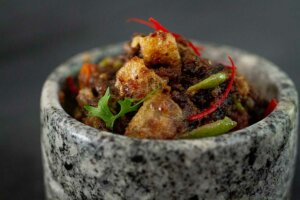
Salted Chinese black olive chili relish (น้ำพริกหนำเลี้ยบ; naam phrik nam liiap)
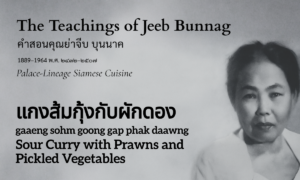
Sour Curry with Prawns and Pickled Vegetables (แกงส้มกุ้งกับผักดอง; gaaeng sohm goong gap phak daawng)
Gaaeng sohm goong, a tamarind-soured prawn curry with pickled vegetables, paste dissolved into boiling water. Jeeb Bunnag, 1933.
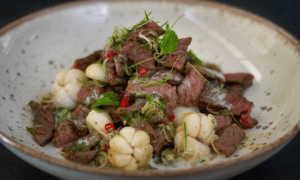
Grilled beef and mangosteen (or grape) salad with mint dressing, by Princess Jongjittanom Dissakul (ยำเนื้อย่างกับมังคุดหรือองุ่น; yam neuua yaang gap mangkhoot reuu angoon)
This grilled beef salad with luscious mangosteen (or grapes) is seasoned with a crisp, cooling dressing of fermented shrimp paste and mint. The mangosteen’s tropical character – a flavor redolent of many other fruits – dominates its fruity essence and is a perfect complement to both the grilled meat and the lingering, sour-salty-sweet, minty dressing. Furthermore, citrusy notes of thinly sliced lemongrass and kaffir lime leaves, coupled with richness of thickened coconut cream, unite the caramelized, meaty elements with the dish’s fruity spectrum.
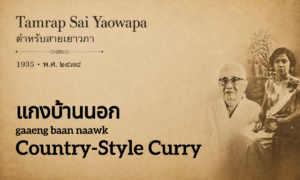
Country-Style Curry (แกงบ้านนอก; gaaeng baan naawk)
Gaaeng baan naawk, a country soup of prawns, pork belly and snakehead fish built on a pounded grilled-fish base. Tamrap Sai Yaowapa, 1935.
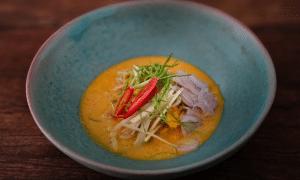
Citrus-Infused Crumbled Duck Egg Yolk Salad (ไขเค็มพล่า; Khai Khem Phlaa)
This vibrant salad combines the richness of crumbled duck egg yolks with the zesty notes of citrus and aromatic herbs.
Set against a backdrop of aromatics, the crumbled essence of cured duck egg yolks glow in a delicate orange-gold shade, evoking a shimmering sunlit dawn. The cured yolks bestow a rich, briny base that acquires even deeper undertones when seasoned with fish sauce and sugar. This base takes on a luxuriously silky texture, reminiscent of a finely whipped mousse, when mixed with juices of lime and kaffir lime, which also give the mix a crisp, clean citrusy finish.
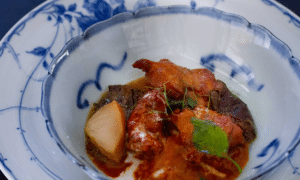
Duck Curry with Prunes and Apples (แกงเป็ดกับพรูนและแอปเปิ้ล อย่าง ม.ล. เติบ ชุมสาย; gaaeng bpet gap phruun lae aaep bpeern)
When it comes to pairing fruits with meats in savory dishes, it’s hard to match the bold tangy-luscious combination of apples and prunes in this old-fashioned coconut-based spicy curry with braised duck. The dish is seasoned to a spicy, salty, and sour-sweet flavor profile, which is further intensified by the prunes’ subtle nectareous, savory-sweetness and the apples’ fruity, sweet-tartness. This curry is a perfect example of how fruits can complement the already complex and profound aromatic relationships between meaty-savory flavors, the curry paste’s aromatic identity, and the dish’s herbal character of Thai basil and fresh peppercorns – creating a most memorable flavor impression.
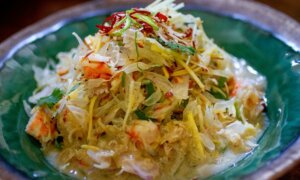
Pomelo salad with salted shrimp and a lemongrass-infused coconut cream dressing (ยำส้มโอกุ้งเค็ม ; yam sohm o:h goong khem)
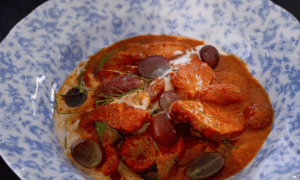
c1941 Roasted Duck Curry with Grapes (Gaaeng Ho) (แกงเป็ดเหาะใส่องุ่น อย่างคุณถนอม ปาลบุตร พ.ศ. 2484; gaaeng bpet haw sai angoon)
Grapes have long been associated with prosperity, fertility and abundance across various cultures and historical periods due to the fruit’s large clusters and bountiful growth. In ancient China, grapes were considered a symbol of wealth and nobility, and often deployed as a status symbol among the elite. In Greek mythology, Dionysus, the god of wine and fertility, was often depicted holding a bunch of grapes, further emphasizing the connection between grapes and abundance. This association is also likely rooted in the fact that grapes were a valuable crop in antiquity – used to produce wine and other fermented products, and an important source of food and nutrition. In Indian Ayurvedic texts, grapes are referred to as vineaksha and utilized in treating a variety of ailments, including fever and indigestion.
From the Siamese perspective, the incorporation of fruits in culinary preparations was viewed as a luxurious indulgence, as many fruits commonly available today were once difficult to obtain. Thus the pairing of an extravagant ingredient – such as fruit – with an equally opulent and exclusive delicacy like roasted duck resulted in a dish fit for royalty.

แกงเผ็ดปลาไหลทรงเครื่อง
ตำรับปลาไหลนี้ ปัจจุบันมักจะคิดว่าเป็นแต่สำรับของชาวบ้าน หรือเป็นแค่อาหารลูกทุ่งเท่านั้น ความจริงแล้ว อาหารตำรับปลาไหลเป็นอาหารทั่วไปของคนทุกชนชั้น ทั้งไพร่สามัญชน ผู้ดีชาวกรุง หรือเจ้านายในรั้วในวัง ต่างมีตำรับแกงปลาไหลขึ้นสำรับทั้งนั้น ที่มีเขียนบันทึกไว้ก็มีหลายตำรับเลยทีเดียว เช่น ตำรับของหม่อมส้มจีน ตั้งแต่ ร.ศ. 109 มี "ต้มเปรตปลาไหล". ตำรับแม่ครัวหัวป่าก์ ของท่านผู้หญิงเปลี่ยน ภาสกรวงษ์ ตำรับวังมหานาค โดย ม.จ.หญิงวิมลปัทมราช จิรประวัติ ก็มี "แกงปลาไหล" ตำรับที่พิมพ์จำหน่ายในช่วง"รัฐนิยม"สมัยจอมพล ป. พิบุลสงคราม พิมพ์เมื่อ พ.ศ.2485 ก็มี "แกงเผ็ด ปลาไหลซงเครื่อง" หรือแม้แต่ที่เข้ากับสำนวนเกลียดปลาไหลกินน้ำแกงตรงเผง ไม่ชอบปลาไหล แต่อยากกินแกงปลาไหล ชาววังในสำนักพระวิมาดาเธอฯ นิยมใช้ปลาดุกมาแกงแทนปลาไหล ตามที่ม.ล.เนื่อง นิลรัตน์ ข้าหลวงในสมเด็จพระเจ้าบรมวงศ์เธอเจ้าฟ้านิภานภดล วิมลประภาวดีกรมขุนอู่ทองเขตขัตติยนารี บันทึกไว้ถึง "แกงปลาดุกอย่างปลาไหล" เอาใว้ด้วย
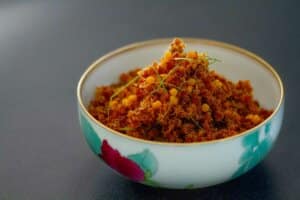
Old-Fashioned Phat Phrik Khing, Yesteryear's Travel Food (ผัดพริกขิง อาหารคนเดินทาง)
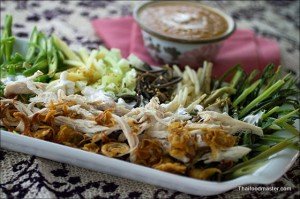
ยำทวาย
This recipe would probably change your perception about the term "salad", maybe because its dressing has a multi layered, curry-like personality, rather than the common sour vinaigrette-like dressing, or maybe because it takes some good few hours to prepare, somewhat longer than simply opening a bag of hydroponic greens.
This salad is the fruit of the dedication of court ladies from aristocratic households, that for centuries perfected and elaborated on the art of cooking through detailed and calculated process, to create sophisticated dishes that are not only delicious but also very healthy and visually pleasing.
These ladies made a very large commitment for small things, and they attended all their time and efforts to make minor things better and getting the small things just right.
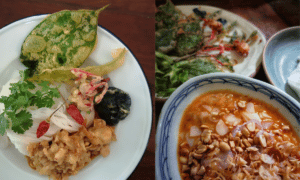
c1949 Fermented rice noodles with multi-sour aromatic chicken sauce by Lady Gleep Mahithaawn (ขนมจีนน้ำพริกไก่ อย่างท่านผู้หญิงกลีบ มหิธร พ.ศ. 2492; khanohm jeen naam phrik gai)
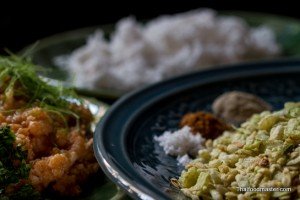
ข้าวเม่าเบื้อง อย่างท่านผู้หญิงเปลี่ยน ภาสกรวงษ์
"ข้าวเม่าเบื้อง" เป็น 1 ใน 2 ตำรับของเครื่องว่างคาว ที่ปรุงจากข้าวเม่า นอกเหนือจาก "ข้าวเม่าหมี่" และปัจจุบันนี้ไม่พบว่ามีใครทำตำรับดังกล่าวนี้เลย จะมีก็แค่ "ข้าวเม่าหมี่" ส่วน "ข้าวเม่าเบื้อง" นั้น แทบจะหายไปจากสังคมไทยเสียแล้ว ปัจจุบันคนทั่วไปจึงไม่รู้จักเครื่องว่างตำรับนี้เลย เราจึงมีความยินดีและภูมิใจนำเสนอตำรับ "ข้าวเม่าเบื้อง" เพื่อเป็นการอนุรักษ์และให้กลับมาเป็นที่รู้จักกันอีกครั้งหนึ่ง...
1
2
3
4
5
6
7
8
9
10

Get Access – Join Thaifoodmaster Today
Practical and kitchen-tested recipes with a mix of theory, history, psychology, and Siamese culture tidbits.
-
Get access to everything right away. Unlock more than 50 Masterclasses, over 700 recipes and Articles
Access to Thaifoodmaster’s constantly growing library of prime professional classes, articles, recipes and videos on Siamese culinary topics, available nowhere else in English.
-
GET EXTRA - New Masterclasses and Daily Recipes
Gain access to NEW masterclasses as they become available. Access DAILY translations of heritage-recipes.
-
1-1 support from Hanuman
1-1 support from Hanuman to help you achieve your professional Thai culinary goals
-
Live Q&A Sessions
The opportunity to join a monthly live two-hour videoconference where I can answer your questions.
-
Great Value!
one year access for the price of 3 days in-person training.
You will get everything you need to:
-
To Get inspired
When you design or build a new menu for an event or restaurant or even prepare for dinner with friends.
-
To Satisfy your curiosity.
Finally !
-
To Master Your Craft
Master your Thai cooking skills and expand your repertoire.
It is truly brilliant with a revolutionary approach introducing aspects and concepts never broached by cookbooks.

Ian Westcott
Sourcing Wines for Discerning Private Clients
© 2008 – 2026 Thaifoodmaster


