
Celebrating the Art of Siamese Culinary Wisdom and Thai Cuisine
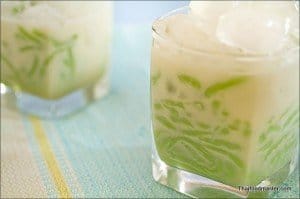
Lod Chong Recipe
Pandan Flavored Rice Flour Droplets in Sweetened Coconut Cream Syrup
(khanohm laawt chaawng naam gathi)
สูตรทำขนมลอดช่องน้ำกะทิ หรือ นกปล่อย Thai desserts are usually made from common ingredients and therefore very popular. However, it was only during the 17th century that desserts and sweets actually became part of everyday meals. In the old days, they were served only at auspicious occasions and ceremonies. During wedding ceremonies, for example, four kinds of sweets are usually served, collectively known as "the four plates dessert" (ขนมสี่ถ้วย ; khanohm see thuay). The ancient Thai expression "To eat four cups of dessert" (กินสี่ถ้วย ; gin see thuay ) used in the central region of the kingdom as an idiom referring to a wedding banquet.
Pandan Flavored Rice Flour Droplets in Sweetened Coconut Cream Syrup
(khanohm laawt chaawng naam gathi)
สูตรทำขนมลอดช่องน้ำกะทิ หรือ นกปล่อย Thai desserts are usually made from common ingredients and therefore very popular. However, it was only during the 17th century that desserts and sweets actually became part of everyday meals. In the old days, they were served only at auspicious occasions and ceremonies. During wedding ceremonies, for example, four kinds of sweets are usually served, collectively known as "the four plates dessert" (ขนมสี่ถ้วย ; khanohm see thuay). The ancient Thai expression "To eat four cups of dessert" (กินสี่ถ้วย ; gin see thuay ) used in the central region of the kingdom as an idiom referring to a wedding banquet.
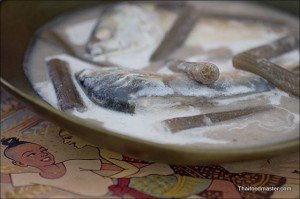
Thai Coconut Curry of Steamed Mackerels and Lotus Stems
(gaaeng gathi saai buaa bplaa thuu neung ;
แกงกะทิสายบัวปลาทูนึ่ง) This old-fashioned Thai coconut curry dish is a simple expression made with ingredients commonly available to Thais, it features steamed mackerels - the fish that Thai people probably love the best and the stems of the lotus flowers - one of Buddhism's most recognized motifs. The fish together with peeled lotus stems are boiled in coconut milk, to which a simple yet very aromatic curry paste, made only of white pepper corns, shallots and fermented shrimp paste is added.
(gaaeng gathi saai buaa bplaa thuu neung ;
แกงกะทิสายบัวปลาทูนึ่ง) This old-fashioned Thai coconut curry dish is a simple expression made with ingredients commonly available to Thais, it features steamed mackerels - the fish that Thai people probably love the best and the stems of the lotus flowers - one of Buddhism's most recognized motifs. The fish together with peeled lotus stems are boiled in coconut milk, to which a simple yet very aromatic curry paste, made only of white pepper corns, shallots and fermented shrimp paste is added.
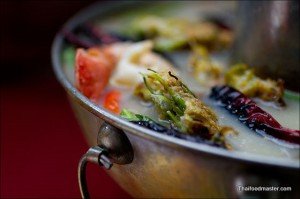
Tom Yum Goong Soup Recipe of Prawns and SaNoh Flowers Fried Cakes (ต้มยำกุ้งทอดมันดอกโสน ; tom yum goong thaawt man daawk sanoh)
Today’s tom yum goong soup recipe is a refreshing addition to the tom yum soup repertoire. The fried SaNoh Flower Cakes sensationally enhance the shrimp’s natural sweetness, while the flower’s bittersweet aftertaste is a superb tropical match to the citrusy and aromatic hot and sour tom yum goong soup.
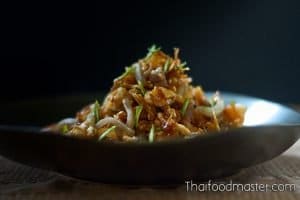
Salad of bitter orange peels, shrimp, poached pork belly and pork skin, roasted peanuts, golden deep-fried crispy shallots and garlic with sweet and sour tamarind dressing.
(ยำผิวส้มซ่า ; yam phiu sohm saa) This salad recipe is adapted from the book “Maae Khruaa Huaa Bpaa” (แม่ครัวหัวป่าก์), published in 1971 as a memorial for Jao Jaawm Phit (เจ้าจอมพิศว์). Jao Jaawm Phit was the daughter of Thanpuying (Lady) Plean Passakornrawong, who was a pioneer of noble Thai cuisine.
(ยำผิวส้มซ่า ; yam phiu sohm saa) This salad recipe is adapted from the book “Maae Khruaa Huaa Bpaa” (แม่ครัวหัวป่าก์), published in 1971 as a memorial for Jao Jaawm Phit (เจ้าจอมพิศว์). Jao Jaawm Phit was the daughter of Thanpuying (Lady) Plean Passakornrawong, who was a pioneer of noble Thai cuisine.
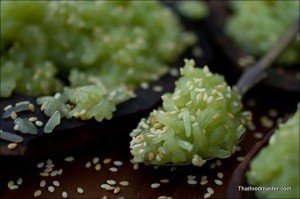
Thai Dessert Recipe: Pandan Flavored Sweet Translucent Glutinous Rice (khaao niaao gaaeo) สูตรทำข้าวเหนียวแก้ว
One of the charms of street food is that it finds you rather than you finding it. Therefore you are usually in the perfect mood to embrace it.
This treat along with other sweets are traditionally presented on tricycle drawn trays that are protected from insects and pollution by a transparent nylon tent and light up by a single light bulb.
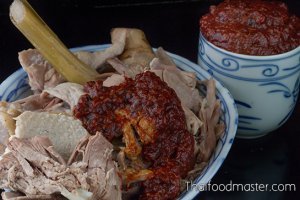
An Ancient Siamese Recipe for Tom Kha Pet (1890 AD) Duck Simmered in Light Coconut Cream and Young Galangal, and Served with Sour-Sweet Roasted Chili Jam
(Tom Kha Bpet; ต้มข่าเป็ด จิ้มน้ำพริกเผาแบบโบราณ) Tom kha is a well-known and much-loved Thai soup: a creamy, soothing coconut blend, a warm, silky broth in which chicken, mainly, is simmered with young galangal, mushrooms, and, at times, charred-grilled banana blossoms. In other versions, lemongrass and kaffir lime leaves are added, blurring the boundaries between tom kha and the coconut-based tom yam soup (tom yum kati; ต้มยำกะทิ). However, in the late 19th century, tom kha was not a soup at all: it was a dish of chicken or duck simmered in a light coconut broth with a generous amount of galangal. The coconut broth added sweetness to the meat, and the galangal helped to mellow the meat odor. It was then served with a basic roasted chili jam as a dipping relish seasoned along the salty-sour-sweet spectrum.
(Tom Kha Bpet; ต้มข่าเป็ด จิ้มน้ำพริกเผาแบบโบราณ) Tom kha is a well-known and much-loved Thai soup: a creamy, soothing coconut blend, a warm, silky broth in which chicken, mainly, is simmered with young galangal, mushrooms, and, at times, charred-grilled banana blossoms. In other versions, lemongrass and kaffir lime leaves are added, blurring the boundaries between tom kha and the coconut-based tom yam soup (tom yum kati; ต้มยำกะทิ). However, in the late 19th century, tom kha was not a soup at all: it was a dish of chicken or duck simmered in a light coconut broth with a generous amount of galangal. The coconut broth added sweetness to the meat, and the galangal helped to mellow the meat odor. It was then served with a basic roasted chili jam as a dipping relish seasoned along the salty-sour-sweet spectrum.
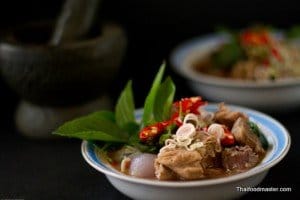
Beef Curry Seasoned with Fermented Shrimp Paste Chili Relish (แกงรัญจวน ; gaaeng ranjuaan)
Gaaeng Ranjuaan is spicy, sour, sweet and salty beef curry seasoned with no more than fermented shrimp paste chili sauce. It should be served steaming hot, and must possess three distinct flavors, similar to fish Tom Yam soup. These modest ingredients and an intensely-flavored curry emerge from a story about love, things lost in translation and…leftovers.
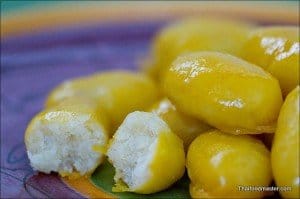
Golden Jackfruit Seeds
Thai Mung Bean Marzipan and Egg Yolk Dessert
(Met Khanoon ; ขนมเม็ดขนุน) It is believed that this dish was introduced to the Siamese royal cuisine in the middle of the seventeenth century by Portuguese traders. Later, along with other egg yolk-based golden sweets like the golden drops (thong yot ทองหยอด), golden flowers (thong yip ทองหยิบ) and golden threads (foi thong ฝอยทอง), these royal desserts were passed to commoners outside the court. For the marzipan filling I am using, beside the mung beans, both the flesh and the water of fragrant young coconuts. It gives a rich, sweet and almost nutty flavor which works perfectly with the silky texture of the mung beans and the creamy golden egg yolks coating.
Thai Mung Bean Marzipan and Egg Yolk Dessert
(Met Khanoon ; ขนมเม็ดขนุน) It is believed that this dish was introduced to the Siamese royal cuisine in the middle of the seventeenth century by Portuguese traders. Later, along with other egg yolk-based golden sweets like the golden drops (thong yot ทองหยอด), golden flowers (thong yip ทองหยิบ) and golden threads (foi thong ฝอยทอง), these royal desserts were passed to commoners outside the court. For the marzipan filling I am using, beside the mung beans, both the flesh and the water of fragrant young coconuts. It gives a rich, sweet and almost nutty flavor which works perfectly with the silky texture of the mung beans and the creamy golden egg yolks coating.
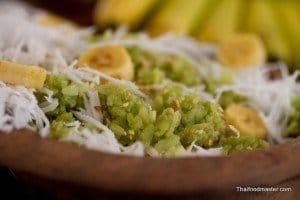
Sweet Pounded Unripe Rice Flakes Cereal with Coconut Flesh and Banana (ข้าวเม่าคลุก ; khaao mao khlook )
Sweet Pounded Unripe Rice Flakes Cereal - Rice harvesting takes place only once a year, and there are only two weeks where the ripening grains are suitable for producing Khao Mao.
Khao Mao doesn't age well, it gets dry and tough quickly. The-once-vivid beautiful green color that portrayed the essence of its immaturity and the beginning of the rice harvesting season, slowly fades away, along with its bread like scent.
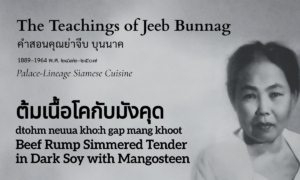
Beef Rump Simmered Tender in Dark Soy with Mangosteen Flesh and Seeds (ต้มเนื้อโคกับมังคุด; dtohm neuua kho:h gap mang khoot)
Dtohm neuua kho:h gap mang khoot, lard-fried beef rump simmered in dark soy with peeled mangosteen, seeds and all. From Jeeb Bunnag, 1933.
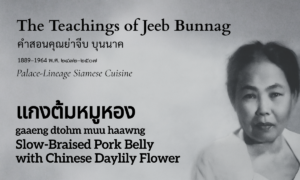
Slow-Braised Pork Belly with Chinese Daylily Flower (แกงต้มหมูหอง; gaaeng dtohm muu haawng)
Gaaeng dtohm muu haawng, pork belly slow-braised with Chinese daylily flower, star anise and tao chiao paste. From Jeeb Bunnag's 1933 Cookbook of Rice Companion Recipes.
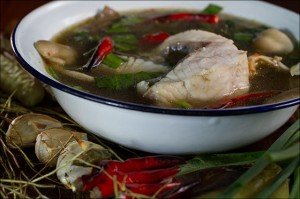
Rustic & Spicy Laotian Fish Soup with Grilled Eggplants, Oyster Mushrooms and Herbs (ต้มแจ่วปลา ; dtom jeaw pla)
Dtom Jeaw Pla is a rustic and spicy fish soup that is far from being unsophisticated. There is something humble, genuine, and unpretentious about it, which makes you fall in love with it.
Its humble countryside charm and surfeit of tastes quickly placed it high on my personal list of favorite dishes.
The fresh essence of fish cooked to perfection melds with the earthy tones of the grilled ingredients, the eggplants, shallots, chilies and garlic. It has a heavenly silky broth with a scent of lemongrass, which is generously lifted up by a handful of fresh herbs, lemon basil, saw coriander and spring onions.
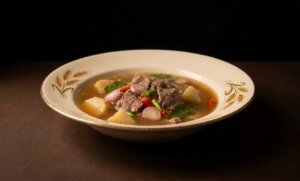
Dtohm Jiu Beef Soup (แกงต้มจิ๋ว; gaaeng dtohm jiu)
Dtohm Jiu Beef Soup: sirloin simmered soft with sweet potato, soured with tamarind, finished with bird's eye chili and lime. Tamrap Sai Yaowapa, 1935.
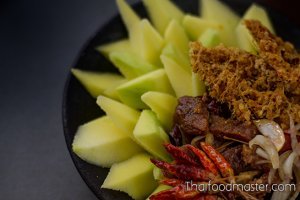
Yam Sohm Choon Mango Salad with Sweet Pork Condiment, Fermented Shrimp Paste, Shallots, and Crispy Deep-Fried Fluffy Fish (ยำส้มฉุน ; yam sohm choon)
Yam sohm choon is a sour green mango salad served with grilled fermented shrimp paste; roughly chopped shallots; sweet pork condiment, deep-fried fluffy grilled catfish and seasoned with fish sauce, palm sugar and lime juice and topped with deep-fried dry chilies cut into small pieces.
If you follow Thai movies and TV dramas, you probably remember Sohm Choon, the adorable boy ghost character from the period romance movie Reun Mayura (1997), which was a love story between a beautiful woman and a handsome man living in different periods of time.
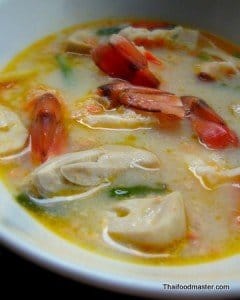
Tom Yam Kung Recipe, Hot and Sour Soup with Shrimp (tom yum goong ; ต้มยำกุ้ง)
Tom Yam is a type of soup with distinct sharp hot and sour flavors, scented with pleasant citrusy aroma.
Tom Yam is known to seduce many westerners to fall in love with Thailand, its people and food. Many trips memories to Thailand were written in diaries, others are etched on film but all are stained by the Tom Yam charm.
I still remember with vivid colors my first bowl of Tom Yam, in the night market of the old neighborhood on a hot night in a ragged, unfashionable part of Bangkok. Where the smell of cooking and the glare of florescent lights decorated the alley where JeMoi used to own a restaurant, a very simple and very good one, decorated with cheap bamboo chairs and peeling orange walls. I would enjoy watching the streets of the early night turning into mornings, eating, drinking and sweating. It was hard to say if I was sweating from the hot and humid weather, the cheap whiskey or JeMoi’s spicy food. I still smile when I think of her, standing by my table with a winning smile, as if she knew how much I enjoy the food.
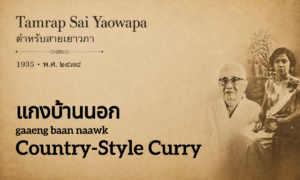
Country-Style Curry (แกงบ้านนอก; gaaeng baan naawk)
Gaaeng baan naawk, a country soup of prawns, pork belly and snakehead fish built on a pounded grilled-fish base. Tamrap Sai Yaowapa, 1935.
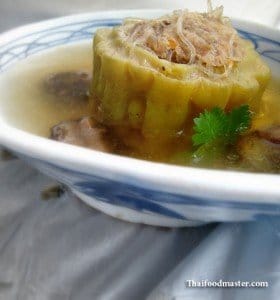
Clear Soup of Bitter Gourd Stuffed with Pork and Glass Noodles ต้มจืดมะระยัดไส้หมูสับ ; dtohm jeuut mara yat sai muu sap
Bitter gourds have long been prized in Asia for a trait considered a defect in cucumbers: bitterness. We tend to believe that anything bitter is medicinal and, in this case, we could be correct. The bitter gourd is said to cure a wide range of ailments - from gastrointestinal conditions to cancers, and from diabetes to HIV.
Also known as bitter melons, bitter gourds are pale green, with an irregular, warty surface. Typically, they are eaten following an initial treatment to remove some of the bitterness; often they are stuffed, to complement their somewhat eccentric bite.
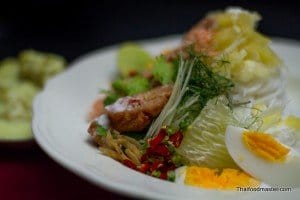
Fermented Rice Noodles Served with Pineapple, Fish Balls in Coconut Milk, Grilled Curried Fish Cakes, Young Ginger and Dry Shrimp Powder
(ขนมจีนซาวน้ำ ; khanohm jeen saao naam ) For the khanohm jeen saao naam version that we present today, we turn again to the writing of Thanpuying (Lady) Gleep Mahithaawn for her unique take on the dish. Her version is quite similar to the common recipe encountered nowadays, but Lady Gleep enhances it with more ingredients, elevating the dish yet another notch to the level of a majestic masterpiece.
(ขนมจีนซาวน้ำ ; khanohm jeen saao naam ) For the khanohm jeen saao naam version that we present today, we turn again to the writing of Thanpuying (Lady) Gleep Mahithaawn for her unique take on the dish. Her version is quite similar to the common recipe encountered nowadays, but Lady Gleep enhances it with more ingredients, elevating the dish yet another notch to the level of a majestic masterpiece.
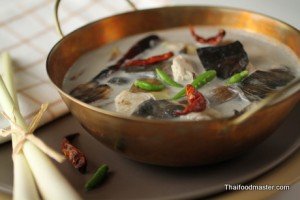
Fresh Coconut Milk Tom Yum Soup Recipe of Grilled Banana Blossom and Chicken
(dtohm yam gathi huaa bplee yang sai gai ;
ต้มยำกะทิหัวปลีย่างใส่ไก่) It will not be an overstatement to say that banana trees accompany Thai people from their birth to the afterlife. Starting with the decorative objects made out of banana leaves newborns receive to invite protective spirits, and continues their entire life with the endless uses for banana leaves, trunks and fruits; finally ending with the female spirit ghost, maae praai taanee (แม่พรายตานี), who resides in banana trees and Thai beliefs.
(dtohm yam gathi huaa bplee yang sai gai ;
ต้มยำกะทิหัวปลีย่างใส่ไก่) It will not be an overstatement to say that banana trees accompany Thai people from their birth to the afterlife. Starting with the decorative objects made out of banana leaves newborns receive to invite protective spirits, and continues their entire life with the endless uses for banana leaves, trunks and fruits; finally ending with the female spirit ghost, maae praai taanee (แม่พรายตานี), who resides in banana trees and Thai beliefs.
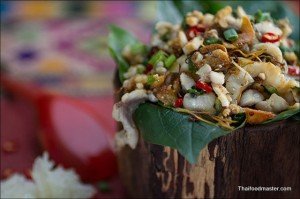
Luang Prabang Style Koi Fish Salad Recipe (Koi Pla)
(gaawy bplaa nin luang prabang ; สูตรทำก้อยปลานิลหลวงพระบาง) A marvelous Luang Prabang style fish salad recipe (Koi Pla), which is very easy to prepare and even though it looks simple, its flavors are complex and clever. Fresh fish fillet is sliced into thin strips which are quick blanched in lemongrass infused boiling water - a cooking method that presenting it’s natural flavors with an uplifting citrusy notes. The white fish slices are then mixed with, deep golden brown caramelized mix of fried garlic, shallots and lemongrass, which are not just visually pleasing but also add a unique sweetness and richness to the dish.
(gaawy bplaa nin luang prabang ; สูตรทำก้อยปลานิลหลวงพระบาง) A marvelous Luang Prabang style fish salad recipe (Koi Pla), which is very easy to prepare and even though it looks simple, its flavors are complex and clever. Fresh fish fillet is sliced into thin strips which are quick blanched in lemongrass infused boiling water - a cooking method that presenting it’s natural flavors with an uplifting citrusy notes. The white fish slices are then mixed with, deep golden brown caramelized mix of fried garlic, shallots and lemongrass, which are not just visually pleasing but also add a unique sweetness and richness to the dish.
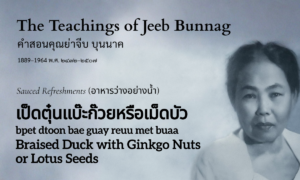
Braised Duck with Ginkgo Nuts or Lotus Seeds (เป็ดตุ๋นแบ๊ะก๊วยหรือเม็ดบัว; bpet dtoon bae guay reuu met buaa)
Braised Duck with Ginkgo Nuts, a Thai-Chinese dish where fried duck is slow-simmered with aromatic spices and ginkgo nuts. From Jeeb Bunnag's 1945 cookbook.
1
2
3

Get Access – Join Thaifoodmaster Today
Practical and kitchen-tested recipes with a mix of theory, history, psychology, and Siamese culture tidbits.
-
Get access to everything right away. Unlock more than 50 Masterclasses, over 700 recipes and Articles
Access to Thaifoodmaster’s constantly growing library of prime professional classes, articles, recipes and videos on Siamese culinary topics, available nowhere else in English.
-
GET EXTRA - New Masterclasses and Daily Recipes
Gain access to NEW masterclasses as they become available. Access DAILY translations of heritage-recipes.
-
1-1 support from Hanuman
1-1 support from Hanuman to help you achieve your professional Thai culinary goals
-
Live Q&A Sessions
The opportunity to join a monthly live two-hour videoconference where I can answer your questions.
-
Great Value!
one year access for the price of 3 days in-person training.
You will get everything you need to:
-
To Get inspired
When you design or build a new menu for an event or restaurant or even prepare for dinner with friends.
-
To Satisfy your curiosity.
Finally !
-
To Master Your Craft
Master your Thai cooking skills and expand your repertoire.
It is truly brilliant with a revolutionary approach introducing aspects and concepts never broached by cookbooks.

Ian Westcott
Sourcing Wines for Discerning Private Clients
© 2008 – 2026 Thaifoodmaster


