
Celebrating the Art of Siamese Culinary Wisdom and Thai Cuisine
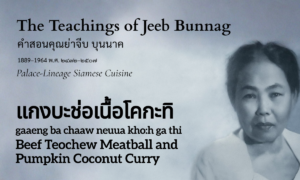
Beef Teochew Meatball and Pumpkin Coconut Curry (แกงบะช่อเนื้อโคกะทิ; gaaeng ba chaaw neuua kho:h ga thi)
Gaeng ba chaaw, Teochew-style beef meatballs seasoned with coriander root paste, simmered in coconut milk with pumpkin. Jeeb Bunnag, 1933.
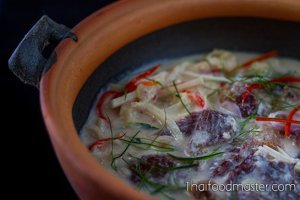
แกงต้มกะทิเนื้อโคเค็ม อย่าง จีบ บุนนาค (พ.ศ. ๒๔๘๔)
ภูมิปัญญาไทยโบราณท่านมีความอัจฉริยะล้ำเลิศ คิดปรุงตำรับอาหารที่ได้ผลออกมาอย่างลงตัว ดังที่กล่าวมาในบทก่อนหน้า วิถีไทยอาศัยการถนอมอาหารด้วยการทำเค็มหรือตากแห้ง และเมื่อจะนำมารับประทาน ความรุ่มรวยทางวัฒนธรรมการกิน บวกกับความมีศิลปะแห่งการปรุง คนสมัยก่อนสามารถรังสรรค์ของใกล้ตัว ให้ออกมาเป็นตำรับที่วิเศษได้โดยง่าย ง่ายด้วยกรรมวิธี ง่ายด้วยวัตถุดิบเครื่องปรุง ให้เป็นของอร่อยแบบไทยแท้ หนึ่งในตำรับนั้นคือ "ต้มกะทิเนื้อโคเค็ม"....
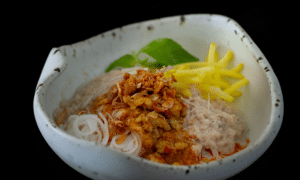
Naam Yaa Neuua – Northern Style Naam Ya according to Lady Plean Passakornrawong (น้ำยาเหนือ)
This fermented rice noodle dish is served with a slow-cooked, chili-less broth made from pounded fish meat and aromatics cooked in coconut cream. Creamy in color and velvety in texture, the broth is seasoned either with fish sauce, fermented fish or salted fish according to one’s preferences. The broth is allowed to slow-cook, achieving its full richness over a couple of hours. Once ready, the broth is poured over the noodles, which are then topped with a glossy-orangey layer of minced shrimp meat fried with their tomalley in pork lard. Complementing this richness are crunchy yellowish bean sprouts blanched in turmeric-tinted water, a sprinkle of sweet, golden crispy-fried shallots and, finally, green lemon basil leaves that endow the dish with a unique, rustic herbal persona.
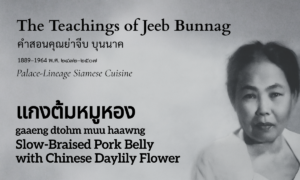
Slow-Braised Pork Belly with Chinese Daylily Flower (แกงต้มหมูหอง; gaaeng dtohm muu haawng)
Gaaeng dtohm muu haawng, pork belly slow-braised with Chinese daylily flower, star anise and tao chiao paste. From Jeeb Bunnag's 1933 Cookbook of Rice Companion Recipes.
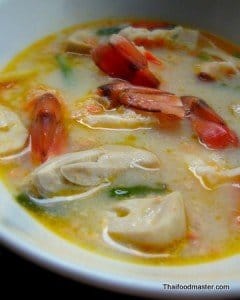
ต้มยำกุ้ง
Tom Yam is a type of soup with distinct sharp hot and sour flavors, scented with pleasant citrusy aroma.
Tom Yam is known to seduce many westerners to fall in love with Thailand, its people and food. Many trips memories to Thailand were written in diaries, others are etched on film but all are stained by the Tom Yam charm.
I still remember with vivid colors my first bowl of Tom Yam, in the night market of the old neighborhood on a hot night in a ragged, unfashionable part of Bangkok. Where the smell of cooking and the glare of florescent lights decorated the alley where JeMoi used to own a restaurant, a very simple and very good one, decorated with cheap bamboo chairs and peeling orange walls. I would enjoy watching the streets of the early night turning into mornings, eating, drinking and sweating. It was hard to say if I was sweating from the hot and humid weather, the cheap whiskey or JeMoi’s spicy food. I still smile when I think of her, standing by my table with a winning smile, as if she knew how much I enjoy the food.
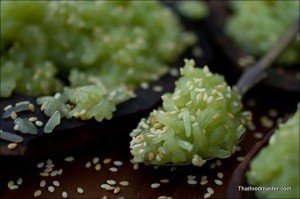
ข้าวเหนียวแก้ว
One of the charms of street food is that it finds you rather than you finding it. Therefore you are usually in the perfect mood to embrace it.
This treat along with other sweets are traditionally presented on tricycle drawn trays that are protected from insects and pollution by a transparent nylon tent and light up by a single light bulb.
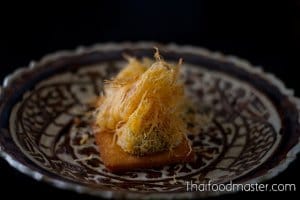
ขนมฝอย หรือ ขนมหันตรา
"ขนมฝอย" หรือ "ขนมหันตรา" - อนุสนธิจากตำนานแกงมัสมั่น ที่ Thaifoodmaster ได้นำเสนอไปแล้วนั้น ในบริบทหนึ่งกล่าวถึงหมายรับสั่งของพระบามสมเด็จพระพุทธยอดฟ้าจุฬาโลกที่ให้ พระยาจุฬาราชมนตรี ผู้นำมุสลิม จัดทำอาหารเลี้ยงพระและผู้คน ในคราวสมโภชพระแก้วมรกตและวัดพระศรีรัตนศาสดาราม ในปี พ.ศ.๒๓๕๒ ท่านขุนฯ เกิดความสนใจในอาหารที่นำมาจัดเลี้ยงเป็นอย่างยิ่ง ด้วยในคราวนั้นนิมนต์พระสงฆ์ถึง ๒,๐๐๐ รูปมาในงานบุญที่ยิ่งใหญ่นี้ จึงได้ตามรอย ค้นคว้าประวัติศาสตร์วัฒนธรรมขนมอีกตำรับหนึ่งของคนไทยมานำเสนอ ในอีกมุมมอง ที่เชื่อว่ายังไม่มีที่ใดบันทึกไว้อย่างครบถ้วนสมบูรณ์เช่น Thaifoodmaster แห่งนี้ คราวนี้จึงขอนำเสนอขนมโบราณที่มีเอกลักษณ์เด่นคือมีทั้งแบบหวาน และแบบคาว มาให้รู้จักกันให้ลึกซึ้งตรงกับตำรับดั้งเดิมมากที่สุด ซึ่งได้แก่ "ขนมฝอย" หรือ "ขนมหันตรา"
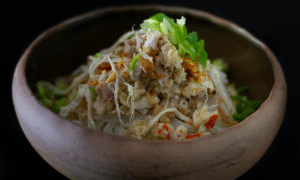
Naam Yaa Jeen - Fermented Rice Noodles with Chinese Sauce by HRH Prince Krom Luang Pitak Montri (น้ำยาจีน อย่างกรมหลวงพิทักษมนตรี)
Among the various curries that can be poured over khanom jeen fermented rice noodles, this broth, known as Chinese-style “naam yaa,” is unique in that it is a water-based curry that does not have chilies. As such, rather than the typical reddish-rust color of most coconut-based naam ya dishes from the Central Plains of the Kingdom, the sauce glows with a soft, light ivory hue, beautifully reflecting the dish’s natural sweet-savoriness, which is derived from slow-braising three proteins – chicken, pork and shrimp – along with a curry paste galvanized by smoke-dried fish and aromatic roots like galangal, fingerroot and sand ginger. The naam ya broth is served over a bed of fermented rice noodles and garnished with toppings such as delicate pulled chicken breast threads, golden-crispy fried shallots and garlic, and vivid green fresh coriander leaves and spring onion. All these elements add a visual grace and a hint of freshness to the robust broth – the signature dish of Prince Krom Luang Pitak Montri (กรมหลวงพิทักษ์มนตรี).
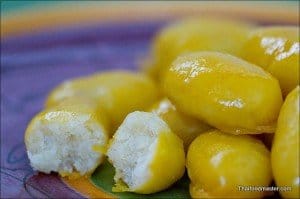
ขนมเม็ดขนุน
It is believed that this dish was introduced to the Siamese royal cuisine in the middle of the seventeenth century by Portuguese traders. Later, along with other egg yolk-based golden sweets like the golden drops (thong yot ทองหยอด), golden flowers (thong yip ทองหยิบ) and golden threads (foi thong ฝอยทอง), these royal desserts were passed to commoners outside the court.
For the marzipan filling I am using, beside the mung beans, both the flesh and the water of fragrant young coconuts. It gives a rich, sweet and almost nutty flavor which works perfectly with the silky texture of the mung beans and the creamy golden egg yolks coating.
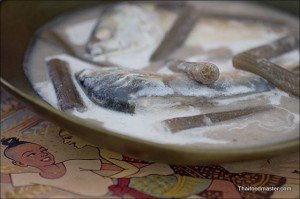
แกงกะทิสายบัวปลาทูนึ่ง
This old-fashioned Thai coconut curry dish is a simple expression made with ingredients commonly available to Thais, it features steamed mackerels - the fish that Thai people probably love the best and the stems of the lotus flowers - one of Buddhism's most recognized motifs.
The fish together with peeled lotus stems are boiled in coconut milk, to which a simple yet very aromatic curry paste, made only of white pepper corns, shallots and fermented shrimp paste is added.
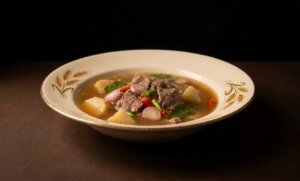
Dtohm Jiu Beef Soup (แกงต้มจิ๋ว; gaaeng dtohm jiu)
Dtohm Jiu Beef Soup: sirloin simmered soft with sweet potato, soured with tamarind, finished with bird's eye chili and lime. Tamrap Sai Yaowapa, 1935.
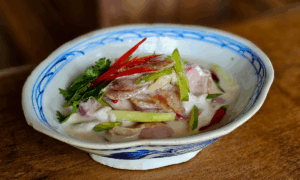
c1935 Princess Yaovabha's Sweet Chinese Sausage in Coconut Cream Soup (แกงไส้กรอกหมูแห้ง; gaaeng sai graawk muu haaeng)
A 1935 Thai palace recipe preserving Princess Yaovabha's Chinese sausage coconut curry. This ivory-colored soup features sweet goon chiang sausage in creamy coconut with lemongrass, kaffir lime, and tamarind. The dish represents a historic culinary shift when Chinese ingredients entered royal Thai kitchens, transforming from street food to palace cuisine.
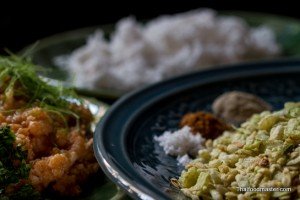
ข้าวเม่าเบื้อง อย่างท่านผู้หญิงเปลี่ยน ภาสกรวงษ์
"ข้าวเม่าเบื้อง" เป็น 1 ใน 2 ตำรับของเครื่องว่างคาว ที่ปรุงจากข้าวเม่า นอกเหนือจาก "ข้าวเม่าหมี่" และปัจจุบันนี้ไม่พบว่ามีใครทำตำรับดังกล่าวนี้เลย จะมีก็แค่ "ข้าวเม่าหมี่" ส่วน "ข้าวเม่าเบื้อง" นั้น แทบจะหายไปจากสังคมไทยเสียแล้ว ปัจจุบันคนทั่วไปจึงไม่รู้จักเครื่องว่างตำรับนี้เลย เราจึงมีความยินดีและภูมิใจนำเสนอตำรับ "ข้าวเม่าเบื้อง" เพื่อเป็นการอนุรักษ์และให้กลับมาเป็นที่รู้จักกันอีกครั้งหนึ่ง...
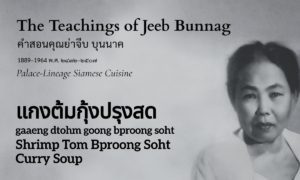
FShrimp Tom Bproong Soht Curry Soup (แกงต้มกุ้งปรุงสด; gaaeng dtohm goong bproong soht)
Gaaeng dtohm goong bproong soht: grilled shrimp with green mango and pickled garlic, seasoned at the bowl. Jeeb Bunnag, 1933.
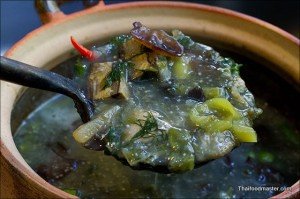
เอาะหลามไก่ใส่สะค้าน
This Laotian dish is popular in the mountainous region of Luang Prabang, the magical city in the northern part of Central Laos.
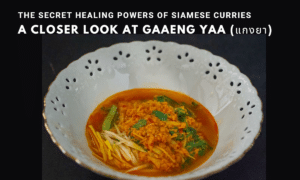
The Secret Healing Powers of Siamese Curries – A Closer Look at Gaaeng Yaa (แกงยา)
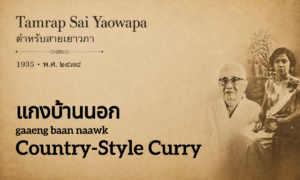
Country-Style Curry (แกงบ้านนอก; gaaeng baan naawk)
Gaaeng baan naawk, a country soup of prawns, pork belly and snakehead fish built on a pounded grilled-fish base. Tamrap Sai Yaowapa, 1935.
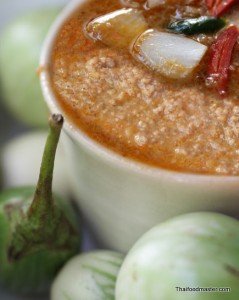
หลนกะปิคั่ว
กะปิคั่วเป็นเมนูอาหารประเภทหลนที่ในทุกวันนี้ค่อนข้างที่จะหารับประทานได้ยากตามร้านอาหารทั่ว ๆ ไป และ น้อยคนนักที่จะรู้จัก
โดยอาหารประเภทหลนนั้นเป็นการนำหัวกะทิมาเคี่ยวกับของที่หมักทั้งหลาย เช่น แหนม ปลาร้า เต้าเจี้ยว กะปิ เป็นต้น เพิ่มเนื้อปลา กุ้ง หรือ หมู และ ปรุงรสโดยใช้น้ำปลา น้ำตาลมะพร้าว และ น้ำมะขามเปียก ซึ่งหลนที่อร่อยนั้นจะต้องมีลักษณะเป็นน้ำขลุกขลิก และต้องใช้เนื้อสัตว์ที่บดอย่างละเอียดเป็นส่วนประกอบ
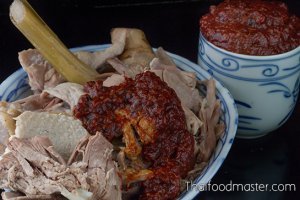
ต้มข่าเป็ด จิ้มน้ำพริกเผาแบบโบราณ อย่างหม่อมซ่มจีน (ราชานุประพันธุ์) ร.ศ.๑๐๙
อาหารโบราณที่ปัจจุบันเปลี่ยนไปจากตำรับเดิมตามรสนิยม ต้มข่าเป็ด จิ้มน้ำพริกเผาแบบโบราณ
"ต้มข่า" แต่เดิม ซึ่งเป็นอาหารของชาวบ้านทั่วไป อาหารชนิดนี้จัดเป็นแกงอย่างหนึ่ง ที่ใช้เนื้อเป็ด เนื้อไก่ หรือ เนื้อปลา ต้มเคี่ยวกับข่าอ่อนในน้ำกะทิ รับประทานกับน้ำพริกหรือน้ำพริกเผา เป็นอาหารพื้น ๆ ของคนไทย ที่เดี๋ยวนี้เปลี่ยนแปลงกลายพันธุ์จนมีลักษณะเข้าใกล้ "ต้มยำกะทิ"
เมื่อราวร้อยกว่าปีก่อนนั้น คนส่วนใหญ่ยังปรุง "ต้มข่า" ในแบบที่ได้เล่ามาอยู่เลย "ตำรากับเข้า" ของ "หม่อมส้มจีน" (ร.ศ.๑๐๙) ก็เขียนถึง "ต้มข่า" ตำรับนี้ เป็นของทำง่ายอย่างสามัญ จะเห็นได้ว่าคนรุ่นเก่าจะเน้นกิน “ต้มข่า” ที่เนื้อสัตว์และข่าอ่อน จิ้มกับน้ำพริกเผาชูรสข้างนอกถ้วย มิใช่ปรุงรสสำเร็จเปรี้ยวเค็มหวานในน้ำแกงอย่างปัจจุบัน
จะเห็นได้ว่าคนรุ่นเก่าจะเน้นกิน "ต้มข่า" ที่เนื้อสัตว์และข่าอ่อน จิ้มกับน้ำพริกเผาชูรสข้างนอกถ้วย มิใช่ปรุงรสสำเร็จเปรี้ยวเค็มหวานในน้ำแกงอย่างปัจจุบัน....
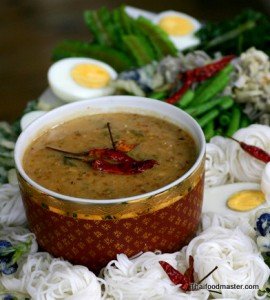
ขนมจีนน้ำพริกกุ้งสูตรมหาเด็ด
The sweet leading sour coconut cream based sauce, enriched and thickened with fragrant freshly roasted peanuts and golden beans are a wonderful coat to dress the sweet shrimp meat. The aromatics are being extracted in every possible way, by roasting, and frying, boiling and reducing, pounding and grounding. All the culinary methods are being fully employed to guarantee an absolute real first class dish.
If you want to start some real Thai cooking going at your home, have the time and access to all the ingredients, than I really want you to try this dish. The building blocks of flavors work so well here and it will open you a great window to see the beginning of what is possible in Thai cuisine.
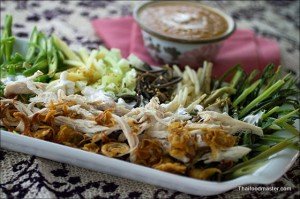
ยำทวาย
This recipe would probably change your perception about the term "salad", maybe because its dressing has a multi layered, curry-like personality, rather than the common sour vinaigrette-like dressing, or maybe because it takes some good few hours to prepare, somewhat longer than simply opening a bag of hydroponic greens.
This salad is the fruit of the dedication of court ladies from aristocratic households, that for centuries perfected and elaborated on the art of cooking through detailed and calculated process, to create sophisticated dishes that are not only delicious but also very healthy and visually pleasing.
These ladies made a very large commitment for small things, and they attended all their time and efforts to make minor things better and getting the small things just right.
1
2
3

Get Access – Join Thaifoodmaster Today
Practical and kitchen-tested recipes with a mix of theory, history, psychology, and Siamese culture tidbits.
-
Get access to everything right away. Unlock more than 50 Masterclasses, over 700 recipes and Articles
Access to Thaifoodmaster’s constantly growing library of prime professional classes, articles, recipes and videos on Siamese culinary topics, available nowhere else in English.
-
GET EXTRA - New Masterclasses and Daily Recipes
Gain access to NEW masterclasses as they become available. Access DAILY translations of heritage-recipes.
-
1-1 support from Hanuman
1-1 support from Hanuman to help you achieve your professional Thai culinary goals
-
Live Q&A Sessions
The opportunity to join a monthly live two-hour videoconference where I can answer your questions.
-
Great Value!
one year access for the price of 3 days in-person training.
You will get everything you need to:
-
To Get inspired
When you design or build a new menu for an event or restaurant or even prepare for dinner with friends.
-
To Satisfy your curiosity.
Finally !
-
To Master Your Craft
Master your Thai cooking skills and expand your repertoire.
It is truly brilliant with a revolutionary approach introducing aspects and concepts never broached by cookbooks.

Ian Westcott
Sourcing Wines for Discerning Private Clients
© 2008 – 2026 Thaifoodmaster


