
Celebrating the Art of Siamese Culinary Wisdom and Thai Cuisine
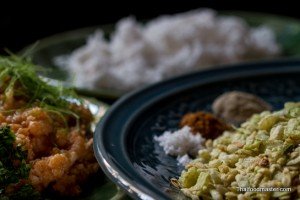
Roasted Pounded Unripe Rice Served with Shrimp Relish and Grated Coconut (ข้าวเม่าเบื้อง ; khao mao beuuang)
Khao mao bueang and khao Mao Mee (ข้าวเม่าหมี่) are the only two known savory dishes from antiquity made from pounded unripe rice grains (ข้าวเม่า; khao mao). While khao mao mee (ข้าวเม่าหมี่) is still a well-known and widely available dish, very few people remember khao mao bueang. Therefore, we are pleased to reintroduce into the Thai culinary repertoire the delicious khao mao bueang.
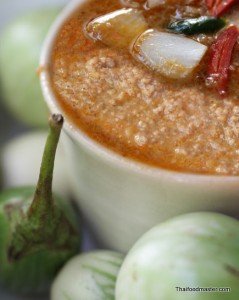
Gabpi Khuaa, An Ancient Dip from The Central Plains (Lohn Gabpi Khuaa; หลนกะปิคั่ว)
In the Thai language, lon (lohn; หลน) means to simmer. In this ancient style dip, minced pork and fermented shrimp paste, along with smoked-charred dry fish, chilies and other aromatics, are slowly simmered in rich coconut cream to create a deep, multi-layered - yet subtle and silky – dip; a dip which is then lightly seasoned with just palm sugar and fish sauce. The dip is served with an array of fresh and fried vegetables, tempura-like cakes, crispy small fishes or tiny transparent salt-water shrimp. For a dish with so many subtle flavors, there is surprisingly little fuss.
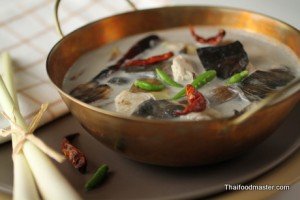
Fresh Coconut Milk Tom Yum Soup Recipe of Grilled Banana Blossom and Chicken
(dtohm yam gathi huaa bplee yang sai gai ;
ต้มยำกะทิหัวปลีย่างใส่ไก่) It will not be an overstatement to say that banana trees accompany Thai people from their birth to the afterlife. Starting with the decorative objects made out of banana leaves newborns receive to invite protective spirits, and continues their entire life with the endless uses for banana leaves, trunks and fruits; finally ending with the female spirit ghost, maae praai taanee (แม่พรายตานี), who resides in banana trees and Thai beliefs.
(dtohm yam gathi huaa bplee yang sai gai ;
ต้มยำกะทิหัวปลีย่างใส่ไก่) It will not be an overstatement to say that banana trees accompany Thai people from their birth to the afterlife. Starting with the decorative objects made out of banana leaves newborns receive to invite protective spirits, and continues their entire life with the endless uses for banana leaves, trunks and fruits; finally ending with the female spirit ghost, maae praai taanee (แม่พรายตานี), who resides in banana trees and Thai beliefs.
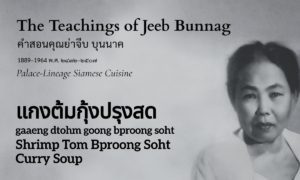
FShrimp Tom Bproong Soht Curry Soup (แกงต้มกุ้งปรุงสด; gaaeng dtohm goong bproong soht)
Gaaeng dtohm goong bproong soht: grilled shrimp with green mango and pickled garlic, seasoned at the bowl. Jeeb Bunnag, 1933.
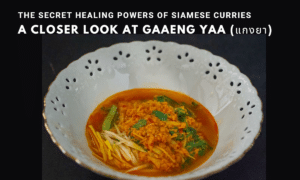
The Secret Healing Powers of Siamese Curries – A Closer Look at Gaaeng Yaa (แกงยา)
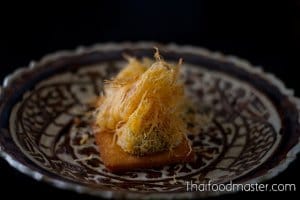
Khanohm faawy or Khanohm handtraa A Forgotten Thai Dessert and Snack ขนมฝอย หรือ ขนมหันตรา
Known as Khanohm faawy (ขนมฝอย) or Khanohm handtraa, this sweet or savory packet can be a dessert or a snack. The dessert has a sweet filling of silky mung beans and a coconut marzipan-like paste, while the snack’s savory filling consists of shrimp and pork minced and seasoned with garlic, coriander root and white peppercorns. Each is theatrically wrapped in a striking nest of skillfully crafted duck’s egg thread.
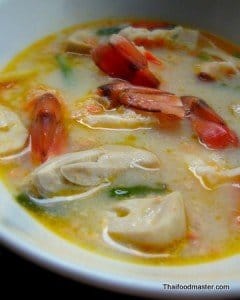
Tom Yam Kung Recipe, Hot and Sour Soup with Shrimp (tom yum goong ; ต้มยำกุ้ง)
Tom Yam is a type of soup with distinct sharp hot and sour flavors, scented with pleasant citrusy aroma.
Tom Yam is known to seduce many westerners to fall in love with Thailand, its people and food. Many trips memories to Thailand were written in diaries, others are etched on film but all are stained by the Tom Yam charm.
I still remember with vivid colors my first bowl of Tom Yam, in the night market of the old neighborhood on a hot night in a ragged, unfashionable part of Bangkok. Where the smell of cooking and the glare of florescent lights decorated the alley where JeMoi used to own a restaurant, a very simple and very good one, decorated with cheap bamboo chairs and peeling orange walls. I would enjoy watching the streets of the early night turning into mornings, eating, drinking and sweating. It was hard to say if I was sweating from the hot and humid weather, the cheap whiskey or JeMoi’s spicy food. I still smile when I think of her, standing by my table with a winning smile, as if she knew how much I enjoy the food.
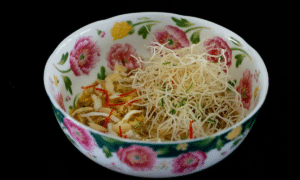
The Ambassador’s House Style Noodle Soup (หมี่น้ำบ้านราชทูต; Mee Naam Baan Raat Thuut)
This soup dish features crispy rice vermicelli noodles, a chicken broth that has a three-flavor profile infused with the aroma of bitter orange, and a plethora of other ingredients such as crispy fried tofu, chicken, pork, crab and pickled garlic.
In Thai, the phrase mee naam baan raat thuut refers to a rice vermicelli noodle soup in the style of the Ambassador’s house. The dish was not new when it appeared in the 1956 book Snacks, Tea Nibbles, Hors D’oeuvres and Drinking Food (ตำราอาหารว่าง - เครื่องน้ำชา และ เครื่องเคี้ยว หรือ กับแกล้ม) by Jeeb Bunnag (จีบ บุนนาค), as noodle dishes were often the preferred ingredient for light meals or snacks. In Grandparents Recipes: 100 Years Old Recipes (จานอร่อยจากปู่ย่า สูตรโบราณ 100 ปี), a volume printed in 2014 that highlights recipes from the kitchens of fifteen prominent families, a similar version of the dish is referred to as mee naam baan bpaak naai leert (หมี่น้ำบ้านปาร์คนายเลิศ) and is associated with Nai Lert.
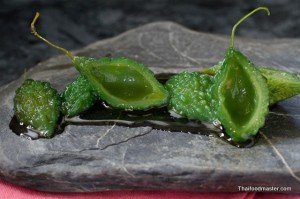
Jasmine Scented Candied Wild Bitter Gourd
(mara khee nohk cheuuam ; มะระขี้นกเชื่อม) Our ancestors, the early humans, had to base their food selection only on their senses. Sweet was energy, umami indicated the presence of proteins and saltiness was the sign for the much needed minerals. Generally, they avoided sour taste because it represented rotten or spoiled food, and bitter was the taste tonics and remedies were made of, and yes, it is now confirmed that bitter gourds are good for you.
(mara khee nohk cheuuam ; มะระขี้นกเชื่อม) Our ancestors, the early humans, had to base their food selection only on their senses. Sweet was energy, umami indicated the presence of proteins and saltiness was the sign for the much needed minerals. Generally, they avoided sour taste because it represented rotten or spoiled food, and bitter was the taste tonics and remedies were made of, and yes, it is now confirmed that bitter gourds are good for you.
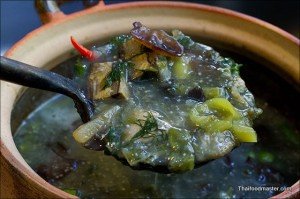
Or Lam Gai Recipe - Velvety Laotian Stew of Chicken, Eggplants and Wild Pepper Vine (aw laam gai sai sakan) สูตรทำเอาะหลามไก่ใส่สะค้าน
This Laotian dish is popular in the mountainous region of Luang Prabang, the magical city in the northern part of Central Laos.
It is a complex and mildly spicy stew, multi layered with flavors and textures, creating a unique, nutritious and delicious dish. It possesses a subtle harmony within a charismatic orchestra of flavors and textures; the taste of meat coupled with the sweetness of vegetables, opposing the bitterness of the greens and willingly surrendering to the aroma of fresh dill and fragrant lemon basil... but it's not all yet....
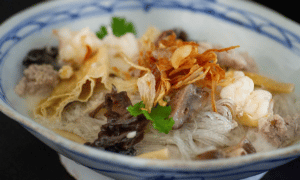
Gaaeng Raawn (แกงร้อน)
Gaaeng raawn (แกงร้อน) is a colloquial Thai term that refers to ‘hot curry’. Today, gaaeng raawn is used to denote soups or curries served with steamed rice. While the precise origin of the term is unclear, gaaeng raawn (แกงร้อน) was deployed in the 1800s for a specific dish – a Siamese soup featuring glass noodles, cooked as either a coconut or a water-based soup with an assortment of dry ingredients revered in Chinese cuisine. The soup’s potential health benefits, combined with its ease of preparation and subtle yet profound flavor, made it a popular choice for entertaining large groups of people, of all ages and backgrounds. The soup is often augmented with fresh proteins: in its more luxurious versions, multiple proteins may be added, including a combination of chicken, pork, shrimp, squid, and crab meat. Thus, over the years, gaaeng raawn (แกงร้อน) was established as a staple source of comfort and warmth for people of all walks of life in Siamese society.
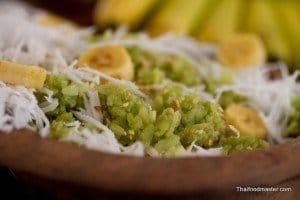
Sweet Pounded Unripe Rice Flakes Cereal with Coconut Flesh and Banana (ข้าวเม่าคลุก ; khaao mao khlook )
Sweet Pounded Unripe Rice Flakes Cereal - Rice harvesting takes place only once a year, and there are only two weeks where the ripening grains are suitable for producing Khao Mao.
Khao Mao doesn't age well, it gets dry and tough quickly. The-once-vivid beautiful green color that portrayed the essence of its immaturity and the beginning of the rice harvesting season, slowly fades away, along with its bread like scent.
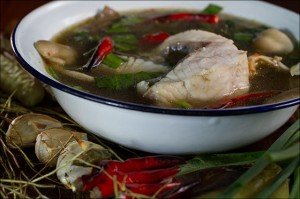
Rustic & Spicy Laotian Fish Soup with Grilled Eggplants, Oyster Mushrooms and Herbs (ต้มแจ่วปลา ; dtom jeaw pla)
Dtom Jeaw Pla is a rustic and spicy fish soup that is far from being unsophisticated. There is something humble, genuine, and unpretentious about it, which makes you fall in love with it.
Its humble countryside charm and surfeit of tastes quickly placed it high on my personal list of favorite dishes.
The fresh essence of fish cooked to perfection melds with the earthy tones of the grilled ingredients, the eggplants, shallots, chilies and garlic. It has a heavenly silky broth with a scent of lemongrass, which is generously lifted up by a handful of fresh herbs, lemon basil, saw coriander and spring onions.
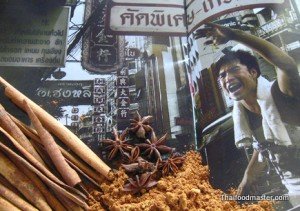
Moo Palo Recipe - Thai Eggs and Pork Chinese Five-Spice Fragrant Stew (สูตรทำไข่พะโล้หมูสามชั้นเห็ดหอม ; khai phalo muu saam chan het haawm)
This is an aromatic stew that leans into the sweet spectrum of the palate. An all-time Thai favorite, moo palo was introduced locally by the Chinese-Cantonese and Tae Chiew immigrants who flocked to the Kingdom in the early nineteenth century.
The name of this dish originates from two Chinese words: pah ziah and lou.
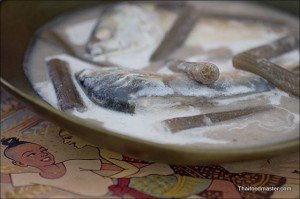
Thai Coconut Curry of Steamed Mackerels and Lotus Stems
(gaaeng gathi saai buaa bplaa thuu neung ;
แกงกะทิสายบัวปลาทูนึ่ง) This old-fashioned Thai coconut curry dish is a simple expression made with ingredients commonly available to Thais, it features steamed mackerels - the fish that Thai people probably love the best and the stems of the lotus flowers - one of Buddhism's most recognized motifs. The fish together with peeled lotus stems are boiled in coconut milk, to which a simple yet very aromatic curry paste, made only of white pepper corns, shallots and fermented shrimp paste is added.
(gaaeng gathi saai buaa bplaa thuu neung ;
แกงกะทิสายบัวปลาทูนึ่ง) This old-fashioned Thai coconut curry dish is a simple expression made with ingredients commonly available to Thais, it features steamed mackerels - the fish that Thai people probably love the best and the stems of the lotus flowers - one of Buddhism's most recognized motifs. The fish together with peeled lotus stems are boiled in coconut milk, to which a simple yet very aromatic curry paste, made only of white pepper corns, shallots and fermented shrimp paste is added.
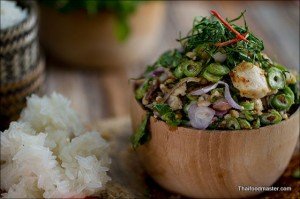
Fish Koi Recipe (Koi Pla)Vientiane Style Fish and Herbs Salad(gaawy bplaa nin vientiane ; ก้อยปลานิลเวียงจันทน์)
In 1833 Prince Mongkut, who later became King Rama IV, found a square stone inscription, known today as “The Ramkhamheang’s Inscription”, believed to be written 541 years earlier, in 1292, by King Ramkhamheang - the third king of The Sukhothai Dynasty (1279-1298).
In this inscription King Ramkhamheang tells the story of the Sukhothai regime; He includes details of the systems of law and describes how he ruled the people wisely, in a kind and personal, like father and son manner. King Ramkhamheang – (who was an outstanding warrior, statesman, scholar and diplomat who expanded his control from the Khmer kingdom of Angkor in the east, through much of what is today central and southern Thailand, to northern parts of Laos and Burma) – gives a picture of his kingdom as idyllic and free of constrains.
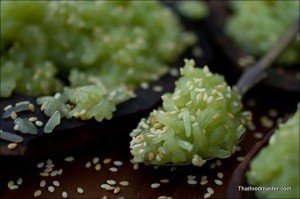
Thai Dessert Recipe: Pandan Flavored Sweet Translucent Glutinous Rice (khaao niaao gaaeo) สูตรทำข้าวเหนียวแก้ว
One of the charms of street food is that it finds you rather than you finding it. Therefore you are usually in the perfect mood to embrace it.
This treat along with other sweets are traditionally presented on tricycle drawn trays that are protected from insects and pollution by a transparent nylon tent and light up by a single light bulb.
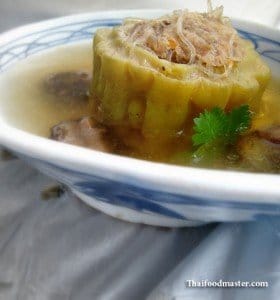
Clear Soup of Bitter Gourd Stuffed with Pork and Glass Noodles ต้มจืดมะระยัดไส้หมูสับ ; dtohm jeuut mara yat sai muu sap
Bitter gourds have long been prized in Asia for a trait considered a defect in cucumbers: bitterness. We tend to believe that anything bitter is medicinal and, in this case, we could be correct. The bitter gourd is said to cure a wide range of ailments - from gastrointestinal conditions to cancers, and from diabetes to HIV.
Also known as bitter melons, bitter gourds are pale green, with an irregular, warty surface. Typically, they are eaten following an initial treatment to remove some of the bitterness; often they are stuffed, to complement their somewhat eccentric bite.
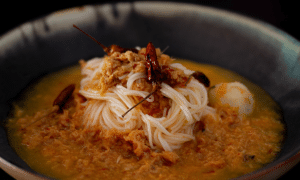
Khanohm Jeen Naam Yaa (ขนมจีนน้ำยา) - Fermented Rice Noodles with Minced Fish in Aromatic Coconut Curry
In the Central Plains of the Kingdom, fermented rice noodles are inextricably linked to a dish known as naam yaa. Composed of a dense, coconut-based minced fish curry, the dish is infused with layers of salted fish and possesses the distinctive, invigorating and purifying notes of fingerroot. Typically, naam yaa is served with fresh lemon basil as the herb of choice along with an array of side dishes collectively known as meuuat khanohm jeen (เหมือดขนมจีน). These include blanched bean sprouts seasoned with a touch of turmeric for color, fresh lemon basil leaves, thinly sliced three colored chilies, and ground chili for added heat. More elaborate versions will add blanched Chinese bitter gourd slices, batter-fried young morning glory shoots, and fresh shrimp minced and fried with its tomalley in pork lard, as well as crispy-fried shallots as the finishing touch.
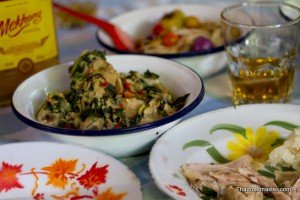
Braised Chicken in Thai Aromatic Paste (ไก่ใต้น้ำ ; gai dtai naam)
Gai dtai naam, which means “under water chicken” in Thai, consists of braised chicken in a coarse, aromatic paste made from lemongrass, galangal, garlic, chilies, kaffir lime leaves, holy basil, coriander and spring onions. In the home-cooked dish popular among the Thai working class, the entire chicken - including the bones - is chopped into bite-size pieces, and served with a bottle of rice wine accompanied by local country-style music (luktung) at high volume.
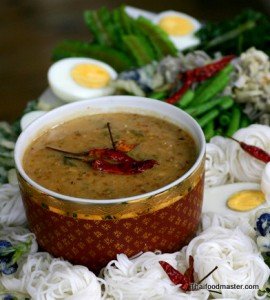
Rice Noodles with Shrimp and Aromatic Coconut Sauce
(khanohm jeen naam phrik goong; ขนมจีนน้ำพริกกุ้งสูตรมหาเด็ด) The sweet leading sour coconut cream based sauce, enriched and thickened with fragrant freshly roasted peanuts and golden beans are a wonderful coat to dress the sweet shrimp meat. The aromatics are being extracted in every possible way, by roasting, and frying, boiling and reducing, pounding and grounding. All the culinary methods are being fully employed to guarantee an absolute real first class dish. If you want to start some real Thai cooking going at your home, have the time and access to all the ingredients, than I really want you to try this dish. The building blocks of flavors work so well here and it will open you a great window to see the beginning of what is possible in Thai cuisine.
(khanohm jeen naam phrik goong; ขนมจีนน้ำพริกกุ้งสูตรมหาเด็ด) The sweet leading sour coconut cream based sauce, enriched and thickened with fragrant freshly roasted peanuts and golden beans are a wonderful coat to dress the sweet shrimp meat. The aromatics are being extracted in every possible way, by roasting, and frying, boiling and reducing, pounding and grounding. All the culinary methods are being fully employed to guarantee an absolute real first class dish. If you want to start some real Thai cooking going at your home, have the time and access to all the ingredients, than I really want you to try this dish. The building blocks of flavors work so well here and it will open you a great window to see the beginning of what is possible in Thai cuisine.
1
2
3

Get Access – Join Thaifoodmaster Today
Practical and kitchen-tested recipes with a mix of theory, history, psychology, and Siamese culture tidbits.
-
Get access to everything right away. Unlock more than 50 Masterclasses, over 700 recipes and Articles
Access to Thaifoodmaster’s constantly growing library of prime professional classes, articles, recipes and videos on Siamese culinary topics, available nowhere else in English.
-
GET EXTRA - New Masterclasses and Daily Recipes
Gain access to NEW masterclasses as they become available. Access DAILY translations of heritage-recipes.
-
1-1 support from Hanuman
1-1 support from Hanuman to help you achieve your professional Thai culinary goals
-
Live Q&A Sessions
The opportunity to join a monthly live two-hour videoconference where I can answer your questions.
-
Great Value!
one year access for the price of 3 days in-person training.
You will get everything you need to:
-
To Get inspired
When you design or build a new menu for an event or restaurant or even prepare for dinner with friends.
-
To Satisfy your curiosity.
Finally !
-
To Master Your Craft
Master your Thai cooking skills and expand your repertoire.
It is truly brilliant with a revolutionary approach introducing aspects and concepts never broached by cookbooks.

Ian Westcott
Sourcing Wines for Discerning Private Clients
© 2008 – 2026 Thaifoodmaster


