
Celebrating the Art of Siamese Culinary Wisdom and Thai Cuisine
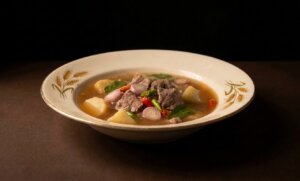
Dtohm Jiu Beef Soup (แกงต้มจิ๋ว; gaaeng dtohm jiu)
Dtohm Jiu Beef Soup: sirloin simmered soft with sweet potato, soured with tamarind, finished with bird's eye chili and lime. Tamrap Sai Yaowapa, 1935.
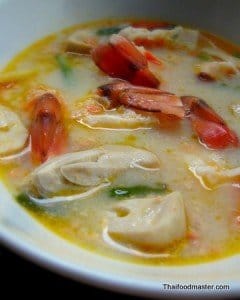
Tom Yam Kung Recipe, Hot and Sour Soup with Shrimp (tom yum goong ; ต้มยำกุ้ง)
Tom Yam is a type of soup with distinct sharp hot and sour flavors, scented with pleasant citrusy aroma.
Tom Yam is known to seduce many westerners to fall in love with Thailand, its people and food. Many trips memories to Thailand were written in diaries, others are etched on film but all are stained by the Tom Yam charm.
I still remember with vivid colors my first bowl of Tom Yam, in the night market of the old neighborhood on a hot night in a ragged, unfashionable part of Bangkok. Where the smell of cooking and the glare of florescent lights decorated the alley where JeMoi used to own a restaurant, a very simple and very good one, decorated with cheap bamboo chairs and peeling orange walls. I would enjoy watching the streets of the early night turning into mornings, eating, drinking and sweating. It was hard to say if I was sweating from the hot and humid weather, the cheap whiskey or JeMoi’s spicy food. I still smile when I think of her, standing by my table with a winning smile, as if she knew how much I enjoy the food.
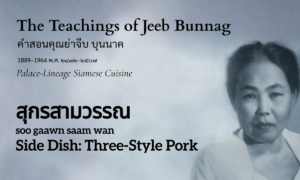
Three-Style Pork (สุกรสามวรรณ; soo gaawn saam wan)
Soo gaawn saam wan: fatty pork reduced three ways—fish sauce with palm sugar, garcinia leaf juice, and fermented bean curd. Jeeb Bunnag, 1933.
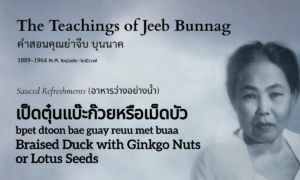
Braised Duck with Ginkgo Nuts or Lotus Seeds (เป็ดตุ๋นแบ๊ะก๊วยหรือเม็ดบัว; bpet dtoon bae guay reuu met buaa)
Braised Duck with Ginkgo Nuts, a Thai-Chinese dish where fried duck is slow-simmered with aromatic spices and ginkgo nuts. From Jeeb Bunnag's 1945 cookbook.
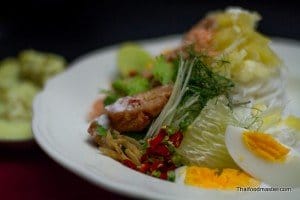
Fermented Rice Noodles Served with Pineapple, Fish Balls in Coconut Milk, Grilled Curried Fish Cakes, Young Ginger and Dry Shrimp Powder
(ขนมจีนซาวน้ำ ; khanohm jeen saao naam ) For the khanohm jeen saao naam version that we present today, we turn again to the writing of Thanpuying (Lady) Gleep Mahithaawn for her unique take on the dish. Her version is quite similar to the common recipe encountered nowadays, but Lady Gleep enhances it with more ingredients, elevating the dish yet another notch to the level of a majestic masterpiece.
(ขนมจีนซาวน้ำ ; khanohm jeen saao naam ) For the khanohm jeen saao naam version that we present today, we turn again to the writing of Thanpuying (Lady) Gleep Mahithaawn for her unique take on the dish. Her version is quite similar to the common recipe encountered nowadays, but Lady Gleep enhances it with more ingredients, elevating the dish yet another notch to the level of a majestic masterpiece.
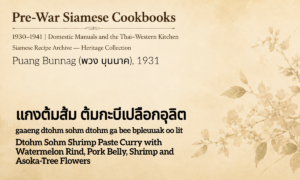
Dtohm Sohm Shrimp Paste Curry with Watermelon Rind, Pork Belly and Asoka-Tree Flowers (แกงต้มส้ม ต้มกะบีเปลือกอุลิต; gaaeng dtohm sohm dtohm ga bee bpleuuak oo lit)
Dtohm sohm kapi curry of Watermelon Rind, Pork Belly, Shrimp, Duck Egg and Asoka-Tree Flowers soured with kaffir lime and tamarind, sweet leading sour and salty. From Puang Bunnag, 1931.
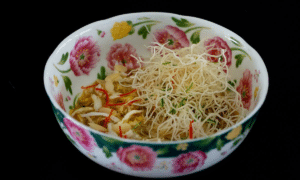
The Ambassador’s House Style Noodle Soup (หมี่น้ำบ้านราชทูต; Mee Naam Baan Raat Thuut)
This soup dish features crispy rice vermicelli noodles, a chicken broth that has a three-flavor profile infused with the aroma of bitter orange, and a plethora of other ingredients such as crispy fried tofu, chicken, pork, crab and pickled garlic.
In Thai, the phrase mee naam baan raat thuut refers to a rice vermicelli noodle soup in the style of the Ambassador’s house. The dish was not new when it appeared in the 1956 book Snacks, Tea Nibbles, Hors D’oeuvres and Drinking Food (ตำราอาหารว่าง - เครื่องน้ำชา และ เครื่องเคี้ยว หรือ กับแกล้ม) by Jeeb Bunnag (จีบ บุนนาค), as noodle dishes were often the preferred ingredient for light meals or snacks. In Grandparents Recipes: 100 Years Old Recipes (จานอร่อยจากปู่ย่า สูตรโบราณ 100 ปี), a volume printed in 2014 that highlights recipes from the kitchens of fifteen prominent families, a similar version of the dish is referred to as mee naam baan bpaak naai leert (หมี่น้ำบ้านปาร์คนายเลิศ) and is associated with Nai Lert.
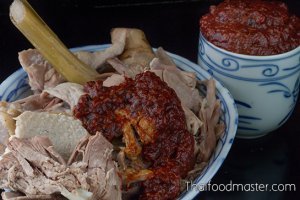
An Ancient Siamese Recipe for Tom Kha Pet (1890 AD) Duck Simmered in Light Coconut Cream and Young Galangal, and Served with Sour-Sweet Roasted Chili Jam
(Tom Kha Bpet; ต้มข่าเป็ด จิ้มน้ำพริกเผาแบบโบราณ) Tom kha is a well-known and much-loved Thai soup: a creamy, soothing coconut blend, a warm, silky broth in which chicken, mainly, is simmered with young galangal, mushrooms, and, at times, charred-grilled banana blossoms. In other versions, lemongrass and kaffir lime leaves are added, blurring the boundaries between tom kha and the coconut-based tom yam soup (tom yum kati; ต้มยำกะทิ). However, in the late 19th century, tom kha was not a soup at all: it was a dish of chicken or duck simmered in a light coconut broth with a generous amount of galangal. The coconut broth added sweetness to the meat, and the galangal helped to mellow the meat odor. It was then served with a basic roasted chili jam as a dipping relish seasoned along the salty-sour-sweet spectrum.
(Tom Kha Bpet; ต้มข่าเป็ด จิ้มน้ำพริกเผาแบบโบราณ) Tom kha is a well-known and much-loved Thai soup: a creamy, soothing coconut blend, a warm, silky broth in which chicken, mainly, is simmered with young galangal, mushrooms, and, at times, charred-grilled banana blossoms. In other versions, lemongrass and kaffir lime leaves are added, blurring the boundaries between tom kha and the coconut-based tom yam soup (tom yum kati; ต้มยำกะทิ). However, in the late 19th century, tom kha was not a soup at all: it was a dish of chicken or duck simmered in a light coconut broth with a generous amount of galangal. The coconut broth added sweetness to the meat, and the galangal helped to mellow the meat odor. It was then served with a basic roasted chili jam as a dipping relish seasoned along the salty-sour-sweet spectrum.
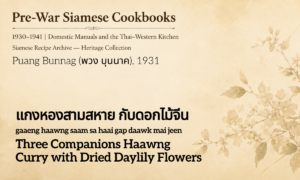
Three Companions Haawng Curry with Dried Daylily Flowers (แกงหองสามสหาย กับดอกไม้จีน; gaaeng haawng saam sa haai gap daawk mai jeen)
Haawng curry of pork belly, chicken and duck in a star anise and tao chiao paste, finished with daylily flowers, sweet before salty. From Puang Bunnag, 1931.
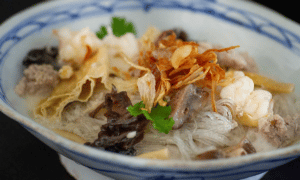
Gaaeng Raawn (แกงร้อน)
Gaaeng raawn (แกงร้อน) is a colloquial Thai term that refers to ‘hot curry’. Today, gaaeng raawn is used to denote soups or curries served with steamed rice. While the precise origin of the term is unclear, gaaeng raawn (แกงร้อน) was deployed in the 1800s for a specific dish – a Siamese soup featuring glass noodles, cooked as either a coconut or a water-based soup with an assortment of dry ingredients revered in Chinese cuisine. The soup’s potential health benefits, combined with its ease of preparation and subtle yet profound flavor, made it a popular choice for entertaining large groups of people, of all ages and backgrounds. The soup is often augmented with fresh proteins: in its more luxurious versions, multiple proteins may be added, including a combination of chicken, pork, shrimp, squid, and crab meat. Thus, over the years, gaaeng raawn (แกงร้อน) was established as a staple source of comfort and warmth for people of all walks of life in Siamese society.
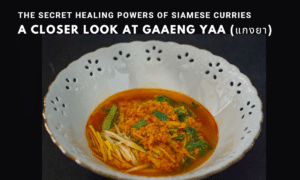
The Secret Healing Powers of Siamese Curries – A Closer Look at Gaaeng Yaa (แกงยา)
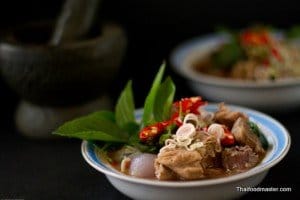
Beef Curry Seasoned with Fermented Shrimp Paste Chili Relish (แกงรัญจวน ; gaaeng ranjuaan)
Gaaeng Ranjuaan is spicy, sour, sweet and salty beef curry seasoned with no more than fermented shrimp paste chili sauce. It should be served steaming hot, and must possess three distinct flavors, similar to fish Tom Yam soup. These modest ingredients and an intensely-flavored curry emerge from a story about love, things lost in translation and…leftovers.
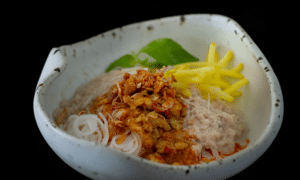
Naam Yaa Neuua – Northern Style Naam Ya according to Lady Plean Passakornrawong (น้ำยาเหนือ)
This fermented rice noodle dish is served with a slow-cooked, chili-less broth made from pounded fish meat and aromatics cooked in coconut cream. Creamy in color and velvety in texture, the broth is seasoned either with fish sauce, fermented fish or salted fish according to one’s preferences. The broth is allowed to slow-cook, achieving its full richness over a couple of hours. Once ready, the broth is poured over the noodles, which are then topped with a glossy-orangey layer of minced shrimp meat fried with their tomalley in pork lard. Complementing this richness are crunchy yellowish bean sprouts blanched in turmeric-tinted water, a sprinkle of sweet, golden crispy-fried shallots and, finally, green lemon basil leaves that endow the dish with a unique, rustic herbal persona.
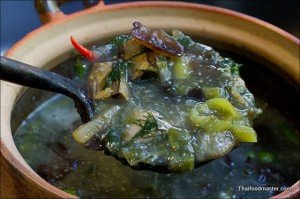
Or Lam Gai Recipe - Velvety Laotian Stew of Chicken, Eggplants and Wild Pepper Vine (aw laam gai sai sakan) สูตรทำเอาะหลามไก่ใส่สะค้าน
This Laotian dish is popular in the mountainous region of Luang Prabang, the magical city in the northern part of Central Laos.
It is a complex and mildly spicy stew, multi layered with flavors and textures, creating a unique, nutritious and delicious dish. It possesses a subtle harmony within a charismatic orchestra of flavors and textures; the taste of meat coupled with the sweetness of vegetables, opposing the bitterness of the greens and willingly surrendering to the aroma of fresh dill and fragrant lemon basil... but it's not all yet....
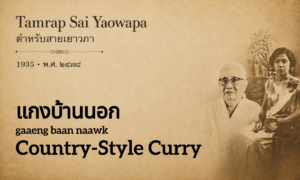
Country-Style Curry (แกงบ้านนอก; gaaeng baan naawk)
Gaaeng baan naawk, a country soup of prawns, pork belly and snakehead fish built on a pounded grilled-fish base. Tamrap Sai Yaowapa, 1935.
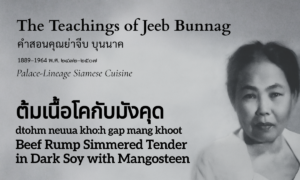
Beef Rump Simmered Tender in Dark Soy with Mangosteen Flesh and Seeds (ต้มเนื้อโคกับมังคุด; dtohm neuua kho:h gap mang khoot)
Dtohm neuua kho:h gap mang khoot, lard-fried beef rump simmered in dark soy with peeled mangosteen, seeds and all. From Jeeb Bunnag, 1933.
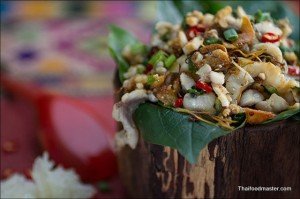
Luang Prabang Style Koi Fish Salad Recipe (Koi Pla)
(gaawy bplaa nin luang prabang ; สูตรทำก้อยปลานิลหลวงพระบาง) A marvelous Luang Prabang style fish salad recipe (Koi Pla), which is very easy to prepare and even though it looks simple, its flavors are complex and clever. Fresh fish fillet is sliced into thin strips which are quick blanched in lemongrass infused boiling water - a cooking method that presenting it’s natural flavors with an uplifting citrusy notes. The white fish slices are then mixed with, deep golden brown caramelized mix of fried garlic, shallots and lemongrass, which are not just visually pleasing but also add a unique sweetness and richness to the dish.
(gaawy bplaa nin luang prabang ; สูตรทำก้อยปลานิลหลวงพระบาง) A marvelous Luang Prabang style fish salad recipe (Koi Pla), which is very easy to prepare and even though it looks simple, its flavors are complex and clever. Fresh fish fillet is sliced into thin strips which are quick blanched in lemongrass infused boiling water - a cooking method that presenting it’s natural flavors with an uplifting citrusy notes. The white fish slices are then mixed with, deep golden brown caramelized mix of fried garlic, shallots and lemongrass, which are not just visually pleasing but also add a unique sweetness and richness to the dish.
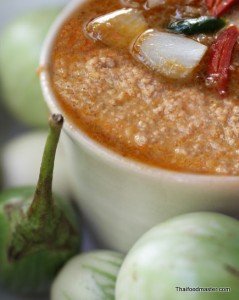
Gabpi Khuaa, An Ancient Dip from The Central Plains (Lohn Gabpi Khuaa; หลนกะปิคั่ว)
In the Thai language, lon (lohn; หลน) means to simmer. In this ancient style dip, minced pork and fermented shrimp paste, along with smoked-charred dry fish, chilies and other aromatics, are slowly simmered in rich coconut cream to create a deep, multi-layered - yet subtle and silky – dip; a dip which is then lightly seasoned with just palm sugar and fish sauce. The dip is served with an array of fresh and fried vegetables, tempura-like cakes, crispy small fishes or tiny transparent salt-water shrimp. For a dish with so many subtle flavors, there is surprisingly little fuss.
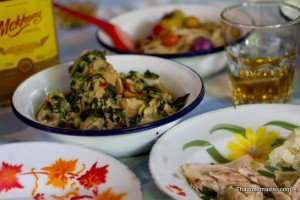
Braised Chicken in Thai Aromatic Paste (ไก่ใต้น้ำ ; gai dtai naam)
Gai dtai naam, which means “under water chicken” in Thai, consists of braised chicken in a coarse, aromatic paste made from lemongrass, galangal, garlic, chilies, kaffir lime leaves, holy basil, coriander and spring onions. In the home-cooked dish popular among the Thai working class, the entire chicken - including the bones - is chopped into bite-size pieces, and served with a bottle of rice wine accompanied by local country-style music (luktung) at high volume.
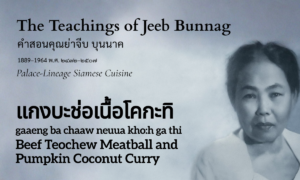
Beef Teochew Meatball and Pumpkin Coconut Curry (แกงบะช่อเนื้อโคกะทิ; gaaeng ba chaaw neuua kho:h ga thi)
Gaeng ba chaaw, Teochew-style beef meatballs seasoned with coriander root paste, simmered in coconut milk with pumpkin. Jeeb Bunnag, 1933.
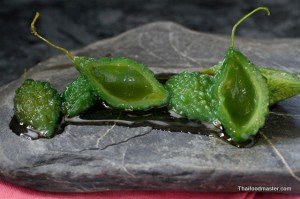
Jasmine Scented Candied Wild Bitter Gourd
(mara khee nohk cheuuam ; มะระขี้นกเชื่อม) Our ancestors, the early humans, had to base their food selection only on their senses. Sweet was energy, umami indicated the presence of proteins and saltiness was the sign for the much needed minerals. Generally, they avoided sour taste because it represented rotten or spoiled food, and bitter was the taste tonics and remedies were made of, and yes, it is now confirmed that bitter gourds are good for you.
(mara khee nohk cheuuam ; มะระขี้นกเชื่อม) Our ancestors, the early humans, had to base their food selection only on their senses. Sweet was energy, umami indicated the presence of proteins and saltiness was the sign for the much needed minerals. Generally, they avoided sour taste because it represented rotten or spoiled food, and bitter was the taste tonics and remedies were made of, and yes, it is now confirmed that bitter gourds are good for you.
1
2
3

Get Access – Join Thaifoodmaster Today
Practical and kitchen-tested recipes with a mix of theory, history, psychology, and Siamese culture tidbits.
-
Get access to everything right away. Unlock more than 50 Masterclasses, over 700 recipes and Articles
Access to Thaifoodmaster’s constantly growing library of prime professional classes, articles, recipes and videos on Siamese culinary topics, available nowhere else in English.
-
GET EXTRA - New Masterclasses and Daily Recipes
Gain access to NEW masterclasses as they become available. Access DAILY translations of heritage-recipes.
-
1-1 support from Hanuman
1-1 support from Hanuman to help you achieve your professional Thai culinary goals
-
Live Q&A Sessions
The opportunity to join a monthly live two-hour videoconference where I can answer your questions.
-
Great Value!
one year access for the price of 3 days in-person training.
You will get everything you need to:
-
To Get inspired
When you design or build a new menu for an event or restaurant or even prepare for dinner with friends.
-
To Satisfy your curiosity.
Finally !
-
To Master Your Craft
Master your Thai cooking skills and expand your repertoire.
It is truly brilliant with a revolutionary approach introducing aspects and concepts never broached by cookbooks.

Ian Westcott
Sourcing Wines for Discerning Private Clients
© 2008 – 2026 Thaifoodmaster


