
Celebrating the Art of Siamese Culinary Wisdom and Thai Cuisine
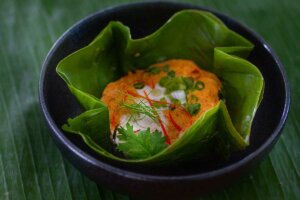
Haaw mohk steamed savory curried fish cakes (ห่อหมกปลา ; haaw mohk bplaa)
This recipe is for a coconut-based haaw mohk featuring clown featherback fish meat (เนื้อปลากราย) and slices of firm snakehead fish (ปลาช่อน). It is a classic recipe that follows the ancient haaw mohk tradition with a contemporary accent.
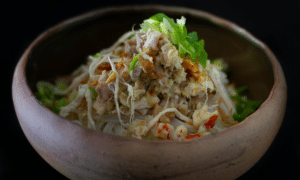
Naam Yaa Jeen - Fermented Rice Noodles with Chinese Sauce by HRH Prince Krom Luang Pitak Montri (น้ำยาจีน อย่างกรมหลวงพิทักษมนตรี)
Among the various curries that can be poured over khanom jeen fermented rice noodles, this broth, known as Chinese-style “naam yaa,” is unique in that it is a water-based curry that does not have chilies. As such, rather than the typical reddish-rust color of most coconut-based naam ya dishes from the Central Plains of the Kingdom, the sauce glows with a soft, light ivory hue, beautifully reflecting the dish’s natural sweet-savoriness, which is derived from slow-braising three proteins – chicken, pork and shrimp – along with a curry paste galvanized by smoke-dried fish and aromatic roots like galangal, fingerroot and sand ginger. The naam ya broth is served over a bed of fermented rice noodles and garnished with toppings such as delicate pulled chicken breast threads, golden-crispy fried shallots and garlic, and vivid green fresh coriander leaves and spring onion. All these elements add a visual grace and a hint of freshness to the robust broth – the signature dish of Prince Krom Luang Pitak Montri (กรมหลวงพิทักษ์มนตรี).
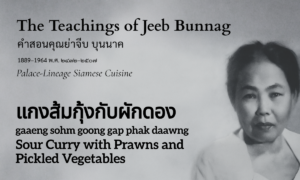
Sour Curry with Prawns and Pickled Vegetables (แกงส้มกุ้งกับผักดอง; gaaeng sohm goong gap phak daawng)
Gaaeng sohm goong, a tamarind-soured prawn curry with pickled vegetables, paste dissolved into boiling water. Jeeb Bunnag, 1933.

Fried Dried Fish with Watermelon (ผัดปลาแห้งแตงอุลิต ; phat bplaa haaeng dtaaeng oo lit)
Here is a summer dish that showcases the wisdom of creating complex flavors through simplicity. Using just lightly salted semi-dried snakehead fish, golden deep-fried shallots and a sweetening agent (either sugar or coconut), we create a condiment that partners perfectly with pieces of sweet juicy watermelon.
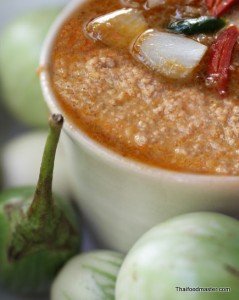
Gabpi Khuaa, An Ancient Dip from The Central Plains (Lohn Gabpi Khuaa; หลนกะปิคั่ว)
In the Thai language, lon (lohn; หลน) means to simmer. In this ancient style dip, minced pork and fermented shrimp paste, along with smoked-charred dry fish, chilies and other aromatics, are slowly simmered in rich coconut cream to create a deep, multi-layered - yet subtle and silky – dip; a dip which is then lightly seasoned with just palm sugar and fish sauce. The dip is served with an array of fresh and fried vegetables, tempura-like cakes, crispy small fishes or tiny transparent salt-water shrimp. For a dish with so many subtle flavors, there is surprisingly little fuss.
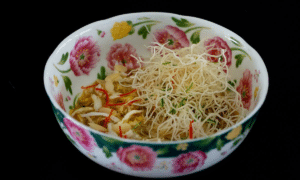
The Ambassador’s House Style Noodle Soup (หมี่น้ำบ้านราชทูต; Mee Naam Baan Raat Thuut)
This soup dish features crispy rice vermicelli noodles, a chicken broth that has a three-flavor profile infused with the aroma of bitter orange, and a plethora of other ingredients such as crispy fried tofu, chicken, pork, crab and pickled garlic.
In Thai, the phrase mee naam baan raat thuut refers to a rice vermicelli noodle soup in the style of the Ambassador’s house. The dish was not new when it appeared in the 1956 book Snacks, Tea Nibbles, Hors D’oeuvres and Drinking Food (ตำราอาหารว่าง - เครื่องน้ำชา และ เครื่องเคี้ยว หรือ กับแกล้ม) by Jeeb Bunnag (จีบ บุนนาค), as noodle dishes were often the preferred ingredient for light meals or snacks. In Grandparents Recipes: 100 Years Old Recipes (จานอร่อยจากปู่ย่า สูตรโบราณ 100 ปี), a volume printed in 2014 that highlights recipes from the kitchens of fifteen prominent families, a similar version of the dish is referred to as mee naam baan bpaak naai leert (หมี่น้ำบ้านปาร์คนายเลิศ) and is associated with Nai Lert.
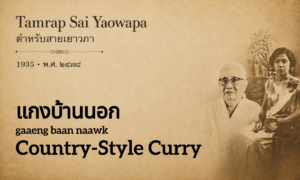
Country-Style Curry (แกงบ้านนอก; gaaeng baan naawk)
Gaaeng baan naawk, a country soup of prawns, pork belly and snakehead fish built on a pounded grilled-fish base. Tamrap Sai Yaowapa, 1935.
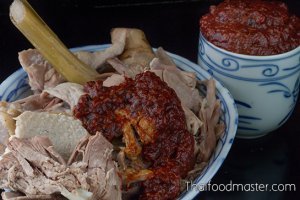
An Ancient Siamese Recipe for Tom Kha Pet (1890 AD) Duck Simmered in Light Coconut Cream and Young Galangal, and Served with Sour-Sweet Roasted Chili Jam
(Tom Kha Bpet; ต้มข่าเป็ด จิ้มน้ำพริกเผาแบบโบราณ) Tom kha is a well-known and much-loved Thai soup: a creamy, soothing coconut blend, a warm, silky broth in which chicken, mainly, is simmered with young galangal, mushrooms, and, at times, charred-grilled banana blossoms. In other versions, lemongrass and kaffir lime leaves are added, blurring the boundaries between tom kha and the coconut-based tom yam soup (tom yum kati; ต้มยำกะทิ). However, in the late 19th century, tom kha was not a soup at all: it was a dish of chicken or duck simmered in a light coconut broth with a generous amount of galangal. The coconut broth added sweetness to the meat, and the galangal helped to mellow the meat odor. It was then served with a basic roasted chili jam as a dipping relish seasoned along the salty-sour-sweet spectrum.
(Tom Kha Bpet; ต้มข่าเป็ด จิ้มน้ำพริกเผาแบบโบราณ) Tom kha is a well-known and much-loved Thai soup: a creamy, soothing coconut blend, a warm, silky broth in which chicken, mainly, is simmered with young galangal, mushrooms, and, at times, charred-grilled banana blossoms. In other versions, lemongrass and kaffir lime leaves are added, blurring the boundaries between tom kha and the coconut-based tom yam soup (tom yum kati; ต้มยำกะทิ). However, in the late 19th century, tom kha was not a soup at all: it was a dish of chicken or duck simmered in a light coconut broth with a generous amount of galangal. The coconut broth added sweetness to the meat, and the galangal helped to mellow the meat odor. It was then served with a basic roasted chili jam as a dipping relish seasoned along the salty-sour-sweet spectrum.
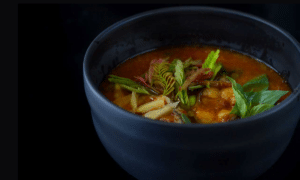
Gaaeng Jao Dtao – An Aristocratic Sour Curry of Catfish with Young Tamarind Leaves, Fingerroot and Lemon Basil, with a Rustic Flare (แกงเจ้าเต่า)
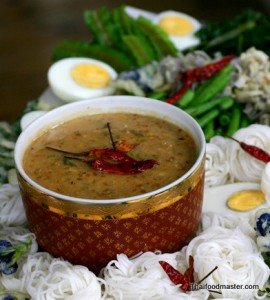
Rice Noodles with Shrimp and Aromatic Coconut Sauce
(khanohm jeen naam phrik goong; ขนมจีนน้ำพริกกุ้งสูตรมหาเด็ด) The sweet leading sour coconut cream based sauce, enriched and thickened with fragrant freshly roasted peanuts and golden beans are a wonderful coat to dress the sweet shrimp meat. The aromatics are being extracted in every possible way, by roasting, and frying, boiling and reducing, pounding and grounding. All the culinary methods are being fully employed to guarantee an absolute real first class dish. If you want to start some real Thai cooking going at your home, have the time and access to all the ingredients, than I really want you to try this dish. The building blocks of flavors work so well here and it will open you a great window to see the beginning of what is possible in Thai cuisine.
(khanohm jeen naam phrik goong; ขนมจีนน้ำพริกกุ้งสูตรมหาเด็ด) The sweet leading sour coconut cream based sauce, enriched and thickened with fragrant freshly roasted peanuts and golden beans are a wonderful coat to dress the sweet shrimp meat. The aromatics are being extracted in every possible way, by roasting, and frying, boiling and reducing, pounding and grounding. All the culinary methods are being fully employed to guarantee an absolute real first class dish. If you want to start some real Thai cooking going at your home, have the time and access to all the ingredients, than I really want you to try this dish. The building blocks of flavors work so well here and it will open you a great window to see the beginning of what is possible in Thai cuisine.
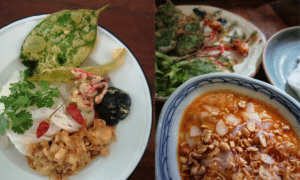
c1949 Fermented rice noodles with multi-sour aromatic chicken sauce by Lady Gleep Mahithaawn (ขนมจีนน้ำพริกไก่ อย่างท่านผู้หญิงกลีบ มหิธร พ.ศ. 2492; khanohm jeen naam phrik gai)
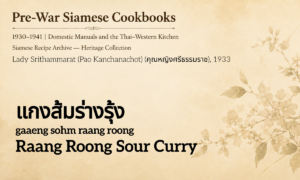
Raang Roong Sour Curry (แกงส้มร่างรุ้ง; gaaeng sohm raang roong)
Gaaeng sohm raang roong, sour curry with giant freshwater prawns on a pounded dried shrimp and shallot base fried in lard. Lady Srithammarat, 1933.
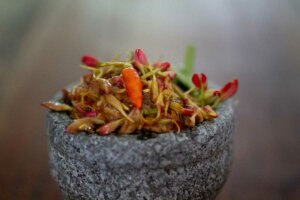
Tamarind flower chili relish inspired by Princess Jongjittanom Dissakul (น้ำพริกดอกมะขาม อย่าง หม่อมเจ้าหญิงจงจิตรถนอม ดิศกุล ; naam phrik daawk makhaam)

Kaffir lime chili relish and vegetables blanched in pork lard (น้ำพริกมะกรูดกับผักตีน้ำมัน ; naam phrik magruut gap phak dtee naam man)
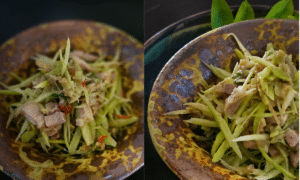
Pork Belly Coated with Salted-Fish and Green Mango Chili Relish (น้ำพริกมะม่วง หมูเคลือบเค็ม พ.ศ. 2476; naam phrik ma muaang mu khleuuap khem)
In this dish, slices of pork belly are coated with a sticky sauce; the sauce is reduced from braising a slice of grilled salted fish with coriander roots, garlic and white peppercorns (saam gluuhr). The dish is served with a sour-leading green mango chili relish that adds tartness with fiery accents to the saltiness of the pork. The salted fish gives the pork an initial fishy aroma that, although robust, gives way to a sense of home as it merges into the sourness and fruitiness of the mango chili relish. As an ingredient commonly used in the kitchens of rice-growing communities, salted fish signifies a comforting familiarity that conveys simplicity and warmth to the table. I like to pair the salted, fishy pork with seasoned rice dishes in which sour-leading relishes are mixed with rice along with other condiments.
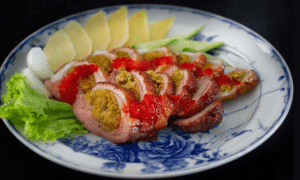
Roasted Stuffed Duck Breast with Chestnuts and Mackerel (เป็ดยัดไส้เกาลัดรมควัน; bpet yat sai gaolat rohm khwan), circa 1935
Smoked duck stuffed with a mackerel and chestnut filling is a dish that defies cultural boundaries. An exemplar of blended culinary influences, featuring inviting colors and an elegant presentation that serve as a prelude to the complex flavors and textures that await, the dish is an eloquent testament to the cooking style of Mrs. Samaknantapol (Jeep Bunnag, who went by the pen name “the granddaughter of Maae Khruaa Huaa Bpaa”). In the 1930s. Mrs. Jeep Bunnag published her first cookbook. Following in the footsteps of her revered grandmother-in-law, Lady Plean Passakornrawong, she continued to document the art of Siamese cuisine through the treasured books she published and was known for her ability to merge culinary traditions into beautiful and innovative dishes that represent an era.
The rich, dark color of the smoked duck’s skin is visually striking and appetizing, evoking a sense of indulgence and luxury. The smoky flavors that permeate the meat reflect our deep connection to primal cooking techniques, a fascinating juxtaposition to the refined presentation of the dish. When the smoked duck is sliced, its succulent pink meat is revealed, surrounding the golden filling of chestnuts and mackerel.
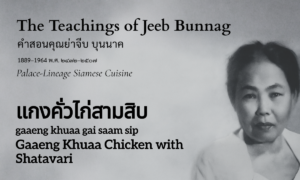
Gaaeng Khuaa Chicken with Shatavari (แกงคั่วไก่สามสิบ; gaaeng khuaa gai saam sip)
Gaaeng khuaa gai saam sip, chicken curry with young shatavari fruit; paste fried in rendered coconut oil. Jeeb Bunnag, 1933.
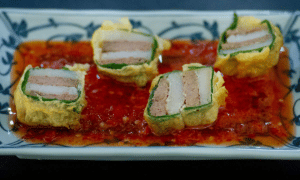
Pork liver and firm pork fat fried in batter (มันสลับตับสุกร; man salap dtap soogaawn)
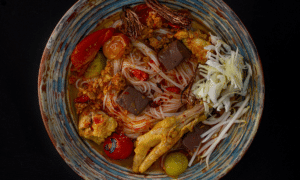
Khanohm Jeen Naam Ngiaao - Shan-Style Tomato Broth over Fermented Rice Noodles with Pork, Chicken Feet and Chicken Blood Cakes (ขนมจีนน้ำเงี้ยว)
A popular noodle dish originating from the Northern region of the Kingdom, khanohm jeen naam ngiaao (ขนมจีนน้ำเงี้ยว) is characterized by its light – yet profound – multi-layered broth. This hearty broth includes an assortment of proteins braised with the dried pollens of cotton tree flowers, and Northern Thai sour cherry tomatoes (มะเขือส้ม); the tomatoes infuse the broth with a subtle tartness that refreshes a full-bodied profile comprising a multitude of fermented ingredients.
The naam ngiaao broth is served over fermented rice noodles and features minced pork, and braised baby back pork ribs with their tender meat clinging to the bone. As well, there are succulent, slow-cooked whole chicken feet, and cubes of slightly bouncy, mauve-hued chicken blood cakes. Served alongside the soup are various toppings, which can include shredded cabbage, bean sprouts, chopped coriander leaves, and spring onions, while dark red chili oil and glossy, charred-fried dried bird’s eye chilies offer a fiery intensity dialed up to your preferred spiciness. In addition, I like to add wok-smoked sour cherry tomatoes and broom-like, crispy-fried dried cotton tree pollen for a surprising textural contrast.
Though the dish is often described as “Shan style”, the word ‘ngiao’ was a derogatory expression for the Shan people. As the disparaging – and outdated – label suggests, the recipe might reflect societal biases and prejudices; thus, at least from the culinary perspective, the ‘ngiao’ in the name of the dish may simply be a nod to the flavors or ingredients favored by The Shan, rather than a claim of authenticity – which could also explain why the dish is based on a Siamese curry paste.
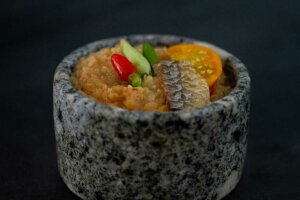
Salted Indian salmon chili relish (น้ำพริกปลากุเลาเค็ม; naam phrik bplaa goo lao khem)
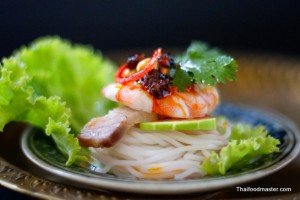
Fermented Rice Noodles, Shrimp and Pork Appetizer Dressed with Fried Chili Jam and Peanuts
(ขนมจีนญี่ปุ่น; Khanohm jeen Yee Poon) Khanohm jeen yee poon is an appetizer consisting of a small roll of fermented rice noodles laid on a green lettuce leaf and topped with a slice of cucumber and cooked shrimp and pork belly, dressed with sour-sweet and salty fried chili jam, sprinkled with roasted peanuts and decorated with coriander leaf and a thin julienne of fresh red chili pepper. A squeeze of fresh lime juice is applied just before eating the dish.
(ขนมจีนญี่ปุ่น; Khanohm jeen Yee Poon) Khanohm jeen yee poon is an appetizer consisting of a small roll of fermented rice noodles laid on a green lettuce leaf and topped with a slice of cucumber and cooked shrimp and pork belly, dressed with sour-sweet and salty fried chili jam, sprinkled with roasted peanuts and decorated with coriander leaf and a thin julienne of fresh red chili pepper. A squeeze of fresh lime juice is applied just before eating the dish.
1
2
3
4
5
6
7
8
9
10


Get Access – Join Thaifoodmaster Today
Practical and kitchen-tested recipes with a mix of theory, history, psychology, and Siamese culture tidbits.
-
Get access to everything right away. Unlock more than 50 Masterclasses, over 700 recipes and Articles
Access to Thaifoodmaster’s constantly growing library of prime professional classes, articles, recipes and videos on Siamese culinary topics, available nowhere else in English.
-
GET EXTRA - New Masterclasses and Daily Recipes
Gain access to NEW masterclasses as they become available. Access DAILY translations of heritage-recipes.
-
1-1 support from Hanuman
1-1 support from Hanuman to help you achieve your professional Thai culinary goals
-
Live Q&A Sessions
The opportunity to join a monthly live two-hour videoconference where I can answer your questions.
-
Great Value!
one year access for the price of 3 days in-person training.
You will get everything you need to:
-
To Get inspired
When you design or build a new menu for an event or restaurant or even prepare for dinner with friends.
-
To Satisfy your curiosity.
Finally !
-
To Master Your Craft
Master your Thai cooking skills and expand your repertoire.
It is truly brilliant with a revolutionary approach introducing aspects and concepts never broached by cookbooks.

Ian Westcott
Sourcing Wines for Discerning Private Clients
© 2008 – 2026 Thaifoodmaster


