
Celebrating the Art of Siamese Culinary Wisdom and Thai Cuisine
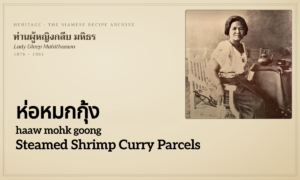
Steamed Shrimp Curry Parcels (ห่อหมกกุ้ง; haaw mohk goong)
Haaw mohk goong — giant freshwater prawns in fish haw mok paste, bound with one egg before wrapping and steaming. Lady Gleep, 1949.
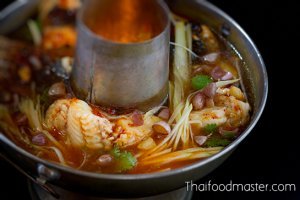
An Ancient Siamese Recipe for Tom Yum Soup (First Published in 1890). Sour Spicy Tom Yum Soup with Snakehead Fish, Roasted Chili Jam and Green Mango (Dtohm Yam Bplaa Chaawn, ต้มยำปลาช่อนแบบโบราณ อย่างหม่อมซ่มจีน ราชานุประพันธุ์ ร.ศ.๑๐๙)
Tom yum soup from the late 19th-century Siam to present days. Including a step-by-step recreation of tom yum soup with snakehead fish (dtohm yam bplaa chaawn, ตัมยำปลาช่อน) as recorded by Maawm Sohm Jeen (Raa Chaa Noopraphan) (หม่อมซ่มจีน, ราชานุประพันธุ์) in her book “Tam Raa Gap Khao” (ตำรากับเข้า), published in 1890 (2433 BE, 109RE).
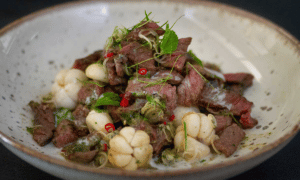
Grilled beef and mangosteen (or grape) salad with mint dressing, by Princess Jongjittanom Dissakul (ยำเนื้อย่างกับมังคุดหรือองุ่น; yam neuua yaang gap mangkhoot reuu angoon)
This grilled beef salad with luscious mangosteen (or grapes) is seasoned with a crisp, cooling dressing of fermented shrimp paste and mint. The mangosteen’s tropical character – a flavor redolent of many other fruits – dominates its fruity essence and is a perfect complement to both the grilled meat and the lingering, sour-salty-sweet, minty dressing. Furthermore, citrusy notes of thinly sliced lemongrass and kaffir lime leaves, coupled with richness of thickened coconut cream, unite the caramelized, meaty elements with the dish’s fruity spectrum.
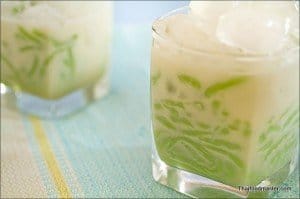
Lod Chong Recipe
Pandan Flavored Rice Flour Droplets in Sweetened Coconut Cream Syrup
(khanohm laawt chaawng naam gathi)
สูตรทำขนมลอดช่องน้ำกะทิ หรือ นกปล่อย Thai desserts are usually made from common ingredients and therefore very popular. However, it was only during the 17th century that desserts and sweets actually became part of everyday meals. In the old days, they were served only at auspicious occasions and ceremonies. During wedding ceremonies, for example, four kinds of sweets are usually served, collectively known as "the four plates dessert" (ขนมสี่ถ้วย ; khanohm see thuay). The ancient Thai expression "To eat four cups of dessert" (กินสี่ถ้วย ; gin see thuay ) used in the central region of the kingdom as an idiom referring to a wedding banquet.
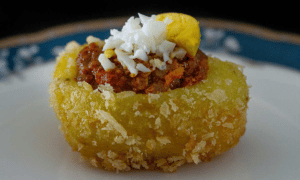
c1935 Stuffed Potatoes with Bitter Orange Fragrant Beef Gaaeng Garee (แกงกะหรี่บรรจุมัน ม.ล. เติบ กำภู ; gaaeng garee ban joo man)
In Anglo-Indian cuisine, potatoes were used liberally in the curries; alongside the favorite sour chutneys, curries were also accompanied by fried, baked, boiled or mashed potatoes. Although the potato gradually found its way into many iconic Indian dishes, and even into Siamese cuisine, the tuber never replaced the rice of South Asia, despite the intentions of both the British and East Indian company officials.
In the 1935 book Sai Yaowapa (ตำรับสายเยาวภา), Princess Yaovabha Bongsanid (พระเจ้าบรมวงศ์เธอ พระองค์เจ้าเยาวภาพงศ์สนิท) reflects the Anglo-Indian style gaaeng garee in her composition of bitter orange-fragrant beef gaaeng garee, which she serves in individual bowls made of fried potatoes, per a recipe recorded by M.L. Terb Gamphu (ม.ล. เติบ กำภู) and M.R. Tuang Sanitwong (ม.ร.ว.เตื้อง สนิทวงศ์).
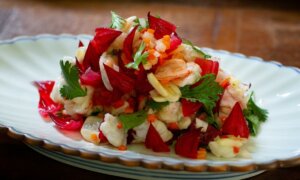
c1890 Fresh roselle salad with acid-cured shrimp (ยำผลกระเจี๊ยบ อย่างท่านผู้หญิงเปลี่ยน ภาสกรณ์วงศ์ ร.ศ.๑๐๘ ; yam phohn gra jiiap;)
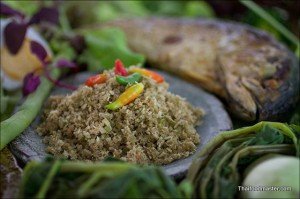
Old Fashioned Lemongrass and Chili Relish (naam phrik dtakhrai ; สูตรทำน้ำพริกตะไคร้)
Lemongrass chili relish - The citrus aromatics of the lemongrass are preserved almost intact and go very well with the peppery aroma of pungent fresh chilies. It is served with a range of blanched vegetables, steamed or fried fish, sweet pork and of course, a bowl of rice - a balanced meal, full of nutrients and health.
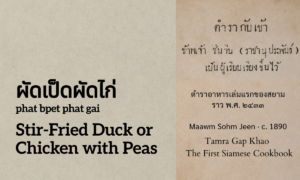
Stir-Fried Duck or Chicken with Peas (ผัดเป็ดผัดไก่; phat bpet phat gai)
Phat bpet phat gai, duck or chicken stir-fried over caramelized soybean paste and lard, peas kept crisp. Maawm Sohm Jeen, Tamra Gap Khao, 1890.
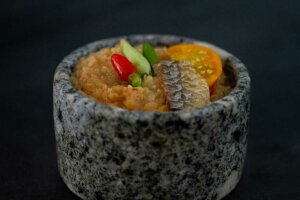
Salted Indian salmon chili relish (น้ำพริกปลากุเลาเค็ม; naam phrik bplaa goo lao khem)
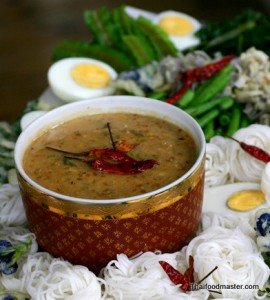
Rice Noodles with Shrimp and Aromatic Coconut Sauce
(khanohm jeen naam phrik goong; ขนมจีนน้ำพริกกุ้งสูตรมหาเด็ด) The sweet leading sour coconut cream based sauce, enriched and thickened with fragrant freshly roasted peanuts and golden beans are a wonderful coat to dress the sweet shrimp meat. The aromatics are being extracted in every possible way, by roasting, and frying, boiling and reducing, pounding and grounding. All the culinary methods are being fully employed to guarantee an absolute real first class dish. If you want to start some real Thai cooking going at your home, have the time and access to all the ingredients, than I really want you to try this dish. The building blocks of flavors work so well here and it will open you a great window to see the beginning of what is possible in Thai cuisine.
(khanohm jeen naam phrik goong; ขนมจีนน้ำพริกกุ้งสูตรมหาเด็ด) The sweet leading sour coconut cream based sauce, enriched and thickened with fragrant freshly roasted peanuts and golden beans are a wonderful coat to dress the sweet shrimp meat. The aromatics are being extracted in every possible way, by roasting, and frying, boiling and reducing, pounding and grounding. All the culinary methods are being fully employed to guarantee an absolute real first class dish. If you want to start some real Thai cooking going at your home, have the time and access to all the ingredients, than I really want you to try this dish. The building blocks of flavors work so well here and it will open you a great window to see the beginning of what is possible in Thai cuisine.
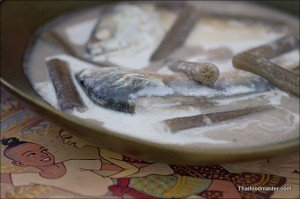
Thai Coconut Curry of Steamed Mackerels and Lotus Stems
(gaaeng gathi saai buaa bplaa thuu neung ;
แกงกะทิสายบัวปลาทูนึ่ง) This old-fashioned Thai coconut curry dish is a simple expression made with ingredients commonly available to Thais, it features steamed mackerels - the fish that Thai people probably love the best and the stems of the lotus flowers - one of Buddhism's most recognized motifs. The fish together with peeled lotus stems are boiled in coconut milk, to which a simple yet very aromatic curry paste, made only of white pepper corns, shallots and fermented shrimp paste is added.
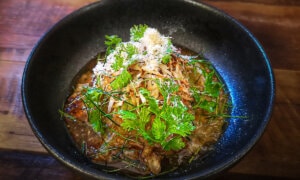
c1889 Faux Rhino Skin Salad (ยำโขนงเนื้อเทียม หรือ ยำหนังหมู ; yam kho:h nohng neuua thiiam reuu yam nang muu)
This old-fashioned Siamese pork skin salad is adapted from an 1889 rhino skin salad recipe. It features thin glossy slices of cooked pork skin, simmered in rich coconut cream, and mixed with dried shrimp, roasted coconut, sour fruits; it is seasoned with chili jam-based dressing.
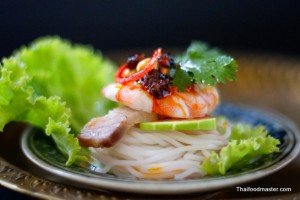
Fermented Rice Noodles, Shrimp and Pork Appetizer Dressed with Fried Chili Jam and Peanuts
(ขนมจีนญี่ปุ่น; Khanohm jeen Yee Poon) Khanohm jeen yee poon is an appetizer consisting of a small roll of fermented rice noodles laid on a green lettuce leaf and topped with a slice of cucumber and cooked shrimp and pork belly, dressed with sour-sweet and salty fried chili jam, sprinkled with roasted peanuts and decorated with coriander leaf and a thin julienne of fresh red chili pepper. A squeeze of fresh lime juice is applied just before eating the dish.
(ขนมจีนญี่ปุ่น; Khanohm jeen Yee Poon) Khanohm jeen yee poon is an appetizer consisting of a small roll of fermented rice noodles laid on a green lettuce leaf and topped with a slice of cucumber and cooked shrimp and pork belly, dressed with sour-sweet and salty fried chili jam, sprinkled with roasted peanuts and decorated with coriander leaf and a thin julienne of fresh red chili pepper. A squeeze of fresh lime juice is applied just before eating the dish.
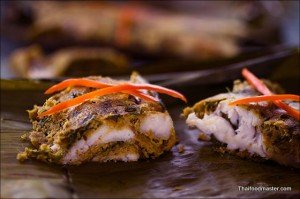
Rustic Grilled Thai Fish Curry in Banana Leaves (Snakehead Fish)
(ngohp bplaa chaawn ; งบปลาช่อน) I love this straightforward grilled Thai fish curry in banana leaves because it packs a punch with its aromatic curry mixture that embrace the white and tender fish meat with great flavors. It is a great addition for any Thai meal and very easy to prepare. Snakehead fish, traditionally caught from irrigation ditches or flooded rice fields, benefits from the aromatic curry paste because it helps to eliminate unpleasant odors which wild caught fishes might acquire from their muddy habitat. Nowadays though, it is commercially farmed and one can safely cook it in various ways with no risk of those undesirable odors.
(ngohp bplaa chaawn ; งบปลาช่อน) I love this straightforward grilled Thai fish curry in banana leaves because it packs a punch with its aromatic curry mixture that embrace the white and tender fish meat with great flavors. It is a great addition for any Thai meal and very easy to prepare. Snakehead fish, traditionally caught from irrigation ditches or flooded rice fields, benefits from the aromatic curry paste because it helps to eliminate unpleasant odors which wild caught fishes might acquire from their muddy habitat. Nowadays though, it is commercially farmed and one can safely cook it in various ways with no risk of those undesirable odors.
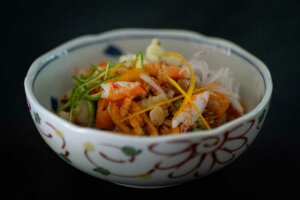
Jungle chili relish by Princess Jongjittanom Dissakul (น้ำพริกป่า อย่าง หม่อมเจ้าหญิงจงจิตรถนอม ดิศกุล ; naam phrik bpaa)
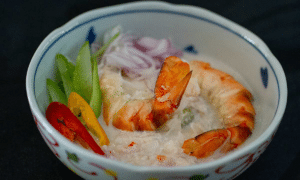
Giant river prawn lohn (กุ้งหลวงหลน ; goong luaang lohn)
This lohn recipe is made using fresh river prawns. The recipe was altered by Lady Plean Passakornrawong (ท่านผู้หญิงเปลี่ยน ภาสกรวงศ์) to provide an alternative to lohn recipes that used pla ra-like fermented shrimp products called กุ้งเจ่า (goong jao) and กุ้งจ่อม (goong jaawm).
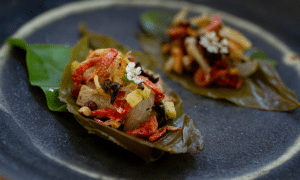
Miang Sot (เมี่ยงซด) - Miiang Soht, circa 1928
The word ‘miang’ is often used to designate Thai hors d’oeuvre-like snacks consisting of various ingredients wrapped in leaves. To chew on a miang parcel delivers a delightful melee of flavors and textures, each triumphing over the other in a continuous transformation, creating a captivating and ever-evolving taste experience throughout the bite.
Miang sot is a fermented leaves dish that appeared in a cookbook published in honor of Thao Suphatigaanapakdee (also known as Prik Sirisamphan) (ท้าวสุภัติการภักดี (ปริก ศิริสัมพันธ์)), in 1928. Titled Gap Khaao Thai (กับข้าวไทย), the book features a collection of recipes that were once prepared and served to King Chulalongkorn Rama V. The author, Sohmboon Sirisamphan (เถ้าแก่ สมบุญ ศิริสัมพันธ์) a respected elder (known as thao gaae (เถ้าแก่) in Thai), was a distinguished businessman of Chinese origins.
The dish is composed of fermented tea leaves; it is perhaps the closest tea leaves wrap to the ‘miang’ style introduced to the Siamese court by Princess Dara Rasami in the late 1800s. The dish gives us a glimpse of flavor of what her household, which participated in the informal marketplace events within the palace, might have to offer.
The popularity of miang in Siamese cuisine is tied to the history of two kingdoms, Siam and Lanna, and the life of one princess, Princess Dara Rasami. The daughter of King Inthawichayanon of Chiang Mai and the fifth consort of King Chulalongkorn, the princess was selected at the age of thirteen, in 1886, to serve as a consort to King Chulalongkorn in the Inner Palace; the decision was shaped by both political strategy and personal transition. At the time, Siam was consolidating its power and extending its influence over neighboring regions, including Lanna. As the ruler of Chiang Mai, Princess Dara Rasami’s father, Intawichayanon, viewed the move as a strategic alliance. In return, King Chulalongkorn presented him with the medal of the Order of Chula Chom Klao, which is the Siamese equivalent of a knighthood.
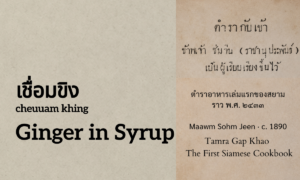
Ginger in Syrup (เชื่อมขิง; cheuuam khing)
Cheuuam khing: young ginger pricked with a needle, steeped six nights in brine and alum, scalded three times before sugar. Tamra Gap Khao, 1890.
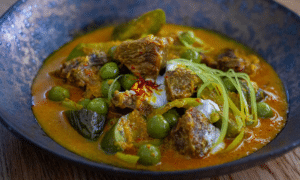
c1941 Magical beef curry (แกงเนื้อวิเศษ พ.ศ. 2484 ; gaaeng neuua wisaeht)
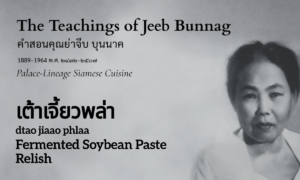
Fermented Soybean Paste Dipping Relish (เต้าเจี้ยวพล่า; dtao jiaao phlaa)
Dtao jiaao phlaa, fermented soybean paste relish bruised with lemongrass, kaffir lime, and tamarind. From Jeeb Bunnag, 1933.
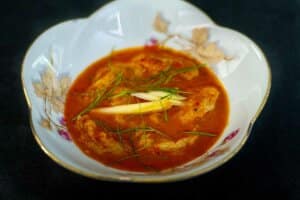
c1933 An Auspicious fish ball curry with two basils (แกงเผ็ดปลาเล็กปลาน้อย; gaaeng phet bplaa lek bplaa naawy)
Typically, in Central-style curries, different types of basil are not used together. In higher cuisine, it is an unstated – but understood – practice to avoid blending the definitive scents of various basils. A curry’s final herbal identity is intended to remain definitively with its basil: the citrus notes of holy basil; the spicy-woody and pungent flavor of tree basil; the tart fragrance of lemon basil; or the cooling anise sensation of Thai basil.
1
2
3
4
5
6
7
8
9
10


Get Access – Join Thaifoodmaster Today
Practical and kitchen-tested recipes with a mix of theory, history, psychology, and Siamese culture tidbits.
-
Get access to everything right away. Unlock more than 50 Masterclasses, over 700 recipes and Articles
Access to Thaifoodmaster’s constantly growing library of prime professional classes, articles, recipes and videos on Siamese culinary topics, available nowhere else in English.
-
GET EXTRA - New Masterclasses and Daily Recipes
Gain access to NEW masterclasses as they become available. Access DAILY translations of heritage-recipes.
-
1-1 support from Hanuman
1-1 support from Hanuman to help you achieve your professional Thai culinary goals
-
Live Q&A Sessions
The opportunity to join a monthly live two-hour videoconference where I can answer your questions.
-
Great Value!
one year access for the price of 3 days in-person training.
You will get everything you need to:
-
To Get inspired
When you design or build a new menu for an event or restaurant or even prepare for dinner with friends.
-
To Satisfy your curiosity.
Finally !
-
To Master Your Craft
Master your Thai cooking skills and expand your repertoire.
It is truly brilliant with a revolutionary approach introducing aspects and concepts never broached by cookbooks.

Ian Westcott
Sourcing Wines for Discerning Private Clients
© 2008 – 2026 Thaifoodmaster


