
Celebrating the Art of Siamese Culinary Wisdom and Thai Cuisine
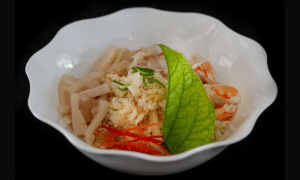
Phra Suli - Three-Flavor Seasoned Rice with Shrimp, Firm Pork Fat and Pork Skin (ข้าวพระศุลี; Khaao Phra Soolee)
Mrs. Paan Nanthaathiwat (คุณปาน นันทาถิวัฒน์) (1893-1955) was known for her kitchen skills. She often cooked for friends and family, spending time in the kitchen with her best friend, Mrs. Yim Pichaiyat Bunnag (คุณยิ้ม พิชัยญาติ บุนนาค (1892-1976). Thus, it was not a surprise when in 1953 she authored a recipe book as part of her merit offering on her 60th birthday. Sadly, Mrs. Paan passed away a year later and the publication, titled Hoong Khaao Dtohm Gaaeng (หุ้งข้าวต้มแกง), was later printed as a memorial book for her funeral. In 1977, the volume was reprinted for the funeral of her best friend, Mrs. Yim.
It is unclear why Mrs. Paan named this citrusy, sour, and salty seasoned rice dish after Lord Shiva, calling it “Phra Suli (พระศุลี ; phra soolee)”. Yet I believe the name of the dish is meant to evoke the elegance and delicacy of the deity rather than to reference cultural authenticity or tradition.
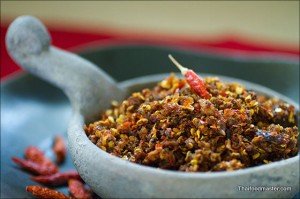
Devil's Chili Relish of Smoked Dry Wallago Catfish
(naam phrik narohk bplaa khang graawp rohm khwan ; น้ำพริกนรกปลาคังกรอบรมควัน) I love my food very spicy and I'm very generous with all things chili. People like me who also enjoy spicy food, in part, love it because It's a truly a food & mood issue. Chilies are known to boost endorphin levels in the body and that makes us feel better. Maybe that's the reason why marketers get my immediate attention simply with red packaging and the naughty smile of the devil holding to the brand name logo of their products.
(naam phrik narohk bplaa khang graawp rohm khwan ; น้ำพริกนรกปลาคังกรอบรมควัน) I love my food very spicy and I'm very generous with all things chili. People like me who also enjoy spicy food, in part, love it because It's a truly a food & mood issue. Chilies are known to boost endorphin levels in the body and that makes us feel better. Maybe that's the reason why marketers get my immediate attention simply with red packaging and the naughty smile of the devil holding to the brand name logo of their products.
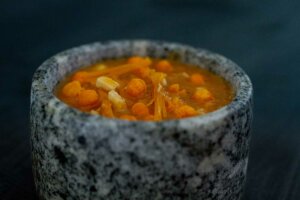
Chili relish of salted duck egg yolks (น้ำพริกไข่เค็ม ; naam phrik khai khem)
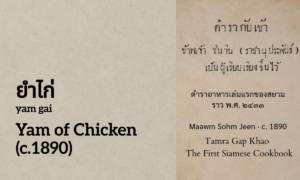
Yam of Chicken (ยำไก่; yam gai)
Yam gai: chicken simmered in coconut milk until dry, then dressed with mint, kaffir lime and green mango. Maawm Sohm Jeen, Tamra Gap Khao, 1890.
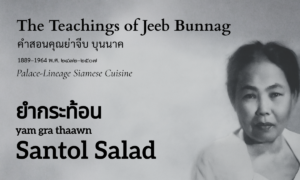
Santol Salad (ยำกระท้อน; yam gra thaawn)
Yam gra thaawn, tart santol salad with pork, shrimp, and crushed peanuts. Fruit is salt-soaked and air-dried to reduce bitterness. Jeeb Bunnag, 1933.
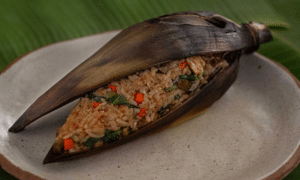
c1935 Char-grilled banana blossom stuffed and baked with tamarind relish fried rice (ข้าวปลี ตำรับสายเยาวภา พ.ศ. 2478 ; khaao bplee)
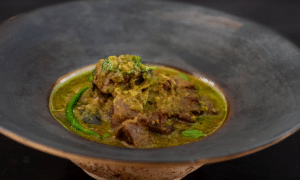
Perfumed Muslim-style Curry of Fresh Chilies with Beef (แกงเขียวหวานเนื้อทรงเครื่อง; Gaaeng Khiaao Waan Neuua Sohng Khreuuang)
The Indian and Muslim cuisines present distinct approaches to using dried spices in curries, both of which influence Siamese cuisine in different ways. Indian-inspired Siamese curries spotlight chilies for their vibrant color, fragrance, flavor and heat, while spices like cumin and coriander play a supporting role. The spices complement and temper the chilies’ intensity, creating a rounded, multi-layered flavor profile; nonetheless, the chilies remain the star ingredient, gently complemented by the spices.
Conversely, Muslim-influenced curries, such as massaman curry, prioritize spices over chilies. Spices like cardamom, nutmeg and mace take center stage, while the chilies provide subtle background heat rather than being the primary flavor. In these curries, the focus is on the rich, warm and complex aromas created by the blend of spices, which is a defining characteristic of many Muslim dishes.
Moreover, Siamese cuisine favors using rehydrated dried chilies in curries for their depth; this depth is highly appreciated, along with the complexity, and comparatively milder heat of the rehydrated dried chilies. As well, the harsh grassy notes of fresh chilies are not favored; they’re referred to in Thai as “green rank” or “men khiaao (เหม็นเขียว)”. Muslim curries often use fresh green chilies, tempering their vibrant, grassy taste with dry spices and thus shifting the flavor from bright and fresh to more subdued and earthy tones, resulting in a dish that is perceived to be layered, despite the burst of fresh chilies.
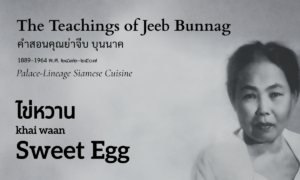
Sweet Egg (ไข่หวาน; khai waan)
Sweet Egg (khai waan): candied salted duck egg yolk encased in floral agar jelly, molded inside an eggshell. Jeeb Bunnag, 1933.
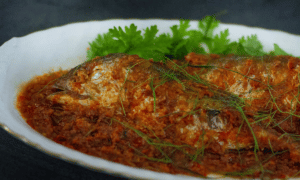
c1908 Chuu Chee with Mackerel (ฉู่ฉี่ปลาทู ; chuu chee bplaa thuu)
A salty-sweet, water-based chuu chee dish that features a thick, almost dry sauce. The deep burnt-red and shiny chuu chee sauce clings to the skin of the crispy mackerel, gold-colored from frying the fish in pork lard. The aromatic profile of the chuu chee complements the mackerel's rich, full-bodied flavor. Although chuu chee is usually made using freshwater fish, saltwater fish, especially mackerel, is featured in chuu chee dishes prepared along the coasts of the Central Plains. This is especially common during the rainy season, when the mackerel is plentiful and of excellent quality.
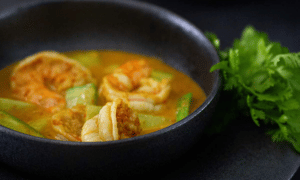
c1889 Garee Curry with Shrimp and Cucumber (แกงกะหรี่กุ้งกับแตงกวา; gaaeng garee goong gap dtaaeng gwaa)
In this old-fashioned coconut-based curry, orangey shrimp and bright green cucumber shine in a golden haze of curry powder, caressed by the light breeze of Indian flare. Cucumbers are used in traditional Ayurvedic medicine as a coolant, to offset internal heat and to resolve fevers. Thus, like a refreshing oasis in the middle of a shimmering desert, the cucumber counterbalances the chili’s internal heat energy and mellows the fragrant, earthy undertones of the spice blend in the dish.
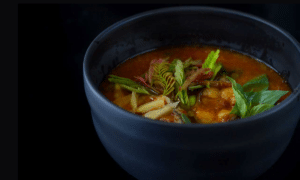
Gaaeng Jao Dtao – An Aristocratic Sour Curry of Catfish with Young Tamarind Leaves, Fingerroot and Lemon Basil, with a Rustic Flare (แกงเจ้าเต่า)
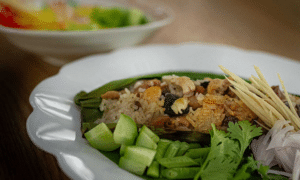
Grilled banana leaf parcels filled with butter-fried rice with chicken, chicken offal and dried spices, served with a sour-sweet coconut-base vegetable relish (ข้าวงบไก่ อาจาดอังวะ ; khaao ngohp gai aajaat angwa)
The khaao ngohp gai (ข้าวงบไก่) recipe by Mom Chao Sai Ladawan (Princess Saisawali Phirom) evokes the flavor and aesthetics of Muslim-style cooking. First, cooked rice, chicken, and chicken offal are fried with butter and perfumed with whole spices. The buttery fried rice is wrapped in banana leaves and then grilled, forming a crispy outer crust of spiced-infused rice grains.
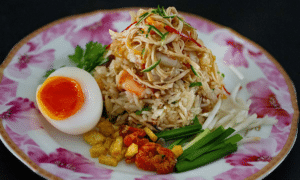
Khao Mee Seasoned Rice (ข้าวหมี่อย่างคลุก; khaao mee yaang khlook)
This article explores two methods of preparing Mee Fried Rice - the traditional Khao Mee Fried Rice and the lighter, seasoned rice alternative known as khaao mee yaang khlook. Discover the flavor chemistry at play and choose your preferred method for a delicious meal.
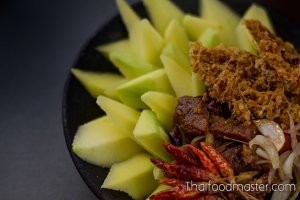
Yam Sohm Choon Mango Salad with Sweet Pork Condiment, Fermented Shrimp Paste, Shallots, and Crispy Deep-Fried Fluffy Fish (ยำส้มฉุน ; yam sohm choon)
Yam sohm choon is a sour green mango salad served with grilled fermented shrimp paste; roughly chopped shallots; sweet pork condiment, deep-fried fluffy grilled catfish and seasoned with fish sauce, palm sugar and lime juice and topped with deep-fried dry chilies cut into small pieces.
If you follow Thai movies and TV dramas, you probably remember Sohm Choon, the adorable boy ghost character from the period romance movie Reun Mayura (1997), which was a love story between a beautiful woman and a handsome man living in different periods of time.
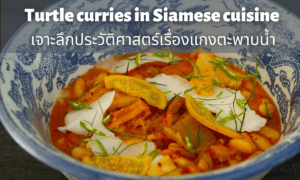
The complete story of turtle curries in Siamese cuisine (เจาะลึกประวัติศาสตร์เรื่องแกงตะพาบน้ำ)
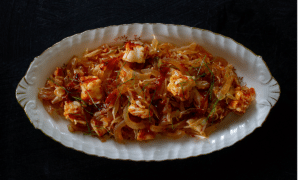
Angel Visiting the Chamber: A Salad of Pomelo, Pork Skin and Shrimp with Chili Jam Dressing, circa 1920s (ยำนางฟ้าเยี่ยมห้อง; yam naang faa yiiam haawng)
The name of this dish, yam naang faa yiiam haawng (ยำนางฟ้าเยี่ยมห้อง), translates to ‘Angel Visiting the Chamber Salad’ in English. This celestial salad, which originated in the 1920s, is a playful chili jam-based salad that combines the textural gradients of pomelo, with its citrusy bursts, chewy cooked pork skin, and the sweet and slightly resilient cooked shrimp meat. The pomelo’s citrusy notes are further amplified with thinly sliced lemongrass and kaffir lime leaves sliced into hair-thin juliennes. I like to adjust the sourness and sweetness of the chili jam-based dressing based on the acidity of the pomelo. As our aim is to achieve a final sour-salty and sweet flavor profile, a sour-salty dressing is suggested if the pomelo is sweet, while a salty-sweet dressing pairs better with a sour pomelo.
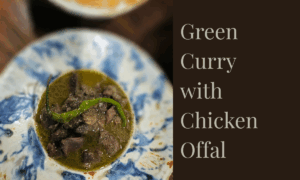
Yogurt-Based Ancient Green Curry with Chicken Offal (แกงเขียว; gaaeng khiaao)
Mrs. Yim Pichaiyat Bunnag (คุณยิ้ม พิชัยญาติ บุนนาค)'s 1920s aristocratic green curry reveals a forgotten chapter in Thai culinary history. This Muslim-style recipe uses ghee and yogurt instead of coconut milk, featuring chicken offal—liver, gizzard, and heart—each contributing distinct textures and concentrated flavors. Roasted spices like cinnamon, clove, and cardamom create warming aromatics, while fresh chilies provide signature heat. The dish documents how Bangkok's noble kitchens adapted Islamic cooking techniques before democratization, preserving methods that would shape modern Thai cuisine.
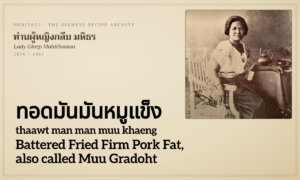
Battered Fried Firm Pork Fat, also called Muu Gradoht (ทอดมันมันหมูแข็ง; thaawt man man muu khaeng)
Muu gradoht — firm pork fat boiled, sliced, and fried in a rice-flour coconut batter tinted with red limestone solution. Lady Gleep Mahithaawn, 1949.
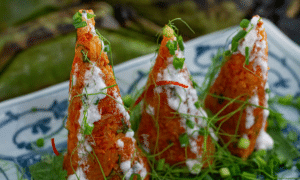
Grilled banana leaf parcels filled with curried rice, shrimp meat grated coconut, and herbs. (ข้าวงบกุ้ง อย่างพระวิมาดาเธอ หม่อมเจ้าสาย ลดาวัลย์ ; khaao ngohp goong)
The khaao ngohp goong (ข้าวงบกุ้ง) of Mom Chao Sai Ladawan (Princess Saisawali Phirom) is a dish of seasoned curried rice mixed with shrimp meat, shrimp tomalley, grated coconut, and herbs. The rice mix is then wrapped in banana leaves and grilled. Unwrapping the parcel reveals an intense orange- and russet-brown colored rice cake that is rich, savory and naturally sweet. It is served with a drizzle of thickened coconut cream and herbs.
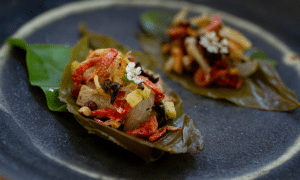
Miang Sot (เมี่ยงซด) - Miiang Soht, circa 1928
The word ‘miang’ is often used to designate Thai hors d’oeuvre-like snacks consisting of various ingredients wrapped in leaves. To chew on a miang parcel delivers a delightful melee of flavors and textures, each triumphing over the other in a continuous transformation, creating a captivating and ever-evolving taste experience throughout the bite.
Miang sot is a fermented leaves dish that appeared in a cookbook published in honor of Thao Suphatigaanapakdee (also known as Prik Sirisamphan) (ท้าวสุภัติการภักดี (ปริก ศิริสัมพันธ์)), in 1928. Titled Gap Khaao Thai (กับข้าวไทย), the book features a collection of recipes that were once prepared and served to King Chulalongkorn Rama V. The author, Sohmboon Sirisamphan (เถ้าแก่ สมบุญ ศิริสัมพันธ์) a respected elder (known as thao gaae (เถ้าแก่) in Thai), was a distinguished businessman of Chinese origins.
The dish is composed of fermented tea leaves; it is perhaps the closest tea leaves wrap to the ‘miang’ style introduced to the Siamese court by Princess Dara Rasami in the late 1800s. The dish gives us a glimpse of flavor of what her household, which participated in the informal marketplace events within the palace, might have to offer.
The popularity of miang in Siamese cuisine is tied to the history of two kingdoms, Siam and Lanna, and the life of one princess, Princess Dara Rasami. The daughter of King Inthawichayanon of Chiang Mai and the fifth consort of King Chulalongkorn, the princess was selected at the age of thirteen, in 1886, to serve as a consort to King Chulalongkorn in the Inner Palace; the decision was shaped by both political strategy and personal transition. At the time, Siam was consolidating its power and extending its influence over neighboring regions, including Lanna. As the ruler of Chiang Mai, Princess Dara Rasami’s father, Intawichayanon, viewed the move as a strategic alliance. In return, King Chulalongkorn presented him with the medal of the Order of Chula Chom Klao, which is the Siamese equivalent of a knighthood.
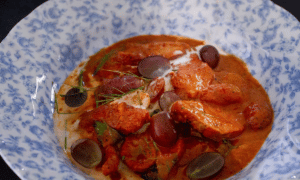
c1941 Roasted Duck Curry with Grapes (Gaaeng Ho) (แกงเป็ดเหาะใส่องุ่น อย่างคุณถนอม ปาลบุตร พ.ศ. 2484; gaaeng bpet haw sai angoon)
Grapes have long been associated with prosperity, fertility and abundance across various cultures and historical periods due to the fruit’s large clusters and bountiful growth. In ancient China, grapes were considered a symbol of wealth and nobility, and often deployed as a status symbol among the elite. In Greek mythology, Dionysus, the god of wine and fertility, was often depicted holding a bunch of grapes, further emphasizing the connection between grapes and abundance. This association is also likely rooted in the fact that grapes were a valuable crop in antiquity – used to produce wine and other fermented products, and an important source of food and nutrition. In Indian Ayurvedic texts, grapes are referred to as vineaksha and utilized in treating a variety of ailments, including fever and indigestion.
From the Siamese perspective, the incorporation of fruits in culinary preparations was viewed as a luxurious indulgence, as many fruits commonly available today were once difficult to obtain. Thus the pairing of an extravagant ingredient – such as fruit – with an equally opulent and exclusive delicacy like roasted duck resulted in a dish fit for royalty.
1
2
3
4
5
6
7
8
9
10


Get Access – Join Thaifoodmaster Today
Practical and kitchen-tested recipes with a mix of theory, history, psychology, and Siamese culture tidbits.
-
Get access to everything right away. Unlock more than 50 Masterclasses, over 700 recipes and Articles
Access to Thaifoodmaster’s constantly growing library of prime professional classes, articles, recipes and videos on Siamese culinary topics, available nowhere else in English.
-
GET EXTRA - New Masterclasses and Daily Recipes
Gain access to NEW masterclasses as they become available. Access DAILY translations of heritage-recipes.
-
1-1 support from Hanuman
1-1 support from Hanuman to help you achieve your professional Thai culinary goals
-
Live Q&A Sessions
The opportunity to join a monthly live two-hour videoconference where I can answer your questions.
-
Great Value!
one year access for the price of 3 days in-person training.
You will get everything you need to:
-
To Get inspired
When you design or build a new menu for an event or restaurant or even prepare for dinner with friends.
-
To Satisfy your curiosity.
Finally !
-
To Master Your Craft
Master your Thai cooking skills and expand your repertoire.
It is truly brilliant with a revolutionary approach introducing aspects and concepts never broached by cookbooks.

Ian Westcott
Sourcing Wines for Discerning Private Clients
© 2008 – 2026 Thaifoodmaster


