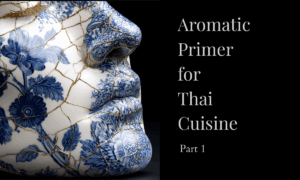

Celebrating the Art of Siamese Culinary Wisdom and Thai Cuisine
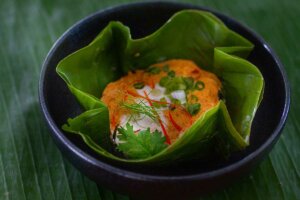
Haaw mohk steamed savory curried fish cakes (ห่อหมกปลา ; haaw mohk bplaa)
This recipe is for a coconut-based haaw mohk featuring clown featherback fish meat (เนื้อปลากราย) and slices of firm snakehead fish (ปลาช่อน). It is a classic recipe that follows the ancient haaw mohk tradition with a contemporary accent.
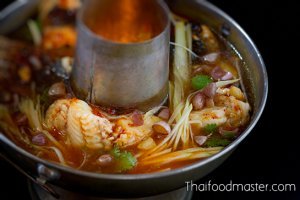
An Ancient Siamese Recipe for Tom Yum Soup (First Published in 1890). Sour Spicy Tom Yum Soup with Snakehead Fish, Roasted Chili Jam and Green Mango (Dtohm Yam Bplaa Chaawn, ต้มยำปลาช่อนแบบโบราณ อย่างหม่อมซ่มจีน ราชานุประพันธุ์ ร.ศ.๑๐๙)
Tom yum soup from the late 19th-century Siam to present days. Including a step-by-step recreation of tom yum soup with snakehead fish (dtohm yam bplaa chaawn, ตัมยำปลาช่อน) as recorded by Maawm Sohm Jeen (Raa Chaa Noopraphan) (หม่อมซ่มจีน, ราชานุประพันธุ์) in her book “Tam Raa Gap Khao” (ตำรากับเข้า), published in 1890 (2433 BE, 109RE).
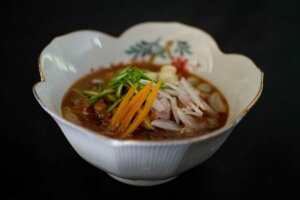
Kapi pla, an old-fashioned fermented shrimp paste relish (กะปิพล่า ; gabpi phlaa)
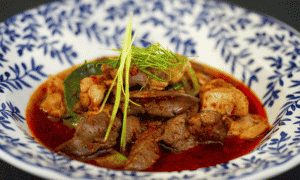
c1933 Water-based spicy curry of fatty chicken and seven spices (แกงเผ็ดไก่น้ำมัน พ.ศ. 2476; gaaeng phet gai naam man)
This water-based, spicy chicken curry is made with corn-yellow rendered chicken fat instead of coconut cream. Dark reddish-brown in color, this full-bodied and fatty beak-to-tail curry presents the chicken identity and personality in both a corporeal and tasty manner. Spices such as cardamom, nutmeg, mace and clove are added into the curry paste to temper the gamey-irony flavor of the offal and deodorize the meat, resulting in a luscious dish that is beautifully layered with textures and flavors.
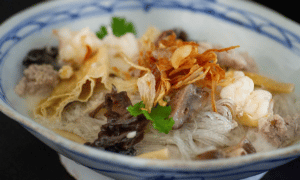
Gaaeng Raawn (แกงร้อน)
Gaaeng raawn (แกงร้อน) is a colloquial Thai term that refers to ‘hot curry’. Today, gaaeng raawn is used to denote soups or curries served with steamed rice. While the precise origin of the term is unclear, gaaeng raawn (แกงร้อน) was deployed in the 1800s for a specific dish – a Siamese soup featuring glass noodles, cooked as either a coconut or a water-based soup with an assortment of dry ingredients revered in Chinese cuisine. The soup’s potential health benefits, combined with its ease of preparation and subtle yet profound flavor, made it a popular choice for entertaining large groups of people, of all ages and backgrounds. The soup is often augmented with fresh proteins: in its more luxurious versions, multiple proteins may be added, including a combination of chicken, pork, shrimp, squid, and crab meat. Thus, over the years, gaaeng raawn (แกงร้อน) was established as a staple source of comfort and warmth for people of all walks of life in Siamese society.
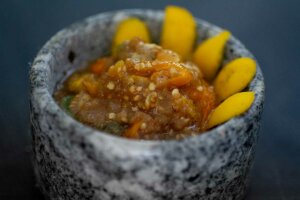
Fermented shrimp paste relish with bitter eggplant seeds (น้ำพริกมะเขือขื่น หรือ มะเขือเหลือง ; naam phrik makheuua kheuun)
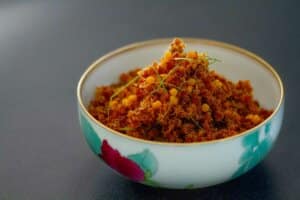
Old-Fashioned Phat Phrik Khing, Yesteryear's Travel Food (ผัดพริกขิง อาหารคนเดินทาง)
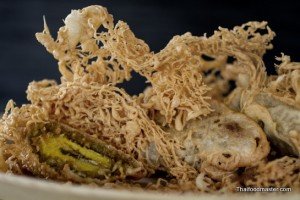
Battered and Deep-Fried Unripe Rice and Grated Coconut Banana Rolls (ข้าวเม่าทอด ; khaao mao thaawt)
Deceptively simple, the recipe for battered, deep-fried unripe rice and grated coconut banana rolls (khao mao thaawt, ข้าวเม่าทอด) is actually quite challenging to master. Like so many Thai dessert recipes, this seemingly straightforward dish has a complex character.
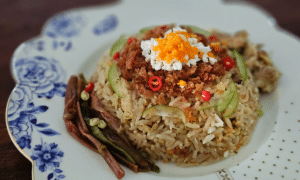
Rice Seasoned with Young Tamarind Relish, Sweetened Fish and Pickled Morning Glory (ข้าวคลุกน้ำพริกมะขามอ่อน ผักบุ้งดอง ปลาแห้งผัดหวาน และ ปลาดุกย่าง; Khaao Khlook Naam Phrik Makhaam Aawn Phakboong Daawng Bplaa Haaeng Phat Waan Lae Bplaa Dook Yaang)
Seasoned rice dishes have been a staple of rice-consuming societies almost since the first grains were cultivated. Adapted according to local resources, traditions and individual preferences, seasoned rice dishes are relished and savored across all walks of life. Within Siamese society, these dishes offer insight into the flavor instincts and eating habits across all demographics, revealing which food items were locally available and valued.
In this delicious seasoned rice recipe from the kitchens of the daughter of King Chulalongkorn, Princess Yaovabha Bongsanid (พระเจ้าบรมวงศ์เธอ พระองค์เจ้าเยาวภาพงศ์สนิท) (1884-1934), the Princess uses a variety of common preserved and inexpensive ingredients, clearly drawing inspiration from the cuisine of the Central Plains with nods to the rural and coastal living atmosphere.
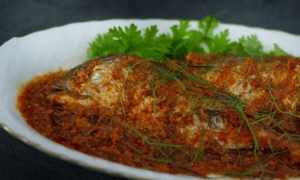
c1908 Chuu Chee with Mackerel (ฉู่ฉี่ปลาทู ; chuu chee bplaa thuu)
A salty-sweet, water-based chuu chee dish that features a thick, almost dry sauce. The deep burnt-red and shiny chuu chee sauce clings to the skin of the crispy mackerel, gold-colored from frying the fish in pork lard. The aromatic profile of the chuu chee complements the mackerel's rich, full-bodied flavor. Although chuu chee is usually made using freshwater fish, saltwater fish, especially mackerel, is featured in chuu chee dishes prepared along the coasts of the Central Plains. This is especially common during the rainy season, when the mackerel is plentiful and of excellent quality.
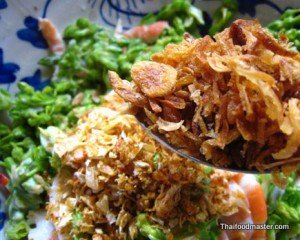
Salad of Thai milkweed flower buds (yam daawk khajaawn ; ยำดอกขจร)
The first Thai restaurant in London was opened during the 1960's by HRH Princess Jurairat Nasiriman (1910-2000) (พระเจ้าวรวงศ์เธอ พระองค์เจ้าจุไรรัตนศิริมาน), the granddaughter of HRH King Mongkut (Rama IV). Princess Jurairat chose to offer this salad on the menu and named it "Salad of Thai Milkweed Flower". (Other names: Cowslip creeper, Telosma Cordata).
This fresh and tasty salad is so vibrant and easy for us to enjoy, it takes in the very basic flavors, sweet, salty, hot and sour and wrap them in a creamy coat of reduced coconut cream. The milkweed flower buds retain their crunchiness and their pleasant fragrance with only a gentle and very quick blanching in sweet boiling water.
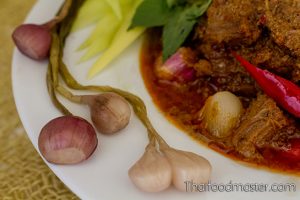
Beef Phanaeng Curry and Ancient Grilled Phanaeng Chicken Curry (พะแนงเนื้อ และ ไก่ผะแนง จากตำราอาหารที่เก่าสุดในสยาม)
Breaking news: The oldest Thai cookbook, as well as history’s first-ever recorded recipe for Phanaeng curry, are revealed for the first time on Thaifoodmaster.com - A 126-year-old cookbook written by one of Siam’s most revered singers, Maawm Sohm Jeen (Raa Chaa Noopraphan) (หม่อมซ่มจีน, ราชานุประพันธุ์), has been rediscovered, offering a unique glimpse into the culinary repertoire of 19th-century Siam. In this chapter we examine the different forms of phanaeng curry from the 1800s to the present day, as we reconstruct the 19th-century version and craft step-by-step a traditional beef phanaeng curry.

Swamp Eel Triple-Layered Red Curry with Fingerroot, Bitter Ginger, Sand Ginger and Thai Basil Flowers (แกงเผ็ดปลาไหลทรงเครื่อง ; Gaaeng Phet Bplaa Lai Sohng Khreuuang)
This eel curry includes a greater-than-usual quantity of aromatics used over three stages. First, the eel is cleaned and sliced into segments; then it is fried with a generous amount of lemongrass, galangal, kaffir lime leaves and shallots. These help to counter its muddy and somewhat iron-like odor, which disappears along with the liquids and the aromatics.
This eel curry recipe is adapted from the vintage book: “Gap Khaao O:H Chaa Roht” by Ging Ga Nohk) (กับข้าวโอชารส โดย กิ่งกนก – กาญจนาภา พ.ศ. 2485). This rare book was written in 1942 during WWII, a period of global turmoil in which Thailand was invaded by the Japanese. That same year marked a decade from the ending of absolute monarchy rule in 1932, and one generation away from the peak of the Siamese culinary renaissance that flourished in the court of King Rama V (1868-1910): a nostalgic era for its children who are still with us to remember and reflect on those times.
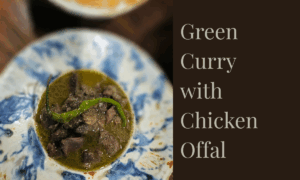
Yogurt-Based Ancient Green Curry with Chicken Offal (แกงเขียว; gaaeng khiaao)
Mrs. Yim Pichaiyat Bunnag (คุณยิ้ม พิชัยญาติ บุนนาค)'s 1920s aristocratic green curry reveals a forgotten chapter in Thai culinary history. This Muslim-style recipe uses ghee and yogurt instead of coconut milk, featuring chicken offal—liver, gizzard, and heart—each contributing distinct textures and concentrated flavors. Roasted spices like cinnamon, clove, and cardamom create warming aromatics, while fresh chilies provide signature heat. The dish documents how Bangkok's noble kitchens adapted Islamic cooking techniques before democratization, preserving methods that would shape modern Thai cuisine.
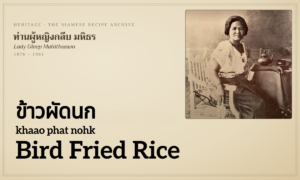
Bird Fried Rice (ข้าวผัดนก; khaao phat nohk)
Khaao phat nohk, field fowl or any small bird stir-fried with pork ham and mustard powder. From Lady Gleep Mahithaawn, 1949.
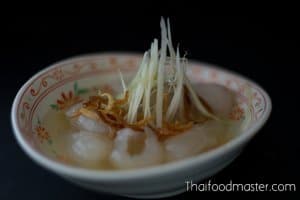
Sohm Choon Fruit Dessert of Lychee, Green Mango, Young Ginger in Jasmine, Bitter Orange, and Pandan-Scented Sweet and Salty Syrup, Topped with Grilled Shallots, Peanuts and Roasted Coconut
(ส้มฉุน ; sohm choon) The first reference to sohm choon as a dessert appears in in the early 1800s, in the culinary poetry of King Rama II gaap heh chohm khreuuang khaao waan (กาพย์เห่ชมเครื่องคาว - หวาน). The poetry was sung during the royal barge’s procession, and this verse refers to sohm choon as a dish made of lychees. A closer look at other foods that are mentioned in the verse also reveals other dishes that are clearly of Chinese origin, such as boiled pork spleen (dtohm dtap lek ต้มตับเหล็ก), steamed bird’s nests (rang nohk neung รังนกนึ่ง) and persimmons (luuk phlap ลูกพลับ).
(ส้มฉุน ; sohm choon) The first reference to sohm choon as a dessert appears in in the early 1800s, in the culinary poetry of King Rama II gaap heh chohm khreuuang khaao waan (กาพย์เห่ชมเครื่องคาว - หวาน). The poetry was sung during the royal barge’s procession, and this verse refers to sohm choon as a dish made of lychees. A closer look at other foods that are mentioned in the verse also reveals other dishes that are clearly of Chinese origin, such as boiled pork spleen (dtohm dtap lek ต้มตับเหล็ก), steamed bird’s nests (rang nohk neung รังนกนึ่ง) and persimmons (luuk phlap ลูกพลับ).
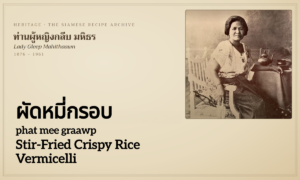
Stir-Fried Crispy Rice Vermicelli (ผัดหมี่กรอบ; phat mee graawp)
Phat mee graawp, rice vermicelli fried crisp in pork lard, seasoned salty–sweet–sour, finished with slivered bitter orange. Lady Gleep Mahithaawn, 1949.
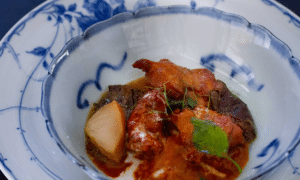
Duck Curry with Prunes and Apples (แกงเป็ดกับพรูนและแอปเปิ้ล อย่าง ม.ล. เติบ ชุมสาย; gaaeng bpet gap phruun lae aaep bpeern)
When it comes to pairing fruits with meats in savory dishes, it’s hard to match the bold tangy-luscious combination of apples and prunes in this old-fashioned coconut-based spicy curry with braised duck. The dish is seasoned to a spicy, salty, and sour-sweet flavor profile, which is further intensified by the prunes’ subtle nectareous, savory-sweetness and the apples’ fruity, sweet-tartness. This curry is a perfect example of how fruits can complement the already complex and profound aromatic relationships between meaty-savory flavors, the curry paste’s aromatic identity, and the dish’s herbal character of Thai basil and fresh peppercorns – creating a most memorable flavor impression.
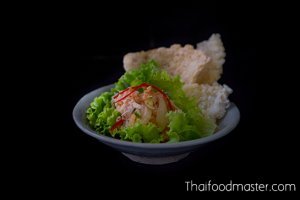
Goong Saawn Glin - A Thai Royal Appetizer of Flaky Acid-Cooked Shrimp, Peanuts and Pickled Garlic, with a Sour-Salty-Sweet Shrimp Tomalley Dressing. (กุ้งซ่อนกลิ่น)
กุ้งแนม" หรือ "กุ้งซ่อนกลิ่น - Goong naaem (goong saawn glin) according to the 1908 recipe in Lady Plean Passakornrawong’s “Maae Khruaa Huaa Bpaa (ตำราแม่ครัวหัวป่าก์)” cookbook. Flaky acid-cooked shrimp and the pork fat, along with thinly sliced roasted peanuts and very small unpeeled diced bitter orange (ส้มซ่า som saa), plus paper-thin slices of pickled garlic and julienned fresh red long chili peppers are mixed and seasoned with shrimp tomalley dressing. It is served in wrapped squares, using iceberg lettuce and young thaawng laang leaves.
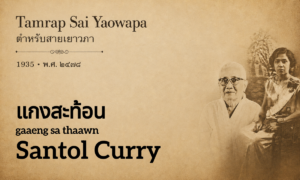
Santol Curry (แกงสะท้อน; gaaeng sa thaawn)
Gaeng sa thaawn, a santol-soured curry of chicken and pork belly in bone stock, finished with prawns. From Tamrap Sai Yaowapa, 1935.
Gaaeng Mong (Chonburi-Style Curry) (แกงโมง (แกงชาวชลบุรี); gaaeng mo:hng (gaaeng chaao chohn boo ree))
Gaaeng Mong, a Chonburi regional curry with fermented shrimp paste, grilled catfish, and young watermelon. From Mrs. Paan Nanthaaphiwat, 1953.
1
2
3
4
5
6
7
8
9
10

Get Access – Join Thaifoodmaster Today
Practical and kitchen-tested recipes with a mix of theory, history, psychology, and Siamese culture tidbits.
-
Get access to everything right away. Unlock more than 50 Masterclasses, over 700 recipes and Articles
Access to Thaifoodmaster’s constantly growing library of prime professional classes, articles, recipes and videos on Siamese culinary topics, available nowhere else in English.
-
GET EXTRA - New Masterclasses and Daily Recipes
Gain access to NEW masterclasses as they become available. Access DAILY translations of heritage-recipes.
-
1-1 support from Hanuman
1-1 support from Hanuman to help you achieve your professional Thai culinary goals
-
Live Q&A Sessions
The opportunity to join a monthly live two-hour videoconference where I can answer your questions.
-
Great Value!
one year access for the price of 3 days in-person training.
You will get everything you need to:
-
To Get inspired
When you design or build a new menu for an event or restaurant or even prepare for dinner with friends.
-
To Satisfy your curiosity.
Finally !
-
To Master Your Craft
Master your Thai cooking skills and expand your repertoire.
It is truly brilliant with a revolutionary approach introducing aspects and concepts never broached by cookbooks.

Ian Westcott
Sourcing Wines for Discerning Private Clients
© 2008 – 2026 Thaifoodmaster


