
Celebrating the Art of Siamese Culinary Wisdom and Thai Cuisine
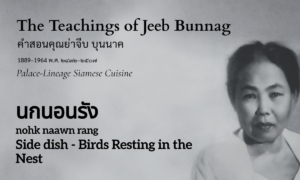
Side dish - Birds Resting in the Nest (นกนอนรัง; nohk naawn rang)
Birds Resting in the Nest, baya weavers stuffed with peppery pork and draped in fine duck egg threads. From Jeeb Bunnag, 1933.
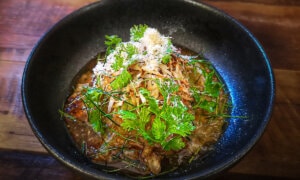
c1889 Faux Rhino Skin Salad (ยำโขนงเนื้อเทียม หรือ ยำหนังหมู ; yam kho:h nohng neuua thiiam reuu yam nang muu)
This old-fashioned Siamese pork skin salad is adapted from an 1889 rhino skin salad recipe. It features thin glossy slices of cooked pork skin, simmered in rich coconut cream, and mixed with dried shrimp, roasted coconut, sour fruits; it is seasoned with chili jam-based dressing.
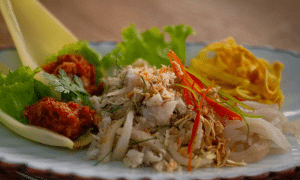
Gaawy goong suay (ก้อยกุ้งเสวย กับ น้ำพริกก้อย) - Old-fashioned chili relish enriched with shrimp tomalley and flaky acid-cooked shrimp meat

c1949 Salad of grilled pork and coconut-cooked pumpkin by Maawm Ying Soophaa (ยำฟักทองกะทิ ตำราการปรุงอาหารยำ หม่อมหญิงสุภา พ.ศ. 2492; yam fak thaawng Gathi)
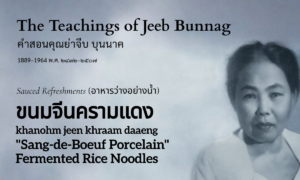
"Sang-de-Boeuf Porcelain" Fermented Rice Noodles (ขนมจีนครามแดง; khanohm jeen khraam daaeng)
Sang-de-Boeuf Porcelain Fermented Rice Noodles featuring a coconut sauce infused with roasted shallots, garlic and mung beans. From Jeeb Bunnag, 1945.
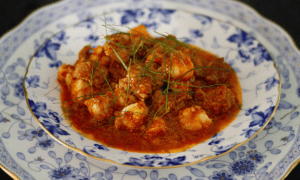
Coconut Cream-Based Chuu Chee of Pork and Shrimp Glazed with Shrimp Tomalley (แกงฉู่ฉี่หมูกับมันกุ้ง; gaaeng chuu chee muu gap man goong)
In the context of Siamese samrub meal planning, this thick chuu chee of pork and shrimp with a reddish coconut-based, curry-like sauce is considered a side dish (ของจาน; khaawng jaan). It consists of small, equal-sized slices of pork meat and shrimp fried in coconut cream together with a phrik khing curry paste. With no other vegetables or herbs, the dish is seasoned using fish sauce and palm sugar to a salty and only slightly sweet profile. Finally, it is glazed with shrimp tomalley poured on top and left unstirred, then cooked covered with the lid on, until the tomalley is baked-cooked. When serving, garnish with hair-thin juliennes of kaffir lime leaves and hand-picked coriander leaves.
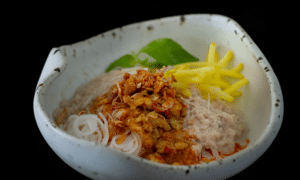
Naam Yaa Neuua – Northern Style Naam Ya according to Lady Plean Passakornrawong (น้ำยาเหนือ)
This fermented rice noodle dish is served with a slow-cooked, chili-less broth made from pounded fish meat and aromatics cooked in coconut cream. Creamy in color and velvety in texture, the broth is seasoned either with fish sauce, fermented fish or salted fish according to one’s preferences. The broth is allowed to slow-cook, achieving its full richness over a couple of hours. Once ready, the broth is poured over the noodles, which are then topped with a glossy-orangey layer of minced shrimp meat fried with their tomalley in pork lard. Complementing this richness are crunchy yellowish bean sprouts blanched in turmeric-tinted water, a sprinkle of sweet, golden crispy-fried shallots and, finally, green lemon basil leaves that endow the dish with a unique, rustic herbal persona.
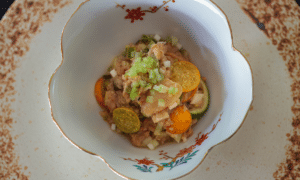
Metropolitan Chili Relish: The 20-Ingredient Pinnacle of Thai Relishes (น้ำพริกนครบาล; Naam Phrik Na Khaawn Baan)
Originating in the early 1800s, Metropolitan Chili Relish is cheerful and complex, yet unassuming – a subtly epic relish composed of more than 20 ingredients, some of which are seasonal. The relative absence of this relish from contemporary menus could be attributed to its difficult-to-assemble ingredient list, coupled with a dwindling number of chefs who are adept at its preparation.
However, despite its intricate composition, the relish adheres to the same foundational culinary principles of other shrimp paste (kapi) chili relishes. Here, though, the savoriness is strengthened with smoke-dried fish, grilled shrimp and pork fat crackling; and the relish is seasoned to a citrus-infused, fruity, sour-sweet leading and salty to follow flavor profile, to which numerous sour and sour-sweet elements are mixed in – akin to a deep-rooted tree extending its branches to bear colorful fruits that shine in varying shades of a tartness.
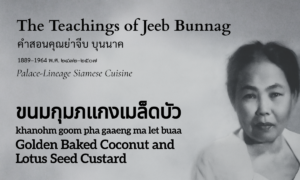
Golden Baked Coconut and Lotus Seed Custard (ขนมกุมภแกงเมล็ดบัว; khanohm goom pha gaaeng ma let buaa)
Khanohm goom pha gaaeng ma let buaa, a lotus seed custard with caramelized coconut solids, radiant-baked until golden. Jeeb Bunnag, 1933.
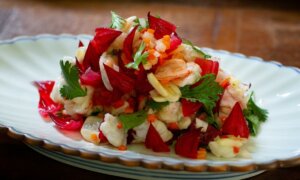
c1890 Fresh roselle salad with acid-cured shrimp (ยำผลกระเจี๊ยบ อย่างท่านผู้หญิงเปลี่ยน ภาสกรณ์วงศ์ ร.ศ.๑๐๘ ; yam phohn gra jiiap;)
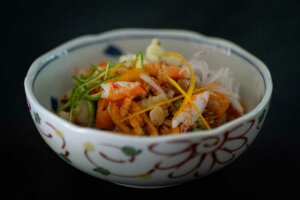
Jungle chili relish by Princess Jongjittanom Dissakul (น้ำพริกป่า อย่าง หม่อมเจ้าหญิงจงจิตรถนอม ดิศกุล ; naam phrik bpaa)
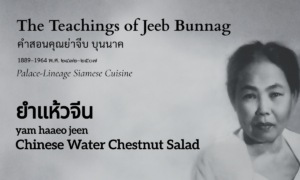
Chinese Water Chestnut Salad (ยำแห้วจีน; yam haaeo jeen)
Chinese Water Chestnut Salad combining crisp water chestnuts with seafood and pork in a salty-sweet-sour dressing. From Jeeb Bunnag's 1933 cookbook.
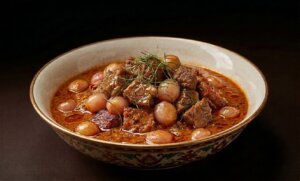
Phanaeng Curry of Grilled Duck Stock with Shallots (แกงพะแนงน้ำเป็ดย่างกับหอมเล็ก; gaaeng pha naaeng naam bpet yaang gap haawm lek)
Phanaeng curry from Mrs Puang Bunnag's 1931 manuscript, built on grilled duck stock and a paste of roasted coriander, cumin, and cinnamon.
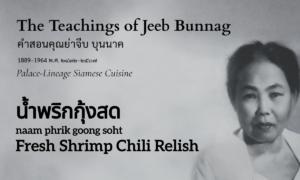
Fresh Shrimp Chili Relish (น้ำพริกกุ้งสด; naam phrik goong soht)
Naam phrik goong soht, a pounded shrimp relish with Songkhla tomalley paste, hairy eggplant, and salacca. From Jeeb Bunnag, 1933.
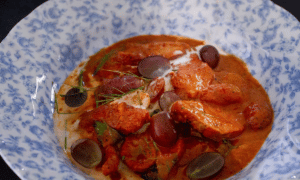
c1941 Roasted Duck Curry with Grapes (Gaaeng Ho) (แกงเป็ดเหาะใส่องุ่น อย่างคุณถนอม ปาลบุตร พ.ศ. 2484; gaaeng bpet haw sai angoon)
Grapes have long been associated with prosperity, fertility and abundance across various cultures and historical periods due to the fruit’s large clusters and bountiful growth. In ancient China, grapes were considered a symbol of wealth and nobility, and often deployed as a status symbol among the elite. In Greek mythology, Dionysus, the god of wine and fertility, was often depicted holding a bunch of grapes, further emphasizing the connection between grapes and abundance. This association is also likely rooted in the fact that grapes were a valuable crop in antiquity – used to produce wine and other fermented products, and an important source of food and nutrition. In Indian Ayurvedic texts, grapes are referred to as vineaksha and utilized in treating a variety of ailments, including fever and indigestion.
From the Siamese perspective, the incorporation of fruits in culinary preparations was viewed as a luxurious indulgence, as many fruits commonly available today were once difficult to obtain. Thus the pairing of an extravagant ingredient – such as fruit – with an equally opulent and exclusive delicacy like roasted duck resulted in a dish fit for royalty.
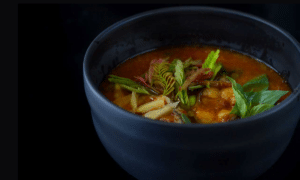
Gaaeng Jao Dtao – An Aristocratic Sour Curry of Catfish with Young Tamarind Leaves, Fingerroot and Lemon Basil, with a Rustic Flare (แกงเจ้าเต่า)
The art of Siamese old-school menu design สํารับอาหารไทย
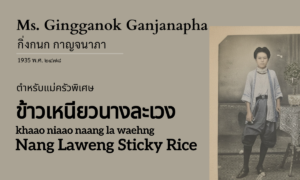
Nang Laweng Sticky Rice (ข้าวเหนียวนางละเวง; khaao niaao naang la waehng)
Khaao niaao naang la waehng, black glutinous rice balls deep-fried in lard with spiced beef and potato filling. Delicious Side Dishes, 1935.
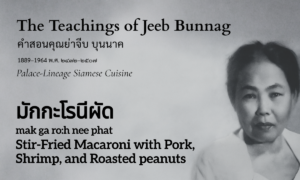
Stir-Fried Macaroni (มักกะโรนีผัด; mak ga ro:h nee phat)
Mak ga ro:h nee phat, macaroni stir-fried with garlic-lard paste, pork, shrimp, and roasted peanuts. From Jeeb Bunnag, 1933.
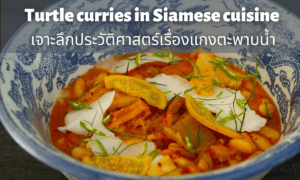
The complete story of turtle curries in Siamese cuisine (เจาะลึกประวัติศาสตร์เรื่องแกงตะพาบน้ำ)
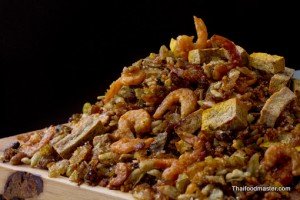
Old Fashioned Pounded Unripe Rice Snack (ข้าวเม่าหมี่ ; khaao mao mee)
Unripe rice snack - “Khao Mao Mee” (ข้าวเม่าหมี่ ) also known as “Khao Mao Song Kreuang” (ข้าวเม่าทรงเครื่อง) or by it's royal name “Khanom Khao Mao Rang” (ขนมข้าวเม่าราง) is a delicious snack. It makes an unusual use of the unripe rice grains, which are normally used for desserts making. The following recipe describes an ancient and hard to find version of it. These days, there is a tendency to add other ingredients like peanuts or to deep fry the unripe rice grains until fluffy and crispy.
1
2
3
4
5
6
7
8
9
10
11
12
13
14

Get Access – Join Thaifoodmaster Today
Practical and kitchen-tested recipes with a mix of theory, history, psychology, and Siamese culture tidbits.
-
Get access to everything right away. Unlock more than 50 Masterclasses, over 700 recipes and Articles
Access to Thaifoodmaster’s constantly growing library of prime professional classes, articles, recipes and videos on Siamese culinary topics, available nowhere else in English.
-
GET EXTRA - New Masterclasses and Daily Recipes
Gain access to NEW masterclasses as they become available. Access DAILY translations of heritage-recipes.
-
1-1 support from Hanuman
1-1 support from Hanuman to help you achieve your professional Thai culinary goals
-
Live Q&A Sessions
The opportunity to join a monthly live two-hour videoconference where I can answer your questions.
-
Great Value!
one year access for the price of 3 days in-person training.
You will get everything you need to:
-
To Get inspired
When you design or build a new menu for an event or restaurant or even prepare for dinner with friends.
-
To Satisfy your curiosity.
Finally !
-
To Master Your Craft
Master your Thai cooking skills and expand your repertoire.
It is truly brilliant with a revolutionary approach introducing aspects and concepts never broached by cookbooks.

Ian Westcott
Sourcing Wines for Discerning Private Clients
© 2008 – 2026 Thaifoodmaster


