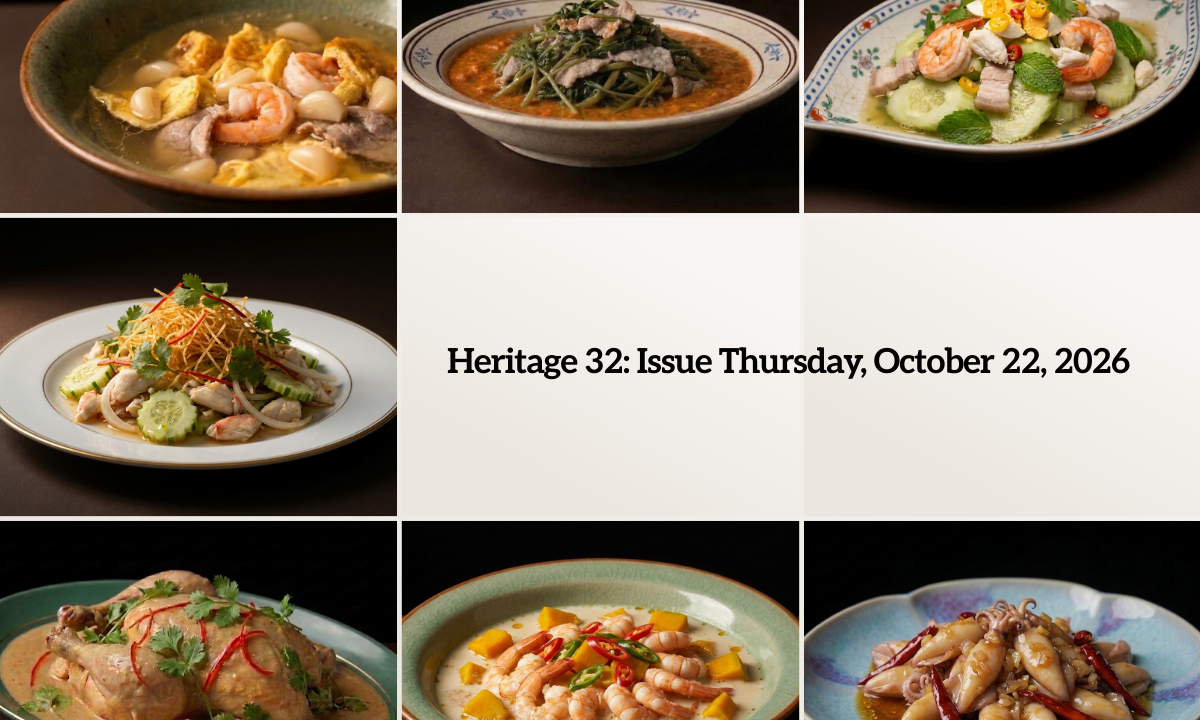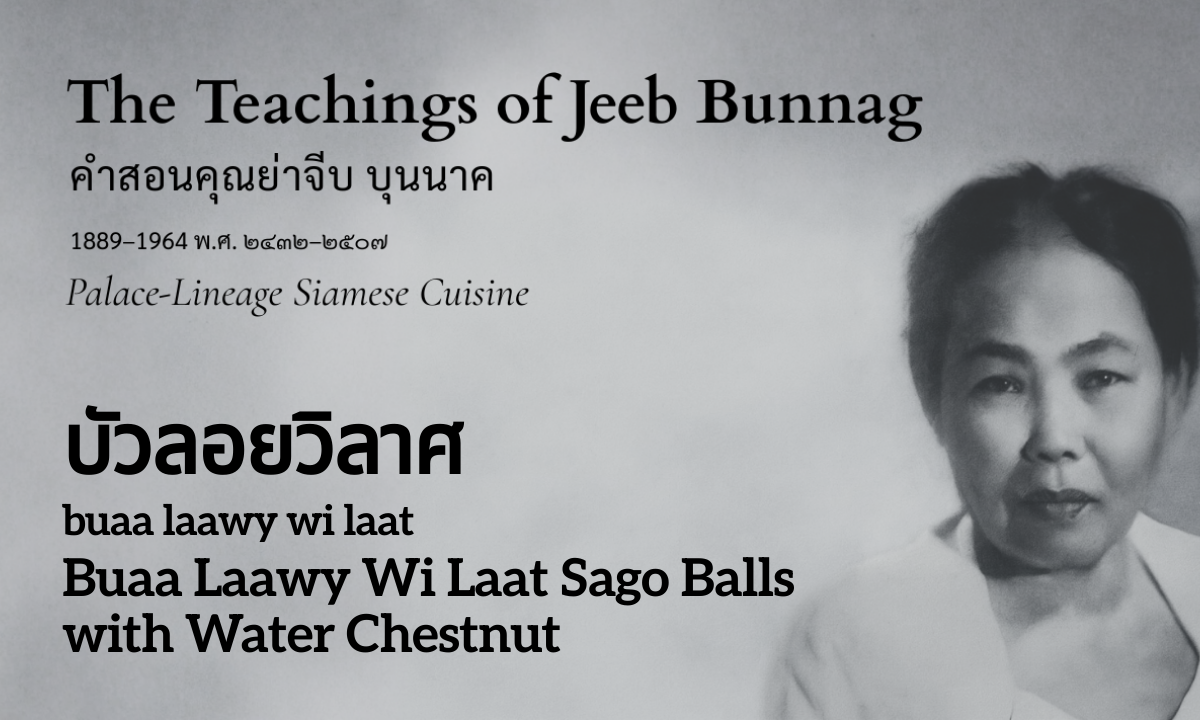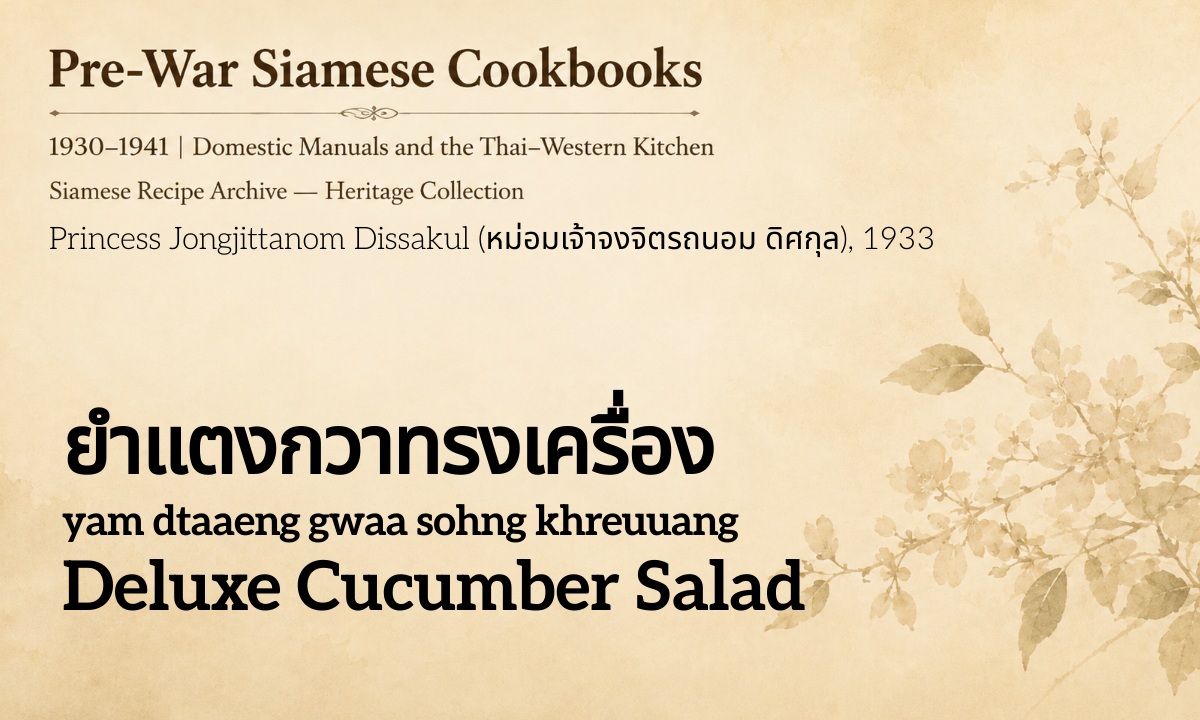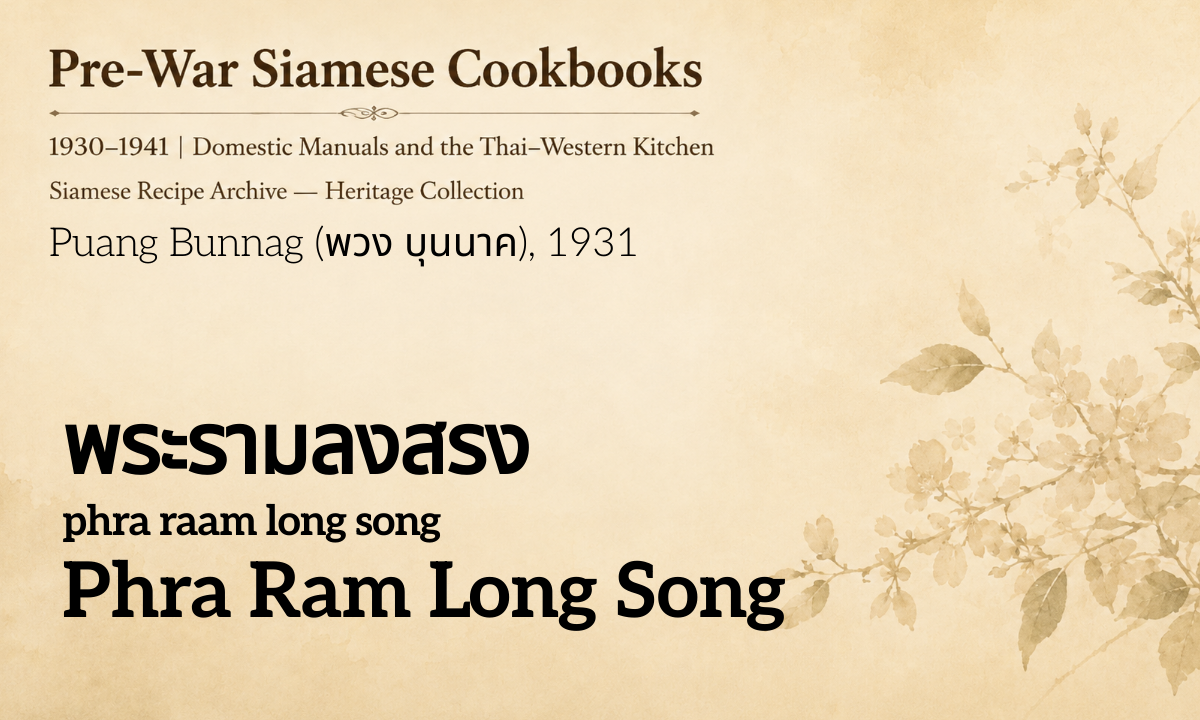
Siamese Culinary Masterclasses for Professional Chefs and Thai Food Enthusiasts

Thaifoodmaster teaches Siamese cooking as a structured language with grammar and syntax—principles that let you cook from understanding rather than following recipes.

I decode Thai manuscripts dating from the late 19th century to modern days and teach their methods—techniques, flavor principles, and meal structures that haven’t been available in English until now. The material comes from historical manuscripts: palace kitchens, professional caterers, household cooks. Translated, tested, and taught.

Online membership: Masterclasses, Articles, Recipes, Daily Heritage Translations.
Professional Guides: Siamese Chili Relishes (น้ำพริก และ เครื่องจิ้ม), Thai Curries (แกงไทย), Thai Salads (เรื่องยำๆ) and The art of Siamese old-school menu design (สํารับอาหารไทย).

In-person workshops: Chiang Mai, 2026. Limited spaces.

Practical and kitchen-tested recipes with a mix of theory, history, psychology, and Siamese culture tidbits.

Historical manuscript translations

A Thaifoodmaster Preservation Project

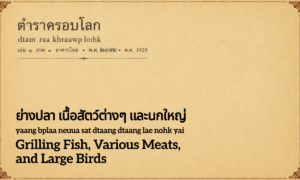
Heritage - Historical Siamese Culinary Manuscripts.
คลังตำราอาหารสยาม

The Siamese Recipe Archive collects and translates historical Thai culinary manuscripts—primary sources written by the cooks, noblewomen, and food professionals who shaped the cuisine of the Rattanakosin era. These are working documents. Each manuscript records practical knowledge shaped by its moment—what was available, what the tradition demanded, what a specific cook decided under real constraints. The sources vary—palace kitchens, professional caterers, schoolteachers, cremation volumes—but each preserves how someone approached the craft, the problems they solved, the techniques they considered worth recording. Thaifoodmaster’s digitization projects make these texts accessible to modern cooks. We preserve the original authors’ voices—their instructions, their preferences, their occasional poetry—while converting archaic measurements to grams and presenting texts in readable modern formats.
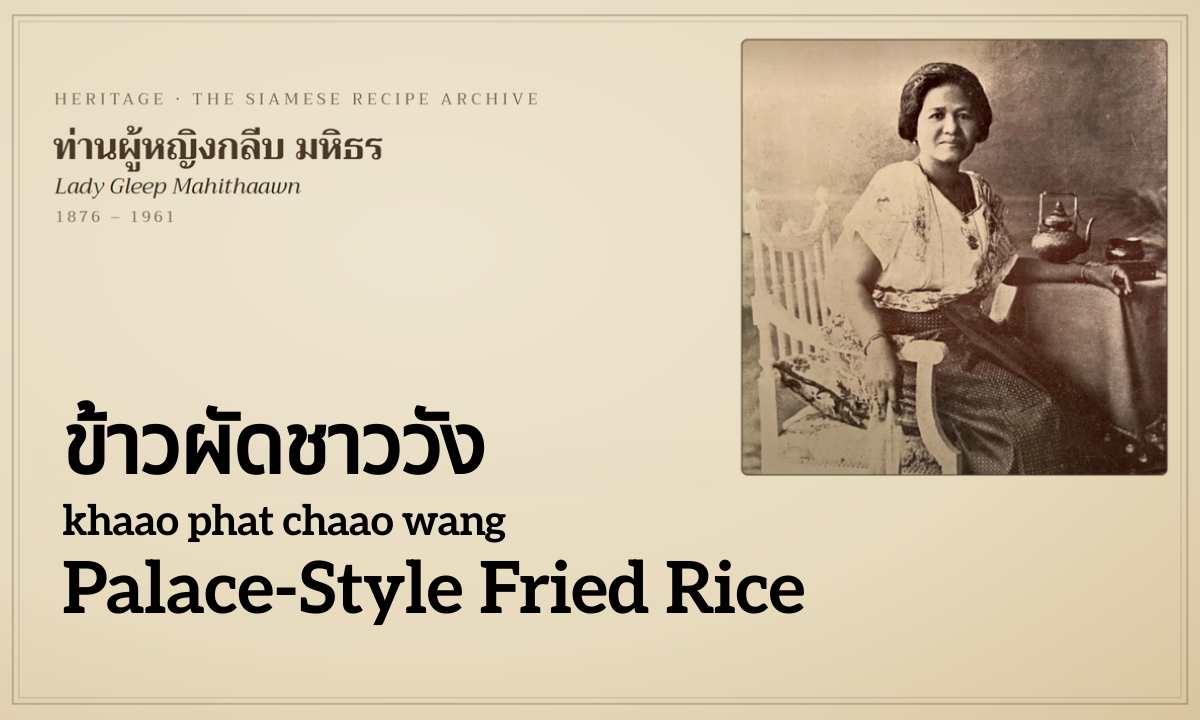
Daily Folios from the Siamese Recipe Archive

Historical manuscript translations

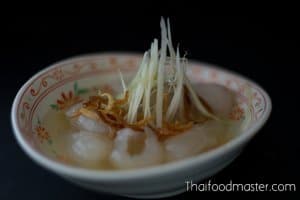
Deep-Sea Shrimp and Cabbage Simmered in Coconut Milk (ต้มกะทิกุ้งตะเข็บกับกะหล่ำปลี; dtohm ga thi goong dta khep gap ga lam bplee)
Dtohm ga thi goong dta khep, shredded cabbage simmered in thin coconut milk with tail-tucked soft-shell shrimp and sour fruit. From Jeeb Bunnag, 1933.
Heritage 29: Issue Tuesday, September 29, 2026
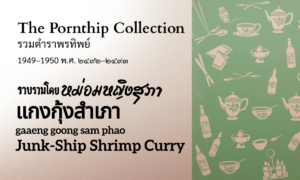
This week's folios: - แกงกุ้งสำเภา — Junk-Ship Shrimp Curry (Maawm Ying Soophaa, 1949) - ยำไก่ — Yam of Chicken (c. 1890) (Maawm Sohm Jeen , 1890) - ผัดปูทะเลผสม — Stir-Fried Mixed Sea Crab (M.R. Tuang Sanitwong, 1935) - ไข่ดวงเดือน — Full Moon Eggs (Maawm Ying Soophaa, 1949) - ปลาร้าปลาดุกข้าวคั่วปิ้ง — Grilled Catfish-and-Roasted-Rice Pla Ra Relish (Lady Gleep Mahithaawn, 1949) - ข้าวผัดนก — Bird Fried Rice (Lady Gleep Mahithaawn, 1949)
Grilled Catfish-and-Roasted-Rice Pla Ra Relish (ปลาร้าปลาดุกข้าวคั่วปิ้ง; bplaa raa bplaa dook khaao khuaa bping)
Catfish-and-roasted-rice pla ra grilled in banana leaf with shallots, galangal and coconut cream until the leaf chars. From Lady Gleep Mahithaawn, 1949.
Stir-Fried Mixed Sea Crab (ผัดปูทะเลผสม; phat bpuu tha laeh pha sohm)
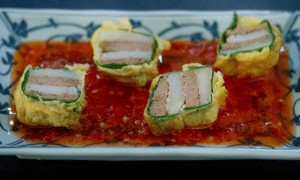
Phat bpuu tha laeh pha sohm: picked crab meat and fat stir-fried with shiitake, pork and peas in a flour-bound bone-stock sauce. Tamrap Sai Yaowapa, 1935.
Bird Fried Rice (ข้าวผัดนก; khaao phat nohk)
Khaao phat nohk, field fowl or any small bird stir-fried with pork ham and mustard powder. From Lady Gleep Mahithaawn, 1949.
Yam of Chicken (ยำไก่; yam gai)
Yam gai: chicken simmered in coconut milk until dry, then dressed with mint, kaffir lime and green mango. Maawm Sohm Jeen, Tamra Gap Khao, 1890.
Load More

Recent Articles

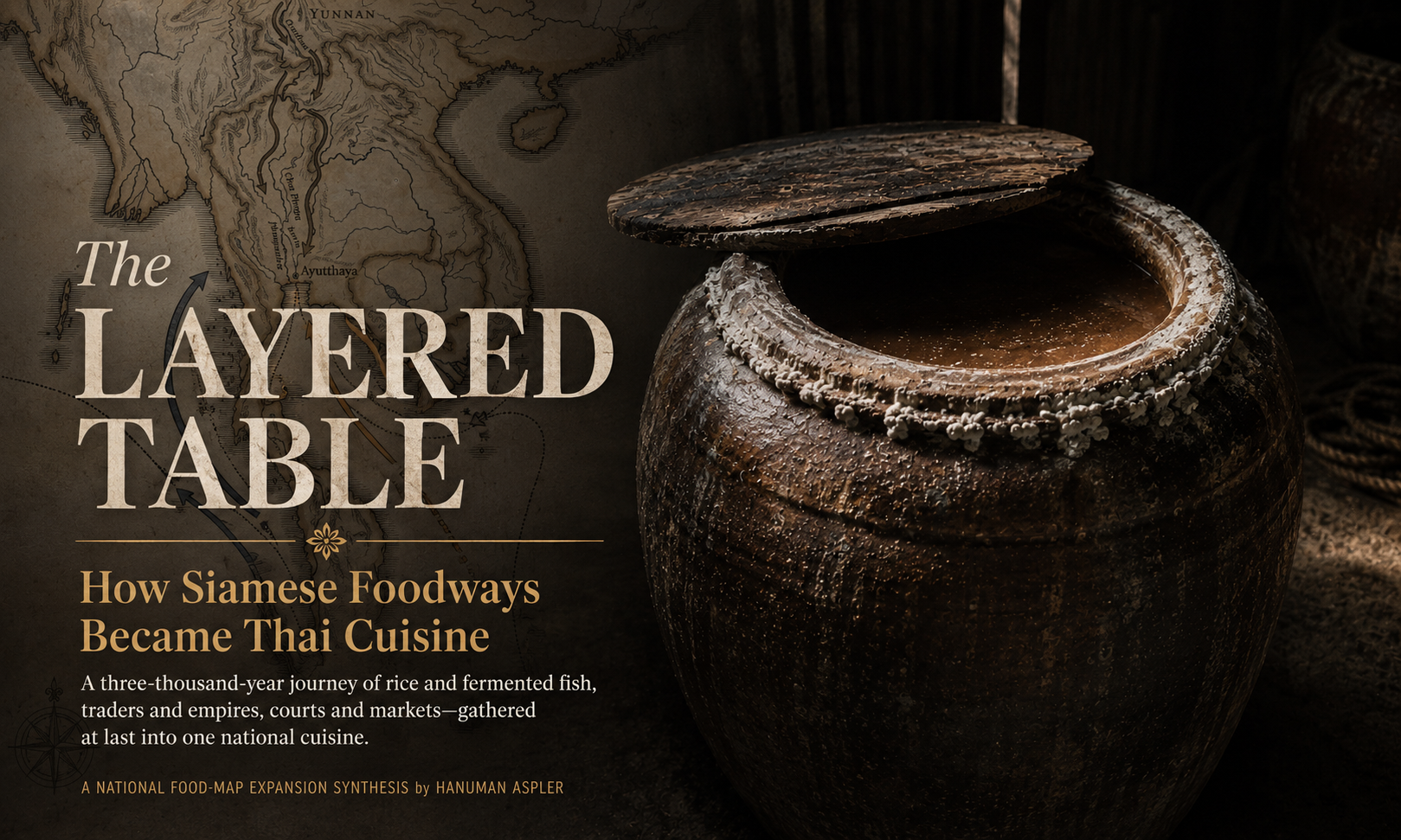
The Layered Table: How Siamese Foodways Became Thai Cuisine

There is no pure Thai food, and the name itself is younger than my grandmother. The Layered Table follows the cuisine back through every layer that built it - the rice-and-fish foundation, the Mon and Khmer ground, the Indic spice technology, the foreign quarters of the Ayutthaya port, the two Chinese roads, and the regions the center absorbed last - to the single year a state gave the whole accumulation one name and called it Thai. Once you can read a dish, its whole history sits there in plain sight. Read in the right order, the plate becomes a calendar.
Reading Historical Recipes

How to Read Historical Recipes: A Four-Dimensional Approach to Siamese Culinary

Every chef attempting to resurrect historical Siamese recipes confronts an uncomfortable truth: perfect replication is impossible. The soil has shifted its mineral composition since the 1890s. Heritage breeds have evolved. Even water tastes different now, filtered through treatment plants rather than stored in earthenware jars perfumed with jasmine flowers and pandan leaves. Yet this impossibility becomes liberation once we reframe what recipes actually are—not fixed instructions but ranges of potential outcomes that crystallize through cooking and transform into lived experience through eating. Historical recipes require four-dimensional reading: literal, contextual, subtextual, and narrative. They answer to four governors: availability, cultural appropriateness, culinary tradition, and superstition. Understanding these frameworks reveals where creative freedom genuinely lies—in that fertile space between memory and imagination where you construct your own culinary narrative. We're not archaeologists trying to resurrect dead dishes but active participants in living traditions.

Jeeb Bunnag - The Teacher Who Preserved a Culinary Empire - A Biography of Mrs. Samaknantapol

The life of Mrs. Samaknantapol (Jeeb Bunnag) (นางสมรรคนันทพล (จีบ บุนนาค)) offers a direct view into the transmission of Thai culinary knowledge across a century of change. Her teaching, writing, and documentation preserved the structures of palace cuisine while shaping methods that could be studied and applied in classrooms throughout modern Bangkok. Her 1933 work Samrub Raawp Bpee (สำรับรอบปี) remains an unparalleled record: 365 complete Samrub, old style Siamese meal sets, arranged with precision, reflecting daily rhythms of eating that were already disappearing from common practice. Through her work, we can study not only individual dishes but also the organization of meals and the cultural reasoning that guided them. As someone who follows her teaching, I approach this story with both historical and practical attention. Her writing has informed my own study of Thai cuisine, and years of cooking from her instructions have shown me the clarity and discipline of her teaching. This account presents her life within its contexts—family, education, print culture, and the evolving society of twentieth-century Siam—while also acknowledging how her work continues to guide readers today.
Chilies in Siam - Three Genomes, Four Trade Routes, One Culinary Revolution

Walk into any Thai kitchen today, and chilies seem so fundamental to the cuisine that imagining Thai food without them feels impossible. Yet these fiery plants traveled thousands of miles from the Americas through a journey far more complex than the simple story historians have long told - these foreign fruits would ultimately transform not just flavors but the very appearance of Southeast Asian food, tinting curries red, staining relishes and painting an entire culinary tradition in shades of fire. For centuries, that story went like this: Portuguese traders brought chilies to Southeast Asia in the early 1500s, spreading them from colonial centers in Goa and Malacca throughout the region. Most Southeast Asian societies incorporated chilies within 100-200 years - a remarkably rapid transformation that fundamentally altered how billions of people eat. This narrative is true, but incomplete. New genetic evidence reveals that chilies reached Southeast Asia through multiple networks operating simultaneously: Portuguese merchants, yes, but also Islamic maritime traders, Chinese overland routes, and Indian Ocean merchant communities. Rather than following a single European pathway, chilies arrived through interconnected global trading systems that had been operating for centuries. The story of how Siam got its fire reveals something profound about how cultural exchange actually worked in the early modern world - and how modern research is overturning colonial-era assumptions about who controlled global trade.
Professional Guides

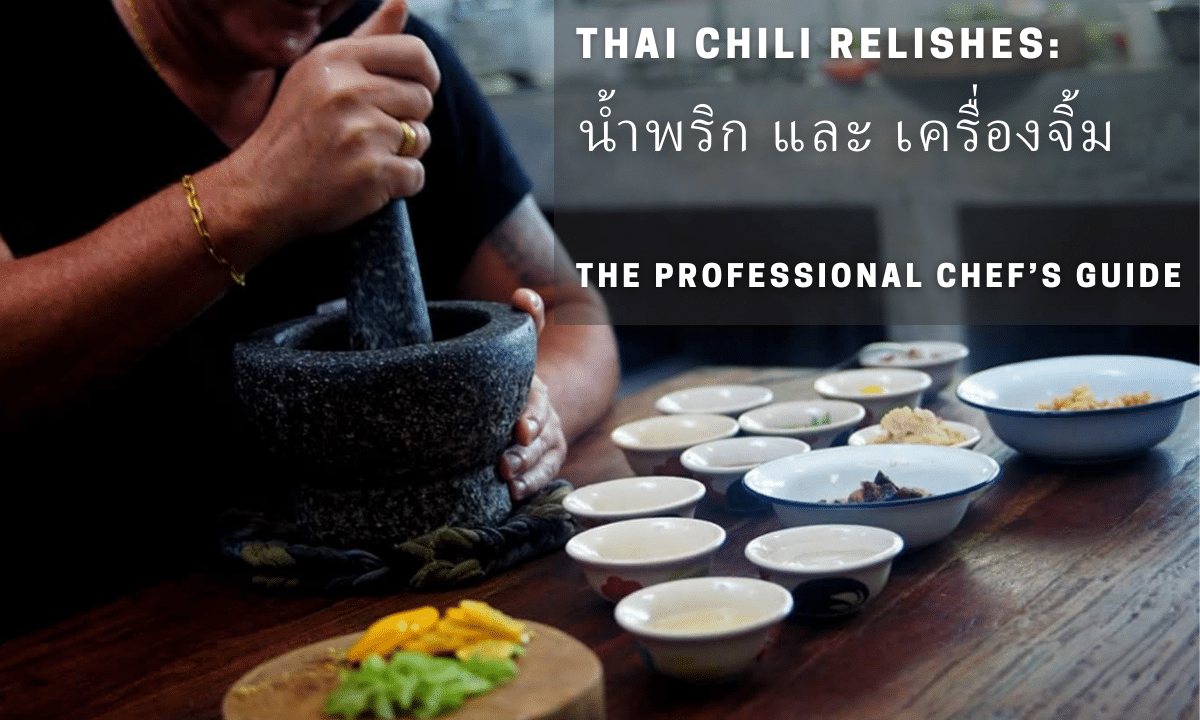
Siamese Chili Relishes – The Professional Chef’s Guide – น้ำพริก และ เครื่องจิ้ม

At the intersection of culinary culture and traditional lifestyles are Siamese chili relishes – probably the oldest type of Siamese food. In ancient times, relishes were essential to the diet, providing a flavorful accompaniment to rice, the staple food. Then – and today – relishes also are served alongside meats or vegetables, producing a tasty meal as well as promoting healthy nutrition. Chili relishes are an expression of ancestral Siamese culinary emotions, and the foundations of modern Thai cuisine.

In this complete companion to chili relishes, we embark on a journey to discover the origins, classifications and regional varieties of chili relishes. Along the way, we will learn about their ingredients, food pairing rules, and essential and practical preparation techniques.

This comprehensive Masterclass covers everything you need to know about preparing chili relishes creatively and authentically.
Thai Curries: The Professional Chef’s Guide

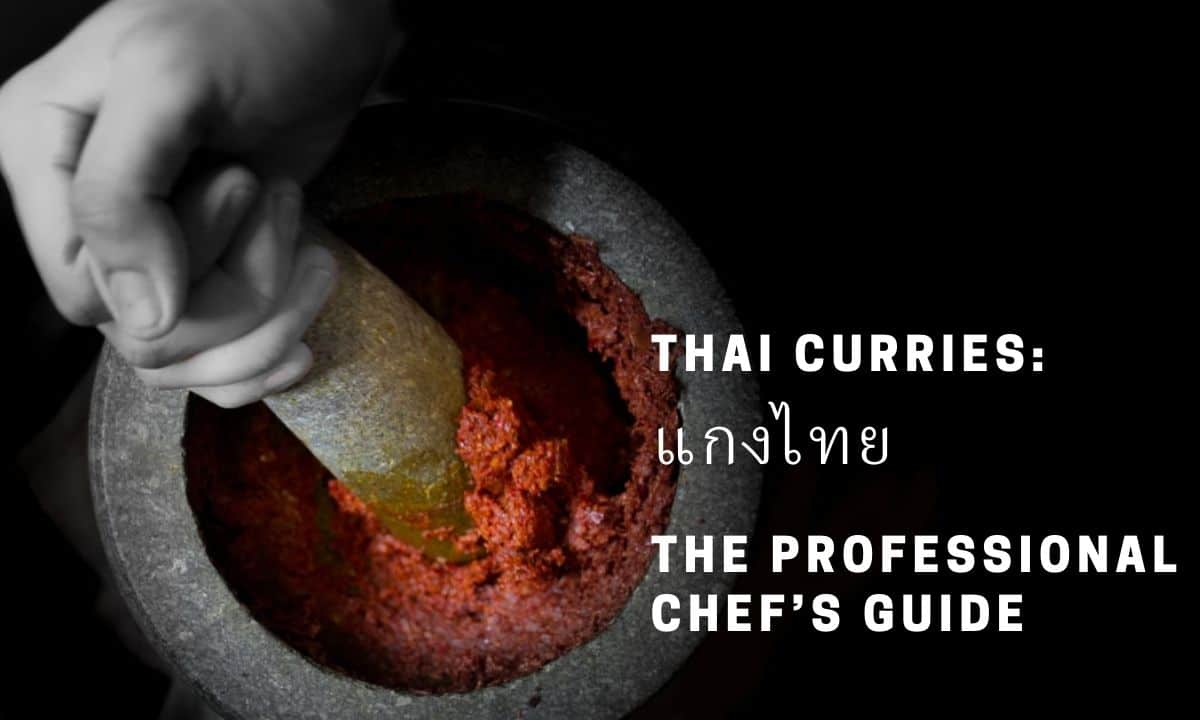
Thai Curries: The Professional Chef’s Guide – แกงไทย

In this unparalleled masterclass, we cover everything you need to know about cooking Thai curries creatively and authentically.

This no-nonsense, comprehensive, and uncensored companion masterclass on Thai curries will transform the way you perceive and execute Thai curries, and you will experience a dramatic improvement in your skills upon completing the class.

This masterclass covers Thai curries’ origins, classifications, regional varieties, curry paste composition, ingredients, spices, and color adjustments, along with essential and practical cooking techniques, and the superb flavor layering practices that master chefs use in crafting Thai curries.
Siamese salads

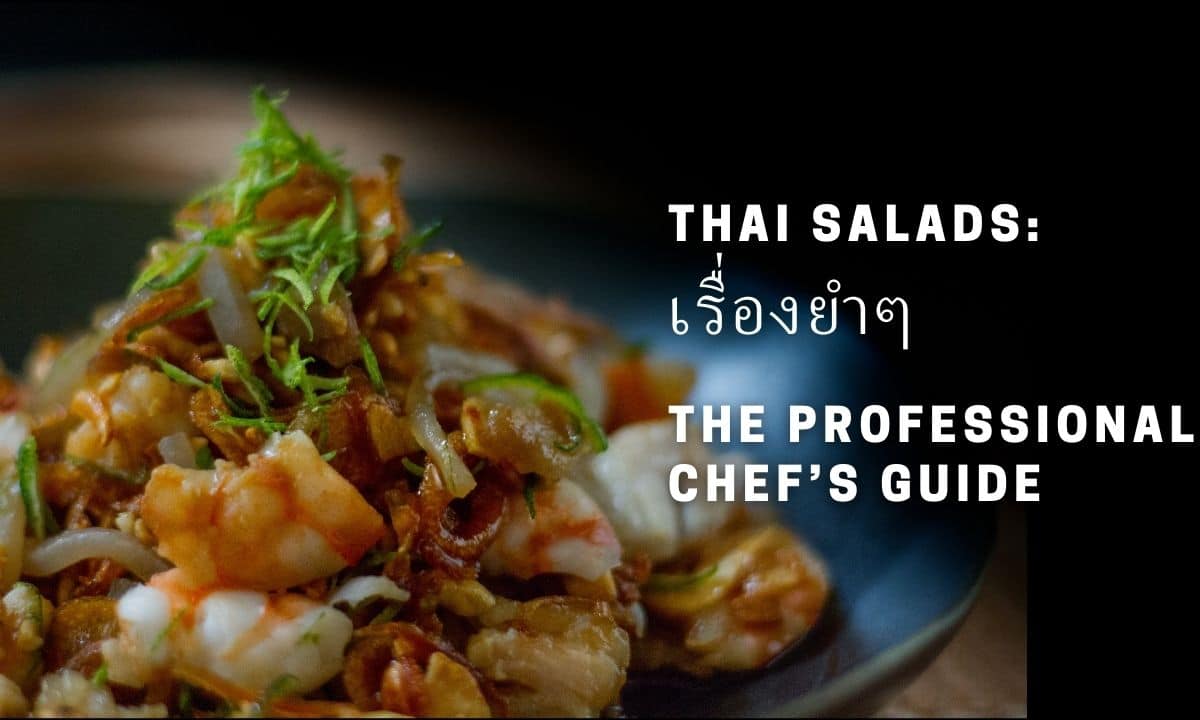
Thai Salads, The Professional Chef’s Guide - เรื่องยำๆ

In this inclusive masterclass, we cover everything you need to know about preparing Siamese salads creatively and authentically.

Modern-day Thai salads are often identified with a flamboyant appearance, and loud and often over-sweetened seasoning. In contrast, old-fashioned Siamese salads were gentle, soft and flavorful. In this immersive and uniquely designed masterclass, we decipher the intricacies of old-fashioned Siamese salads’ culinary codes, using Thaifoodmaster’s revolutionary visual approach to layering flavors.

While we all think we know how to toss a fantastic salad, in reality, the codes of Siamese salads remains enigmatic: This is due to the basic salad concept that dictates mixing short flavor phrases from distinctive elements in order that each element can be identified while remaining part of a harmonious new whole. Utilizing the Thaifoodmaster’s visual approach to salad design results in more positive, bright, vibrant, and coherent cooking skills, with a presentation that is not abstract but organic and containing references to nature.

This comprehensive masterclass will transform the way you perceive and prepare Thai salads – and you can anticipate a dramatic improvement in your skills after completing the class!
The art of Siamese old-school menu design

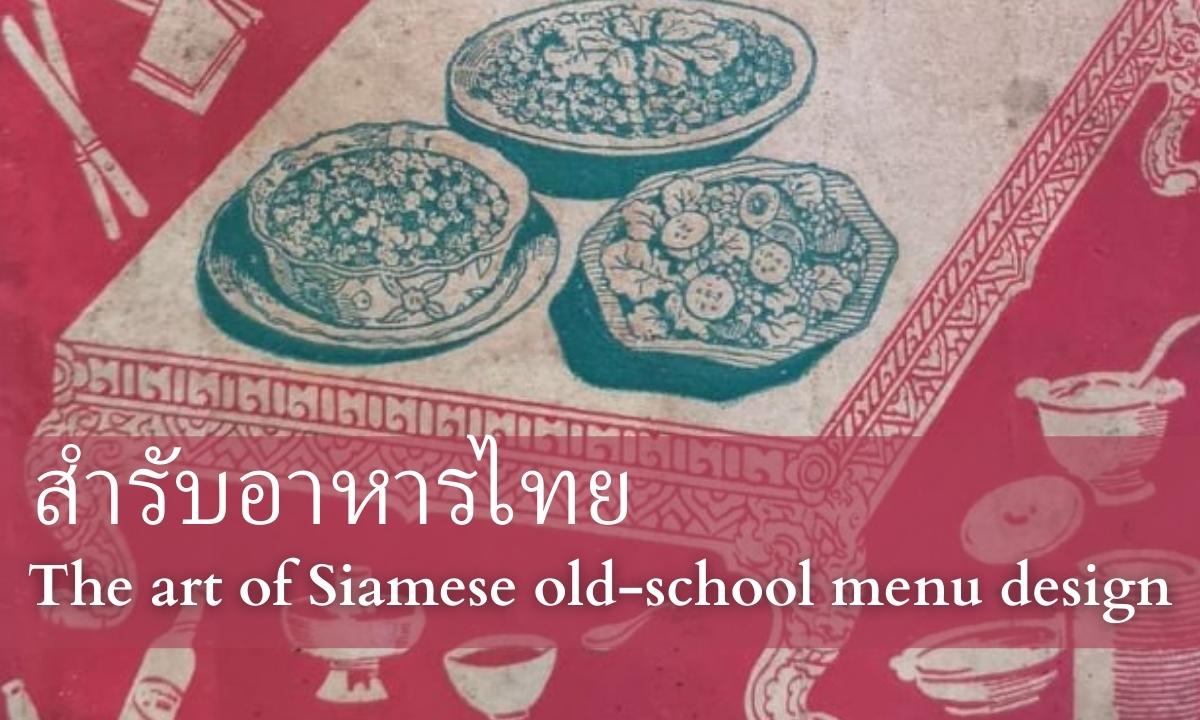
The art of Siamese old-school menu design สํารับอาหารไทย

Siamese meals are shared meals, and the dishes are served at the same time. The Siamese meal is always centered around rice; a well-crafted meal features several dishes served simultaneously. This selection of dishes is called samrub (สำรับ).

This masterclass explores the art of Siamese old-school menu design, as reflected in pre-WWII aristocratic Siamese manuscripts. The masterclass includes detailed reference materials with a large number of set menu ideas for everyday or special occasion meals, as well as a seasonal food calendar providing a year-round list of suggested ingredients based on their availability and optimal quality. We’ll discuss how to assemble a balanced daily menu spanning breakfast through lunch and afternoon snacks until dinner, with in-depth discussions on factors such as seasonal ingredients, the occasion, and one’s health.

Whether you are a beginner or an experienced chef, this masterclass will provide you with eye-opening invaluable reference material, a detailed Samrub design mind map, and sixty-six practical set menu examples that you can immediately incorporate into your cooking.
Masterclasses

1
2
3
4
5
6

MKHP_as_is (Maae Khruaa Huaa Bpaa; แม่ครัวหัวป่าก์)

Explore the culinary world of Lady Plean Passakornrawong (ท่านผู้หญิงเปลี่ยน ภาสกรวงศ์)  with our complete archive of the MKHP_as_is Project, showcasing her authentic recipes as they were penned in 1908. 

1
2
3
4
5
6
7
8
9
10
11
12
13
14
15
16
17
18
19
20
21
22
23
24
25
26
27
28
29
30
31
32
33
34
35
36
37
38
39
40
41
42
43
44
45
46
47
48
49
50
51
52
53
54
55
56
57
58

Articles and Recipes

Sweet and Sour Stir-Fried Giant Female Freshwater Prawn (ผัดเปรี้ยวหวานนางกุ้ง; phat bpriaao waan naang goong)
Phat bpriaao waan naang goong, giant female freshwater prawns steamed then stir-fried with a cassava flour sweet-sour glaze. Jeeb Bunnag, 1933.
smoked grilled duck salad
Salad of smoked grilled duck breast with roasted shallots and bitter yellow eggplants (พล่าอกเป็ดรมควันกับมะเขือเหลืองและหอมเผา ; phlaa ohk bpet rohm khwan gap ma kheuua leuuang lae haawm phao)
Grilled Catfish Parcels (งบปลาอุย; ngohp bplaa uy)
Ngohp bplaa uy, pla uy catfish sealed in banana leaf with aromatic herb paste and coconut cream, then charcoal-grilled. Jeeb Bunnag, 1933.
Chicken and Tomato Curry (แกงไก่กับมะเขือเทศ; gaaeng gai gap ma kheuua thaeht)
Gaaeng gai gap ma kheuua thaeht: tomatoes cored and stuffed with pounded chicken neck and corn, simmered in bone stock. Jeeb Bunnag, 1933.
Rice Noodles with Shrimp and Aromatic Coconut Sauce
(khanohm jeen naam phrik goong; ขนมจีนน้ำพริกกุ้งสูตรมหาเด็ด)
The sweet leading sour coconut cream based sauce, enriched and thickened with fragrant freshly roasted peanuts and golden beans are a wonderful coat to dress the sweet shrimp meat. The aromatics are being extracted in every possible way, by roasting, and frying, boiling and reducing, pounding and grounding. All the culinary methods are being fully employed to guarantee an absolute real first class dish. If you want to start some real Thai cooking going at your home, have the time and access to all the ingredients, than I really want you to try this dish. The building blocks of flavors work so well here and it will open you a great window to see the beginning of what is possible in Thai cuisine.
The Teachings of Jeeb Bunnag (คำสอนคุณย่าจีบ บุนนาค)
In 1929, fire destroyed her home in Bang Krabue—manuscripts, possessions, the material inheritance of generations. What survived was knowledge. Trained by Lady Plean Passakornrawong in the palace kitchens, she carried a culinary tradition that could not burn. Four years later, she began publishing. She signed her books with her actual address so anyone could write to her. This archive gathers recipes from across her publications, spanning four decades from her 1933 Samrub Raawp Bpee (สำรับรอบปี) to works published after her death in 1964. Each preparation carries her teaching method—tested instructions, structural logic preserved, substitutions provided for those with dietary restrictions. Palace technique made accessible. Court cuisine adapted for household kitchens. The grammar of Siamese cooking recorded by someone who carried it by birthright and gave it away through teaching.
Chicken Krayakhu, Delicate Chicken and Crab Young Rice Porridge (ไก่กระยาคู; gai gra yaa khuu)
Chicken Krayakhu, a refined porridge combining ground young rice with chicken, crab meat and fresh ginger. From Jeeb Bunnag's 1945 cookbook of aristocratic Thai cuisine.
Dtohm Jiu Beef Soup
Dtohm Jiu Beef Soup (แกงต้มจิ๋ว; gaaeng dtohm jiu)
Dtohm Jiu Beef Soup: sirloin simmered soft with sweet potato, soured with tamarind, finished with bird's eye chili and lime. Tamrap Sai Yaowapa, 1935.
Or Lam Gai Recipe - Velvety Laotian Stew of Chicken, Eggplants and Wild Pepper Vine (aw laam gai sai sakan) สูตรทำเอาะหลามไก่ใส่สะค้าน
This Laotian dish is popular in the mountainous region of Luang Prabang, the magical city in the northern part of Central Laos. It is a complex and mildly spicy stew, multi layered with flavors and textures, creating a unique, nutritious and delicious dish. It possesses a subtle harmony within a charismatic orchestra of flavors and textures; the taste of meat coupled with the sweetness of vegetables, opposing the bitterness of the greens and willingly surrendering to the aroma of fresh dill and fragrant lemon basil... but it's not all yet....
Yam of Chicken (ยำไก่; yam gai)
Yam gai: chicken simmered in coconut milk until dry, then dressed with mint, kaffir lime and green mango. Maawm Sohm Jeen, Tamra Gap Khao, 1890.
naam-yaa-nua
Naam Yaa Neuua – Northern Style Naam Ya according to Lady Plean Passakornrawong (น้ำยาเหนือ)
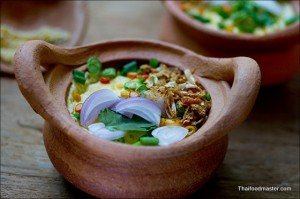
This fermented rice noodle dish is served with a slow-cooked, chili-less broth made from pounded fish meat and aromatics cooked in coconut cream. Creamy in color and velvety in texture, the broth is seasoned either with fish sauce, fermented fish or salted fish according to one’s preferences. The broth is allowed to slow-cook, achieving its full richness over a couple of hours. Once ready, the broth is poured over the noodles, which are then topped with a glossy-orangey layer of minced shrimp meat fried with their tomalley in pork lard. Complementing this richness are crunchy yellowish bean sprouts blanched in turmeric-tinted water, a sprinkle of sweet, golden crispy-fried shallots and, finally, green lemon basil leaves that endow the dish with a unique, rustic herbal persona.
c1935 Stuffed Potatoes with Bitter Orange Fragrant Beef Gaaeng Garee (แกงกะหรี่บรรจุมัน ม.ล. เติบ กำภู ; gaaeng garee ban joo man)
In Anglo-Indian cuisine, potatoes were used liberally in the curries; alongside the favorite sour chutneys, curries were also accompanied by fried, baked, boiled or mashed potatoes. Although the potato gradually found its way into many iconic Indian dishes, and even into Siamese cuisine, the tuber never replaced the rice of South Asia, despite the intentions of both the British and East Indian company officials. In the 1935 book Sai Yaowapa (ตำรับสายเยาวภา), Princess Yaovabha Bongsanid (พระเจ้าบรมวงศ์เธอ พระองค์เจ้าเยาวภาพงศ์สนิท) reflects the Anglo-Indian style gaaeng garee in her composition of bitter orange-fragrant beef gaaeng garee, which she serves in individual bowls made of fried potatoes, per a recipe recorded by M.L. Terb Gamphu (ม.ล. เติบ กำภู) and M.R. Tuang Sanitwong (ม.ร.ว.เตื้อง สนิทวงศ์).
The Direction of the Cut - Following the Structure Across Thai, Chinese, and Japanese Culinary Traditions: Verbs, Chemistry, and the Architecture of the Knife Cut
Pick up a shallot. The thin lines running from root to tip are not cosmetic - they are the bulb's structural axis, the direction along which its cells elongated as it grew. The choice you make at the cutting board is the angle at which your knife will sever those cells. The decision turns out to be governed by the same principle whether you are slicing shallots, butchering meat, preparing sashimi, or scoring squid. This essay follows that principle across the Thai, Chinese, and Japanese culinary traditions - through their verbs, their chemistry, and the architecture of the cut. It is one of the deepest patterns in cooking, and one of the least discussed.
Stir-Fried Sea Crab (ปูทะเลผัด; bpuu tha laeh phat)
Bpuu tha laeh phat: sea crab fried in pork lard with shiitake and peas, bound with wheat flour and bone stock. Maawm Ying Soophaa, 1951.
khao-prasuri
Phra Suli - Three-Flavor Seasoned Rice with Shrimp, Firm Pork Fat and Pork Skin (ข้าวพระศุลี; Khaao Phra Soolee)
Mrs. Paan Nanthaathiwat (คุณปาน นันทาถิวัฒน์) (1893-1955) was known for her kitchen skills. She often cooked for friends and family, spending time in the kitchen with her best friend, Mrs. Yim Pichaiyat Bunnag (คุณยิ้ม พิชัยญาติ บุนนาค (1892-1976). Thus, it was not a surprise when in 1953 she authored a recipe book as part of her merit offering on her 60th birthday. Sadly, Mrs. Paan passed away a year later and the publication, titled Hoong Khaao Dtohm Gaaeng (หุ้งข้าวต้มแกง), was later printed as a memorial book for her funeral. In 1977, the volume was reprinted for the funeral of her best friend, Mrs. Yim. It is unclear why Mrs. Paan named this citrusy, sour, and salty seasoned rice dish after Lord Shiva, calling it “Phra Suli (พระศุลี ; phra soolee)”. Yet I believe the name of the dish is meant to evoke the elegance and delicacy of the deity rather than to reference cultural authenticity or tradition.
1
2
3
4
5
6
7
8
9
10
11
12
13
14
15
16
17
18
19
20
21
22
23
24
25
26
27
28
29
30
31
32
33
34
35

Siamese Culinary Legends of the Rattanakosin period

Siamese cuisine is the accumulated wisdom of cooks at every level of the society – from housewives cooking at home and caring for their families, to cooks in the temple, to the culinary masters who created elaborate dishes behind the palace walls. In this series of short articles highlighting their lives and work, we salute and pay homage to the most prominent individuals who influenced and shaped the Siamese culinary arts bpaa ga sin (ปากะศิลป์) of the Rattanakosin Era.

These background descriptions will put into perspective the dishes we present and cook here on Thaifoodmaster and will also help you to cook Thai dishes that taste like they have a solid bond to the culture, the land and its people.
The Spice Vault

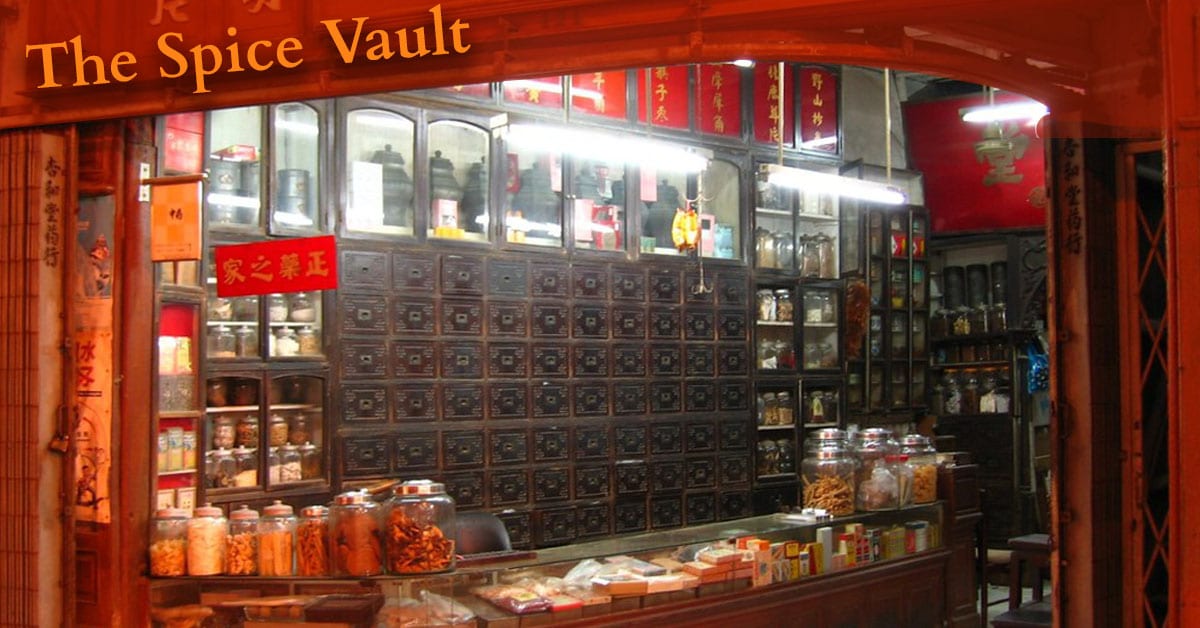
The Spice Vault

Here you will find recipes for popular spice mixes that you can make yourself! Homemade spice blends not only taste better and cost less, but you’ll also be able to create unique spice blends based on your personal preferences. As a bonus, you’ll use spices with no preservatives or artificial colors!

For example, members can explore recipes for Chinese five-spice mix, masalas for khao soi and hang lay curries, homemade Thai curry powder, and a variety of the spice blends used in Northern and Muslim Thai cuisines.