
Celebrating the Art of Siamese Culinary Wisdom and Thai Cuisine
Fish Miang Naem (เมี่ยงแนมปลา; miiang naaem bplaa)
Miiang naaem bplaa, grilled snakehead fish with fire-roasted galangal juice and bitter orange, served in lettuce cups. Jeeb Bunnag, 1933.
Shrimp-Topped Canapes (ขนมปังหน้ากุ้ง; khanohm bpang naa goong)
Khanohm bpang naa goong: fried bread squares topped with coconut-cream shrimp, garnished with semi-matured coconut in a cross. Jeeb Bunnag, 1933.
Bite-Sized Fried Shrimp-Rice Cake Parcels Wrapped With Fresh Garnishes in Cabbage Leaves (ส้มผักสด; sohm phak soht)
Sohm phak soht: coconut-battered fried shrimp-rice cakes wrapped in Chinese cabbage with pickled ginger, peanuts, shallots, lime and bitter orange. Jeeb Bunnag, 1945.
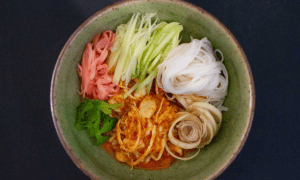
“Sang-de-Boeuf Porcelain” Fermented Rice Noodles by Princess Jongjittanom Dissakul (ขนมจีนครามแดง อย่าง หม่อมเจ้าหญิงจงจิตรถนอม ดิศกุล ; khanohm jeen khraam daaeng)
Royal Rice Porridge with Accompaniments (ข้าวต้มทรงเครื่อง; khaao dtohm sohng khreuuang)
Royal Rice Porridge with Accompaniments features crispy dried shrimp, tofu, peanuts, and potato chips atop soft rice porridge. From Jeeb Bunnag's 1945 cookbook.
Miiang Kha Nohm Laeh Lai (เมี่ยงขนมเลไลย; miiang kha nohm laeh lai)
Miiang kha nohm laeh lai, split sweets topped with boiled prawn and pork fat, with a sour tomalley dressing. From Mrs. Paan Nanthaaphiwat, 1953.
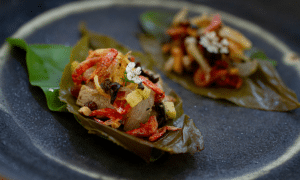
Miang Sot (เมี่ยงซด) - Miiang Soht, circa 1928
The word ‘miang’ is often used to designate Thai hors d’oeuvre-like snacks consisting of various ingredients wrapped in leaves. To chew on a miang parcel delivers a delightful melee of flavors and textures, each triumphing over the other in a continuous transformation, creating a captivating and ever-evolving taste experience throughout the bite.
Miang sot is a fermented leaves dish that appeared in a cookbook published in honor of Thao Suphatigaanapakdee (also known as Prik Sirisamphan) (ท้าวสุภัติการภักดี (ปริก ศิริสัมพันธ์)), in 1928. Titled Gap Khaao Thai (กับข้าวไทย), the book features a collection of recipes that were once prepared and served to King Chulalongkorn Rama V. The author, Sohmboon Sirisamphan (เถ้าแก่ สมบุญ ศิริสัมพันธ์) a respected elder (known as thao gaae (เถ้าแก่) in Thai), was a distinguished businessman of Chinese origins.
The dish is composed of fermented tea leaves; it is perhaps the closest tea leaves wrap to the ‘miang’ style introduced to the Siamese court by Princess Dara Rasami in the late 1800s. The dish gives us a glimpse of flavor of what her household, which participated in the informal marketplace events within the palace, might have to offer.
The popularity of miang in Siamese cuisine is tied to the history of two kingdoms, Siam and Lanna, and the life of one princess, Princess Dara Rasami. The daughter of King Inthawichayanon of Chiang Mai and the fifth consort of King Chulalongkorn, the princess was selected at the age of thirteen, in 1886, to serve as a consort to King Chulalongkorn in the Inner Palace; the decision was shaped by both political strategy and personal transition. At the time, Siam was consolidating its power and extending its influence over neighboring regions, including Lanna. As the ruler of Chiang Mai, Princess Dara Rasami’s father, Intawichayanon, viewed the move as a strategic alliance. In return, King Chulalongkorn presented him with the medal of the Order of Chula Chom Klao, which is the Siamese equivalent of a knighthood.
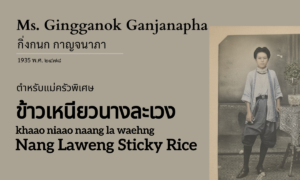
Nang Laweng Sticky Rice (ข้าวเหนียวนางละเวง; khaao niaao naang la waehng)
Khaao niaao naang la waehng, black glutinous rice balls deep-fried in lard with spiced beef and potato filling. Delicious Side Dishes, 1935.
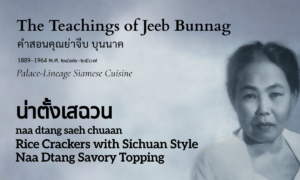
Rice Crackers with Sichuan Style Naa Dtang Savory Topping (น่าตั้งเสฉวน; naa dtang saeh chuaan)
Naa dtang saeh chuaan, a seafood-meat umami topping served with assorted crispy accompaniments. From Jeeb Bunnag's 1945 cookbook of Thai appetizers.
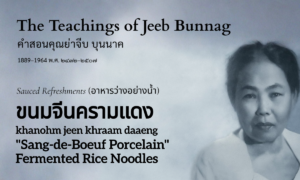
"Sang-de-Boeuf Porcelain" Fermented Rice Noodles (ขนมจีนครามแดง; khanohm jeen khraam daaeng)
Sang-de-Boeuf Porcelain Fermented Rice Noodles featuring a coconut sauce infused with roasted shallots, garlic and mung beans. From Jeeb Bunnag, 1945.

Emperor's Hong Te Rice Vermicelli (หมี่ฮ่องเต้; mee haawng dteh)
Emperor's Hong Te Rice Vermicelli, a royal Thai dish combining delicate shredded chicken and crab meat over rice noodles. From Jeeb Bunnag's 1945 cookbook.
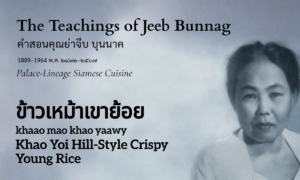
Khao Yoi Hill-Style Crispy Rice (ข้าวเหม้าเขาย้อย; khaao mao khao yaawy)
Khao Yoi Hill-Style Crispy Rice, a royal Thai snack mix combining puffed rice with crispy pork, aromatic herbs, and tofu. From Jeeb Bunnag's cookbook, 1945.
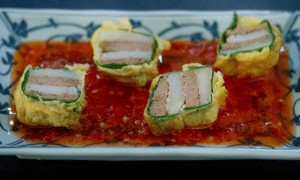
Pork liver and firm pork fat fried in batter (มันสลับตับสุกร; man salap dtap soogaawn)
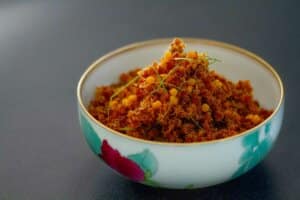
Old-Fashioned Phat Phrik Khing, Yesteryear's Travel Food (ผัดพริกขิง อาหารคนเดินทาง)
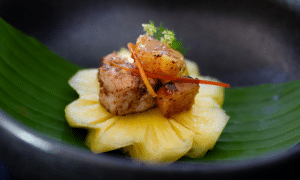
Spiced Skewers of Grilled Pork Neck and Firm Pork Fat with Fresh Pineapple (หมูปิ้งสัปปะรด; Muu Bping Sapbparoht)
Known as muu bping sapbparoht (หมูปิ้งสัปปะรด) and translated as grilled pork with pineapple, this dish showcases cubes of grilled pork meat and firm fat with fresh pineapple. The pork meat is marinated in light soy sauce and an array of dry spices, giving it earthy and slightly spicy notes. The cubes are then threaded onto skewers, interspersed with evenly sliced pieces of firm pork fat. When grilled, these pieces of pork fat introduce an additional layer of richness and juiciness to the meat. The preferred cut of choice for this dish is pork neck, a cut highly valued for its optimal ratio of lean meat to fat, culminating in a pleasingly succulent texture when grilled.
In Thai cuisine, it is common practice to sprinkle grated coconut over glowing charcoal while grilling. The heat-induced combustion of aromatic fats within the coconut introduces an additional dimension of sweet, smoky richness to the dish. Meanwhile, the charring of the edges of the meat catalyzes the caramelization of its natural sugars, yielding a delightful sweetness that further enhances the smoky undertones of the meat.
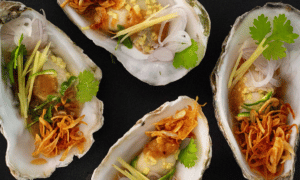
c1949 Quick-cured oysters with ginger and kaffir lime zest by Maawm Ying Soophaa (หอยนางรมดอง โดย หม่อมหญิงสุภา พ.ศ. 2492; haawy naang rohm daawng)
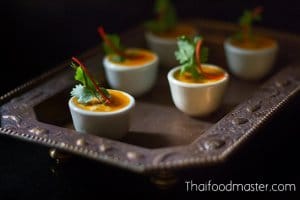
Fat Horse - A Thai appetizer with an amusing name: (ม้าอ้วน ; maa uaan)
Maa ouan is a Thai appetizer with clear Chinese characteristics. It resembles the filling of khanohm jeep dumplings (ขนมจีบ), the crab and pork meat fillings of haawy jaaw (ฮ่อยจ๊อ), or the shrimp and pork meat mix of haae geun (แฮ่กึน). Minced pork and shrimp meat are seasoned with garlic, coriander roots, white peppercorns and salt, then mixed with duck egg and a bit of coconut cream, placed in small ceramic cups (thuay dta lai, ถ้วยตะไล), and steamed. It can be served either as a starter, an hors d'oeuvres, or even as a side dish to curries.
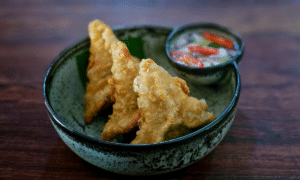
The Elegance of Khanohm Khaang Khaao (ขนมค้างคาว)
If palaces represent grandeur and wealth within a society, and poems often focus on emotional experience or the beauty of language, then the significance of a dumpling may be inferred by its structured elegance and minimalism – each fold and pleat a deliberate act, and each filling a curated experience constructing comfort in its most elemental form.
Khanom khaang khaao (ขนมค้างคาว) is a traditional Siamese fried, triangular-shaped dumpling with obvious Chinese origins. Its earliest recorded recipe can be traced back to Jao Khraawk Thaawng Yuu (เจ้าครอกทองอยู่), a distinguished aristocrat from the royal court of Ayutthaya. Historical records indicate that, from the early days of the Rattanakosin era, her recipe was a favored snack within the Siamese royal court.
These dumplings are shaped like triangles and, according to some, resemble bats: For this reason, they are called khanom khaang khaao (ขนมค้างคาว) – ‘the bat’s treat’. The dumpling’s dough is made from rice and mung bean flours; its filling is prepared by combining grated coconut and shrimp meat, which are cooked together into a dense, flavorful mixture that brings out the nutty-sweet taste of the grated coconut and the savory-sweet flavors of the shrimp. Kaffir lime leaves, sliced into hair-thin juliennes, add a hint of citrus.
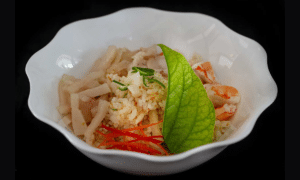
Phra Suli - Three-Flavor Seasoned Rice with Shrimp, Firm Pork Fat and Pork Skin (ข้าวพระศุลี; Khaao Phra Soolee)
Mrs. Paan Nanthaathiwat (คุณปาน นันทาถิวัฒน์) (1893-1955) was known for her kitchen skills. She often cooked for friends and family, spending time in the kitchen with her best friend, Mrs. Yim Pichaiyat Bunnag (คุณยิ้ม พิชัยญาติ บุนนาค (1892-1976). Thus, it was not a surprise when in 1953 she authored a recipe book as part of her merit offering on her 60th birthday. Sadly, Mrs. Paan passed away a year later and the publication, titled Hoong Khaao Dtohm Gaaeng (หุ้งข้าวต้มแกง), was later printed as a memorial book for her funeral. In 1977, the volume was reprinted for the funeral of her best friend, Mrs. Yim.
It is unclear why Mrs. Paan named this citrusy, sour, and salty seasoned rice dish after Lord Shiva, calling it “Phra Suli (พระศุลี ; phra soolee)”. Yet I believe the name of the dish is meant to evoke the elegance and delicacy of the deity rather than to reference cultural authenticity or tradition.
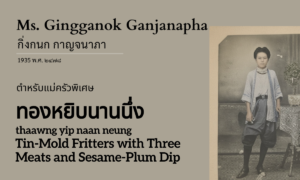
Thong Yip Naan Nueng (ทองหยิบนานนึ่ง; thaawng yip naan neung)
Thong Yip Naan Nueng, mold-fried wheat batter with crab, pork, and chicken, inverted mid-fry until golden. From Gingganok Gaanjanaaphaa, 1935.

Cantonese-Style Tofu (เต้าหู้แคนต้อน; dtao huu khaaen dtaawn)
Cantonese-Style Tofu, an elaborate Thai-Cantonese fusion dish featuring stuffed tofu and squid with pork offal in sweet-sour sauce. From Jeeb Bunnag's 1945 cookbook.
1
2
3
4
5


Get Access – Join Thaifoodmaster Today
Practical and kitchen-tested recipes with a mix of theory, history, psychology, and Siamese culture tidbits.
-
Get access to everything right away. Unlock more than 50 Masterclasses, over 700 recipes and Articles
Access to Thaifoodmaster’s constantly growing library of prime professional classes, articles, recipes and videos on Siamese culinary topics, available nowhere else in English.
-
GET EXTRA - New Masterclasses and Daily Recipes
Gain access to NEW masterclasses as they become available. Access DAILY translations of heritage-recipes.
-
1-1 support from Hanuman
1-1 support from Hanuman to help you achieve your professional Thai culinary goals
-
Live Q&A Sessions
The opportunity to join a monthly live two-hour videoconference where I can answer your questions.
-
Great Value!
one year access for the price of 3 days in-person training.
You will get everything you need to:
-
To Get inspired
When you design or build a new menu for an event or restaurant or even prepare for dinner with friends.
-
To Satisfy your curiosity.
Finally !
-
To Master Your Craft
Master your Thai cooking skills and expand your repertoire.
It is truly brilliant with a revolutionary approach introducing aspects and concepts never broached by cookbooks.

Ian Westcott
Sourcing Wines for Discerning Private Clients
© 2008 – 2026 Thaifoodmaster


