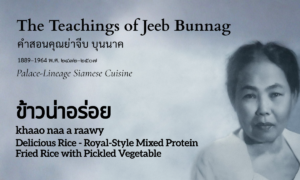
Grilled Rawaaeng Curried Rice Parcels in Banana Leaves (ระแวงขาวปิง; ra waaeng khaao bping)
Ra waaeng khaao bping, rice parcels with duck and coconut cream wrapped in banana leaves and grilled. From Jeeb Bunnag's 1945 Thai appetizer cookbook.
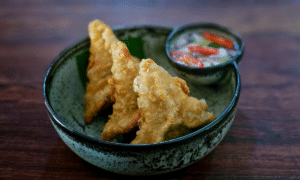
Taro and Crab Fritters (ทอดมันปูเผือก; thaawt man bpuu pheuuak)
Thaawt man bpuu pheuuak: finely shredded taro and sea crab in coconut-cream batter, fried in flat molds. From Jeeb Bunnag, 1933.
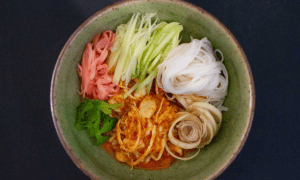
"Sang-de-Boeuf Porcelain" Fermented Rice Noodles (ขนมจีนครามแดง; khanohm jeen khraam daaeng)
Sang-de-Boeuf Porcelain Fermented Rice Noodles featuring a coconut sauce infused with roasted shallots, garlic and mung beans. From Jeeb Bunnag, 1945.
มังกรคาบแก้ว กับ ม้าฮ่อ
เครื่องว่างชนิดนี้ ชื่อ "ม้าฮ่อ" บางคนเขียน "ม้าห้อ" เป็นอาหารว่างสัญชาติมอญ สมาชิกในเรือนเรารู้จักกันดีพอสมควร ถ้าใครไม่รู้จักก็จะได้รู้จักกันล่ะ เห็นจั่วหัวชื่อเป็นสองอย่าง จัดจานแยกกัน ก็เพื่อแบ่งให้เห็นชัด ความจริงก็คืออาหารว่างอย่างเดียวกัน เดิมชาวไทยเชื้อสายมอญจะนิยมทำในงานบุญหรืองานพิธีต่าง ๆ โดยใช้ผลไม้ที่มีรสเปรี้ยวมาโรยด้วย 'พริกกะเกลือ' (อย่าพาลไปนึกถึงพริกกะเกลือสมัยนี้เสียล่ะ คนละแบบกัน) เพื่อให้รับประทานผลไม้เปรี้ยวได้อย่างอร่อยขึ้น ไม่ต้องทิ้งให้เสียของ พริกกะเกลือที่ว่าคือการผัดหมูกุ้ง ใส่น้ำตาลและถั่วลิสงคั่ว ตำรับไทยแท้ไม่มีดอก จะมีก็แต่ 'เมี่ยง'ผลไม้ ที่ดูคล้ายกัน กระนั้นคนไทยก็รับเอามาเหมือนอาหารอีกหลายชนิดหลายสัญชาติ จนได้ชื่อว่าเป็นเครื่องว่างไทยมาแต่โบร่ำโบราณ
Fish Miang Naem (เมี่ยงแนมปลา; miiang naaem bplaa)
Miiang naaem bplaa, grilled snakehead fish with fire-roasted galangal juice and bitter orange, served in lettuce cups. Jeeb Bunnag, 1933.
Sticky Rice with Golden Fish Topping (ข้าวเหนียวหน้าปลาทอง; khaao niaao naa plaa thaawng)
Sticky Rice with Golden Fish Topping features coconut-infused glutinous rice topped with crispy sweet-savory fish floss and fried shallots. From Jeeb Bunnak's 1945 cookbook of Thai desserts.
khao-prasuri
Phra Suli - Three-Flavor Seasoned Rice with Shrimp, Firm Pork Fat and Pork Skin (ข้าวพระศุลี; Khaao Phra Soolee)
Mrs. Paan Nanthaathiwat (คุณปาน นันทาถิวัฒน์) (1893-1955) was known for her kitchen skills. She often cooked for friends and family, spending time in the kitchen with her best friend, Mrs. Yim Pichaiyat Bunnag (คุณยิ้ม พิชัยญาติ บุนนาค (1892-1976). Thus, it was not a surprise when in 1953 she authored a recipe book as part of her merit offering on her 60th birthday. Sadly, Mrs. Paan passed away a year later and the publication, titled Hoong Khaao Dtohm Gaaeng (หุ้งข้าวต้มแกง), was later printed as a memorial book for her funeral. In 1977, the volume was reprinted for the funeral of her best friend, Mrs. Yim. It is unclear why Mrs. Paan named this citrusy, sour, and salty seasoned rice dish after Lord Shiva, calling it “Phra Suli (พระศุลี ; phra soolee)”. Yet I believe the name of the dish is meant to evoke the elegance and delicacy of the deity rather than to reference cultural authenticity or tradition.
Miang Sot (เมี่ยงซด) - Miiang Soht, circa 1928
The word ‘miang’ is often used to designate Thai hors d’oeuvre-like snacks consisting of various ingredients wrapped in leaves. To chew on a miang parcel delivers a delightful melee of flavors and textures, each triumphing over the other in a continuous transformation, creating a captivating and ever-evolving taste experience throughout the bite. Miang sot is a fermented leaves dish that appeared in a cookbook published in honor of Thao Suphatigaanapakdee (also known as Prik Sirisamphan) (ท้าวสุภัติการภักดี (ปริก ศิริสัมพันธ์)), in 1928. Titled Gap Khaao Thai (กับข้าวไทย), the book features a collection of recipes that were once prepared and served to King Chulalongkorn Rama V. The author, Sohmboon Sirisamphan (เถ้าแก่ สมบุญ ศิริสัมพันธ์) a respected elder (known as thao gaae (เถ้าแก่) in Thai), was a distinguished businessman of Chinese origins. The dish is composed of fermented tea leaves; it is perhaps the closest tea leaves wrap to the ‘miang’ style introduced to the Siamese court by Princess Dara Rasami in the late 1800s. The dish gives us a glimpse of flavor of what her household, which participated in the informal marketplace events within the palace, might have to offer. The popularity of miang in Siamese cuisine is tied to the history of two kingdoms, Siam and Lanna, and the life of one princess, Princess Dara Rasami. The daughter of King Inthawichayanon of Chiang Mai and the fifth consort of King Chulalongkorn, the princess was selected at the age of thirteen, in 1886, to serve as a consort to King Chulalongkorn in the Inner Palace; the decision was shaped by both political strategy and personal transition. At the time, Siam was consolidating its power and extending its influence over neighboring regions, including Lanna. As the ruler of Chiang Mai, Princess Dara Rasami’s father, Intawichayanon, viewed the move as a strategic alliance. In return, King Chulalongkorn presented him with the medal of the Order of Chula Chom Klao, which is the Siamese equivalent of a knighthood.
Royal Rice Porridge with Accompaniments (ข้าวต้มทรงเครื่อง; khaao dtohm sohng khreuuang)
Royal Rice Porridge with Accompaniments features crispy dried shrimp, tofu, peanuts, and potato chips atop soft rice porridge. From Jeeb Bunnag's 1945 cookbook.
Khao Krob
Crispy Rice - Khaao Graawp (ข้าวกรอบ อย่างหม่อมเจ้าสาย ลดาวัลย์)
Suan Sunandha Palace was the permanent residence of Mom Chao Sai Ladawan (HRH Princess Saisawali Phirom, พระวิมาดาเธอ หม่อมเจ้าสาย ลดาวัลย์), the Royal Consort to Rama V. In the kitchen of Suan Sunandha Palace, the Princess presided over a peak era of culinary innovation until her passing on June 24, 1929. Reflecting her practicality, the Princess’ recipes frequently incorporated the era’s common pantry ingredients in new and surprising combinations. For example, in her boat-embarking chili relish (น้ำพริกลงเรือ; naam phrik lohng reuua), a relish still enjoyed today, the Princess pairs fermented shrimp paste chili relish with sweet pork, crispy fried fish, salted duck eggs and hairy-fruited eggplant (maeuk) (มะอึก). Another example is her gaaeng ran juaan (แกงรัญจวน) – the Princess prepares a vibrant spicy and sour soup, fragrant with the aroma of Thai basil, from the leftovers of a stir-fried beef dish and fermented shrimp paste chili relish, which she cooked together with lemongrass, shallots and garlic. Mom Chao Sai Ladawan’s recipes, many already recreated here at Thaifoodmaster, were recorded by Princess Sadap Ladawan (เจ้าจอมหม่อมราชวงศ์สดับลดาวัลย์), a key figure in the Palace’s culinary affairs, and subsequently compiled and published by Suan Sunandha Rajabhat University in a volume dedicated to seasoned rice dishes and chili relishes. In this dish called khaao graawp (ข้าวกรอบ), or “crispy rice” the Princess seasons cooked jasmine rice with chili jam, and adds four fried components, each highlighting a different element of the crispiness indicated by the dish’s name.
Nang Laweng Sticky Rice (ข้าวเหนียวนางละเวง; khaao niaao naang la waehng)
Khaao niaao naang la waehng, black glutinous rice balls deep-fried in lard with spiced beef and potato filling. Delicious Side Dishes, 1935.
Grilled Seasoned Rice Crust (ข้าวตังปิ้งปรุง; khaao dtang bping bproong)
Khaao dtang bping bproong, rice crust grilled with garlic-lard and fish sauce, brushed on with a banana leaf. Jeeb Bunnag, 1933.
ผัดปลาแห้งแตงอุลิตอย่างปัจจุบัน และ ผัดปลาแห้งโบราณ อย่างคุณม่วง ราชนิกูล
ผัดปลาแห้งอย่างปัจจุบัน และ ผัดปลาแห้งโบราณ - สมัยก่อนถือว่าอยู่ในสำรับหลัก เป็นอาหารคาว ไปดูในตำรา "แม่ครัวหัวป่าก์" ได้ขอรับ ปัจจุบันคนรู้จักน้อยลง และมักคิดว่าเป็นอาหารว่าง หน้านี้แตงอุลิตกำลังมีรสดี ปลาจากช่วงหน้าเกี่ยวข้าวก็มันดี ทำปลาแห้งหรือปลาเกลือเอาไว้ ยิ่งเหมาะที่จะนำมาปรุงตำรับนี้ แต่จะนำแต่ตำรับที่พอจะรู้จัก ก็ไม่ใช่ Thaifoodmaster สิขอรับ วันนี้จะเอาตำรับปลาแห้ง แบบโบราณจริง ๆ มาให้รู้จักด้วย ใครที่พอจะรู้จักปลาแห้งอย่างที่มีในปัจจุบัน จะได้เอาไปคุยเพิ่มได้ว่า ยังมีโบราณกว่านี้อีก ใครที่มาบอกว่าเคยเห็นคุณย่าคุณยายทำกิน เราก็จะได้ข่มว่างั้นขอ เรียนเชิญคุณย่าคุณยายมาฟังสูตรของคุณทวดคุณเทียดดูทีรึ จะมีความเห็นเป็นประการใด
Beautiful Rice (ข้าวโฉมงาม; khaao chohm ngaam)
Beautiful Rice, turmeric-infused rice with crab and chicken served in hollowed tomato cups. From Jeeb Bunnag's 1945 Thai cookbook.
Royal-Style Stir-Fried Unripe Rice with Pork and Seafood (ข้าวเหม้าหมี่; khaao mao mee)
Royal-Style Stir-Fried Unripe Rice with Pork and Seafood, a dry-fried Thai royal dish using pounded unripe rice instead of vermicelli. From Jeeb Bunnak's 1945 cookbook.
Savory Filled Cockle Shell Dumplings (คลางแคลงทรงเครื่อง; khlaang khlaaeng sohng khreuuang)
Savory Filled Cockle Shell Dumplings, translucent palace-style dumplings with seafood and pork filling. From Jeeb Bunnag's 1945 Thai cookbook of appetizers.
Crispy pork or sweet beef threads (หมูเค็มผัดฝอย; muu khem phat faawy)
Crispy sweet pork or beef threads  (หมูเค็มผัดฝอย ; muu khem phat faawy)
This is a modern version of a classic sweet meat threads condiment that often complements chili relishes or is served as a side dish in classic Siamese samrub meals.
เมี่ยงคำ
ค้นข้อมูลดูว่าตำรับ "เมี่ยงคำ" เริ่มปรากฏมีบันทึกไว้เป็นลายลักษณ์อักษรแต่เมื่อใดกันแน่ สอบทานดูตำราอาหารเก่า ๆ หลายตำรับ ที่ตีพิมพ์ในสมัยรัชกาลที่ ๕ ก็ไม่พบ "เมี่ยงคำ" ในวิถีอาหารไทยโบราณแต่อย่างใด พบแต่ เมี่ยงลาว หรือ เมี่ยงพายัพ ซึ่งหมายถึงเมี่ยงที่มาจากทางเหนือ จากการอ่านหนังสือหลาย ๆ เล่ม เพื่อหาข้อมูลพบว่า "เมี่ยง" ได้เริ่มเป็นที่นิยมแพร่หลายในรั้วในวัง ก็หลังจากที่พระราชชายาเจ้าดารารัศมี ลงมารับราชการในราชสำนักที่กรุงเทพฯ และได้นำวัฒนธรรมการกินเมี่ยง ซึ่งเป็นหนึ่งในวิถีการดำรงชีวิตแบบล้านนาติดมาในหมู่ข้าราชบริพารชาวเหนือในตำหนักของพระองค์ ซึ่งบรรดาชาววังในสมัยนั้นจะเห็นเป็นสิ่งแปลกตาโก้เก๋ และคอยเอาอย่างในบางเรื่อง ทำให้หลังจากนั้นจึงค่อยเริ่มมีตำรับเมี่ยงต่าง ๆ ออกมามากมาย ปรากฏในตำราอาหารหรือเครื่องว่างต่าง ๆ ของไทยในสมัยต่อ ๆ มา สำหรับ "เมี่ยงคำ" นั้น พบว่ามีปรากฏครั้งแรก ในบทกาพย์เห่ชมเครื่องว่าง ของรัชกาลที่ ๖ ที่ใช้เป็นบทนำในตอนต้นบทความนี้ ซึ่งนั่นก็แสดงว่า "เมี่ยงคำ" กลายเป็นเครื่องว่างในวังหลวงเป็นที่นิยมกันมากแล้วในสมัยนั้นถึงสามารถขึ้นโต๊ะเครื่องเสวยได้ จึงเป็นข้อสันนิษฐานว่าน่าจะมีกำเนิดมาไม่เก่าไปกว่าสมัยรัชกาลที่ ๕ เป็นแน่แท้ ตำรับ "เมี่ยงคำ" คงจะเกิดจากการคิดประดิษฐ์ทำนำสิ่งละอันพันละน้อย ใส่ไปในคำเมี่ยง พร้อมใส่น้ำเมี่ยง เพื่อรับประทาน ทีละคำ ๆ จึงได้ชื่อว่า "เมี่ยงคำ" เหมือน ๆ หรือทำนองเดียวกันกับ "เมี่ยงอยาก" ที่ คุณป้า ม.ล. เนื่อง นิลรัตน์ เขียนบันทึกไว้ในหนังสือ "ชีวิตในวัง" ที่ตีพิมพ์มาแล้วหลายครั้ง ว่าเกิดจากความอยากกินเมี่ยง ของกลุ่มข้าหลวงวังสวนสุนันทา เวลามานั่งจับกลุ่มคุยกันยามว่างภารกิจ และไปค้นหาของในครัว ได้ กากหมู น้ำตาลปึก กะปิ ฯลฯ ก็นำมารับประทานกันเป็น"เมี่ยง" ที่อร่อยอย่างง่าย ๆ
Alternating Colored Conch Shells (สังข์สลับสี; sang sa lap see)
Alternating Colored Conch Shells, multicolored dumplings tinted with natural dyes and shaped like conch shells. From Jeeb Bunnag's 1945 dessert cookbook.
The Elegance of Khanohm Khaang Khaao (ขนมค้างคาว)
If palaces represent grandeur and wealth within a society, and poems often focus on emotional experience or the beauty of language, then the significance of a dumpling may be inferred by its structured elegance and minimalism – each fold and pleat a deliberate act, and each filling a curated experience constructing comfort in its most elemental form. Khanom khaang khaao (ขนมค้างคาว) is a traditional Siamese fried, triangular-shaped dumpling with obvious Chinese origins. Its earliest recorded recipe can be traced back to Jao Khraawk Thaawng Yuu (เจ้าครอกทองอยู่), a distinguished aristocrat from the royal court of Ayutthaya. Historical records indicate that, from the early days of the Rattanakosin era, her recipe was a favored snack within the Siamese royal court. These dumplings are shaped like triangles and, according to some, resemble bats: For this reason, they are called khanom khaang khaao (ขนมค้างคาว) – ‘the bat’s treat’. The dumpling’s dough is made from rice and mung bean flours; its filling is prepared by combining grated coconut and shrimp meat, which are cooked together into a dense, flavorful mixture that brings out the nutty-sweet taste of the grated coconut and the savory-sweet flavors of the shrimp. Kaffir lime leaves, sliced into hair-thin juliennes, add a hint of citrus.
Three Noodle Bundles (เส้นสามแซ่; sen saam saae)
Three Noodle Bundles feature rice vermicelli, Chinese egg noodles (mee sua), and glass noodles wrapped around mustard greens and bound with seasoned pork in Pumpkin Broth. From Jeeb Bunnag's 1945 cookbook.
1
2
3
4
5

Have a look at some of our favorite courses.

Aromatic Primer for Thai Cuisine - Part 1
Patterns – Decoding the Complexity of Siamese Curry Paste: A Multidimensional Exploration

Get Access – Join Thaifoodmaster Today

Practical and kitchen-tested recipes with a mix of theory, history, psychology, and Siamese culture tidbits.

  • Get access to everything right away. Unlock more than 50 Masterclasses, over 700 recipes and Articles

    Access to Thaifoodmaster’s constantly growing library of prime professional classes, articles, recipes and videos on Siamese culinary topics, available nowhere else in English.
  • GET EXTRA - New Masterclasses and Daily Recipes

    Gain access to NEW masterclasses as they become available. Access DAILY translations of heritage-recipes.

  • 1-1 support from Hanuman

    1-1 support from Hanuman to help you achieve your professional Thai culinary goals

  • Live Q&A Sessions

    The opportunity to join a monthly live two-hour videoconference where I can answer your questions.

  • Great Value!

    one year access for the price of 3 days in-person training.

You will get everything you need to:

  • To Get inspired

    When you design or build a new menu for an event or restaurant or even prepare for dinner with friends.

  • To Satisfy your curiosity.

    Finally !

  • To Master Your Craft

    Master your Thai cooking skills and expand your repertoire.

It is truly brilliant with a revolutionary approach introducing aspects and concepts never broached by cookbooks.
Ian Westcott
Ian Westcott
Sourcing Wines for Discerning Private Clients