
Celebrating the Art of Siamese Culinary Wisdom and Thai Cuisine
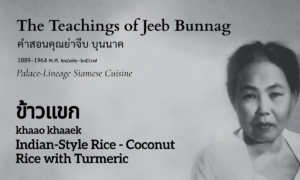
Indian-Style Rice (ข้าวแขก; khaao khaaek)
Khaao khaaek: lightly salted soft rice under a turmeric-tinted, jasmine-scented coconut cream, twice as thick as the rice. Jeeb Bunnag, 1933.
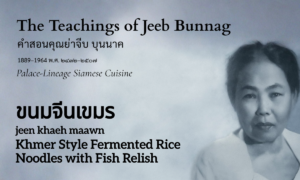
Khmer Rice Noodles with Fish Relish (ขนมจีนเขมร; jeen khaeh maawn)
Khmer Rice Noodles with Fish Relish features smoke-dried barb fish prepared through a four-stage process with aromatic herbs. From Jeeb Bunnak's 1945 cookbook.
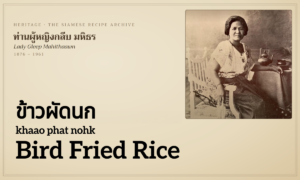
Bird Fried Rice (ข้าวผัดนก; khaao phat nohk)
Khaao phat nohk, field fowl or any small bird stir-fried with pork ham and mustard powder. From Lady Gleep Mahithaawn, 1949.
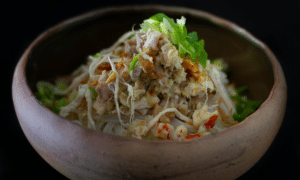
Naam Yaa Jeen - Fermented Rice Noodles with Chinese Sauce by HRH Prince Krom Luang Pitak Montri (น้ำยาจีน อย่างกรมหลวงพิทักษมนตรี)
Among the various curries that can be poured over khanom jeen fermented rice noodles, this broth, known as Chinese-style “naam yaa,” is unique in that it is a water-based curry that does not have chilies. As such, rather than the typical reddish-rust color of most coconut-based naam ya dishes from the Central Plains of the Kingdom, the sauce glows with a soft, light ivory hue, beautifully reflecting the dish’s natural sweet-savoriness, which is derived from slow-braising three proteins – chicken, pork and shrimp – along with a curry paste galvanized by smoke-dried fish and aromatic roots like galangal, fingerroot and sand ginger. The naam ya broth is served over a bed of fermented rice noodles and garnished with toppings such as delicate pulled chicken breast threads, golden-crispy fried shallots and garlic, and vivid green fresh coriander leaves and spring onion. All these elements add a visual grace and a hint of freshness to the robust broth – the signature dish of Prince Krom Luang Pitak Montri (กรมหลวงพิทักษ์มนตรี).
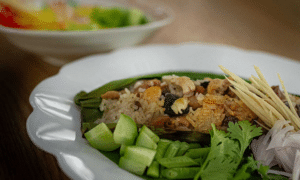
Grilled banana leaf parcels filled with butter-fried rice with chicken, chicken offal and dried spices, served with a sour-sweet coconut-base vegetable relish (ข้าวงบไก่ อาจาดอังวะ ; khaao ngohp gai aajaat angwa)
The khaao ngohp gai (ข้าวงบไก่) recipe by Mom Chao Sai Ladawan (Princess Saisawali Phirom) evokes the flavor and aesthetics of Muslim-style cooking. First, cooked rice, chicken, and chicken offal are fried with butter and perfumed with whole spices. The buttery fried rice is wrapped in banana leaves and then grilled, forming a crispy outer crust of spiced-infused rice grains.
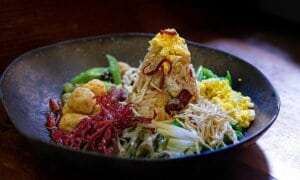
c1901 Siamese seasoned mix rice Javanese style (ข้าวนาซิประจิต หรือ ข้าวประดับ ; khaao naasi prajit or khaao bpradap)
Three-Color Vegetable Fried Rice (ข้าวผัดผักสามสี; khaao phat phak saam see)
Three-color vegetable fried rice with diced chicken, carrot, peas and radish, the beans boiled in ash water to stay green. From Paan Nanthaaphiwat, 1953.
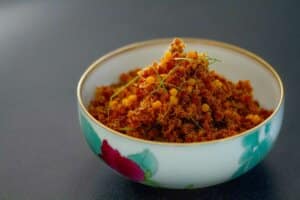
Old-Fashioned Phat Phrik Khing, Yesteryear's Travel Food (ผัดพริกขิง อาหารคนเดินทาง)
Modified Turnip Cake (ขนมหัวผักกาดแปลง; khanom hua phak gaat bplaeng)
Khanom hua phak gaat bplaeng: steamed turnip cake, deep-fried golden, then stir-fried with shrimp and egg. Jeeb Bunnag, 1933.
Potato Rice Soup (ข้าวต้มันฝรั่ง; khaao dtohm man farang)
Potato Khao dtohm Rice Soup, featuring a clear seafood broth with pork meatballs, served with crispy fried potatoes on the side. From Gingganok's 'Delicious Side Dishes,' 1935.
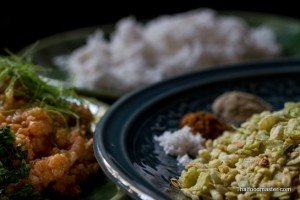
Roasted Pounded Unripe Rice Served with Shrimp Relish and Grated Coconut (ข้าวเม่าเบื้อง ; khao mao beuuang)
Khao mao bueang and khao Mao Mee (ข้าวเม่าหมี่) are the only two known savory dishes from antiquity made from pounded unripe rice grains (ข้าวเม่า; khao mao). While khao mao mee (ข้าวเม่าหมี่) is still a well-known and widely available dish, very few people remember khao mao bueang. Therefore, we are pleased to reintroduce into the Thai culinary repertoire the delicious khao mao bueang.
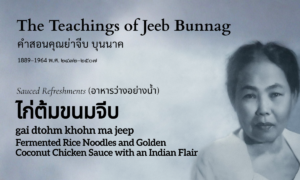
Fermented Rice Noodles and Golden Coconut Chicken Sauce with an Indian Flair (ไก่ต้มขนมจีบ; gai dtohm khohn ma jeep)
Gai dtohm khohn ma jeep, a coconut-simmered chicken sauce with Indian influences served with fermented rice noodles. From Jeeb Bunnag's 1945 cookbook.
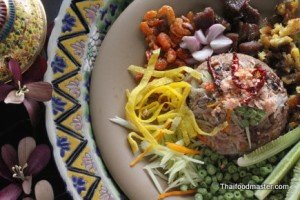
Rice Seasoned with Shrimp Paste
(khaao khlook gabpi ; ข้าวคลุกกะปิ) สูตรทำข้าวคลุกกะปิของ หม่อมเจ้าจงจิตรถนอม ดิศกุล - Rice Seasoned with Shrimp Paste Recipe - Each of the dish’s components is separately prepared and set aside, and mixed individually for each serving. A pleasant harmony of several flavors is created – complex and profound in taste, the dish is a stunning display of confidence. There are many variations of this dish: I have chosen to publish the version described by Prince Johngjit thanaawm Disagoon. This is the very same version prepared for King Chulalongkorn the Great during his unforgettable trip to Italy.
(khaao khlook gabpi ; ข้าวคลุกกะปิ) สูตรทำข้าวคลุกกะปิของ หม่อมเจ้าจงจิตรถนอม ดิศกุล - Rice Seasoned with Shrimp Paste Recipe - Each of the dish’s components is separately prepared and set aside, and mixed individually for each serving. A pleasant harmony of several flavors is created – complex and profound in taste, the dish is a stunning display of confidence. There are many variations of this dish: I have chosen to publish the version described by Prince Johngjit thanaawm Disagoon. This is the very same version prepared for King Chulalongkorn the Great during his unforgettable trip to Italy.
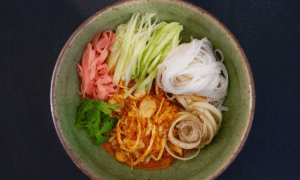
“Sang-de-Boeuf Porcelain” Fermented Rice Noodles by Princess Jongjittanom Dissakul (ขนมจีนครามแดง อย่าง หม่อมเจ้าหญิงจงจิตรถนอม ดิศกุล ; khanohm jeen khraam daaeng)
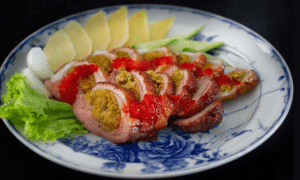
Roasted Stuffed Duck Breast with Chestnuts and Mackerel (เป็ดยัดไส้เกาลัดรมควัน; bpet yat sai gaolat rohm khwan), circa 1935
Smoked duck stuffed with a mackerel and chestnut filling is a dish that defies cultural boundaries. An exemplar of blended culinary influences, featuring inviting colors and an elegant presentation that serve as a prelude to the complex flavors and textures that await, the dish is an eloquent testament to the cooking style of Mrs. Samaknantapol (Jeep Bunnag, who went by the pen name “the granddaughter of Maae Khruaa Huaa Bpaa”). In the 1930s. Mrs. Jeep Bunnag published her first cookbook. Following in the footsteps of her revered grandmother-in-law, Lady Plean Passakornrawong, she continued to document the art of Siamese cuisine through the treasured books she published and was known for her ability to merge culinary traditions into beautiful and innovative dishes that represent an era.
The rich, dark color of the smoked duck’s skin is visually striking and appetizing, evoking a sense of indulgence and luxury. The smoky flavors that permeate the meat reflect our deep connection to primal cooking techniques, a fascinating juxtaposition to the refined presentation of the dish. When the smoked duck is sliced, its succulent pink meat is revealed, surrounding the golden filling of chestnuts and mackerel.
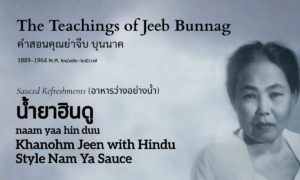
Khanohm Jeen with Hindu Style Nam Ya Sauce (น้ำยาฮินดู; naam yaa hin duu)
Naam yaa hin duu, a coconut curry sauce with red and white beans, flavored with fermented soybean paste. From Jeeb Bunnag's 1945 cookbook.
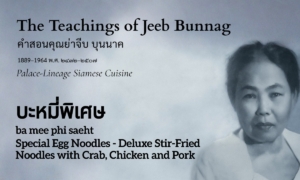
Special Egg Noodles (บะหมี่พิเศษ; ba mee phi saeht)
Ba mee phi saeht, egg noodles stir-fried with crab, chicken, and pork, garnished with scored carrots. From Jeeb Bunnag's 1945 cookbook.
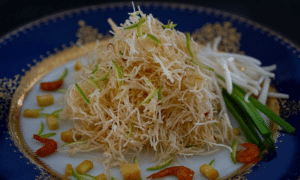
Sour-Sweet Savory Crispy Rice Vermicelli with Bitter Orange (Mee Krob) (หมี่กรอบส้มซ่าทรงเครื่อง ; Mee Graawp)
mee graawp sohng khreuuang (หมี่กรอบทรงเครื่อง), is an exquisitely regal dish of crispy rice vermicelli. The delicate noodles strands are washed and dried, then fried to a crisp light-golden hue. They retain their brittle crunch and airy texture even after being stir-fried with a clinging sticky sauce that encases the noodles in a thin layer of sheen. This sauce, mixed into the noodles together with other ingredients such as thin slices of pickled garlic and bitter orange peel, impart the dish with a light, fresh sweet and sour, and slightly salty and citrusy glaze.
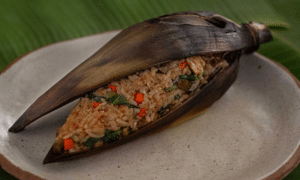
c1935 Char-grilled banana blossom stuffed and baked with tamarind relish fried rice (ข้าวปลี ตำรับสายเยาวภา พ.ศ. 2478 ; khaao bplee)
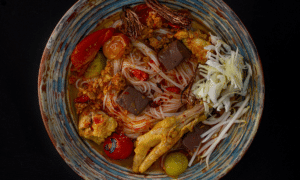
Khanohm Jeen Naam Ngiaao - Shan-Style Tomato Broth over Fermented Rice Noodles with Pork, Chicken Feet and Chicken Blood Cakes (ขนมจีนน้ำเงี้ยว)
A popular noodle dish originating from the Northern region of the Kingdom, khanohm jeen naam ngiaao (ขนมจีนน้ำเงี้ยว) is characterized by its light – yet profound – multi-layered broth. This hearty broth includes an assortment of proteins braised with the dried pollens of cotton tree flowers, and Northern Thai sour cherry tomatoes (มะเขือส้ม); the tomatoes infuse the broth with a subtle tartness that refreshes a full-bodied profile comprising a multitude of fermented ingredients.
The naam ngiaao broth is served over fermented rice noodles and features minced pork, and braised baby back pork ribs with their tender meat clinging to the bone. As well, there are succulent, slow-cooked whole chicken feet, and cubes of slightly bouncy, mauve-hued chicken blood cakes. Served alongside the soup are various toppings, which can include shredded cabbage, bean sprouts, chopped coriander leaves, and spring onions, while dark red chili oil and glossy, charred-fried dried bird’s eye chilies offer a fiery intensity dialed up to your preferred spiciness. In addition, I like to add wok-smoked sour cherry tomatoes and broom-like, crispy-fried dried cotton tree pollen for a surprising textural contrast.
Though the dish is often described as “Shan style”, the word ‘ngiao’ was a derogatory expression for the Shan people. As the disparaging – and outdated – label suggests, the recipe might reflect societal biases and prejudices; thus, at least from the culinary perspective, the ‘ngiao’ in the name of the dish may simply be a nod to the flavors or ingredients favored by The Shan, rather than a claim of authenticity – which could also explain why the dish is based on a Siamese curry paste.
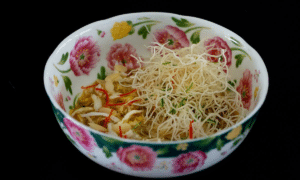
The Ambassador’s House Style Noodle Soup (หมี่น้ำบ้านราชทูต; Mee Naam Baan Raat Thuut)
This soup dish features crispy rice vermicelli noodles, a chicken broth that has a three-flavor profile infused with the aroma of bitter orange, and a plethora of other ingredients such as crispy fried tofu, chicken, pork, crab and pickled garlic.
In Thai, the phrase mee naam baan raat thuut refers to a rice vermicelli noodle soup in the style of the Ambassador’s house. The dish was not new when it appeared in the 1956 book Snacks, Tea Nibbles, Hors D’oeuvres and Drinking Food (ตำราอาหารว่าง - เครื่องน้ำชา และ เครื่องเคี้ยว หรือ กับแกล้ม) by Jeeb Bunnag (จีบ บุนนาค), as noodle dishes were often the preferred ingredient for light meals or snacks. In Grandparents Recipes: 100 Years Old Recipes (จานอร่อยจากปู่ย่า สูตรโบราณ 100 ปี), a volume printed in 2014 that highlights recipes from the kitchens of fifteen prominent families, a similar version of the dish is referred to as mee naam baan bpaak naai leert (หมี่น้ำบ้านปาร์คนายเลิศ) and is associated with Nai Lert.
1
2
3

Get Access – Join Thaifoodmaster Today
Practical and kitchen-tested recipes with a mix of theory, history, psychology, and Siamese culture tidbits.
-
Get access to everything right away. Unlock more than 50 Masterclasses, over 700 recipes and Articles
Access to Thaifoodmaster’s constantly growing library of prime professional classes, articles, recipes and videos on Siamese culinary topics, available nowhere else in English.
-
GET EXTRA - New Masterclasses and Daily Recipes
Gain access to NEW masterclasses as they become available. Access DAILY translations of heritage-recipes.
-
1-1 support from Hanuman
1-1 support from Hanuman to help you achieve your professional Thai culinary goals
-
Live Q&A Sessions
The opportunity to join a monthly live two-hour videoconference where I can answer your questions.
-
Great Value!
one year access for the price of 3 days in-person training.
You will get everything you need to:
-
To Get inspired
When you design or build a new menu for an event or restaurant or even prepare for dinner with friends.
-
To Satisfy your curiosity.
Finally !
-
To Master Your Craft
Master your Thai cooking skills and expand your repertoire.
It is truly brilliant with a revolutionary approach introducing aspects and concepts never broached by cookbooks.

Ian Westcott
Sourcing Wines for Discerning Private Clients
© 2008 – 2026 Thaifoodmaster


