
Celebrating the Art of Siamese Culinary Wisdom and Thai Cuisine
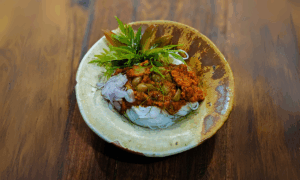
c1933 Khuaa Curry with Bang Chang Chilies (แกงคั่วพริกขี้หนูหรือพริกชี้ฟ้า; gaaeng khuaa phrik baang chaang): Princess Dissakul's Smoky Fish Curry Recipe
Princess Dissakul's 1933 royal Thai curry featuring secretly pounded smoked fish in rich coconut cream with Bang Chang chilies and aromatic phrik khing paste. This complex, smoky curry builds layers of earth and ember, traditionally served over khanom jeen fermented rice noodles and topped with tangy pickled garlic for a perfect balance of smoke, spice, and tang.
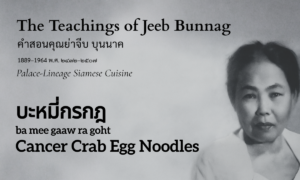
Cancer Crab Egg Noodles (บะหมี่กรกฎ; ba mee gaaw ra goht)
Ba mee gaaw ra goht, puffed deep-fried egg noodles topped with crab, shrimp, and salted duck egg yolk balls. Jeeb Bunnag, 1933.
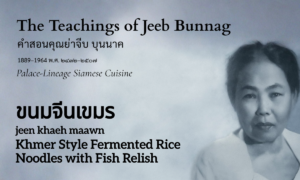
Khmer Rice Noodles with Fish Relish (ขนมจีนเขมร; jeen khaeh maawn)
Khmer Rice Noodles with Fish Relish features smoke-dried barb fish prepared through a four-stage process with aromatic herbs. From Jeeb Bunnak's 1945 cookbook.
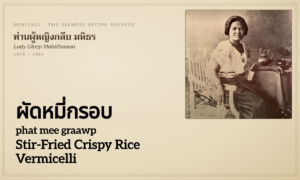
Stir-Fried Crispy Rice Vermicelli (ผัดหมี่กรอบ; phat mee graawp)
Phat mee graawp, rice vermicelli fried crisp in pork lard, seasoned salty–sweet–sour, finished with slivered bitter orange. Lady Gleep Mahithaawn, 1949.
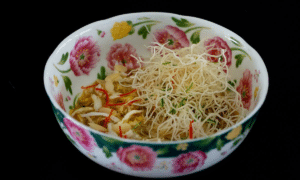
The Ambassador’s House Style Noodle Soup (หมี่น้ำบ้านราชทูต; Mee Naam Baan Raat Thuut)
This soup dish features crispy rice vermicelli noodles, a chicken broth that has a three-flavor profile infused with the aroma of bitter orange, and a plethora of other ingredients such as crispy fried tofu, chicken, pork, crab and pickled garlic.
In Thai, the phrase mee naam baan raat thuut refers to a rice vermicelli noodle soup in the style of the Ambassador’s house. The dish was not new when it appeared in the 1956 book Snacks, Tea Nibbles, Hors D’oeuvres and Drinking Food (ตำราอาหารว่าง - เครื่องน้ำชา และ เครื่องเคี้ยว หรือ กับแกล้ม) by Jeeb Bunnag (จีบ บุนนาค), as noodle dishes were often the preferred ingredient for light meals or snacks. In Grandparents Recipes: 100 Years Old Recipes (จานอร่อยจากปู่ย่า สูตรโบราณ 100 ปี), a volume printed in 2014 that highlights recipes from the kitchens of fifteen prominent families, a similar version of the dish is referred to as mee naam baan bpaak naai leert (หมี่น้ำบ้านปาร์คนายเลิศ) and is associated with Nai Lert.
Muslim-Style Curry Noodles (ก๋วยเตี๋ยวแขก; guay dtiaao khaaek)
Guay dtiaao khaaek, beef simmered in curry paste and thin coconut milk over rice noodles, seasoned only at the table. Favorite Dishes, 1978.
"Sang-de-Boeuf Porcelain" Fermented Rice Noodles (ขนมจีนครามแดง; khanohm jeen khraam daaeng)
Sang-de-Boeuf Porcelain Fermented Rice Noodles featuring a coconut sauce infused with roasted shallots, garlic and mung beans. From Jeeb Bunnag, 1945.
Fermented Rice Noodles and Golden Coconut Chicken Sauce with an Indian Flair (ไก่ต้มขนมจีบ; gai dtohm khohn ma jeep)
Gai dtohm khohn ma jeep, a coconut-simmered chicken sauce with Indian influences served with fermented rice noodles. From Jeeb Bunnag's 1945 cookbook.
Javanese-Style Dressed Glass Noodles (วุ้นเส้นชวา; woon seh chawa)
Woon seh chawa: glass noodles in cinnamon-infused chicken broth with tangy dressing and layered toppings. From Jeeb Bunnag's 1945 cookbook of Thai snacks.
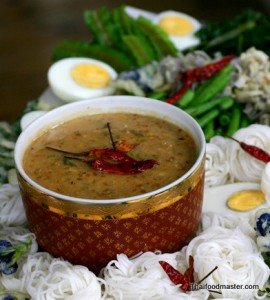
Rice Noodles with Shrimp and Aromatic Coconut Sauce
(khanohm jeen naam phrik goong; ขนมจีนน้ำพริกกุ้งสูตรมหาเด็ด) The sweet leading sour coconut cream based sauce, enriched and thickened with fragrant freshly roasted peanuts and golden beans are a wonderful coat to dress the sweet shrimp meat. The aromatics are being extracted in every possible way, by roasting, and frying, boiling and reducing, pounding and grounding. All the culinary methods are being fully employed to guarantee an absolute real first class dish. If you want to start some real Thai cooking going at your home, have the time and access to all the ingredients, than I really want you to try this dish. The building blocks of flavors work so well here and it will open you a great window to see the beginning of what is possible in Thai cuisine.
(khanohm jeen naam phrik goong; ขนมจีนน้ำพริกกุ้งสูตรมหาเด็ด) The sweet leading sour coconut cream based sauce, enriched and thickened with fragrant freshly roasted peanuts and golden beans are a wonderful coat to dress the sweet shrimp meat. The aromatics are being extracted in every possible way, by roasting, and frying, boiling and reducing, pounding and grounding. All the culinary methods are being fully employed to guarantee an absolute real first class dish. If you want to start some real Thai cooking going at your home, have the time and access to all the ingredients, than I really want you to try this dish. The building blocks of flavors work so well here and it will open you a great window to see the beginning of what is possible in Thai cuisine.
The Ambassador’s House Style Rice Vermicelli in Broth (หมี่น้ำบ้านราชทูต; mee naam baan raat thuut)
The Ambassador's House Style Rice Vermicelli features crispy rice noodles in a complex sweet-sour broth with multiple proteins. From Jeeb Bunnag, 1945.
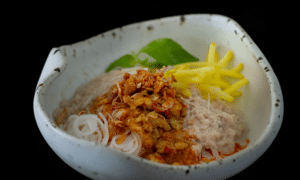
Naam Yaa Neuua – Northern Style Naam Ya according to Lady Plean Passakornrawong (น้ำยาเหนือ)
This fermented rice noodle dish is served with a slow-cooked, chili-less broth made from pounded fish meat and aromatics cooked in coconut cream. Creamy in color and velvety in texture, the broth is seasoned either with fish sauce, fermented fish or salted fish according to one’s preferences. The broth is allowed to slow-cook, achieving its full richness over a couple of hours. Once ready, the broth is poured over the noodles, which are then topped with a glossy-orangey layer of minced shrimp meat fried with their tomalley in pork lard. Complementing this richness are crunchy yellowish bean sprouts blanched in turmeric-tinted water, a sprinkle of sweet, golden crispy-fried shallots and, finally, green lemon basil leaves that endow the dish with a unique, rustic herbal persona.
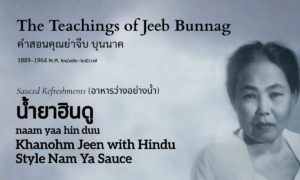
Khanohm Jeen with Hindu Style Nam Ya Sauce (น้ำยาฮินดู; naam yaa hin duu)
Naam yaa hin duu, a coconut curry sauce with red and white beans, flavored with fermented soybean paste. From Jeeb Bunnag's 1945 cookbook.
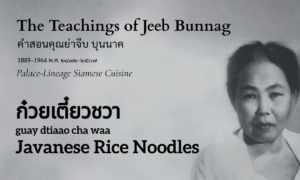
Javanese Rice Noodles (ก๋วยเตี๋ยวชวา; guay dtiaao cha waa)
Javanese rice noodles cut into fine strands with a jelly knife, topped with shrimp, salted turnip and peanuts in chicken stock. From Jeeb Bunnag, 1933.
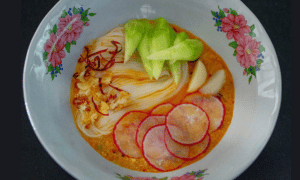
c1936 Arabian noodles – Princess Maao Thongthaem’s Siamese-Orientalist fermented rice noodles light meal (ขนมจีนอาหรับ อย่าง เม้า ทองแถม; khanohm jeen aarap)
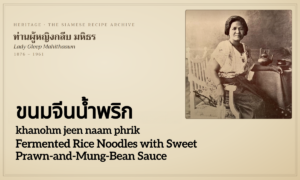
Fermented Rice Noodles with Sweet Prawn-and-Mung-Bean Sauce (ขนมจีนน้ำพริก; khanohm jeen naam phrik)
Khanohm jeen naam phrik: fermented rice noodles with pounded prawn, roasted mung bean and tamarind-coconut sauce. Lady Gleep Mahithaawn, 1949.
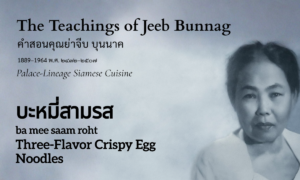
Three-Flavor Crispy Egg Noodles (บะหมี่สามรส; ba mee saam roht)
Ba mee saam roht: deep-fried egg noodles topped with shrimp, pork fat, jicama, and pineapple in a sour-sweet-salty sauce. Jeeb Bunnag, 1945.
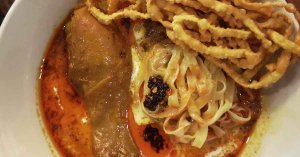
Khao Soi Recipe, Northern Style Curried Noodle Soup with Chicken
(khaao saawy gai ; สูตรทำข้าวซอยไก่) This dish (Khao Soi Recipe) takes us back in time to the mid-19th century. The trade caravans were trailing the jungles of northern Thailand along the ancient routes between India and China. Those long caravans were carrying wealth of exotic goods, leaving rich aroma of spices and the sweet scent of opium as they passed. The men on this long line of between fifty and one hundred mules would be Yunnanese Muslim Chinese, who dominated the trade routes and began to settle in Chiang Mai and the main towns of north Thailand at that time.
(khaao saawy gai ; สูตรทำข้าวซอยไก่) This dish (Khao Soi Recipe) takes us back in time to the mid-19th century. The trade caravans were trailing the jungles of northern Thailand along the ancient routes between India and China. Those long caravans were carrying wealth of exotic goods, leaving rich aroma of spices and the sweet scent of opium as they passed. The men on this long line of between fifty and one hundred mules would be Yunnanese Muslim Chinese, who dominated the trade routes and began to settle in Chiang Mai and the main towns of north Thailand at that time.
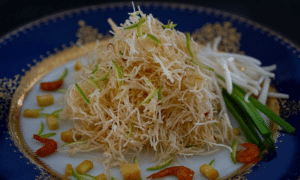
Sour-Sweet Savory Crispy Rice Vermicelli with Bitter Orange (Mee Krob) (หมี่กรอบส้มซ่าทรงเครื่อง ; Mee Graawp)
mee graawp sohng khreuuang (หมี่กรอบทรงเครื่อง), is an exquisitely regal dish of crispy rice vermicelli. The delicate noodles strands are washed and dried, then fried to a crisp light-golden hue. They retain their brittle crunch and airy texture even after being stir-fried with a clinging sticky sauce that encases the noodles in a thin layer of sheen. This sauce, mixed into the noodles together with other ingredients such as thin slices of pickled garlic and bitter orange peel, impart the dish with a light, fresh sweet and sour, and slightly salty and citrusy glaze.
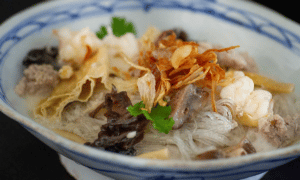
Gaaeng Raawn (แกงร้อน)
Gaaeng raawn (แกงร้อน) is a colloquial Thai term that refers to ‘hot curry’. Today, gaaeng raawn is used to denote soups or curries served with steamed rice. While the precise origin of the term is unclear, gaaeng raawn (แกงร้อน) was deployed in the 1800s for a specific dish – a Siamese soup featuring glass noodles, cooked as either a coconut or a water-based soup with an assortment of dry ingredients revered in Chinese cuisine. The soup’s potential health benefits, combined with its ease of preparation and subtle yet profound flavor, made it a popular choice for entertaining large groups of people, of all ages and backgrounds. The soup is often augmented with fresh proteins: in its more luxurious versions, multiple proteins may be added, including a combination of chicken, pork, shrimp, squid, and crab meat. Thus, over the years, gaaeng raawn (แกงร้อน) was established as a staple source of comfort and warmth for people of all walks of life in Siamese society.

Emperor's Hong Te Rice Vermicelli (หมี่ฮ่องเต้; mee haawng dteh)
Emperor's Hong Te Rice Vermicelli, a royal Thai dish combining delicate shredded chicken and crab meat over rice noodles. From Jeeb Bunnag's 1945 cookbook.
1
2

Get Access – Join Thaifoodmaster Today
Practical and kitchen-tested recipes with a mix of theory, history, psychology, and Siamese culture tidbits.
-
Get access to everything right away. Unlock more than 50 Masterclasses, over 700 recipes and Articles
Access to Thaifoodmaster’s constantly growing library of prime professional classes, articles, recipes and videos on Siamese culinary topics, available nowhere else in English.
-
GET EXTRA - New Masterclasses and Daily Recipes
Gain access to NEW masterclasses as they become available. Access DAILY translations of heritage-recipes.
-
1-1 support from Hanuman
1-1 support from Hanuman to help you achieve your professional Thai culinary goals
-
Live Q&A Sessions
The opportunity to join a monthly live two-hour videoconference where I can answer your questions.
-
Great Value!
one year access for the price of 3 days in-person training.
You will get everything you need to:
-
To Get inspired
When you design or build a new menu for an event or restaurant or even prepare for dinner with friends.
-
To Satisfy your curiosity.
Finally !
-
To Master Your Craft
Master your Thai cooking skills and expand your repertoire.
It is truly brilliant with a revolutionary approach introducing aspects and concepts never broached by cookbooks.

Ian Westcott
Sourcing Wines for Discerning Private Clients
© 2008 – 2026 Thaifoodmaster


