
Celebrating the Art of Siamese Culinary Wisdom and Thai Cuisine
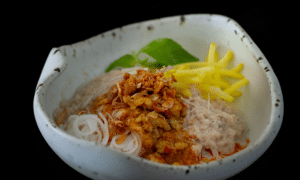
Naam Yaa Neuua – Northern Style Naam Ya according to Lady Plean Passakornrawong (น้ำยาเหนือ)
This fermented rice noodle dish is served with a slow-cooked, chili-less broth made from pounded fish meat and aromatics cooked in coconut cream. Creamy in color and velvety in texture, the broth is seasoned either with fish sauce, fermented fish or salted fish according to one’s preferences. The broth is allowed to slow-cook, achieving its full richness over a couple of hours. Once ready, the broth is poured over the noodles, which are then topped with a glossy-orangey layer of minced shrimp meat fried with their tomalley in pork lard. Complementing this richness are crunchy yellowish bean sprouts blanched in turmeric-tinted water, a sprinkle of sweet, golden crispy-fried shallots and, finally, green lemon basil leaves that endow the dish with a unique, rustic herbal persona.
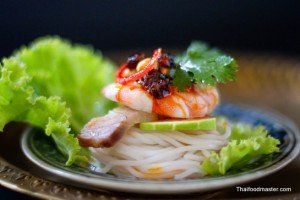
ขนมจีนญี่ปุ่น
สูตรทำขนมจีนญี่ปุ่น - มีตำรับอาหารสมัยก่อนอย่างหนึ่ง เป็นสูตรของ ท่านผู้หญิงกลีบ มหิธร ดูเหมือนจะเป็นอาหารว่างคาว ให้ชื่อว่า “ขนมจีนญี่ปุ่น” ลองมาดูเครื่องปรุง และวิธีทำกัน ผู้อ่านจะบอกได้หรือไม่ว่า ตำรับนี้มีต้นกำเนิดจากดินแดนอาทิตย์อุทัย หรือไม่ประการใด ตำรับของท่านผู้หญิงกลีบ มีดังนี้
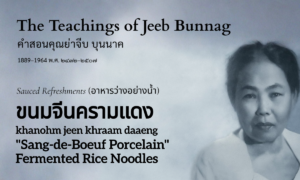
"Sang-de-Boeuf Porcelain" Fermented Rice Noodles (ขนมจีนครามแดง; khanohm jeen khraam daaeng)
Sang-de-Boeuf Porcelain Fermented Rice Noodles featuring a coconut sauce infused with roasted shallots, garlic and mung beans. From Jeeb Bunnag, 1945.
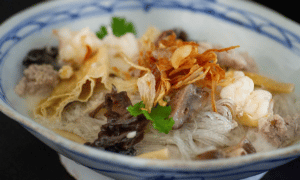
Gaaeng Raawn (แกงร้อน)
Gaaeng raawn (แกงร้อน) is a colloquial Thai term that refers to ‘hot curry’. Today, gaaeng raawn is used to denote soups or curries served with steamed rice. While the precise origin of the term is unclear, gaaeng raawn (แกงร้อน) was deployed in the 1800s for a specific dish – a Siamese soup featuring glass noodles, cooked as either a coconut or a water-based soup with an assortment of dry ingredients revered in Chinese cuisine. The soup’s potential health benefits, combined with its ease of preparation and subtle yet profound flavor, made it a popular choice for entertaining large groups of people, of all ages and backgrounds. The soup is often augmented with fresh proteins: in its more luxurious versions, multiple proteins may be added, including a combination of chicken, pork, shrimp, squid, and crab meat. Thus, over the years, gaaeng raawn (แกงร้อน) was established as a staple source of comfort and warmth for people of all walks of life in Siamese society.
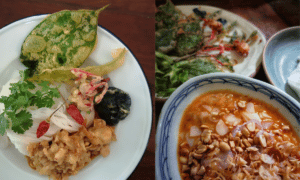
c1949 Fermented rice noodles with multi-sour aromatic chicken sauce by Lady Gleep Mahithaawn (ขนมจีนน้ำพริกไก่ อย่างท่านผู้หญิงกลีบ มหิธร พ.ศ. 2492; khanohm jeen naam phrik gai)
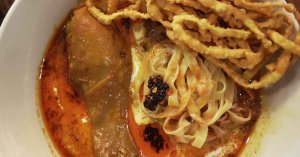
ข้าวซอยไก่
This dish (Khao Soi Recipe) takes us back in time to the mid-19th century. The trade caravans were trailing the jungles of northern Thailand along the ancient routes between India and China. Those long caravans were carrying wealth of exotic goods, leaving rich aroma of spices and the sweet scent of opium as they passed.
The men on this long line of between fifty and one hundred mules would be Yunnanese Muslim Chinese, who dominated the trade routes and began to settle in Chiang Mai and the main towns of north Thailand at that time.
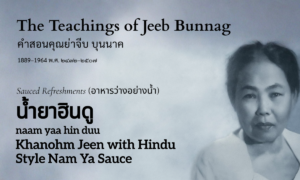
Khanohm Jeen with Hindu Style Nam Ya Sauce (น้ำยาฮินดู; naam yaa hin duu)
Naam yaa hin duu, a coconut curry sauce with red and white beans, flavored with fermented soybean paste. From Jeeb Bunnag's 1945 cookbook.
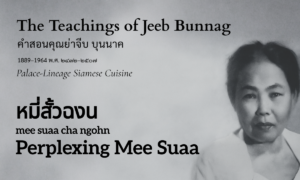
Perplexing Mee Suaa (หมี่สั้วฉงน; mee suaa cha ngohn)
Mee suaa cha ngohn: wheat noodle bundles bound with shrimp-corn paste, steamed, served in clear pork-crab broth. Jeeb Bunnag, 1933.
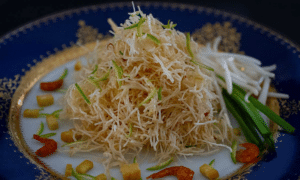
Sour-Sweet Savory Crispy Rice Vermicelli with Bitter Orange (Mee Krob) (หมี่กรอบส้มซ่าทรงเครื่อง ; Mee Graawp)
mee graawp sohng khreuuang (หมี่กรอบทรงเครื่อง), is an exquisitely regal dish of crispy rice vermicelli. The delicate noodles strands are washed and dried, then fried to a crisp light-golden hue. They retain their brittle crunch and airy texture even after being stir-fried with a clinging sticky sauce that encases the noodles in a thin layer of sheen. This sauce, mixed into the noodles together with other ingredients such as thin slices of pickled garlic and bitter orange peel, impart the dish with a light, fresh sweet and sour, and slightly salty and citrusy glaze.
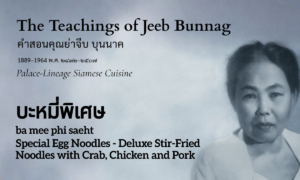
Special Egg Noodles (บะหมี่พิเศษ; ba mee phi saeht)
Ba mee phi saeht, egg noodles stir-fried with crab, chicken, and pork, garnished with scored carrots. From Jeeb Bunnag's 1945 cookbook.
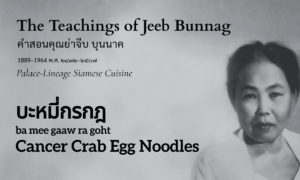
Cancer Crab Egg Noodles (บะหมี่กรกฎ; ba mee gaaw ra goht)
Ba mee gaaw ra goht, puffed deep-fried egg noodles topped with crab, shrimp, and salted duck egg yolk balls. Jeeb Bunnag, 1933.
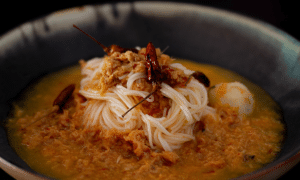
Khanohm Jeen Naam Yaa (ขนมจีนน้ำยา) - Fermented Rice Noodles with Minced Fish in Aromatic Coconut Curry
In the Central Plains of the Kingdom, fermented rice noodles are inextricably linked to a dish known as naam yaa. Composed of a dense, coconut-based minced fish curry, the dish is infused with layers of salted fish and possesses the distinctive, invigorating and purifying notes of fingerroot. Typically, naam yaa is served with fresh lemon basil as the herb of choice along with an array of side dishes collectively known as meuuat khanohm jeen (เหมือดขนมจีน). These include blanched bean sprouts seasoned with a touch of turmeric for color, fresh lemon basil leaves, thinly sliced three colored chilies, and ground chili for added heat. More elaborate versions will add blanched Chinese bitter gourd slices, batter-fried young morning glory shoots, and fresh shrimp minced and fried with its tomalley in pork lard, as well as crispy-fried shallots as the finishing touch.
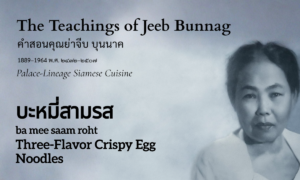
Three-Flavor Crispy Egg Noodles (บะหมี่สามรส; ba mee saam roht)
Ba mee saam roht: deep-fried egg noodles topped with shrimp, pork fat, jicama, and pineapple in a sour-sweet-salty sauce. Jeeb Bunnag, 1945.
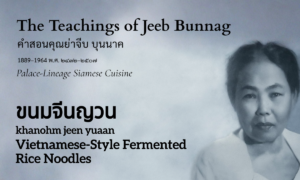
Vietnamese-Style Fermented Rice Noodles (ขนมจีนญวน; khanohm jeen yuaan)
Vietnamese-Style Rice Noodles features fermented rice noodles layered with fresh shrimp, pork, and herbs, dressed with a tangy sauce. From Jeeb Bunnak's 1945 cookbook.
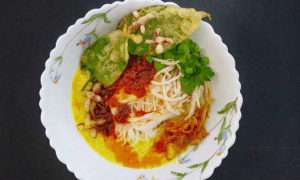
c1908 Fermented rice noodles and golden coconut chicken sauce with an Indian flair (ขนมจีนแขก หรือ ไก่ต้มขนมจีน ; khanohm jeen khaaek)
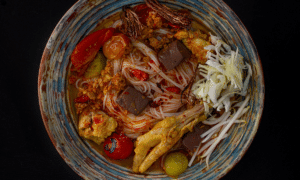
Khanohm Jeen Naam Ngiaao - Shan-Style Tomato Broth over Fermented Rice Noodles with Pork, Chicken Feet and Chicken Blood Cakes (ขนมจีนน้ำเงี้ยว)
A popular noodle dish originating from the Northern region of the Kingdom, khanohm jeen naam ngiaao (ขนมจีนน้ำเงี้ยว) is characterized by its light – yet profound – multi-layered broth. This hearty broth includes an assortment of proteins braised with the dried pollens of cotton tree flowers, and Northern Thai sour cherry tomatoes (มะเขือส้ม); the tomatoes infuse the broth with a subtle tartness that refreshes a full-bodied profile comprising a multitude of fermented ingredients.
The naam ngiaao broth is served over fermented rice noodles and features minced pork, and braised baby back pork ribs with their tender meat clinging to the bone. As well, there are succulent, slow-cooked whole chicken feet, and cubes of slightly bouncy, mauve-hued chicken blood cakes. Served alongside the soup are various toppings, which can include shredded cabbage, bean sprouts, chopped coriander leaves, and spring onions, while dark red chili oil and glossy, charred-fried dried bird’s eye chilies offer a fiery intensity dialed up to your preferred spiciness. In addition, I like to add wok-smoked sour cherry tomatoes and broom-like, crispy-fried dried cotton tree pollen for a surprising textural contrast.
Though the dish is often described as “Shan style”, the word ‘ngiao’ was a derogatory expression for the Shan people. As the disparaging – and outdated – label suggests, the recipe might reflect societal biases and prejudices; thus, at least from the culinary perspective, the ‘ngiao’ in the name of the dish may simply be a nod to the flavors or ingredients favored by The Shan, rather than a claim of authenticity – which could also explain why the dish is based on a Siamese curry paste.

Emperor's Hong Te Rice Vermicelli (หมี่ฮ่องเต้; mee haawng dteh)
Emperor's Hong Te Rice Vermicelli, a royal Thai dish combining delicate shredded chicken and crab meat over rice noodles. From Jeeb Bunnag's 1945 cookbook.
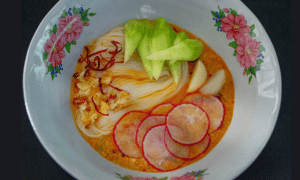
c1936 Arabian noodles – Princess Maao Thongthaem’s Siamese-Orientalist fermented rice noodles light meal (ขนมจีนอาหรับ อย่าง เม้า ทองแถม; khanohm jeen aarap)
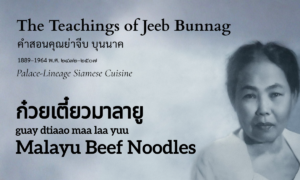
Malayu Beef Noodles (ก๋วยเตี๋ยวมาลายู; guay dtiaao maa laa yuu)
Malayu Noodles featuring tender beef simmered with cinnamon, cardamom, bay leaves, and cloves. From Jeeb Bunnag's Cookbook of Rice Companion Recipes, 1933.
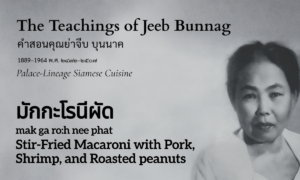
Stir-Fried Macaroni (มักกะโรนีผัด; mak ga ro:h nee phat)
Mak ga ro:h nee phat, macaroni stir-fried with garlic-lard paste, pork, shrimp, and roasted peanuts. From Jeeb Bunnag, 1933.
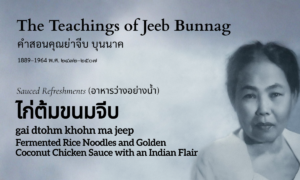
Fermented Rice Noodles and Golden Coconut Chicken Sauce with an Indian Flair (ไก่ต้มขนมจีบ; gai dtohm khohn ma jeep)
Gai dtohm khohn ma jeep, a coconut-simmered chicken sauce with Indian influences served with fermented rice noodles. From Jeeb Bunnag's 1945 cookbook.
1
2

Get Access – Join Thaifoodmaster Today
Practical and kitchen-tested recipes with a mix of theory, history, psychology, and Siamese culture tidbits.
-
Get access to everything right away. Unlock more than 50 Masterclasses, over 700 recipes and Articles
Access to Thaifoodmaster’s constantly growing library of prime professional classes, articles, recipes and videos on Siamese culinary topics, available nowhere else in English.
-
GET EXTRA - New Masterclasses and Daily Recipes
Gain access to NEW masterclasses as they become available. Access DAILY translations of heritage-recipes.
-
1-1 support from Hanuman
1-1 support from Hanuman to help you achieve your professional Thai culinary goals
-
Live Q&A Sessions
The opportunity to join a monthly live two-hour videoconference where I can answer your questions.
-
Great Value!
one year access for the price of 3 days in-person training.
You will get everything you need to:
-
To Get inspired
When you design or build a new menu for an event or restaurant or even prepare for dinner with friends.
-
To Satisfy your curiosity.
Finally !
-
To Master Your Craft
Master your Thai cooking skills and expand your repertoire.
It is truly brilliant with a revolutionary approach introducing aspects and concepts never broached by cookbooks.

Ian Westcott
Sourcing Wines for Discerning Private Clients
© 2008 – 2026 Thaifoodmaster


