
Celebrating the Art of Siamese Culinary Wisdom and Thai Cuisine
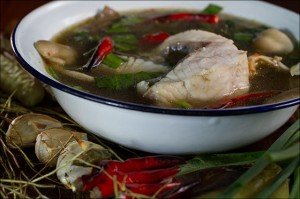
ต้มแจ่วปลา
Dtom Jeaw Pla is a rustic and spicy fish soup that is far from being unsophisticated. There is something humble, genuine, and unpretentious about it, which makes you fall in love with it.
Its humble countryside charm and surfeit of tastes quickly placed it high on my personal list of favorite dishes.
The fresh essence of fish cooked to perfection melds with the earthy tones of the grilled ingredients, the eggplants, shallots, chilies and garlic. It has a heavenly silky broth with a scent of lemongrass, which is generously lifted up by a handful of fresh herbs, lemon basil, saw coriander and spring onions.
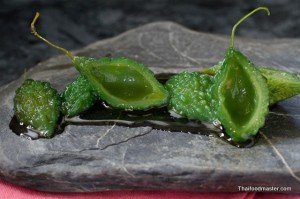
มะระขี้นกเชื่อม
Our ancestors, the early humans, had to base their food selection only on their senses. Sweet was energy, umami indicated the presence of proteins and saltiness was the sign for the much needed minerals. Generally, they avoided sour taste because it represented rotten or spoiled food, and bitter was the taste tonics and remedies were made of, and yes, it is now confirmed that bitter gourds are good for you.
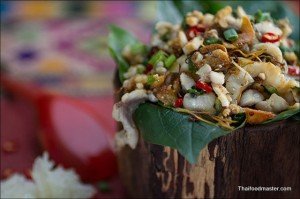
ก้อยปลานิลหลวงพระบาง
A marvelous Luang Prabang style fish salad recipe (Koi Pla), which is very easy to prepare and even though it looks simple, its flavors are complex and clever.
Fresh fish fillet is sliced into thin strips which are quick blanched in lemongrass infused boiling water - a cooking method that presenting it’s natural flavors with an uplifting citrusy notes. The white fish slices are then mixed with, deep golden brown caramelized mix of fried garlic, shallots and lemongrass, which are not just visually pleasing but also add a unique sweetness and richness to the dish.
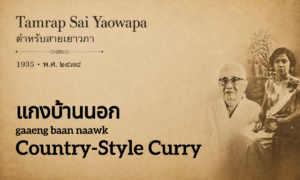
Country-Style Curry (แกงบ้านนอก; gaaeng baan naawk)
Gaaeng baan naawk, a country soup of prawns, pork belly and snakehead fish built on a pounded grilled-fish base. Tamrap Sai Yaowapa, 1935.
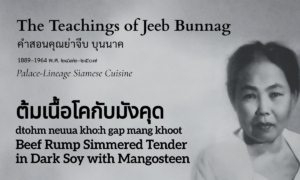
Beef Rump Simmered Tender in Dark Soy with Mangosteen Flesh and Seeds (ต้มเนื้อโคกับมังคุด; dtohm neuua kho:h gap mang khoot)
Dtohm neuua kho:h gap mang khoot, lard-fried beef rump simmered in dark soy with peeled mangosteen, seeds and all. From Jeeb Bunnag, 1933.
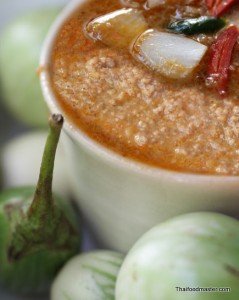
หลนกะปิคั่ว
กะปิคั่วเป็นเมนูอาหารประเภทหลนที่ในทุกวันนี้ค่อนข้างที่จะหารับประทานได้ยากตามร้านอาหารทั่ว ๆ ไป และ น้อยคนนักที่จะรู้จัก
โดยอาหารประเภทหลนนั้นเป็นการนำหัวกะทิมาเคี่ยวกับของที่หมักทั้งหลาย เช่น แหนม ปลาร้า เต้าเจี้ยว กะปิ เป็นต้น เพิ่มเนื้อปลา กุ้ง หรือ หมู และ ปรุงรสโดยใช้น้ำปลา น้ำตาลมะพร้าว และ น้ำมะขามเปียก ซึ่งหลนที่อร่อยนั้นจะต้องมีลักษณะเป็นน้ำขลุกขลิก และต้องใช้เนื้อสัตว์ที่บดอย่างละเอียดเป็นส่วนประกอบ
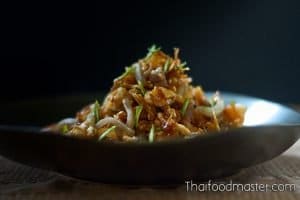
ยำผิวส้มซ่า
พูดถึงอาหารไทยแท้ไทยโบราณ ท่านรู้หรือไม่ว่า พืชชนิดใดที่คนไทยสมัยก่อนนำมาให้รสเปรี้ยวในสำรับอาหารมากที่สุด ? ถ้าเป็นปัจจุบันจะตอบได้ง่าย ๆ ว่าเป็น "มะนาว" แต่สมัยก่อนนั้น ไม่ใช่เลยขอรับ คนไทยอาศัยความเปรี้ยวจาก"มะขาม" มากที่สุด ใช้ทั้งยอดอ่อน ดอก ฝักอ่อน และ โดยเฉพาะมะขามเปียก แต่ทราบไหมขอรับว่า ส่วนใหญ่น้ำมะขามเปียกมักไม่ใช่องค์ ประกอบเด่นในอาหารไทย ตัวมะขามเปียกเอง ก็นำมาทำเป็นอาหารหลักไม่ได้ ไม่เคยมีตำรับ ยำมะขามเปียก แกงมะขามเปียก หรือ มะขามเปียกลอยแก้ว แต่อย่างใดเลย อย่างที่เห็นก็แค่เป็นเครื่องดื่ม ในกลุ่มน้ำปานะ ที่ภิกษุในศาสนาพุทธสามารถฉันได้ในยามวิกาล เช่น น้ำมะขาม
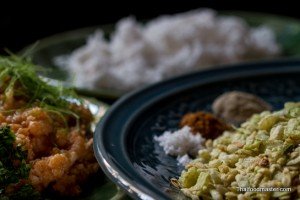
ข้าวเม่าเบื้อง อย่างท่านผู้หญิงเปลี่ยน ภาสกรวงษ์
"ข้าวเม่าเบื้อง" เป็น 1 ใน 2 ตำรับของเครื่องว่างคาว ที่ปรุงจากข้าวเม่า นอกเหนือจาก "ข้าวเม่าหมี่" และปัจจุบันนี้ไม่พบว่ามีใครทำตำรับดังกล่าวนี้เลย จะมีก็แค่ "ข้าวเม่าหมี่" ส่วน "ข้าวเม่าเบื้อง" นั้น แทบจะหายไปจากสังคมไทยเสียแล้ว ปัจจุบันคนทั่วไปจึงไม่รู้จักเครื่องว่างตำรับนี้เลย เราจึงมีความยินดีและภูมิใจนำเสนอตำรับ "ข้าวเม่าเบื้อง" เพื่อเป็นการอนุรักษ์และให้กลับมาเป็นที่รู้จักกันอีกครั้งหนึ่ง...
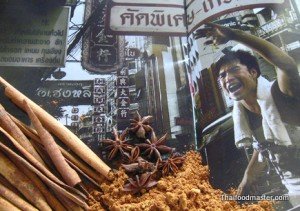
สูตรทำไข่พะโล้หมูสามชั้นเห็ดหอม
This is an aromatic stew that leans into the sweet spectrum of the palate. An all-time Thai favorite, moo palo was introduced locally by the Chinese-Cantonese and Tae Chiew immigrants who flocked to the Kingdom in the early nineteenth century.
The name of this dish originates from two Chinese words: pah ziah and lou.
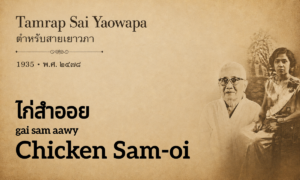
Chicken Sam-oi (ไก่สำออย; gai sam aawy)
Gai sam aawy, whole chicken steamed with sugarcane inside, then simmered in coconut cream with coriander seed and cumin. From Tamrap Sai Yaowapa, 1935.
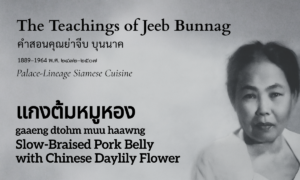
Slow-Braised Pork Belly with Chinese Daylily Flower (แกงต้มหมูหอง; gaaeng dtohm muu haawng)
Gaaeng dtohm muu haawng, pork belly slow-braised with Chinese daylily flower, star anise and tao chiao paste. From Jeeb Bunnag's 1933 Cookbook of Rice Companion Recipes.
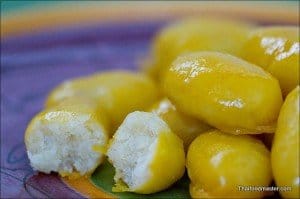
ขนมเม็ดขนุน
It is believed that this dish was introduced to the Siamese royal cuisine in the middle of the seventeenth century by Portuguese traders. Later, along with other egg yolk-based golden sweets like the golden drops (thong yot ทองหยอด), golden flowers (thong yip ทองหยิบ) and golden threads (foi thong ฝอยทอง), these royal desserts were passed to commoners outside the court.
For the marzipan filling I am using, beside the mung beans, both the flesh and the water of fragrant young coconuts. It gives a rich, sweet and almost nutty flavor which works perfectly with the silky texture of the mung beans and the creamy golden egg yolks coating.
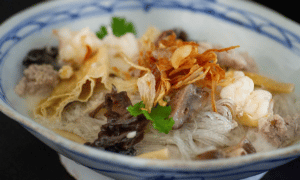
Gaaeng Raawn (แกงร้อน)
Gaaeng raawn (แกงร้อน) is a colloquial Thai term that refers to ‘hot curry’. Today, gaaeng raawn is used to denote soups or curries served with steamed rice. While the precise origin of the term is unclear, gaaeng raawn (แกงร้อน) was deployed in the 1800s for a specific dish – a Siamese soup featuring glass noodles, cooked as either a coconut or a water-based soup with an assortment of dry ingredients revered in Chinese cuisine. The soup’s potential health benefits, combined with its ease of preparation and subtle yet profound flavor, made it a popular choice for entertaining large groups of people, of all ages and backgrounds. The soup is often augmented with fresh proteins: in its more luxurious versions, multiple proteins may be added, including a combination of chicken, pork, shrimp, squid, and crab meat. Thus, over the years, gaaeng raawn (แกงร้อน) was established as a staple source of comfort and warmth for people of all walks of life in Siamese society.
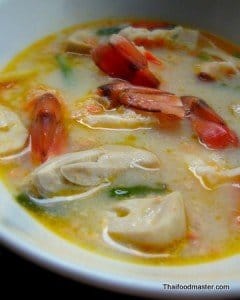
ต้มยำกุ้ง
Tom Yam is a type of soup with distinct sharp hot and sour flavors, scented with pleasant citrusy aroma.
Tom Yam is known to seduce many westerners to fall in love with Thailand, its people and food. Many trips memories to Thailand were written in diaries, others are etched on film but all are stained by the Tom Yam charm.
I still remember with vivid colors my first bowl of Tom Yam, in the night market of the old neighborhood on a hot night in a ragged, unfashionable part of Bangkok. Where the smell of cooking and the glare of florescent lights decorated the alley where JeMoi used to own a restaurant, a very simple and very good one, decorated with cheap bamboo chairs and peeling orange walls. I would enjoy watching the streets of the early night turning into mornings, eating, drinking and sweating. It was hard to say if I was sweating from the hot and humid weather, the cheap whiskey or JeMoi’s spicy food. I still smile when I think of her, standing by my table with a winning smile, as if she knew how much I enjoy the food.
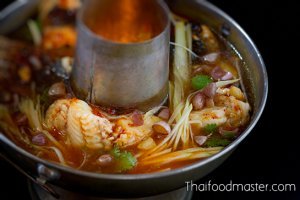
ต้มยำปลาช่อนแบบโบราณ - อย่างหม่อมซ่มจีน (ราชานุประพันธุ์) - ร.ศ.๑๐๙
ตำรับอาหารไทยแท้ที่มีมาแต่โบราณ ปัจจุบันยังคงมีอยู่ หากแต่พัฒนาไปไกลจนแทบไม่มีใครรับรู้ต้นเค้าเก่าก่อน ถ้าให้คนรุ่นปัจจุบันมาลิ้มลองตำรับแบบดั้งเดิม ก็จะมองว่าเป็นของแปลกไปเสียแล้ว ดังนั้น Thaifoodmaster คงจะต้องออกมาอธิบายถึงพัฒนาการของอาหารตำรับน้ำแกงนี้ก่อนไม่มีใครจดจำของเก่าแบบดั้งเดิมได้
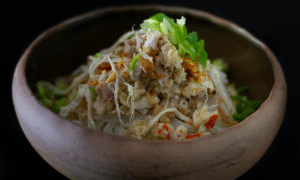
Naam Yaa Jeen - Fermented Rice Noodles with Chinese Sauce by HRH Prince Krom Luang Pitak Montri (น้ำยาจีน อย่างกรมหลวงพิทักษมนตรี)
Among the various curries that can be poured over khanom jeen fermented rice noodles, this broth, known as Chinese-style “naam yaa,” is unique in that it is a water-based curry that does not have chilies. As such, rather than the typical reddish-rust color of most coconut-based naam ya dishes from the Central Plains of the Kingdom, the sauce glows with a soft, light ivory hue, beautifully reflecting the dish’s natural sweet-savoriness, which is derived from slow-braising three proteins – chicken, pork and shrimp – along with a curry paste galvanized by smoke-dried fish and aromatic roots like galangal, fingerroot and sand ginger. The naam ya broth is served over a bed of fermented rice noodles and garnished with toppings such as delicate pulled chicken breast threads, golden-crispy fried shallots and garlic, and vivid green fresh coriander leaves and spring onion. All these elements add a visual grace and a hint of freshness to the robust broth – the signature dish of Prince Krom Luang Pitak Montri (กรมหลวงพิทักษ์มนตรี).
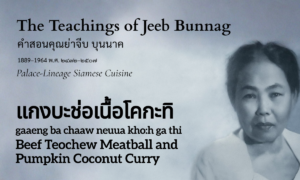
Beef Teochew Meatball and Pumpkin Coconut Curry (แกงบะช่อเนื้อโคกะทิ; gaaeng ba chaaw neuua kho:h ga thi)
Gaeng ba chaaw, Teochew-style beef meatballs seasoned with coriander root paste, simmered in coconut milk with pumpkin. Jeeb Bunnag, 1933.
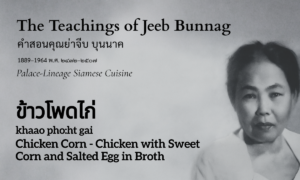
Chicken Corn (ข้าวโพดไก่; khaao pho:ht gai)
Chicken Corn, a delicate Thai snack where thinly sliced corn is simmered in chicken stock with shredded breast meat and salted egg yolk. From Jeeb Bunnag's 1933 cookbook.
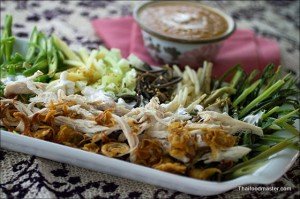
ยำทวาย
This recipe would probably change your perception about the term "salad", maybe because its dressing has a multi layered, curry-like personality, rather than the common sour vinaigrette-like dressing, or maybe because it takes some good few hours to prepare, somewhat longer than simply opening a bag of hydroponic greens.
This salad is the fruit of the dedication of court ladies from aristocratic households, that for centuries perfected and elaborated on the art of cooking through detailed and calculated process, to create sophisticated dishes that are not only delicious but also very healthy and visually pleasing.
These ladies made a very large commitment for small things, and they attended all their time and efforts to make minor things better and getting the small things just right.
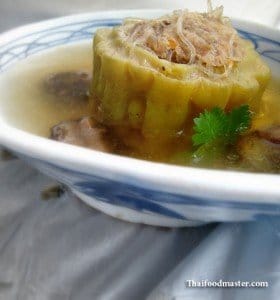
ต้มจืดมะระยัดไส้หมูสับ
Bitter gourds have long been prized in Asia for a trait considered a defect in cucumbers: bitterness. We tend to believe that anything bitter is medicinal and, in this case, we could be correct. The bitter gourd is said to cure a wide range of ailments - from gastrointestinal conditions to cancers, and from diabetes to HIV.
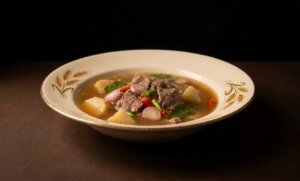
Dtohm Jiu Beef Soup (แกงต้มจิ๋ว; gaaeng dtohm jiu)
Dtohm Jiu Beef Soup: sirloin simmered soft with sweet potato, soured with tamarind, finished with bird's eye chili and lime. Tamrap Sai Yaowapa, 1935.
1
2
3


Get Access – Join Thaifoodmaster Today
Practical and kitchen-tested recipes with a mix of theory, history, psychology, and Siamese culture tidbits.
-
Get access to everything right away. Unlock more than 50 Masterclasses, over 700 recipes and Articles
Access to Thaifoodmaster’s constantly growing library of prime professional classes, articles, recipes and videos on Siamese culinary topics, available nowhere else in English.
-
GET EXTRA - New Masterclasses and Daily Recipes
Gain access to NEW masterclasses as they become available. Access DAILY translations of heritage-recipes.
-
1-1 support from Hanuman
1-1 support from Hanuman to help you achieve your professional Thai culinary goals
-
Live Q&A Sessions
The opportunity to join a monthly live two-hour videoconference where I can answer your questions.
-
Great Value!
one year access for the price of 3 days in-person training.
You will get everything you need to:
-
To Get inspired
When you design or build a new menu for an event or restaurant or even prepare for dinner with friends.
-
To Satisfy your curiosity.
Finally !
-
To Master Your Craft
Master your Thai cooking skills and expand your repertoire.
It is truly brilliant with a revolutionary approach introducing aspects and concepts never broached by cookbooks.

Ian Westcott
Sourcing Wines for Discerning Private Clients
© 2008 – 2026 Thaifoodmaster


