
Celebrating the Art of Siamese Culinary Wisdom and Thai Cuisine
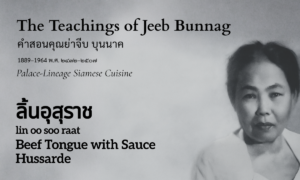
Beef Tongue with Sauce Hussarde (ลิ้นอุสุราช; lin oo soo raat)
Lin oo soo raat, saltpeter-cured braised beef tongue with mace and cinnamon, from Jeeb Bunnag's 1933 Cookbook of Rice Companion Recipes.
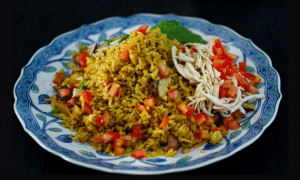
Golden Chestnut Fried Rice with Mint and Tomato (ข้าวผัดกาหรี่; khaao phat garee), circa 1935
Dating from the early 1900s, this tempting fried rice dish highlights how the Siamese aristocracy savored their golden rice, perfumed with an alluring blend of imported spices. The dish can be enjoyed on its own or as part of a larger meal featuring curries and soups.
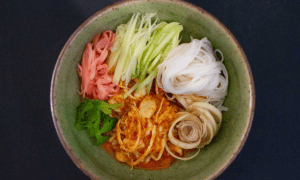
“Sang-de-Boeuf Porcelain” Fermented Rice Noodles by Princess Jongjittanom Dissakul (ขนมจีนครามแดง อย่าง หม่อมเจ้าหญิงจงจิตรถนอม ดิศกุล ; khanohm jeen khraam daaeng)
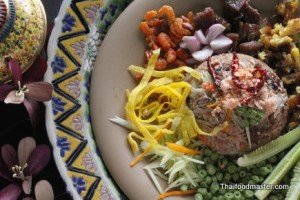
Rice Seasoned with Shrimp Paste
(khaao khlook gabpi ; ข้าวคลุกกะปิ) สูตรทำข้าวคลุกกะปิของ หม่อมเจ้าจงจิตรถนอม ดิศกุล - Rice Seasoned with Shrimp Paste Recipe - Each of the dish’s components is separately prepared and set aside, and mixed individually for each serving. A pleasant harmony of several flavors is created – complex and profound in taste, the dish is a stunning display of confidence. There are many variations of this dish: I have chosen to publish the version described by Prince Johngjit thanaawm Disagoon. This is the very same version prepared for King Chulalongkorn the Great during his unforgettable trip to Italy.
(khaao khlook gabpi ; ข้าวคลุกกะปิ) สูตรทำข้าวคลุกกะปิของ หม่อมเจ้าจงจิตรถนอม ดิศกุล - Rice Seasoned with Shrimp Paste Recipe - Each of the dish’s components is separately prepared and set aside, and mixed individually for each serving. A pleasant harmony of several flavors is created – complex and profound in taste, the dish is a stunning display of confidence. There are many variations of this dish: I have chosen to publish the version described by Prince Johngjit thanaawm Disagoon. This is the very same version prepared for King Chulalongkorn the Great during his unforgettable trip to Italy.
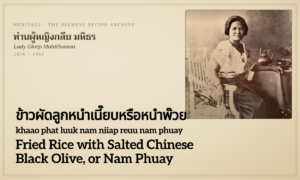
Fried Rice with Salted Chinese Black Olive, or Nam Phuay (ข้าวผัดลูกหนำเนี๊ยบหรือหนำพ๊วย; khaao phat luuk nam niiap reuu nam phuay)
Khao phat luk nam nieb: salted Chinese black olive, shelled and mashed fine, tossed through rice. Lady Gleep Mahithaawn, 1949.
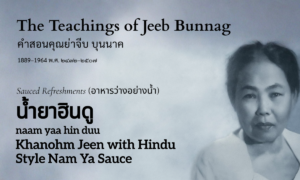
Khanohm Jeen with Hindu Style Nam Ya Sauce (น้ำยาฮินดู; naam yaa hin duu)
Naam yaa hin duu, a coconut curry sauce with red and white beans, flavored with fermented soybean paste. From Jeeb Bunnag's 1945 cookbook.
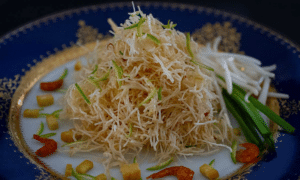
Sour-Sweet Savory Crispy Rice Vermicelli with Bitter Orange (Mee Krob) (หมี่กรอบส้มซ่าทรงเครื่อง ; Mee Graawp)
mee graawp sohng khreuuang (หมี่กรอบทรงเครื่อง), is an exquisitely regal dish of crispy rice vermicelli. The delicate noodles strands are washed and dried, then fried to a crisp light-golden hue. They retain their brittle crunch and airy texture even after being stir-fried with a clinging sticky sauce that encases the noodles in a thin layer of sheen. This sauce, mixed into the noodles together with other ingredients such as thin slices of pickled garlic and bitter orange peel, impart the dish with a light, fresh sweet and sour, and slightly salty and citrusy glaze.
Modified Turnip Cake (ขนมหัวผักกาดแปลง; khanom hua phak gaat bplaeng)
Khanom hua phak gaat bplaeng: steamed turnip cake, deep-fried golden, then stir-fried with shrimp and egg. Jeeb Bunnag, 1933.
Special Seasoned Glutinous Rice with Crab and Chicken (ข้าวเหนียวปรุงพิเศษ; khaao niaao bproong phi saeht)
Special Seasoned Glutinous Rice, a royal Thai palace dish featuring coconut-infused sticky rice with crab and chicken. From Jeeb Bunnag's cookbook, 1945.
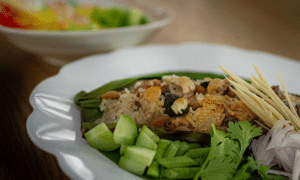
Grilled banana leaf parcels filled with butter-fried rice with chicken, chicken offal and dried spices, served with a sour-sweet coconut-base vegetable relish (ข้าวงบไก่ อาจาดอังวะ ; khaao ngohp gai aajaat angwa)
The khaao ngohp gai (ข้าวงบไก่) recipe by Mom Chao Sai Ladawan (Princess Saisawali Phirom) evokes the flavor and aesthetics of Muslim-style cooking. First, cooked rice, chicken, and chicken offal are fried with butter and perfumed with whole spices. The buttery fried rice is wrapped in banana leaves and then grilled, forming a crispy outer crust of spiced-infused rice grains.
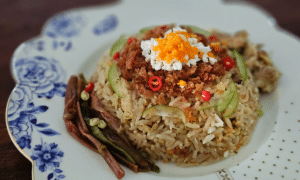
Rice Seasoned with Young Tamarind Relish, Sweetened Fish and Pickled Morning Glory (ข้าวคลุกน้ำพริกมะขามอ่อน ผักบุ้งดอง ปลาแห้งผัดหวาน และ ปลาดุกย่าง; Khaao Khlook Naam Phrik Makhaam Aawn Phakboong Daawng Bplaa Haaeng Phat Waan Lae Bplaa Dook Yaang)
Seasoned rice dishes have been a staple of rice-consuming societies almost since the first grains were cultivated. Adapted according to local resources, traditions and individual preferences, seasoned rice dishes are relished and savored across all walks of life. Within Siamese society, these dishes offer insight into the flavor instincts and eating habits across all demographics, revealing which food items were locally available and valued.
In this delicious seasoned rice recipe from the kitchens of the daughter of King Chulalongkorn, Princess Yaovabha Bongsanid (พระเจ้าบรมวงศ์เธอ พระองค์เจ้าเยาวภาพงศ์สนิท) (1884-1934), the Princess uses a variety of common preserved and inexpensive ingredients, clearly drawing inspiration from the cuisine of the Central Plains with nods to the rural and coastal living atmosphere.
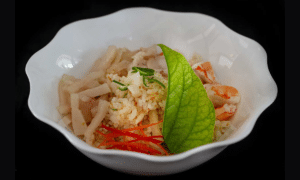
Phra Suli - Three-Flavor Seasoned Rice with Shrimp, Firm Pork Fat and Pork Skin (ข้าวพระศุลี; Khaao Phra Soolee)
Mrs. Paan Nanthaathiwat (คุณปาน นันทาถิวัฒน์) (1893-1955) was known for her kitchen skills. She often cooked for friends and family, spending time in the kitchen with her best friend, Mrs. Yim Pichaiyat Bunnag (คุณยิ้ม พิชัยญาติ บุนนาค (1892-1976). Thus, it was not a surprise when in 1953 she authored a recipe book as part of her merit offering on her 60th birthday. Sadly, Mrs. Paan passed away a year later and the publication, titled Hoong Khaao Dtohm Gaaeng (หุ้งข้าวต้มแกง), was later printed as a memorial book for her funeral. In 1977, the volume was reprinted for the funeral of her best friend, Mrs. Yim.
It is unclear why Mrs. Paan named this citrusy, sour, and salty seasoned rice dish after Lord Shiva, calling it “Phra Suli (พระศุลี ; phra soolee)”. Yet I believe the name of the dish is meant to evoke the elegance and delicacy of the deity rather than to reference cultural authenticity or tradition.
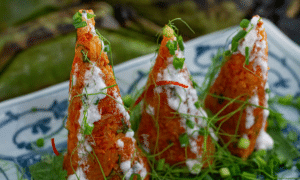
Grilled banana leaf parcels filled with curried rice, shrimp meat grated coconut, and herbs. (ข้าวงบกุ้ง อย่างพระวิมาดาเธอ หม่อมเจ้าสาย ลดาวัลย์ ; khaao ngohp goong)
The khaao ngohp goong (ข้าวงบกุ้ง) of Mom Chao Sai Ladawan (Princess Saisawali Phirom) is a dish of seasoned curried rice mixed with shrimp meat, shrimp tomalley, grated coconut, and herbs. The rice mix is then wrapped in banana leaves and grilled. Unwrapping the parcel reveals an intense orange- and russet-brown colored rice cake that is rich, savory and naturally sweet. It is served with a drizzle of thickened coconut cream and herbs.
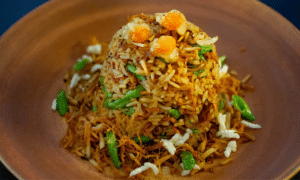
Crispy Rice - Khaao Graawp (ข้าวกรอบ อย่างหม่อมเจ้าสาย ลดาวัลย์)
Suan Sunandha Palace was the permanent residence of Mom Chao Sai Ladawan (HRH Princess Saisawali Phirom, พระวิมาดาเธอ หม่อมเจ้าสาย ลดาวัลย์), the Royal Consort to Rama V. In the kitchen of Suan Sunandha Palace, the Princess presided over a peak era of culinary innovation until her passing on June 24, 1929. Reflecting her practicality, the Princess’ recipes frequently incorporated the era’s common pantry ingredients in new and surprising combinations.
For example, in her boat-embarking chili relish (น้ำพริกลงเรือ; naam phrik lohng reuua), a relish still enjoyed today, the Princess pairs fermented shrimp paste chili relish with sweet pork, crispy fried fish, salted duck eggs and hairy-fruited eggplant (maeuk) (มะอึก). Another example is her gaaeng ran juaan (แกงรัญจวน) – the Princess prepares a vibrant spicy and sour soup, fragrant with the aroma of Thai basil, from the leftovers of a stir-fried beef dish and fermented shrimp paste chili relish, which she cooked together with lemongrass, shallots and garlic.
Mom Chao Sai Ladawan’s recipes, many already recreated here at Thaifoodmaster, were recorded by Princess Sadap Ladawan (เจ้าจอมหม่อมราชวงศ์สดับลดาวัลย์), a key figure in the Palace’s culinary affairs, and subsequently compiled and published by Suan Sunandha Rajabhat University in a volume dedicated to seasoned rice dishes and chili relishes.
In this dish called khaao graawp (ข้าวกรอบ), or “crispy rice” the Princess seasons cooked jasmine rice with chili jam, and adds four fried components, each highlighting a different element of the crispiness indicated by the dish’s name.
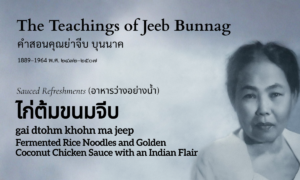
Fermented Rice Noodles and Golden Coconut Chicken Sauce with an Indian Flair (ไก่ต้มขนมจีบ; gai dtohm khohn ma jeep)
Gai dtohm khohn ma jeep, a coconut-simmered chicken sauce with Indian influences served with fermented rice noodles. From Jeeb Bunnag's 1945 cookbook.
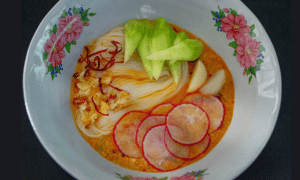
c1936 Arabian noodles – Princess Maao Thongthaem’s Siamese-Orientalist fermented rice noodles light meal (ขนมจีนอาหรับ อย่าง เม้า ทองแถม; khanohm jeen aarap)
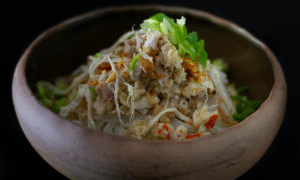
Naam Yaa Jeen - Fermented Rice Noodles with Chinese Sauce by HRH Prince Krom Luang Pitak Montri (น้ำยาจีน อย่างกรมหลวงพิทักษมนตรี)
Among the various curries that can be poured over khanom jeen fermented rice noodles, this broth, known as Chinese-style “naam yaa,” is unique in that it is a water-based curry that does not have chilies. As such, rather than the typical reddish-rust color of most coconut-based naam ya dishes from the Central Plains of the Kingdom, the sauce glows with a soft, light ivory hue, beautifully reflecting the dish’s natural sweet-savoriness, which is derived from slow-braising three proteins – chicken, pork and shrimp – along with a curry paste galvanized by smoke-dried fish and aromatic roots like galangal, fingerroot and sand ginger. The naam ya broth is served over a bed of fermented rice noodles and garnished with toppings such as delicate pulled chicken breast threads, golden-crispy fried shallots and garlic, and vivid green fresh coriander leaves and spring onion. All these elements add a visual grace and a hint of freshness to the robust broth – the signature dish of Prince Krom Luang Pitak Montri (กรมหลวงพิทักษ์มนตรี).
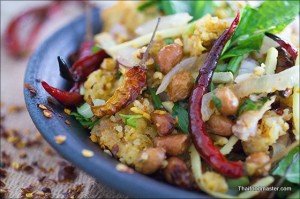
Yam Naem Khao Thot Recipe
Spicy Salad of Curried Rice Croquettes, Fermented Pork, Ginger and Peanuts
(yam naaem khaao thaawt)
สูตรทำยำแหนมข้าวทอด The dish was introduced to me by a street vendor in forsaken part of town some twenty years ago. Auntie Yai was a true character. She was wearing intensive makeup and I still remember her talkative hilarious manner. I and other customers waiting in line were regularly subjected to nonstop "interrogations" or "interviews". I must admit I enjoyed the peek into other people lives while waiting over an hour for her mouth watering curried rice croquettes. I loved how the pungent, vibrant swirl of ginger was setting off the fermented pork sourness just perfectly, how the nutty crunch of those peanuts was balanced by the vivid tone of fresh herbs.
Spicy Salad of Curried Rice Croquettes, Fermented Pork, Ginger and Peanuts
(yam naaem khaao thaawt)
สูตรทำยำแหนมข้าวทอด The dish was introduced to me by a street vendor in forsaken part of town some twenty years ago. Auntie Yai was a true character. She was wearing intensive makeup and I still remember her talkative hilarious manner. I and other customers waiting in line were regularly subjected to nonstop "interrogations" or "interviews". I must admit I enjoyed the peek into other people lives while waiting over an hour for her mouth watering curried rice croquettes. I loved how the pungent, vibrant swirl of ginger was setting off the fermented pork sourness just perfectly, how the nutty crunch of those peanuts was balanced by the vivid tone of fresh herbs.
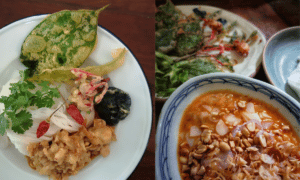
c1949 Fermented rice noodles with multi-sour aromatic chicken sauce by Lady Gleep Mahithaawn (ขนมจีนน้ำพริกไก่ อย่างท่านผู้หญิงกลีบ มหิธร พ.ศ. 2492; khanohm jeen naam phrik gai)
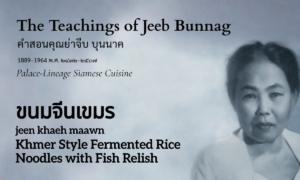
Khmer Rice Noodles with Fish Relish (ขนมจีนเขมร; jeen khaeh maawn)
Khmer Rice Noodles with Fish Relish features smoke-dried barb fish prepared through a four-stage process with aromatic herbs. From Jeeb Bunnak's 1945 cookbook.
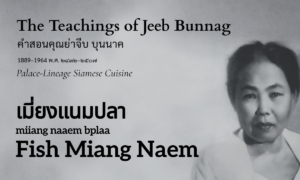
Fish Miang Naem (เมี่ยงแนมปลา; miiang naaem bplaa)
Miiang naaem bplaa, grilled snakehead fish with fire-roasted galangal juice and bitter orange, served in lettuce cups. Jeeb Bunnag, 1933.
1
2
3


Get Access – Join Thaifoodmaster Today
Practical and kitchen-tested recipes with a mix of theory, history, psychology, and Siamese culture tidbits.
-
Get access to everything right away. Unlock more than 50 Masterclasses, over 700 recipes and Articles
Access to Thaifoodmaster’s constantly growing library of prime professional classes, articles, recipes and videos on Siamese culinary topics, available nowhere else in English.
-
GET EXTRA - New Masterclasses and Daily Recipes
Gain access to NEW masterclasses as they become available. Access DAILY translations of heritage-recipes.
-
1-1 support from Hanuman
1-1 support from Hanuman to help you achieve your professional Thai culinary goals
-
Live Q&A Sessions
The opportunity to join a monthly live two-hour videoconference where I can answer your questions.
-
Great Value!
one year access for the price of 3 days in-person training.
You will get everything you need to:
-
To Get inspired
When you design or build a new menu for an event or restaurant or even prepare for dinner with friends.
-
To Satisfy your curiosity.
Finally !
-
To Master Your Craft
Master your Thai cooking skills and expand your repertoire.
It is truly brilliant with a revolutionary approach introducing aspects and concepts never broached by cookbooks.

Ian Westcott
Sourcing Wines for Discerning Private Clients
© 2008 – 2026 Thaifoodmaster


