
Celebrating the Art of Siamese Culinary Wisdom and Thai Cuisine
Dulda (ดุลด๊ะ; doon da)
Dulda, a raita-style yogurt salad with duck egg, mint, and coriander, from Hibrahim Haji Rocheedee Bin Dtwan's Islamic Cookbook, 1933.
Small Salad (ยำเล็ก; yam lek)
Yam lek, a Thai-Muslim vinegar-dressed salad with cucumber, mint, and bruised bird's eye chili. From the Islamic Cookbook, 1933.
The Earliest Printed Recipe for Papaya Som Tum (ส้มตำมะละกอ; sohm dtam ma la gaaw)
Sohm dtam ma la gaaw, the first printed Siamese recipe for som tum — a Central Thai papaya salad with dried shrimp. Tamra Khraawp Lo:hk, 1929.
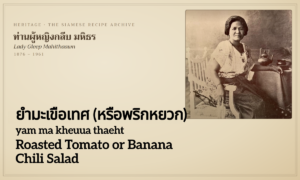
Roasted Tomato Salad, or Banana Chili Salad (ยำมะเขือเทศ (หรือพริกหยวก); yam ma kheuua thaeht)
Yam ma kheuua thaeht: flame-roasted tomatoes, peeled and seeded, dressed with ground dried shrimp and madan. Lady Gleep Mahithaawn, 1949.
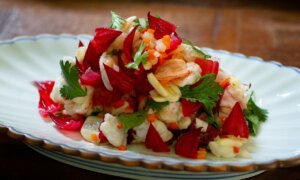
c1890 Fresh roselle salad with acid-cured shrimp (ยำผลกระเจี๊ยบ อย่างท่านผู้หญิงเปลี่ยน ภาสกรณ์วงศ์ ร.ศ.๑๐๘ ; yam phohn gra jiiap;)
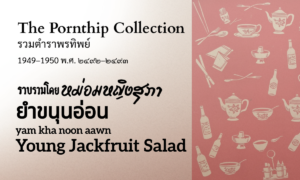
Young Jackfruit Salad (ยำขนุนอ่อน; yam kha noon aawn)
Young Jackfruit Salad featuring tender jackfruit stir-fried with coconut cream and aromatic herbs and dressed with chili jam. From Maawm Ying Soophaa's 1949 manuscript on Thai salad recipes.
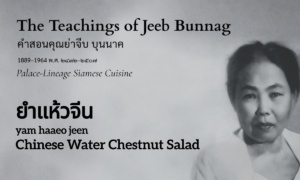
Chinese Water Chestnut Salad (ยำแห้วจีน; yam haaeo jeen)
Chinese Water Chestnut Salad combining crisp water chestnuts with seafood and pork in a salty-sweet-sour dressing. From Jeeb Bunnag's 1933 cookbook.
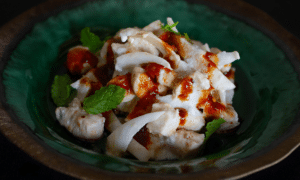
Faux Frog Salad – A Salad of Coconut Braised Chicken with Young Coconut and Chili Jam Dressing (ยำกบเทียม; yam gohp thiiam)
Faux frog salad is a rich, elegant dish featuring tender chicken braised in coconut cream and young coconut flesh with a chili-jam based dressing. Utilizing an old-fashioned salad assembly technique – the ‘mix and layer’ – this is a visually striking salad with alternating layers of reds and whites.
The name of this vintage dish – Faux Frog Salad – could be a reflection of the swinging social norms in Siam during the roaring twenties, a period of significant social change; as the country sought to navigate the challenges of modernization, Siamese society was shifting its dietary preferences away from the frog, once a common, versatile and popular ingredient. Thus, through the desire for distinction, chicken, an ingredient often compared to the taste of everything, was preferable to frog.
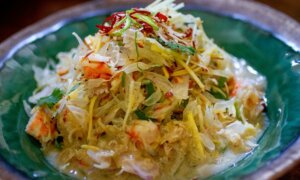
Pomelo salad with salted shrimp and a lemongrass-infused coconut cream dressing (ยำส้มโอกุ้งเค็ม ; yam sohm o:h goong khem)
Snap Bean and Yardlong Bean Salad with Duck (ยำถั่วแขกถั่วฝักยาวกับเนื้อเป็ด; yam thuaa khaaek thuaa fak yaao gap neuua bpet)
Snap Bean and Yardlong Bean Salad with Duck combines two bean varieties with Chinese-style roasted duck and transparent shrimp. From Maawm Ying Soophaa's 1949 royal cuisine manuscript.
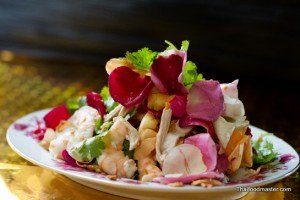
ยำกลีบกุพชกะ - ตำนาน "ดอกกุหลาบ" กับ เรื่องรัก 14 กุมภาพันธ์ แบบไทย ๆ
สูตรทำยำกลีบกุพชกะ อย่าง พระยานครราชเสนี - วันแห่งความรัก 14 กุมภาพันธ์นี้ ข้าพเจ้าเปลี่ยนความคิดใหม่แล้ว แทนที่จะพาครอบครัวไปฉลองข้างนอก เปลี่ยนมาฉลองที่บ้านดีกว่า จะลงปรุงอาหารคาวหวานจากดอกกุหลาบหลาย ๆ ตำรับให้เป็นธีม (theme) ดูท่าคงจะมีเรื่องเล่า จากดอกกุหลาบแดงช่อนั้นของแม่ลูกสาวข้าพเจ้าในโต๊ะอาหารเป็นแน่แท้... คิดแล้วก็ขับรถไป ฮัมเพลงไป เบา ๆ
Yam of Beef Innards (ยำเครื่องในโค; yam khreuuang nai kho:h)
Yam khreuuang nai kho:h, beef innards cleaned with slaked lime and dressed without coconut. From Maawm Sohm Jeen's Tamra Gap Khao, c. 1890.
Yam of Chicken (ยำไก่; yam gai)
Yam gai: chicken simmered in coconut milk until dry, then dressed with mint, kaffir lime and green mango. Maawm Sohm Jeen, Tamra Gap Khao, 1890.
Deluxe Cucumber Salad (ยำแตงกวาทรงเครื่อง; yam dtaaeng gwaa sohng khreuuang)
Deluxe cucumber salad of bias-cut cucumber, boiled pork belly, shrimp, and sea crab in a three-flavor dressing. From Princess Jongjittanom, 1978.
Royal-Style Roselle Bud Salad (ยำผลกระเจี๊ยบเสวย; yam phohn gra jiiap sa weeuy)
Royal-Style Roselle Bud Salad combines wine-ruby roselle buds with pork and crispy aromatics in a bitter orange dressing. Components remain separate until serving, per Maawm Ying Soophaa's 1949 manuscript.
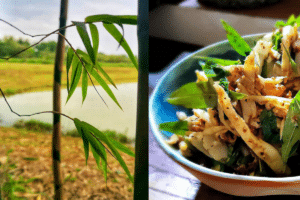
Shan-Style Salad of Bamboo Shoots with Fermented Soybean Cake Dressing (หน่อโก้; Naaw Go:H)
Naaw go:h, a Shan-style seasonal salad, is a dish commonly made by the Shan people during the rainy season, using freshly foraged ingredients. Consisting of shredded, cooked bamboo shoots and herbs with a glossy, earthy-like dressing, the salad reflects the moist soil from which the bamboo sprouts after the rains. The use of whole, elongated Vietnamese coriander leaves and sliced, angular young ginger leaves visually mirrors the structure of the bamboo plant.
The dressing for this salad is prepared by frying a paste in pork lard or cooking oil; the paste includes roasted dried bird’s eye chilis, roasted garlic, powdered soybean cake and salt and, occasionally, roasted shallots or a small piece of fresh turmeric are incorporated. This mixture bestows a harmonious blend of salty-spicy, rich, and nutty undertones upon the salad, complemented by a subtle yeasty essence.
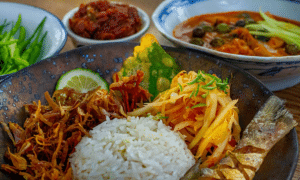
Khaao man sohm dtam and the first-ever recorded recipe for papaya salad (ข้าวมันส้มตำ)
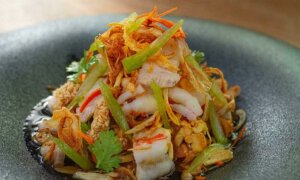
c1933 Sour bilimbi fruit and crispy candied peanut salad with pork, shrimp and pork fat (ยำตะลิงปลิง ; yam dtaling bpling)
A candied peanut bar might be considered an unlikely ingredient for an old-fashioned Siamese-style salad. Yet, peanut bars were familiar to the Siamese as early as the Ayutthaya period and were part of a broader set of Teochew Chinese sweets called, in Thai, “khanohm janap (ขนมจันอับ)”.
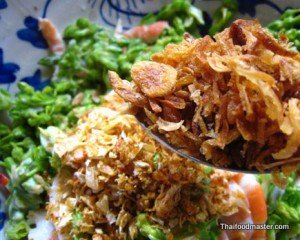
ยำดอกขจร
The first Thai restaurant in London was opened during the 1960's by HRH Princess Jurairat Nasiriman (1910-2000) (พระเจ้าวรวงศ์เธอ พระองค์เจ้าจุไรรัตนศิริมาน), the granddaughter of HRH King Mongkut (Rama IV). Princess Jurairat chose to offer this salad on the menu and named it "Salad of Thai Milkweed Flower". (Other names: Cowslip creeper, Telosma Cordata).
This fresh and tasty salad is so vibrant and easy for us to enjoy, it takes in the very basic flavors, sweet, salty, hot and sour and wrap them in a creamy coat of reduced coconut cream. The milkweed flower buds retain their crunchiness and their pleasant fragrance with only a gentle and very quick blanching in sweet boiling water.
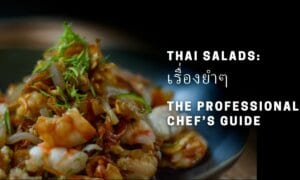
Thai Salads, The Professional Chef's Guide เรื่องยำๆ
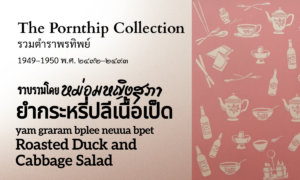
Duck and Cabbage Salad (ยำกระหร่ำปลีเนื้อเป็ด; yam graram bplee neuua bpet)
Duck and Cabbage Salad featuring shredded roasted duck, dried squid, and tender cabbage with a balanced sour-sweet dressing. From Maawm Ying Soophaa's 1949 manuscript.
1
2
3


Get Access – Join Thaifoodmaster Today
Practical and kitchen-tested recipes with a mix of theory, history, psychology, and Siamese culture tidbits.
-
Get access to everything right away. Unlock more than 50 Masterclasses, over 700 recipes and Articles
Access to Thaifoodmaster’s constantly growing library of prime professional classes, articles, recipes and videos on Siamese culinary topics, available nowhere else in English.
-
GET EXTRA - New Masterclasses and Daily Recipes
Gain access to NEW masterclasses as they become available. Access DAILY translations of heritage-recipes.
-
1-1 support from Hanuman
1-1 support from Hanuman to help you achieve your professional Thai culinary goals
-
Live Q&A Sessions
The opportunity to join a monthly live two-hour videoconference where I can answer your questions.
-
Great Value!
one year access for the price of 3 days in-person training.
You will get everything you need to:
-
To Get inspired
When you design or build a new menu for an event or restaurant or even prepare for dinner with friends.
-
To Satisfy your curiosity.
Finally !
-
To Master Your Craft
Master your Thai cooking skills and expand your repertoire.
It is truly brilliant with a revolutionary approach introducing aspects and concepts never broached by cookbooks.

Ian Westcott
Sourcing Wines for Discerning Private Clients
© 2008 – 2026 Thaifoodmaster


