
Celebrating the Art of Siamese Culinary Wisdom and Thai Cuisine
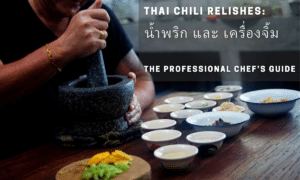
Siamese Chili Relishes - The Professional Chef's Guide - น้ำพริก และ เครื่องจิ้ม
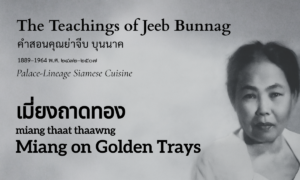
Miang on Golden Trays (เมี่ยงถาดทอง; miang thaat thaawng) (กระทงทอง)
Miang thaat thaawng, palm-pressed fried pastry cups filled with crab, pork, pickled garlic, and bitter orange zest. Jeeb Bunnag, 1933.

Roasted Fish Pae Sa (แป๊ะซะปลาเผา; bpae sa bplaa phao)
Bpae sa bplaa phao: clay-roasted snakehead fish with chili jam and tamarind dressing, from Jeeb Bunnag's 1933 palace-style manuscript.
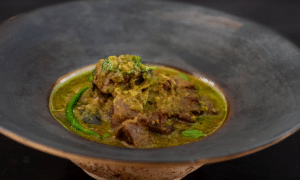
Perfumed Muslim-style Curry of Fresh Chilies with Beef (แกงเขียวหวานเนื้อทรงเครื่อง; Gaaeng Khiaao Waan Neuua Sohng Khreuuang)
The Indian and Muslim cuisines present distinct approaches to using dried spices in curries, both of which influence Siamese cuisine in different ways. Indian-inspired Siamese curries spotlight chilies for their vibrant color, fragrance, flavor and heat, while spices like cumin and coriander play a supporting role. The spices complement and temper the chilies’ intensity, creating a rounded, multi-layered flavor profile; nonetheless, the chilies remain the star ingredient, gently complemented by the spices.
Conversely, Muslim-influenced curries, such as massaman curry, prioritize spices over chilies. Spices like cardamom, nutmeg and mace take center stage, while the chilies provide subtle background heat rather than being the primary flavor. In these curries, the focus is on the rich, warm and complex aromas created by the blend of spices, which is a defining characteristic of many Muslim dishes.
Moreover, Siamese cuisine favors using rehydrated dried chilies in curries for their depth; this depth is highly appreciated, along with the complexity, and comparatively milder heat of the rehydrated dried chilies. As well, the harsh grassy notes of fresh chilies are not favored; they’re referred to in Thai as “green rank” or “men khiaao (เหม็นเขียว)”. Muslim curries often use fresh green chilies, tempering their vibrant, grassy taste with dry spices and thus shifting the flavor from bright and fresh to more subdued and earthy tones, resulting in a dish that is perceived to be layered, despite the burst of fresh chilies.
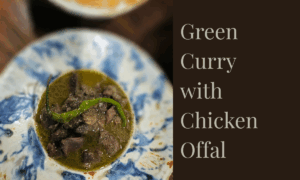
Yogurt-Based Ancient Green Curry with Chicken Offal (แกงเขียว; gaaeng khiaao)
Mrs. Yim Pichaiyat Bunnag (คุณยิ้ม พิชัยญาติ บุนนาค)'s 1920s aristocratic green curry reveals a forgotten chapter in Thai culinary history. This Muslim-style recipe uses ghee and yogurt instead of coconut milk, featuring chicken offal—liver, gizzard, and heart—each contributing distinct textures and concentrated flavors. Roasted spices like cinnamon, clove, and cardamom create warming aromatics, while fresh chilies provide signature heat. The dish documents how Bangkok's noble kitchens adapted Islamic cooking techniques before democratization, preserving methods that would shape modern Thai cuisine.
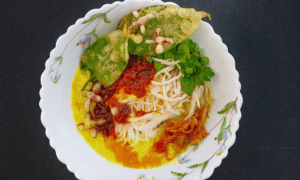
c1908 Fermented rice noodles and golden coconut chicken sauce with an Indian flair (ขนมจีนแขก หรือ ไก่ต้มขนมจีน ; khanohm jeen khaaek)
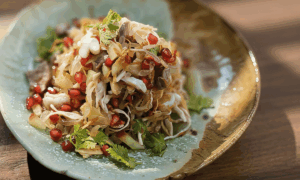
c1935 Trinarong Salad - Thai Three-Fruit Yam from Pathum Thani (ยำตรีณรงค์; yam dtreen rohng)
Central-style Thai salad combining pomelo, rose apple, and pomegranate with shrimp, chicken, and pork. From Ms. Booree Thohnsak's 1935 Pathum Thani memorial cookbook.
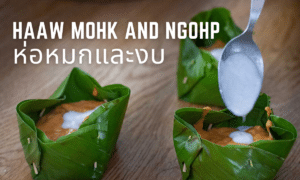
Haaw Mohk and Ngohp (ห่อหมก และ งบ)
Perplexing Mee Suaa (หมี่สั้วฉงน; mee suaa cha ngohn)
Mee suaa cha ngohn: wheat noodle bundles bound with shrimp-corn paste, steamed, served in clear pork-crab broth. Jeeb Bunnag, 1933.
Bite-Sized Fried Shrimp-Rice Cake Parcels Wrapped With Fresh Garnishes in Cabbage Leaves (ส้มผักสด; sohm phak soht)
Sohm phak soht: coconut-battered fried shrimp-rice cakes wrapped in Chinese cabbage with pickled ginger, peanuts, shallots, lime and bitter orange. Jeeb Bunnag, 1945.
Offal in Broth (เครื่องในกะทะ; khreuuang nai ga tha)
Offal in Broth combines carefully cleaned organ meats in a seasoned pork bone broth. From Jeeb Bunnag's 1945 Thai culinary manuscript for appetizers and snacks.
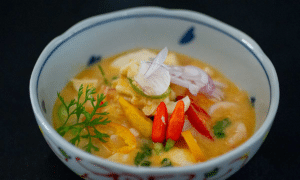
Salted duck eggs and shrimp creamy lohn (หลนไข่เค็ม ; lohn khai khem)
Lohn of salted duck eggs is a smooth, rich and creamy relish with a vibrant three-flavor profile of sour-salty-sweet. Unlike other lohn relishes, it does not contain any overbearing fermented ingredients, making it easy to enjoy, and it does not require an acquired taste.
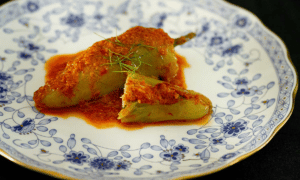
Chuu Chee Curry of Stuffed Banana Chilies with Pork, Shrimp and Crab Meat (ฉู่ฉี่พริกสอดไส้ ; chuu chee phrik yuaak saawt sai)
This chuu chee features avocado-green banana chilies and the pinkish mixture of pork, shrimp and crab meats. The chilies are sliced open and stuffed with a mixture of the meats, which is seasoned with the basic saam gluuhr (สามเกลอ) paste – the Siamese trio of coriander roots, Thai garlic and white peppercorns. The stuffed chilies are then steamed before being cooked in a thick, reddish, coconut cream-based curry. The liquids collected in the tray during the steaming process are packed with the light sweet fruitiness of the banana chilies; these liquids are reserved and added to the broth, producing a bright and light-bodied dish.
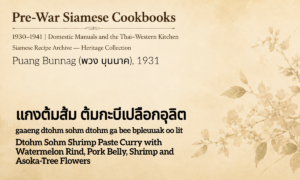
Dtohm Sohm Shrimp Paste Curry with Watermelon Rind, Pork Belly and Asoka-Tree Flowers (แกงต้มส้ม ต้มกะบีเปลือกอุลิต; gaaeng dtohm sohm dtohm ga bee bpleuuak oo lit)
Dtohm sohm kapi curry of Watermelon Rind, Pork Belly, Shrimp, Duck Egg and Asoka-Tree Flowers soured with kaffir lime and tamarind, sweet leading sour and salty. From Puang Bunnag, 1931.
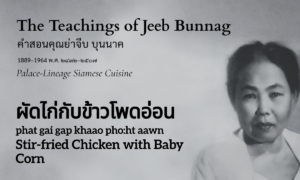
Stir-fried Chicken with Baby Corn (ผัดไก่กับข้าวโพดอ่อน; phat gai gap khaao pho:ht aawn)
Phat gai gap khaao phoht aawn, chicken and baby corn stir-fried with garlic, sauce thickened by pounded corn kernels. Jeeb Bunnag, 1933.
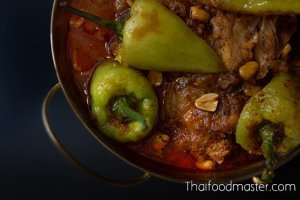
Jee (Jeen) Juaan Curry of Chicken, Banana Chilies, Peanuts and Indian Spices (แกงเผ็ดไก่จี่จ๋วน, แกงจีนจ๊วน, แกงจ๋วน ; gaaeng phet gai jee juaan )
Also known as: gaaeng jeen juaan (แกงจีนจ๊วน), or gaaeng juaan (แกงจ๋วน).
Gaaeng jeen juaan is a coconut-based red curry. With primary ingredients of chicken, light green banana chili peppers and peanuts, it is similar to Massaman curry (matsaman); and scented with the sweet aroma of dry Indian spices such as cumin, mace, nutmeg, clove, star anise and cinnamon. Pineapple adds sweetness and a thin layer of tartness. The sweet and sour flavors are echoed by the addition of fresh sugarcane juice and a squeeze of bitter orange juice (sohm saa). To enhance the aroma and texture of the curry, roasted grated coconut is added to the curry paste.

Jatturaphan Dumplings — Bird Egg-Shaped Dumplings in Four Complexions (ไข่นกจัตุรพรรณ; khai nohk jat dtoo phan)
Bird's Egg Jatturaphan: tapioca dumplings with salted egg yolk centers in four natural colors, served in chicken broth. From Jeeb Bunnag's 1945 royal court cuisine cookbook.
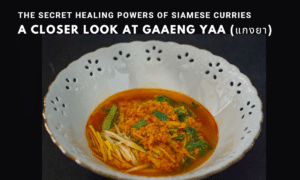
The Secret Healing Powers of Siamese Curries – A Closer Look at Gaaeng Yaa (แกงยา)
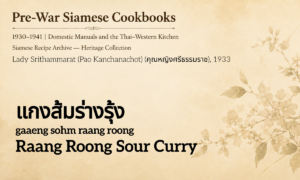
Raang Roong Sour Curry (แกงส้มร่างรุ้ง; gaaeng sohm raang roong)
Gaaeng sohm raang roong, sour curry with giant freshwater prawns on a pounded dried shrimp and shallot base fried in lard. Lady Srithammarat, 1933.

Capital-Style Sausage (ไส้กรอกกรุง; sai graawk groong)
Capital-Style Sausage combines crab meat and pork with cinnamon and nutmeg, smoked over sugarcane peels and coconut husks. From Jeeb Bunnag's 1945 cookbook.
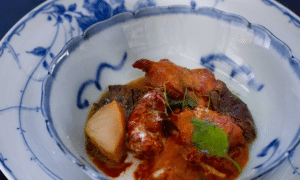
Duck Curry with Prunes and Apples (แกงเป็ดกับพรูนและแอปเปิ้ล อย่าง ม.ล. เติบ ชุมสาย; gaaeng bpet gap phruun lae aaep bpeern)
When it comes to pairing fruits with meats in savory dishes, it’s hard to match the bold tangy-luscious combination of apples and prunes in this old-fashioned coconut-based spicy curry with braised duck. The dish is seasoned to a spicy, salty, and sour-sweet flavor profile, which is further intensified by the prunes’ subtle nectareous, savory-sweetness and the apples’ fruity, sweet-tartness. This curry is a perfect example of how fruits can complement the already complex and profound aromatic relationships between meaty-savory flavors, the curry paste’s aromatic identity, and the dish’s herbal character of Thai basil and fresh peppercorns – creating a most memorable flavor impression.
1
2
3
4
5
6
7
8
9
10
11
12
13
14

Get Access – Join Thaifoodmaster Today
Practical and kitchen-tested recipes with a mix of theory, history, psychology, and Siamese culture tidbits.
-
Get access to everything right away. Unlock more than 50 Masterclasses, over 700 recipes and Articles
Access to Thaifoodmaster’s constantly growing library of prime professional classes, articles, recipes and videos on Siamese culinary topics, available nowhere else in English.
-
GET EXTRA - New Masterclasses and Daily Recipes
Gain access to NEW masterclasses as they become available. Access DAILY translations of heritage-recipes.
-
1-1 support from Hanuman
1-1 support from Hanuman to help you achieve your professional Thai culinary goals
-
Live Q&A Sessions
The opportunity to join a monthly live two-hour videoconference where I can answer your questions.
-
Great Value!
one year access for the price of 3 days in-person training.
You will get everything you need to:
-
To Get inspired
When you design or build a new menu for an event or restaurant or even prepare for dinner with friends.
-
To Satisfy your curiosity.
Finally !
-
To Master Your Craft
Master your Thai cooking skills and expand your repertoire.
It is truly brilliant with a revolutionary approach introducing aspects and concepts never broached by cookbooks.

Ian Westcott
Sourcing Wines for Discerning Private Clients
© 2008 – 2026 Thaifoodmaster


