
Celebrating the Art of Siamese Culinary Wisdom and Thai Cuisine
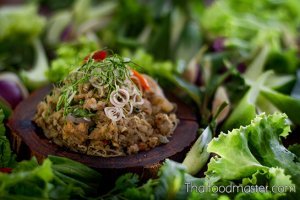
Thai Relish of Fermented Fish, Grilled Catfish, Pork and Shrimp (ปลาร้าผัดทรงเครื่องสูตรสายเยาวภา ; bplaa raa phat sohng khreuuang, suut saai yao wa phaa)
Fish fermentation consists of a simple salt-curing process: mixing or coating a whole fish, sliced fish or minced fish meat with salt and rice husks (or ground roasted rice). The mixture is then allowed to rest and ferment for few months. This fermentation process creates deep, intense umami flavor agents accompanied by a strong stench. It is only with culinary sagacity and skill that cooks are able to harness and direct these powerful flavors within the context of an appetizing dish, and to constrain the odor to an agreeable intensity.
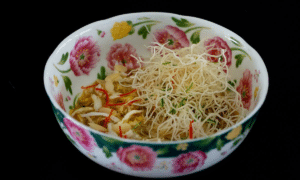
The Ambassador’s House Style Noodle Soup (หมี่น้ำบ้านราชทูต; Mee Naam Baan Raat Thuut)
This soup dish features crispy rice vermicelli noodles, a chicken broth that has a three-flavor profile infused with the aroma of bitter orange, and a plethora of other ingredients such as crispy fried tofu, chicken, pork, crab and pickled garlic.
In Thai, the phrase mee naam baan raat thuut refers to a rice vermicelli noodle soup in the style of the Ambassador’s house. The dish was not new when it appeared in the 1956 book Snacks, Tea Nibbles, Hors D’oeuvres and Drinking Food (ตำราอาหารว่าง - เครื่องน้ำชา และ เครื่องเคี้ยว หรือ กับแกล้ม) by Jeeb Bunnag (จีบ บุนนาค), as noodle dishes were often the preferred ingredient for light meals or snacks. In Grandparents Recipes: 100 Years Old Recipes (จานอร่อยจากปู่ย่า สูตรโบราณ 100 ปี), a volume printed in 2014 that highlights recipes from the kitchens of fifteen prominent families, a similar version of the dish is referred to as mee naam baan bpaak naai leert (หมี่น้ำบ้านปาร์คนายเลิศ) and is associated with Nai Lert.
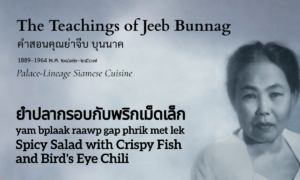
Spicy Salad with Crispy Fish and Bird's Eye Chili (ยำปลากรอบกับพริกเม็ดเล็ก; yam bplaak raawp gap phrik met lek)
Yam bplaak raawp gap phrik met lek - smoke-dried fish salad with fried aromatic herbs and salt-tempered bird's eye chilies. Jeeb Bunnag, 1933.

(c1941) Heavenly Clear Soup (แกงจืดสวรรค์; gaaeng jeuut saawan)
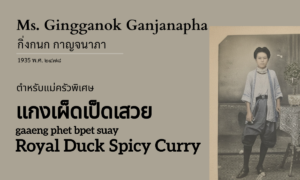
Royal Duck Spicy Curry (แกงเผ็ดเป็ดเสวย; gaaeng phet bpet suay)
Gaaeng phet bpet suay, duck dry-sautéed before simmering, with kaffir lime and optional nutmeg in the paste. Delicious Side Dishes, 1935.
Seasoned Chicken Tongue Relish (ลิ้นระกาปรุง; lin ra gaa bproong)
Lin ra gaa bproong, pounded chicken tongue relish with ruaan shrimp and ginger, from Jeeb Bunnag's 1933 Cookbook of Rice Companion Recipes.
Chuu Chee Curry with Climbing Perch (แกงฉู่ฉี่ปลาหมอ; gaaeng chuu chee bplaa maaw)
Chuu chee curry with climbing perch — pan-fried fish in split coconut cream based chuu chee curry with kaffir lime leaves and coriander leaves. From Jeeb Bunnag's 1933 cookbook.
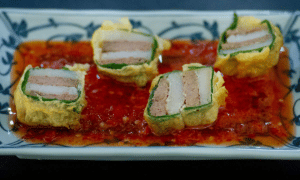
Pork liver and firm pork fat fried in batter (มันสลับตับสุกร; man salap dtap soogaawn)
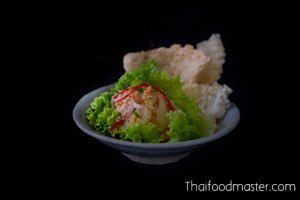
Goong Saawn Glin - A Thai Royal Appetizer of Flaky Acid-Cooked Shrimp, Peanuts and Pickled Garlic, with a Sour-Salty-Sweet Shrimp Tomalley Dressing. (กุ้งซ่อนกลิ่น)
กุ้งแนม" หรือ "กุ้งซ่อนกลิ่น - Goong naaem (goong saawn glin) according to the 1908 recipe in Lady Plean Passakornrawong’s “Maae Khruaa Huaa Bpaa (ตำราแม่ครัวหัวป่าก์)” cookbook. Flaky acid-cooked shrimp and the pork fat, along with thinly sliced roasted peanuts and very small unpeeled diced bitter orange (ส้มซ่า som saa), plus paper-thin slices of pickled garlic and julienned fresh red long chili peppers are mixed and seasoned with shrimp tomalley dressing. It is served in wrapped squares, using iceberg lettuce and young thaawng laang leaves.
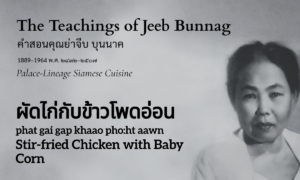
Stir-fried Chicken with Baby Corn (ผัดไก่กับข้าวโพดอ่อน; phat gai gap khaao pho:ht aawn)
Phat gai gap khaao phoht aawn, chicken and baby corn stir-fried with garlic, sauce thickened by pounded corn kernels. Jeeb Bunnag, 1933.
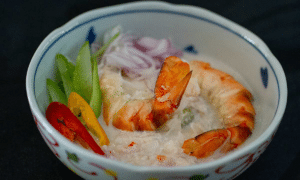
Giant river prawn lohn (กุ้งหลวงหลน ; goong luaang lohn)
This lohn recipe is made using fresh river prawns. The recipe was altered by Lady Plean Passakornrawong (ท่านผู้หญิงเปลี่ยน ภาสกรวงศ์) to provide an alternative to lohn recipes that used pla ra-like fermented shrimp products called กุ้งเจ่า (goong jao) and กุ้งจ่อม (goong jaawm).
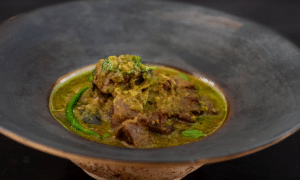
Perfumed Muslim-style Curry of Fresh Chilies with Beef (แกงเขียวหวานเนื้อทรงเครื่อง; Gaaeng Khiaao Waan Neuua Sohng Khreuuang)
The Indian and Muslim cuisines present distinct approaches to using dried spices in curries, both of which influence Siamese cuisine in different ways. Indian-inspired Siamese curries spotlight chilies for their vibrant color, fragrance, flavor and heat, while spices like cumin and coriander play a supporting role. The spices complement and temper the chilies’ intensity, creating a rounded, multi-layered flavor profile; nonetheless, the chilies remain the star ingredient, gently complemented by the spices.
Conversely, Muslim-influenced curries, such as massaman curry, prioritize spices over chilies. Spices like cardamom, nutmeg and mace take center stage, while the chilies provide subtle background heat rather than being the primary flavor. In these curries, the focus is on the rich, warm and complex aromas created by the blend of spices, which is a defining characteristic of many Muslim dishes.
Moreover, Siamese cuisine favors using rehydrated dried chilies in curries for their depth; this depth is highly appreciated, along with the complexity, and comparatively milder heat of the rehydrated dried chilies. As well, the harsh grassy notes of fresh chilies are not favored; they’re referred to in Thai as “green rank” or “men khiaao (เหม็นเขียว)”. Muslim curries often use fresh green chilies, tempering their vibrant, grassy taste with dry spices and thus shifting the flavor from bright and fresh to more subdued and earthy tones, resulting in a dish that is perceived to be layered, despite the burst of fresh chilies.
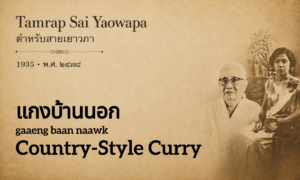
Country-Style Curry (แกงบ้านนอก; gaaeng baan naawk)
Gaaeng baan naawk, a country soup of prawns, pork belly and snakehead fish built on a pounded grilled-fish base. Tamrap Sai Yaowapa, 1935.
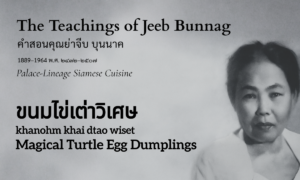
Magical Turtle Egg Dumplings (ขนมไข่เต่าวิเศษ; khanohm khai dtao wiset)
Khanohm khai dtao wiset, oval rice flour dumplings in salty coconut cream with shrimp tomalley, from Jeeb Bunnag's 1933 cookbook.

phrik Khing Phukam (พริกขิงภุกาม; phrik khing phoo gaam)
Phrik khing phukam, a crispy phrik khing (พริกขิง) of deep-fried smoke-dried fish and shrimp with lemongrass, bound in a fish sauce glaze. Jeeb Bunnag, 1933.
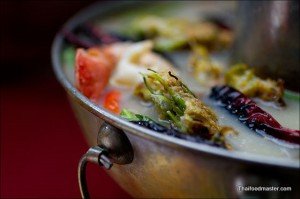
Tom Yum Goong Soup Recipe of Prawns and SaNoh Flowers Fried Cakes (ต้มยำกุ้งทอดมันดอกโสน ; tom yum goong thaawt man daawk sanoh)
Today’s tom yum goong soup recipe is a refreshing addition to the tom yum soup repertoire. The fried SaNoh Flower Cakes sensationally enhance the shrimp’s natural sweetness, while the flower’s bittersweet aftertaste is a superb tropical match to the citrusy and aromatic hot and sour tom yum goong soup.
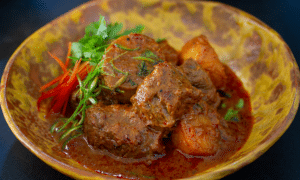
Perfumed Braised Beef and Potato Curry with Three Gingers, Thai Basil and Bitter Orange (แกงเนื้อใส่เปราะหอมสดและส้มซ่า; Gaaeng Neuua Sai Bpraw Haawm Soht Lae Sohm Saa)
Discovered in a memorial book for the funeral of SubLt. Soophoht Jeungpraphaa (ร.ต. สุพจน์ จึงประภา) (1925-1966), this beef and potato curry dish unites two distinct curry styles: Massaman curry, known for its sweet and warming complexity of dry spices, punctuated by the vibrancy of bitter orange juice; and gaaeng phet (แกงเผ็ด) spicy curry, dominated by a basil herbal identity. The recipe maintains a sense of traditional elegance despite the startlingly unusual culinary fusion; as these two cooking styles are woven together, their spiced comfort, earthy warmth, citrusy freshness, and cool herbaceous notes meld in a gentle refinement. Drawing upon familiar and novel elements, this curry is both comforting and stimulating.
Massaman curry typically presents as a deep, rich dish. Its unique flavor profile is derived predominantly from a range of dry spices that point to its Persian-inspired roots in Siamese cuisine, along with a curry paste that exudes a sense of freshness. The dried chilis are roasted to deepen their color; the rest of the ingredients, such as the shallots, garlic and dry spices, are roasted too, individually, before being pounded into the paste. Conversely, the gaaeng phet (แกงเผ็ด) curry integrates dry spices more sparingly and is known for flavor qualities that are based on a phrik khing (พริกขิง) paste made of fresh aromatics and a basil herbal identity.
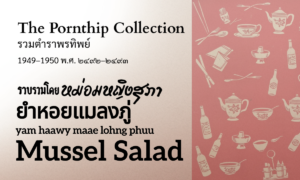
Mussel Salad (ยำหอยแมลงภู่; yam haawy maae lohng phuu)
Yam haawy maae lohng phuu, mussels tossed with lemongrass, kaffir lime, and toasted coconut. From Maawm Ying Soophaa's Salad Recipes, 1949.
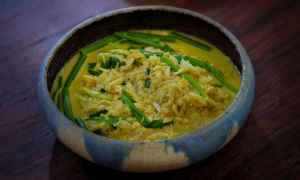
Crab and Spring Onion Coconut-Based Curry (แกงคั่วปูกับต้นหอม; Gaaeng Khuaa Bpuu Gap Dtohn Haawm)
Preparing a crab curry is an exercise in culinary diplomacy, wherein the challenge lies in negotiating the distinct flavors of land and sea into a cohesive understanding and capturing the perfect balance. This golden gastronomic horizon is where the delicate whispers of the ocean meet earth’s bold declarations – and at its core is a straightforward question: How do we craft a curry that testifies, via crab, to the ocean’s bounty, yet remains grounded in the earth’s aromatic flora, with roots like galangal and turmeric?
In addition, it is challenging to create a curry that is luxuriously creamy, yet light and not too greasy; where the crab’s delicate natural sweetness surfaces as a pleasant sea breeze, levitating above the pitfalls of being too fishy or overly sweetened. Another hurdle is achieving the precise color – produced by red chilies, golden turmeric and peppercorns – that reflects the culinary traditions of southern seashore fishing communities. I like mine set to about a 70:30 ratio of yellow to red and, if using black peppercorns, with a deep brown undertone.
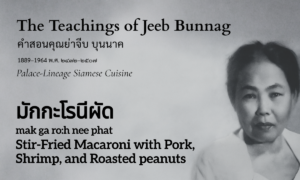
Stir-Fried Macaroni (มักกะโรนีผัด; mak ga ro:h nee phat)
Mak ga ro:h nee phat, macaroni stir-fried with garlic-lard paste, pork, shrimp, and roasted peanuts. From Jeeb Bunnag, 1933.
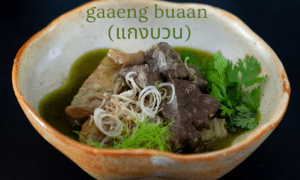
The Story of Gaaeng Buaan (แกงบวน) – The Oldest Siamese Dish?
1
2
3
4
5
6
7
8
9
10
11
12
13
14

Get Access – Join Thaifoodmaster Today
Practical and kitchen-tested recipes with a mix of theory, history, psychology, and Siamese culture tidbits.
-
Get access to everything right away. Unlock more than 50 Masterclasses, over 700 recipes and Articles
Access to Thaifoodmaster’s constantly growing library of prime professional classes, articles, recipes and videos on Siamese culinary topics, available nowhere else in English.
-
GET EXTRA - New Masterclasses and Daily Recipes
Gain access to NEW masterclasses as they become available. Access DAILY translations of heritage-recipes.
-
1-1 support from Hanuman
1-1 support from Hanuman to help you achieve your professional Thai culinary goals
-
Live Q&A Sessions
The opportunity to join a monthly live two-hour videoconference where I can answer your questions.
-
Great Value!
one year access for the price of 3 days in-person training.
You will get everything you need to:
-
To Get inspired
When you design or build a new menu for an event or restaurant or even prepare for dinner with friends.
-
To Satisfy your curiosity.
Finally !
-
To Master Your Craft
Master your Thai cooking skills and expand your repertoire.
It is truly brilliant with a revolutionary approach introducing aspects and concepts never broached by cookbooks.

Ian Westcott
Sourcing Wines for Discerning Private Clients
© 2008 – 2026 Thaifoodmaster


