
Celebrating the Art of Siamese Culinary Wisdom and Thai Cuisine
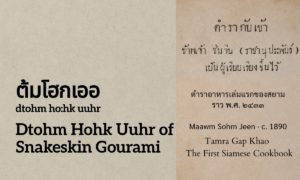
Dtohm Hohk Uuhr of Snakeskin Gourami (ต้มโฮกเออ; dtohm ho:hk uuhr)
Dtohm hohk uuhr, snakeskin gourami soup soured with young tamarind leaves and twenty to thirty bruised bird chilies. From Maawm Sohm Jeen, 1890.
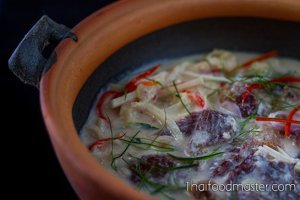
แกงต้มกะทิเนื้อโคเค็ม อย่าง จีบ บุนนาค (พ.ศ. ๒๔๘๔)
ภูมิปัญญาไทยโบราณท่านมีความอัจฉริยะล้ำเลิศ คิดปรุงตำรับอาหารที่ได้ผลออกมาอย่างลงตัว ดังที่กล่าวมาในบทก่อนหน้า วิถีไทยอาศัยการถนอมอาหารด้วยการทำเค็มหรือตากแห้ง และเมื่อจะนำมารับประทาน ความรุ่มรวยทางวัฒนธรรมการกิน บวกกับความมีศิลปะแห่งการปรุง คนสมัยก่อนสามารถรังสรรค์ของใกล้ตัว ให้ออกมาเป็นตำรับที่วิเศษได้โดยง่าย ง่ายด้วยกรรมวิธี ง่ายด้วยวัตถุดิบเครื่องปรุง ให้เป็นของอร่อยแบบไทยแท้ หนึ่งในตำรับนั้นคือ "ต้มกะทิเนื้อโคเค็ม"....
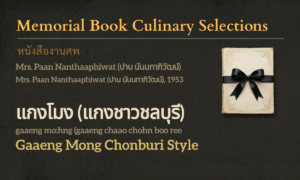
Gaaeng Mong (Chonburi-Style Curry) (แกงโมง (แกงชาวชลบุรี); gaaeng mo:hng (gaaeng chaao chohn boo ree))
Gaaeng Mong, a Chonburi regional curry with fermented shrimp paste, grilled catfish, and young watermelon. From Mrs. Paan Nanthaaphiwat, 1953.
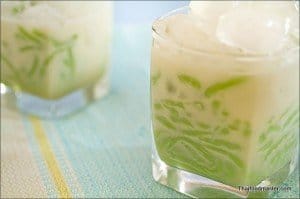
ขนมลอดช่องน้ำกะทิ หรือ นกปล่อย
Thai desserts are usually made from common ingredients and therefore very popular. However, it was only during the 17th century that desserts and sweets actually became part of everyday meals. In the old days, they were served only at auspicious occasions and ceremonies.
During wedding ceremonies, for example, four kinds of sweets are usually served, collectively known as "the four plates dessert" (ขนมสี่ถ้วย ; khanohm see thuay). The ancient Thai expression "To eat four cups of dessert" (กินสี่ถ้วย ; gin see thuay ) used in the central region of the kingdom as an idiom referring to a wedding banquet.
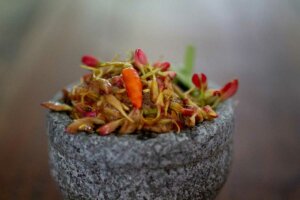
Tamarind flower chili relish inspired by Princess Jongjittanom Dissakul (น้ำพริกดอกมะขาม อย่าง หม่อมเจ้าหญิงจงจิตรถนอม ดิศกุล ; naam phrik daawk makhaam)
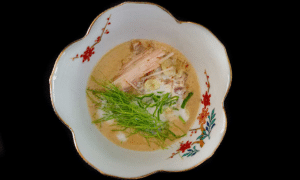
Fermented fish lohn relish (ปลาร้าหลน ; bplaa raa lohn)
Similar preparations of fermented fish lohn were likely enjoyed throughout the Central Plains, both in higher and common vernacular cuisines.
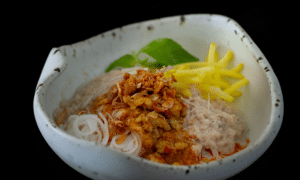
Naam Yaa Neuua – Northern Style Naam Ya according to Lady Plean Passakornrawong (น้ำยาเหนือ)
This fermented rice noodle dish is served with a slow-cooked, chili-less broth made from pounded fish meat and aromatics cooked in coconut cream. Creamy in color and velvety in texture, the broth is seasoned either with fish sauce, fermented fish or salted fish according to one’s preferences. The broth is allowed to slow-cook, achieving its full richness over a couple of hours. Once ready, the broth is poured over the noodles, which are then topped with a glossy-orangey layer of minced shrimp meat fried with their tomalley in pork lard. Complementing this richness are crunchy yellowish bean sprouts blanched in turmeric-tinted water, a sprinkle of sweet, golden crispy-fried shallots and, finally, green lemon basil leaves that endow the dish with a unique, rustic herbal persona.
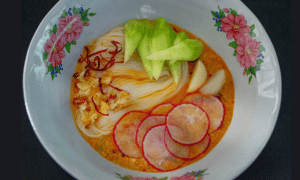
c1936 Arabian noodles – Princess Maao Thongthaem’s Siamese-Orientalist fermented rice noodles light meal (ขนมจีนอาหรับ อย่าง เม้า ทองแถม; khanohm jeen aarap)
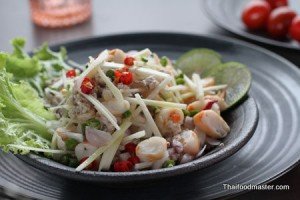
ยำขมิ้นขาวกุ้งเค็ม
This dish brings yet another angle to celebrate the essence of Thai cuisine. The Thais dare pairing ingredients, which at first seem to be unmatchable, strong players with opposite characteristics, white turmeric and salted prawns, and guess what? It works beautifully!
The pairing actually has the intention to enhance the differences in flavor and texture, creating a playful dish, both in taste and in presentation. The delicate thin cut white turmeric juliennes with its crunchy-apple like texture matched well with the just made salted prawns chunks which still maintain some of their intrinsic sweetness.
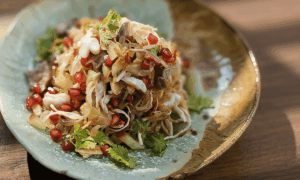
c1935 Trinarong Salad - Thai Three-Fruit Yam from Pathum Thani (ยำตรีณรงค์; yam dtreen rohng)
Central-style Thai salad combining pomelo, rose apple, and pomegranate with shrimp, chicken, and pork. From Ms. Booree Thohnsak's 1935 Pathum Thani memorial cookbook.
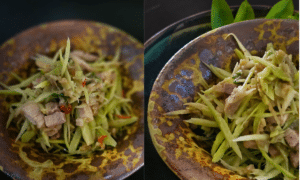
Pork Belly Coated with Salted-Fish and Green Mango Chili Relish (น้ำพริกมะม่วง หมูเคลือบเค็ม พ.ศ. 2476; naam phrik ma muaang mu khleuuap khem)
In this dish, slices of pork belly are coated with a sticky sauce; the sauce is reduced from braising a slice of grilled salted fish with coriander roots, garlic and white peppercorns (saam gluuhr). The dish is served with a sour-leading green mango chili relish that adds tartness with fiery accents to the saltiness of the pork. The salted fish gives the pork an initial fishy aroma that, although robust, gives way to a sense of home as it merges into the sourness and fruitiness of the mango chili relish. As an ingredient commonly used in the kitchens of rice-growing communities, salted fish signifies a comforting familiarity that conveys simplicity and warmth to the table. I like to pair the salted, fishy pork with seasoned rice dishes in which sour-leading relishes are mixed with rice along with other condiments.
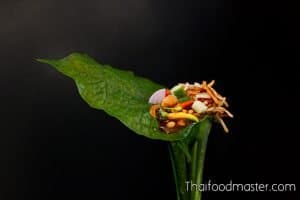
เมี่ยงคำ
ค้นข้อมูลดูว่าตำรับ "เมี่ยงคำ" เริ่มปรากฏมีบันทึกไว้เป็นลายลักษณ์อักษรแต่เมื่อใดกันแน่ สอบทานดูตำราอาหารเก่า ๆ หลายตำรับ ที่ตีพิมพ์ในสมัยรัชกาลที่ ๕ ก็ไม่พบ "เมี่ยงคำ" ในวิถีอาหารไทยโบราณแต่อย่างใด พบแต่ เมี่ยงลาว หรือ เมี่ยงพายัพ ซึ่งหมายถึงเมี่ยงที่มาจากทางเหนือ จากการอ่านหนังสือหลาย ๆ เล่ม เพื่อหาข้อมูลพบว่า "เมี่ยง" ได้เริ่มเป็นที่นิยมแพร่หลายในรั้วในวัง ก็หลังจากที่พระราชชายาเจ้าดารารัศมี ลงมารับราชการในราชสำนักที่กรุงเทพฯ และได้นำวัฒนธรรมการกินเมี่ยง ซึ่งเป็นหนึ่งในวิถีการดำรงชีวิตแบบล้านนาติดมาในหมู่ข้าราชบริพารชาวเหนือในตำหนักของพระองค์ ซึ่งบรรดาชาววังในสมัยนั้นจะเห็นเป็นสิ่งแปลกตาโก้เก๋ และคอยเอาอย่างในบางเรื่อง ทำให้หลังจากนั้นจึงค่อยเริ่มมีตำรับเมี่ยงต่าง ๆ ออกมามากมาย ปรากฏในตำราอาหารหรือเครื่องว่างต่าง ๆ ของไทยในสมัยต่อ ๆ มา สำหรับ "เมี่ยงคำ" นั้น พบว่ามีปรากฏครั้งแรก ในบทกาพย์เห่ชมเครื่องว่าง ของรัชกาลที่ ๖ ที่ใช้เป็นบทนำในตอนต้นบทความนี้ ซึ่งนั่นก็แสดงว่า "เมี่ยงคำ" กลายเป็นเครื่องว่างในวังหลวงเป็นที่นิยมกันมากแล้วในสมัยนั้นถึงสามารถขึ้นโต๊ะเครื่องเสวยได้ จึงเป็นข้อสันนิษฐานว่าน่าจะมีกำเนิดมาไม่เก่าไปกว่าสมัยรัชกาลที่ ๕ เป็นแน่แท้ ตำรับ "เมี่ยงคำ" คงจะเกิดจากการคิดประดิษฐ์ทำนำสิ่งละอันพันละน้อย ใส่ไปในคำเมี่ยง พร้อมใส่น้ำเมี่ยง เพื่อรับประทาน ทีละคำ ๆ จึงได้ชื่อว่า "เมี่ยงคำ" เหมือน ๆ หรือทำนองเดียวกันกับ "เมี่ยงอยาก" ที่ คุณป้า ม.ล. เนื่อง นิลรัตน์ เขียนบันทึกไว้ในหนังสือ "ชีวิตในวัง" ที่ตีพิมพ์มาแล้วหลายครั้ง ว่าเกิดจากความอยากกินเมี่ยง ของกลุ่มข้าหลวงวังสวนสุนันทา เวลามานั่งจับกลุ่มคุยกันยามว่างภารกิจ และไปค้นหาของในครัว ได้ กากหมู น้ำตาลปึก กะปิ ฯลฯ ก็นำมารับประทานกันเป็น"เมี่ยง" ที่อร่อยอย่างง่าย ๆ

Fried fermented shrimp paste relish with green apples by Princess Jongjittanom Dissakul (น้ำพริกลูกแอปเปิ้ลผัด อย่าง หม่อมเจ้าหญิงจงจิตรถนอม ดิศกุล ; naam phrik luuk aaep bpeern phat)
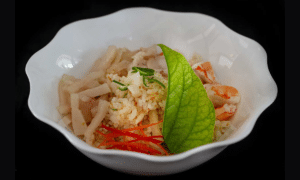
Phra Suli - Three-Flavor Seasoned Rice with Shrimp, Firm Pork Fat and Pork Skin (ข้าวพระศุลี; Khaao Phra Soolee)
Mrs. Paan Nanthaathiwat (คุณปาน นันทาถิวัฒน์) (1893-1955) was known for her kitchen skills. She often cooked for friends and family, spending time in the kitchen with her best friend, Mrs. Yim Pichaiyat Bunnag (คุณยิ้ม พิชัยญาติ บุนนาค (1892-1976). Thus, it was not a surprise when in 1953 she authored a recipe book as part of her merit offering on her 60th birthday. Sadly, Mrs. Paan passed away a year later and the publication, titled Hoong Khaao Dtohm Gaaeng (หุ้งข้าวต้มแกง), was later printed as a memorial book for her funeral. In 1977, the volume was reprinted for the funeral of her best friend, Mrs. Yim.
It is unclear why Mrs. Paan named this citrusy, sour, and salty seasoned rice dish after Lord Shiva, calling it “Phra Suli (พระศุลี ; phra soolee)”. Yet I believe the name of the dish is meant to evoke the elegance and delicacy of the deity rather than to reference cultural authenticity or tradition.
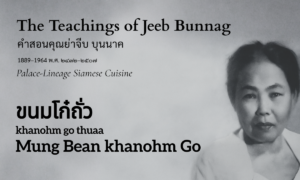
Mung Bean khanohm Go (ขนมโก๋ถั่ว; khanohm go thuaa)
Khanohm go thuaa, a molded palace confection of dry-roasted mung bean flour and coarse-grain sugar, scented with jasmine and ylang-ylang. Jeeb Bunnag, 1933.
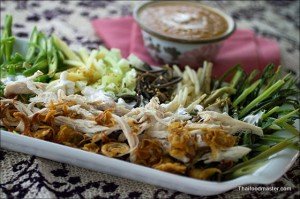
ยำทวาย
This recipe would probably change your perception about the term "salad", maybe because its dressing has a multi layered, curry-like personality, rather than the common sour vinaigrette-like dressing, or maybe because it takes some good few hours to prepare, somewhat longer than simply opening a bag of hydroponic greens.
This salad is the fruit of the dedication of court ladies from aristocratic households, that for centuries perfected and elaborated on the art of cooking through detailed and calculated process, to create sophisticated dishes that are not only delicious but also very healthy and visually pleasing.
These ladies made a very large commitment for small things, and they attended all their time and efforts to make minor things better and getting the small things just right.
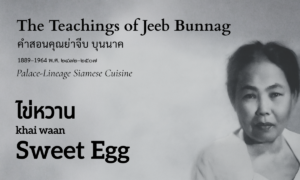
Sweet Egg (ไข่หวาน; khai waan)
Sweet Egg (khai waan): candied salted duck egg yolk encased in floral agar jelly, molded inside an eggshell. Jeeb Bunnag, 1933.
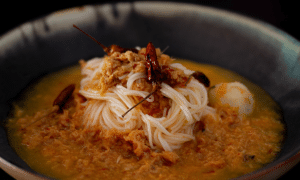
Khanohm Jeen Naam Yaa (ขนมจีนน้ำยา) - Fermented Rice Noodles with Minced Fish in Aromatic Coconut Curry
In the Central Plains of the Kingdom, fermented rice noodles are inextricably linked to a dish known as naam yaa. Composed of a dense, coconut-based minced fish curry, the dish is infused with layers of salted fish and possesses the distinctive, invigorating and purifying notes of fingerroot. Typically, naam yaa is served with fresh lemon basil as the herb of choice along with an array of side dishes collectively known as meuuat khanohm jeen (เหมือดขนมจีน). These include blanched bean sprouts seasoned with a touch of turmeric for color, fresh lemon basil leaves, thinly sliced three colored chilies, and ground chili for added heat. More elaborate versions will add blanched Chinese bitter gourd slices, batter-fried young morning glory shoots, and fresh shrimp minced and fried with its tomalley in pork lard, as well as crispy-fried shallots as the finishing touch.
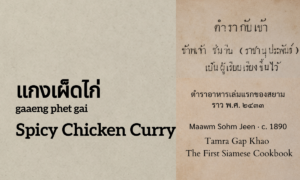
Spicy Chicken Curry (แกงเผ็ดไก่; gaaeng phet gai)
Gaaeng phet gai, chicken simmered in a pork-lard-fried red curry paste with optional brandy or sherry. From Maawm Sohm Jeen's Tamra Gap Khao, c. 1890.
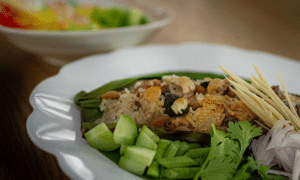
Grilled banana leaf parcels filled with butter-fried rice with chicken, chicken offal and dried spices, served with a sour-sweet coconut-base vegetable relish (ข้าวงบไก่ อาจาดอังวะ ; khaao ngohp gai aajaat angwa)
The khaao ngohp gai (ข้าวงบไก่) recipe by Mom Chao Sai Ladawan (Princess Saisawali Phirom) evokes the flavor and aesthetics of Muslim-style cooking. First, cooked rice, chicken, and chicken offal are fried with butter and perfumed with whole spices. The buttery fried rice is wrapped in banana leaves and then grilled, forming a crispy outer crust of spiced-infused rice grains.
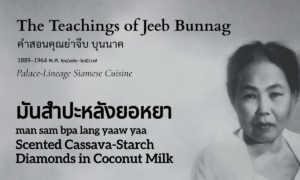
Scented Cassava-Starch Diamonds in Coconut Milk (มันสำปะหลังยอหยา; man sam bpa lang yaaw yaa)
Man sam bpa lang yaaw yaa: cassava starch diamonds kneaded with pandan, served in floral-scented coconut milk. Jeeb Bunnag, 1933.
1
2
3
4
5
6
7
8
9
10

Get Access – Join Thaifoodmaster Today
Practical and kitchen-tested recipes with a mix of theory, history, psychology, and Siamese culture tidbits.
-
Get access to everything right away. Unlock more than 50 Masterclasses, over 700 recipes and Articles
Access to Thaifoodmaster’s constantly growing library of prime professional classes, articles, recipes and videos on Siamese culinary topics, available nowhere else in English.
-
GET EXTRA - New Masterclasses and Daily Recipes
Gain access to NEW masterclasses as they become available. Access DAILY translations of heritage-recipes.
-
1-1 support from Hanuman
1-1 support from Hanuman to help you achieve your professional Thai culinary goals
-
Live Q&A Sessions
The opportunity to join a monthly live two-hour videoconference where I can answer your questions.
-
Great Value!
one year access for the price of 3 days in-person training.
You will get everything you need to:
-
To Get inspired
When you design or build a new menu for an event or restaurant or even prepare for dinner with friends.
-
To Satisfy your curiosity.
Finally !
-
To Master Your Craft
Master your Thai cooking skills and expand your repertoire.
It is truly brilliant with a revolutionary approach introducing aspects and concepts never broached by cookbooks.

Ian Westcott
Sourcing Wines for Discerning Private Clients
© 2008 – 2026 Thaifoodmaster


