
Celebrating the Art of Siamese Culinary Wisdom and Thai Cuisine
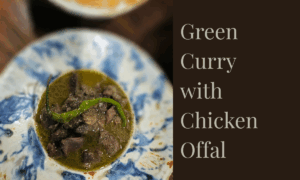
Yogurt-Based Ancient Green Curry with Chicken Offal (แกงเขียว; gaaeng khiaao)
Mrs. Yim Pichaiyat Bunnag (คุณยิ้ม พิชัยญาติ บุนนาค)'s 1920s aristocratic green curry reveals a forgotten chapter in Thai culinary history. This Muslim-style recipe uses ghee and yogurt instead of coconut milk, featuring chicken offal—liver, gizzard, and heart—each contributing distinct textures and concentrated flavors. Roasted spices like cinnamon, clove, and cardamom create warming aromatics, while fresh chilies provide signature heat. The dish documents how Bangkok's noble kitchens adapted Islamic cooking techniques before democratization, preserving methods that would shape modern Thai cuisine.
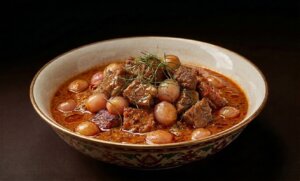
Phanaeng Curry of Grilled Duck Stock with Shallots (แกงพะแนงน้ำเป็ดย่างกับหอมเล็ก; gaaeng pha naaeng naam bpet yaang gap haawm lek)
Phanaeng curry from Mrs Puang Bunnag's 1931 manuscript, built on grilled duck stock and a paste of roasted coriander, cumin, and cinnamon.
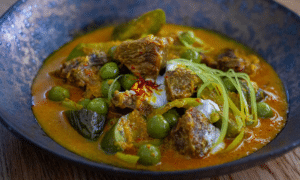
c1941 Magical beef curry (แกงเนื้อวิเศษ พ.ศ. 2484 ; gaaeng neuua wisaeht)
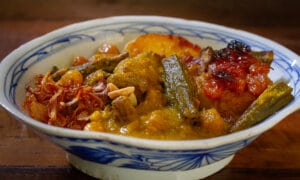
c1929 Green Curry of the Sultan (แกงเขียวหวานสุลต่าน อ่ยาง หะยี ฮิบรอเฮม และ จีบ บุนนาค พ.ศ. 2472 ; gaaeng khiaao waan soola dtaan)
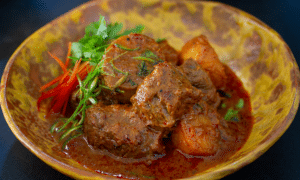
Perfumed Braised Beef and Potato Curry with Three Gingers, Thai Basil and Bitter Orange (แกงเนื้อใส่เปราะหอมสดและส้มซ่า; Gaaeng Neuua Sai Bpraw Haawm Soht Lae Sohm Saa)
Discovered in a memorial book for the funeral of SubLt. Soophoht Jeungpraphaa (ร.ต. สุพจน์ จึงประภา) (1925-1966), this beef and potato curry dish unites two distinct curry styles: Massaman curry, known for its sweet and warming complexity of dry spices, punctuated by the vibrancy of bitter orange juice; and gaaeng phet (แกงเผ็ด) spicy curry, dominated by a basil herbal identity. The recipe maintains a sense of traditional elegance despite the startlingly unusual culinary fusion; as these two cooking styles are woven together, their spiced comfort, earthy warmth, citrusy freshness, and cool herbaceous notes meld in a gentle refinement. Drawing upon familiar and novel elements, this curry is both comforting and stimulating.
Massaman curry typically presents as a deep, rich dish. Its unique flavor profile is derived predominantly from a range of dry spices that point to its Persian-inspired roots in Siamese cuisine, along with a curry paste that exudes a sense of freshness. The dried chilis are roasted to deepen their color; the rest of the ingredients, such as the shallots, garlic and dry spices, are roasted too, individually, before being pounded into the paste. Conversely, the gaaeng phet (แกงเผ็ด) curry integrates dry spices more sparingly and is known for flavor qualities that are based on a phrik khing (พริกขิง) paste made of fresh aromatics and a basil herbal identity.
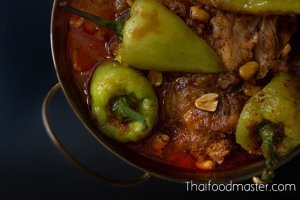
Jee (Jeen) Juaan Curry of Chicken, Banana Chilies, Peanuts and Indian Spices (แกงเผ็ดไก่จี่จ๋วน, แกงจีนจ๊วน, แกงจ๋วน ; gaaeng phet gai jee juaan )
Also known as: gaaeng jeen juaan (แกงจีนจ๊วน), or gaaeng juaan (แกงจ๋วน).
Gaaeng jeen juaan is a coconut-based red curry. With primary ingredients of chicken, light green banana chili peppers and peanuts, it is similar to Massaman curry (matsaman); and scented with the sweet aroma of dry Indian spices such as cumin, mace, nutmeg, clove, star anise and cinnamon. Pineapple adds sweetness and a thin layer of tartness. The sweet and sour flavors are echoed by the addition of fresh sugarcane juice and a squeeze of bitter orange juice (sohm saa). To enhance the aroma and texture of the curry, roasted grated coconut is added to the curry paste.
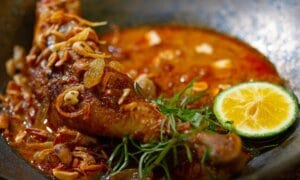
c1939 Siamese-Javanese style coconut-based chicken and golden raisins curry (แกงแขกยะวา ; gaaeng khaaek yawaa)
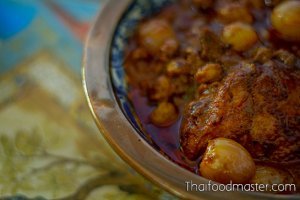
Massaman Curry - The Untold Story (แกงมัสมั่น – แกงมาชะแมน – แกงหมัดสมั่น)
Considered by some to be the most famous, and the most delicious, dish in Thai cooking, the story of Massaman curry is interwoven with trade, politics and religion in 17th-century Siam. The story is filled with mighty kings, legendary explorers and unsolved mysteries, adding an air of magic and power to this already-heavenly perfumed dish, and thickening the plot of this full bodied, coconut-based curry’s birth.
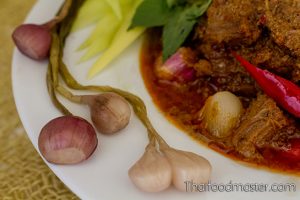
Beef Phanaeng Curry and Ancient Grilled Phanaeng Chicken Curry (พะแนงเนื้อ และ ไก่ผะแนง จากตำราอาหารที่เก่าสุดในสยาม)
Breaking news: The oldest Thai cookbook, as well as history’s first-ever recorded recipe for Phanaeng curry, are revealed for the first time on Thaifoodmaster.com - A 126-year-old cookbook written by one of Siam’s most revered singers, Maawm Sohm Jeen (Raa Chaa Noopraphan) (หม่อมซ่มจีน, ราชานุประพันธุ์), has been rediscovered, offering a unique glimpse into the culinary repertoire of 19th-century Siam. In this chapter we examine the different forms of phanaeng curry from the 1800s to the present day, as we reconstruct the 19th-century version and craft step-by-step a traditional beef phanaeng curry.
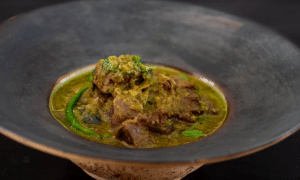
Perfumed Muslim-style Curry of Fresh Chilies with Beef (แกงเขียวหวานเนื้อทรงเครื่อง; Gaaeng Khiaao Waan Neuua Sohng Khreuuang)
The Indian and Muslim cuisines present distinct approaches to using dried spices in curries, both of which influence Siamese cuisine in different ways. Indian-inspired Siamese curries spotlight chilies for their vibrant color, fragrance, flavor and heat, while spices like cumin and coriander play a supporting role. The spices complement and temper the chilies’ intensity, creating a rounded, multi-layered flavor profile; nonetheless, the chilies remain the star ingredient, gently complemented by the spices.
Conversely, Muslim-influenced curries, such as massaman curry, prioritize spices over chilies. Spices like cardamom, nutmeg and mace take center stage, while the chilies provide subtle background heat rather than being the primary flavor. In these curries, the focus is on the rich, warm and complex aromas created by the blend of spices, which is a defining characteristic of many Muslim dishes.
Moreover, Siamese cuisine favors using rehydrated dried chilies in curries for their depth; this depth is highly appreciated, along with the complexity, and comparatively milder heat of the rehydrated dried chilies. As well, the harsh grassy notes of fresh chilies are not favored; they’re referred to in Thai as “green rank” or “men khiaao (เหม็นเขียว)”. Muslim curries often use fresh green chilies, tempering their vibrant, grassy taste with dry spices and thus shifting the flavor from bright and fresh to more subdued and earthy tones, resulting in a dish that is perceived to be layered, despite the burst of fresh chilies.
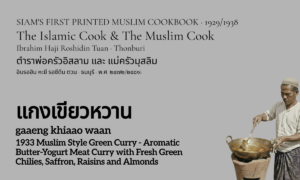
1933 Muslim Style Green Curry - Aromatic Butter-Yogurt Meat Curry with Fresh Green Chilies, Saffron, Raisins and Almonds (แกงเขียวหวาน; gaaeng khiaao waan)
Green Curry in Muslim style featuring butter, yogurt, saffron and almonds. This distinctive version uses egg yolks and potatoes in the curry paste. From Ibrahim's Islamic Cookbook (1933).

Get Access – Join Thaifoodmaster Today
Practical and kitchen-tested recipes with a mix of theory, history, psychology, and Siamese culture tidbits.
-
Get access to everything right away. Unlock more than 50 Masterclasses, over 700 recipes and Articles
Access to Thaifoodmaster’s constantly growing library of prime professional classes, articles, recipes and videos on Siamese culinary topics, available nowhere else in English.
-
GET EXTRA - New Masterclasses and Daily Recipes
Gain access to NEW masterclasses as they become available. Access DAILY translations of heritage-recipes.
-
1-1 support from Hanuman
1-1 support from Hanuman to help you achieve your professional Thai culinary goals
-
Live Q&A Sessions
The opportunity to join a monthly live two-hour videoconference where I can answer your questions.
-
Great Value!
one year access for the price of 3 days in-person training.
You will get everything you need to:
-
To Get inspired
When you design or build a new menu for an event or restaurant or even prepare for dinner with friends.
-
To Satisfy your curiosity.
Finally !
-
To Master Your Craft
Master your Thai cooking skills and expand your repertoire.
It is truly brilliant with a revolutionary approach introducing aspects and concepts never broached by cookbooks.

Ian Westcott
Sourcing Wines for Discerning Private Clients
© 2008 – 2026 Thaifoodmaster


