
Celebrating the Art of Siamese Culinary Wisdom and Thai Cuisine
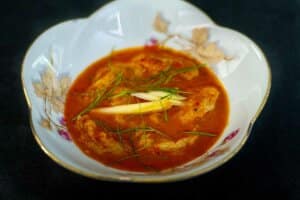
c1933 An Auspicious fish ball curry with two basils (แกงเผ็ดปลาเล็กปลาน้อย; gaaeng phet bplaa lek bplaa naawy)
Typically, in Central-style curries, different types of basil are not used together. In higher cuisine, it is an unstated – but understood – practice to avoid blending the definitive scents of various basils. A curry’s final herbal identity is intended to remain definitively with its basil: the citrus notes of holy basil; the spicy-woody and pungent flavor of tree basil; the tart fragrance of lemon basil; or the cooling anise sensation of Thai basil.
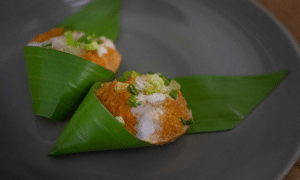
c1908 Haaw Mohk steamed savory curried cakes featuring crab meat, chicken, and pork (ห่อหมกทรงเครื่อง อย่างท่านผู้หญิงเปลี่ยน ภาสกรวงศ์ แม่ครัวหัวป่าก์ พ.ศ. 2451 ; haaw mohk sohng khreuuang)
This festive and rich recipe is for a coconut-based haaw mohk featuring chicken, crab and pork meats. This recipe was chosen from the various versions available at the time by Lady Plean Passakornrawong, for inclusion in her epic cookbook Maae Khruaa Huaa Bpaa (MKHP) (ท่านผู้หญิงเปลี่ยน ภาสกรวงศ์ตำราแม่ครัวหัวป่าก์).
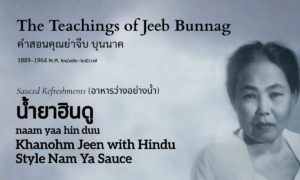
Khanohm Jeen with Hindu Style Nam Ya Sauce (น้ำยาฮินดู; naam yaa hin duu)
Naam yaa hin duu, a coconut curry sauce with red and white beans, flavored with fermented soybean paste. From Jeeb Bunnag's 1945 cookbook.
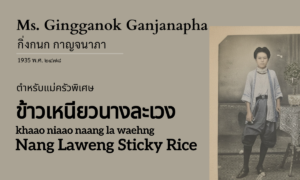
Nang Laweng Sticky Rice (ข้าวเหนียวนางละเวง; khaao niaao naang la waehng)
Khaao niaao naang la waehng, black glutinous rice balls deep-fried in lard with spiced beef and potato filling. Delicious Side Dishes, 1935.
Beef Teochew Meatball and Pumpkin Coconut Curry (แกงบะช่อเนื้อโคกะทิ; gaaeng ba chaaw neuua kho:h ga thi)
Gaeng ba chaaw, Teochew-style beef meatballs seasoned with coriander root paste, simmered in coconut milk with pumpkin. Jeeb Bunnag, 1933.
Raang Roong Sour Curry (แกงส้มร่างรุ้ง; gaaeng sohm raang roong)
Gaaeng sohm raang roong, sour curry with giant freshwater prawns on a pounded dried shrimp and shallot base fried in lard. Lady Srithammarat, 1933.
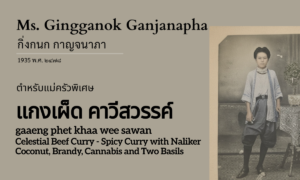
Celestial Beef Curry - Spicy Curry Simmered in Sacred Naliker Coconut Milk with Cannabis, Brandy, Pea Eggplant, and Two Basils (แกงเผ็ด คาวีสวรรค์; gaaeng phet khaa wee sawan)
Gaaeng phet khaa wee sawan, spicy beef curry made with rare Naliker coconut milk, cannabis leaves, and brandy. From Delicious Side Dishes, 1935.
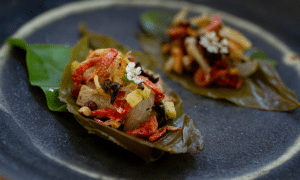
Miang Sot (เมี่ยงซด) - Miiang Soht, circa 1928
The word ‘miang’ is often used to designate Thai hors d’oeuvre-like snacks consisting of various ingredients wrapped in leaves. To chew on a miang parcel delivers a delightful melee of flavors and textures, each triumphing over the other in a continuous transformation, creating a captivating and ever-evolving taste experience throughout the bite.
Miang sot is a fermented leaves dish that appeared in a cookbook published in honor of Thao Suphatigaanapakdee (also known as Prik Sirisamphan) (ท้าวสุภัติการภักดี (ปริก ศิริสัมพันธ์)), in 1928. Titled Gap Khaao Thai (กับข้าวไทย), the book features a collection of recipes that were once prepared and served to King Chulalongkorn Rama V. The author, Sohmboon Sirisamphan (เถ้าแก่ สมบุญ ศิริสัมพันธ์) a respected elder (known as thao gaae (เถ้าแก่) in Thai), was a distinguished businessman of Chinese origins.
The dish is composed of fermented tea leaves; it is perhaps the closest tea leaves wrap to the ‘miang’ style introduced to the Siamese court by Princess Dara Rasami in the late 1800s. The dish gives us a glimpse of flavor of what her household, which participated in the informal marketplace events within the palace, might have to offer.
The popularity of miang in Siamese cuisine is tied to the history of two kingdoms, Siam and Lanna, and the life of one princess, Princess Dara Rasami. The daughter of King Inthawichayanon of Chiang Mai and the fifth consort of King Chulalongkorn, the princess was selected at the age of thirteen, in 1886, to serve as a consort to King Chulalongkorn in the Inner Palace; the decision was shaped by both political strategy and personal transition. At the time, Siam was consolidating its power and extending its influence over neighboring regions, including Lanna. As the ruler of Chiang Mai, Princess Dara Rasami’s father, Intawichayanon, viewed the move as a strategic alliance. In return, King Chulalongkorn presented him with the medal of the Order of Chula Chom Klao, which is the Siamese equivalent of a knighthood.
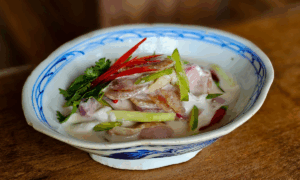
c1935 Princess Yaovabha's Sweet Chinese Sausage in Coconut Cream Soup (แกงไส้กรอกหมูแห้ง; gaaeng sai graawk muu haaeng)
A 1935 Thai palace recipe preserving Princess Yaovabha's Chinese sausage coconut curry. This ivory-colored soup features sweet goon chiang sausage in creamy coconut with lemongrass, kaffir lime, and tamarind. The dish represents a historic culinary shift when Chinese ingredients entered royal Thai kitchens, transforming from street food to palace cuisine.
Palace-Style Fried Rice (ข้าวผัดชาววัง; khaao phat chaao wang)
Khao phat chao wang, fried rice cooked in the rendered fat of salt-stewed pork with shrimp and egg. From Lady Gleep Mahithaawn, 1949.
Goon Saa Lime-Cured Pork (กุญซ่า; goon saa)
Goon saa: lean pork cured by lime juice and salt without fire, shredded and tossed with its own reduced pressing liquid. From Maawm Ying Soophaa, 1949.
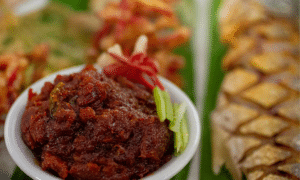
Tamarind flesh chili relish (น้ำพริกส้มมะขามเปียก; naam phrik sohm ma khaam bpiiak)
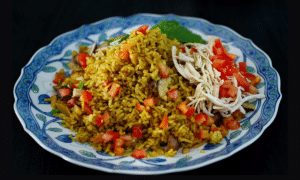
Golden Chestnut Fried Rice with Mint and Tomato (ข้าวผัดกาหรี่; khaao phat garee), circa 1935
Dating from the early 1900s, this tempting fried rice dish highlights how the Siamese aristocracy savored their golden rice, perfumed with an alluring blend of imported spices. The dish can be enjoyed on its own or as part of a larger meal featuring curries and soups.
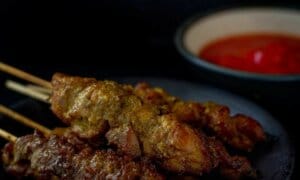
Satay Lue - Grilled beef satay with thick Muslim style peanut sauce (สะเต๊ะลือ กับ น้ำจิ้มอย่างแขก ; sadteh leuu kap naam jim yaang khaaek)
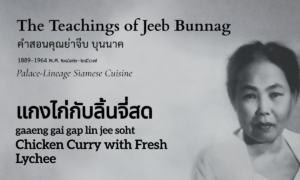
Chicken Curry with Fresh Lychee (แกงไก่กับลิ้นจี่สด; gaaeng gai gap lin jee soht)
Gaaeng gai gap lin jee soht: coconut chicken curry with whole fresh lychee, added last to preserve its floral aroma. Jeeb Bunnag, 1933.
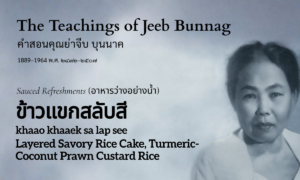
Layered Savory Rice Cake (ข้าวแขกสลับสี; khaao khaaek sa lap see)
Layered Savory Rice Cake features steamed rice, seasoned prawn filling, and golden turmeric-coconut custard. From Mrs. Samakkhanatthon's 1945 Thai cookbook.

Airy Golden Cake (ขนมทองโปร่ง; khanohm thong pro:ng)
Khanohm thong pro:ng, a rice flour sponge baked in molds with whipped egg whites, from Jeeb Bunnag's 1933 Cookbook of Rice Companion Recipes.
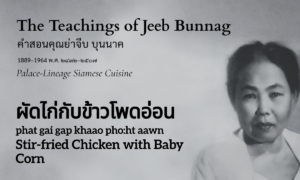
Stir-fried Chicken with Baby Corn (ผัดไก่กับข้าวโพดอ่อน; phat gai gap khaao pho:ht aawn)
Phat gai gap khaao phoht aawn, chicken and baby corn stir-fried with garlic, sauce thickened by pounded corn kernels. Jeeb Bunnag, 1933.
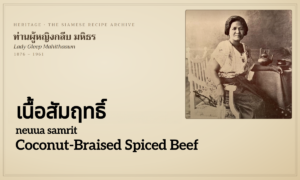
Coconut-Braised Spiced Beef (เนื้อสัมฤทธิ์; neuua samrit)
Neuua samrit — beef tenderloin dry-braised in coconut milk with roasted coriander and cumin, glazed dry. Lady Gleep Mahithaawn, 1949.
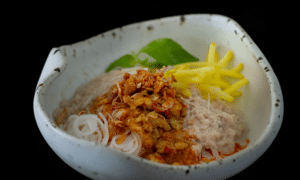
Naam Yaa Neuua – Northern Style Naam Ya according to Lady Plean Passakornrawong (น้ำยาเหนือ)
This fermented rice noodle dish is served with a slow-cooked, chili-less broth made from pounded fish meat and aromatics cooked in coconut cream. Creamy in color and velvety in texture, the broth is seasoned either with fish sauce, fermented fish or salted fish according to one’s preferences. The broth is allowed to slow-cook, achieving its full richness over a couple of hours. Once ready, the broth is poured over the noodles, which are then topped with a glossy-orangey layer of minced shrimp meat fried with their tomalley in pork lard. Complementing this richness are crunchy yellowish bean sprouts blanched in turmeric-tinted water, a sprinkle of sweet, golden crispy-fried shallots and, finally, green lemon basil leaves that endow the dish with a unique, rustic herbal persona.
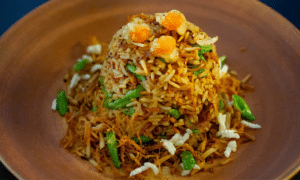
Crispy Rice - Khaao Graawp (ข้าวกรอบ อย่างหม่อมเจ้าสาย ลดาวัลย์)
Suan Sunandha Palace was the permanent residence of Mom Chao Sai Ladawan (HRH Princess Saisawali Phirom, พระวิมาดาเธอ หม่อมเจ้าสาย ลดาวัลย์), the Royal Consort to Rama V. In the kitchen of Suan Sunandha Palace, the Princess presided over a peak era of culinary innovation until her passing on June 24, 1929. Reflecting her practicality, the Princess’ recipes frequently incorporated the era’s common pantry ingredients in new and surprising combinations.
For example, in her boat-embarking chili relish (น้ำพริกลงเรือ; naam phrik lohng reuua), a relish still enjoyed today, the Princess pairs fermented shrimp paste chili relish with sweet pork, crispy fried fish, salted duck eggs and hairy-fruited eggplant (maeuk) (มะอึก). Another example is her gaaeng ran juaan (แกงรัญจวน) – the Princess prepares a vibrant spicy and sour soup, fragrant with the aroma of Thai basil, from the leftovers of a stir-fried beef dish and fermented shrimp paste chili relish, which she cooked together with lemongrass, shallots and garlic.
Mom Chao Sai Ladawan’s recipes, many already recreated here at Thaifoodmaster, were recorded by Princess Sadap Ladawan (เจ้าจอมหม่อมราชวงศ์สดับลดาวัลย์), a key figure in the Palace’s culinary affairs, and subsequently compiled and published by Suan Sunandha Rajabhat University in a volume dedicated to seasoned rice dishes and chili relishes.
In this dish called khaao graawp (ข้าวกรอบ), or “crispy rice” the Princess seasons cooked jasmine rice with chili jam, and adds four fried components, each highlighting a different element of the crispiness indicated by the dish’s name.
1
2
3
4
5
6
7
8
9
10
11
12
13
14

Get Access – Join Thaifoodmaster Today
Practical and kitchen-tested recipes with a mix of theory, history, psychology, and Siamese culture tidbits.
-
Get access to everything right away. Unlock more than 50 Masterclasses, over 700 recipes and Articles
Access to Thaifoodmaster’s constantly growing library of prime professional classes, articles, recipes and videos on Siamese culinary topics, available nowhere else in English.
-
GET EXTRA - New Masterclasses and Daily Recipes
Gain access to NEW masterclasses as they become available. Access DAILY translations of heritage-recipes.
-
1-1 support from Hanuman
1-1 support from Hanuman to help you achieve your professional Thai culinary goals
-
Live Q&A Sessions
The opportunity to join a monthly live two-hour videoconference where I can answer your questions.
-
Great Value!
one year access for the price of 3 days in-person training.
You will get everything you need to:
-
To Get inspired
When you design or build a new menu for an event or restaurant or even prepare for dinner with friends.
-
To Satisfy your curiosity.
Finally !
-
To Master Your Craft
Master your Thai cooking skills and expand your repertoire.
It is truly brilliant with a revolutionary approach introducing aspects and concepts never broached by cookbooks.

Ian Westcott
Sourcing Wines for Discerning Private Clients
© 2008 – 2026 Thaifoodmaster


