
Celebrating the Art of Siamese Culinary Wisdom and Thai Cuisine
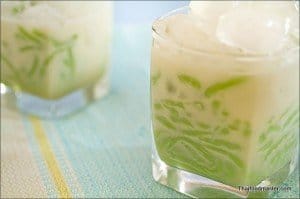
ขนมลอดช่องน้ำกะทิ หรือ นกปล่อย
Thai desserts are usually made from common ingredients and therefore very popular. However, it was only during the 17th century that desserts and sweets actually became part of everyday meals. In the old days, they were served only at auspicious occasions and ceremonies.
During wedding ceremonies, for example, four kinds of sweets are usually served, collectively known as "the four plates dessert" (ขนมสี่ถ้วย ; khanohm see thuay). The ancient Thai expression "To eat four cups of dessert" (กินสี่ถ้วย ; gin see thuay ) used in the central region of the kingdom as an idiom referring to a wedding banquet.
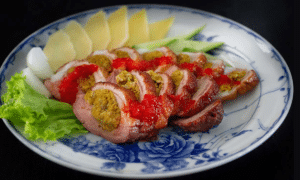
Roasted Stuffed Duck Breast with Chestnuts and Mackerel (เป็ดยัดไส้เกาลัดรมควัน; bpet yat sai gaolat rohm khwan), circa 1935
Smoked duck stuffed with a mackerel and chestnut filling is a dish that defies cultural boundaries. An exemplar of blended culinary influences, featuring inviting colors and an elegant presentation that serve as a prelude to the complex flavors and textures that await, the dish is an eloquent testament to the cooking style of Mrs. Samaknantapol (Jeep Bunnag, who went by the pen name “the granddaughter of Maae Khruaa Huaa Bpaa”). In the 1930s. Mrs. Jeep Bunnag published her first cookbook. Following in the footsteps of her revered grandmother-in-law, Lady Plean Passakornrawong, she continued to document the art of Siamese cuisine through the treasured books she published and was known for her ability to merge culinary traditions into beautiful and innovative dishes that represent an era.
The rich, dark color of the smoked duck’s skin is visually striking and appetizing, evoking a sense of indulgence and luxury. The smoky flavors that permeate the meat reflect our deep connection to primal cooking techniques, a fascinating juxtaposition to the refined presentation of the dish. When the smoked duck is sliced, its succulent pink meat is revealed, surrounding the golden filling of chestnuts and mackerel.
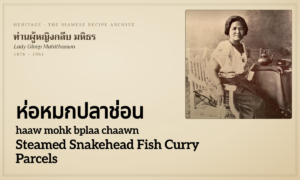
Steamed Snakehead Fish Curry Parcels (ห่อหมกปลาช่อน; haaw mohk bplaa chaawn)
haaw mohk pla chon: snakehead fish steamed in banana leaf with one coconut pressed into three grades of milk. Lady Gleep Mahithaawn, 1949.

Ancient roasted chili jam (naam phrik phao bo:h raan ; น้ำพริกเผาโบราณ)
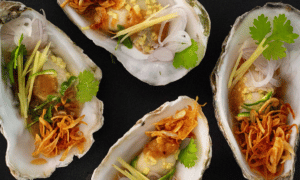
c1949 Quick-cured oysters with ginger and kaffir lime zest by Maawm Ying Soophaa (หอยนางรมดอง โดย หม่อมหญิงสุภา พ.ศ. 2492; haawy naang rohm daawng)
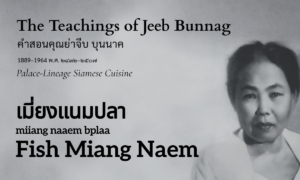
Fish Miang Naem (เมี่ยงแนมปลา; miiang naaem bplaa)
Miiang naaem bplaa, grilled snakehead fish with fire-roasted galangal juice and bitter orange, served in lettuce cups. Jeeb Bunnag, 1933.
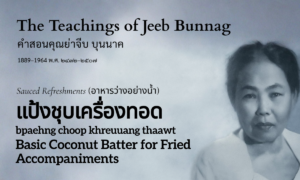
Coconut Batter for Fried Accompaniments (แป้งชุบเครื่องทอด; bpaehng choop khreuuang thaawt)
Coconut Batter for Fried Accompaniments, a rice flour mixture kneaded with limestone solution until glossy. From Jeeb Bunnag's 1945 cookbook of Thai snacks and desserts.
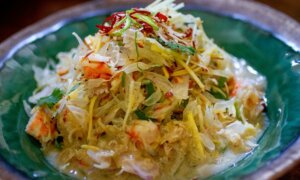
Pomelo salad with salted shrimp and a lemongrass-infused coconut cream dressing (ยำส้มโอกุ้งเค็ม ; yam sohm o:h goong khem)
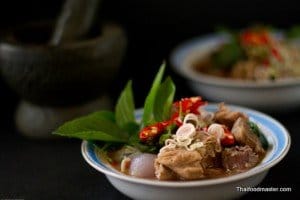
แกงรัญจวน
แกงโบราณชนิดนี้ เริ่มกลับมาเป็นที่นิยมอีกครั้งหนึ่ง หลังจากพอมีร้านอาหารไทยบางร้านนำตำรับนี้ไปบรรจุเป็นหนึ่งในเมนู และจากหนังสืออัตตชีวประวัติของ ม.ล. เนื่อง นิลรัตน์ ผู้เขียนเรื่องราวชีวิตในสำนักพระวิมาดาเธอ กรมพระสุทธาสินีนาฏ ปิยมหาราช ปดิวรัดดา แหล่งขึ้นชื่อเรื่องฝีมือปรุงอาหารในช่วง รัชกาลที่ ๕ ถึงสมัยรัชกาลที่ ๗ และอีกหนึ่งสาเหตุก็มาจากบทละครย้อนยุคยอดนิยม เมื่อไม่นานมานี้ เกี่ยวกับเรื่องคุณชายแห่งราชตระกูลหนึ่ง ๕ คน ที่มีเรื่องราวความรักโรแมนติกในการหาคู่ครอง มีการพิสูจน์คุณสมบัติ ของตัวเอกฝ่ายหญิงที่เหมาะสมจะมาเป็นคู่ครองของคุณชายทั้ง ๕ ซึ่งแบ่งเป็นตอน ๆ ละคน รวม ๕ ตอน และมีตอนหนึ่งกล่าวถึงเรื่องราวที่ทำการพิสูจน์ความสามารถของนางเอกด้วยการทำ “แกงรัญจวน” ซึ่งเป็นอาหารเริ่มต้นจากในวังสวนสุนันทา มาเป็นเนื้อหาของบทละคร บรรดาแฟนละครเลยตามหาสูตรกันใหญ่ ที่พึ่งของแหล่งข้อมูล ก็ดูจะหนีไม่พ้นในกูเกิ้ล ในบางเว็ปไซด์ในอินเตอร์เน็ต
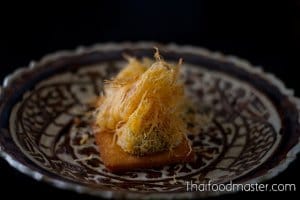
ขนมฝอย หรือ ขนมหันตรา
"ขนมฝอย" หรือ "ขนมหันตรา" - อนุสนธิจากตำนานแกงมัสมั่น ที่ Thaifoodmaster ได้นำเสนอไปแล้วนั้น ในบริบทหนึ่งกล่าวถึงหมายรับสั่งของพระบามสมเด็จพระพุทธยอดฟ้าจุฬาโลกที่ให้ พระยาจุฬาราชมนตรี ผู้นำมุสลิม จัดทำอาหารเลี้ยงพระและผู้คน ในคราวสมโภชพระแก้วมรกตและวัดพระศรีรัตนศาสดาราม ในปี พ.ศ.๒๓๕๒ ท่านขุนฯ เกิดความสนใจในอาหารที่นำมาจัดเลี้ยงเป็นอย่างยิ่ง ด้วยในคราวนั้นนิมนต์พระสงฆ์ถึง ๒,๐๐๐ รูปมาในงานบุญที่ยิ่งใหญ่นี้ จึงได้ตามรอย ค้นคว้าประวัติศาสตร์วัฒนธรรมขนมอีกตำรับหนึ่งของคนไทยมานำเสนอ ในอีกมุมมอง ที่เชื่อว่ายังไม่มีที่ใดบันทึกไว้อย่างครบถ้วนสมบูรณ์เช่น Thaifoodmaster แห่งนี้ คราวนี้จึงขอนำเสนอขนมโบราณที่มีเอกลักษณ์เด่นคือมีทั้งแบบหวาน และแบบคาว มาให้รู้จักกันให้ลึกซึ้งตรงกับตำรับดั้งเดิมมากที่สุด ซึ่งได้แก่ "ขนมฝอย" หรือ "ขนมหันตรา"
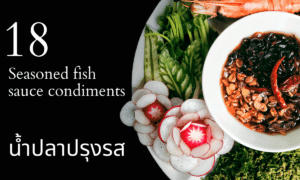
18 Seasoned fish sauce condiments (น้ำปลาปรุงรส ; naam bplaap roong roht)
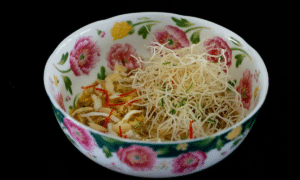
The Ambassador’s House Style Noodle Soup (หมี่น้ำบ้านราชทูต; Mee Naam Baan Raat Thuut)
This soup dish features crispy rice vermicelli noodles, a chicken broth that has a three-flavor profile infused with the aroma of bitter orange, and a plethora of other ingredients such as crispy fried tofu, chicken, pork, crab and pickled garlic.
In Thai, the phrase mee naam baan raat thuut refers to a rice vermicelli noodle soup in the style of the Ambassador’s house. The dish was not new when it appeared in the 1956 book Snacks, Tea Nibbles, Hors D’oeuvres and Drinking Food (ตำราอาหารว่าง - เครื่องน้ำชา และ เครื่องเคี้ยว หรือ กับแกล้ม) by Jeeb Bunnag (จีบ บุนนาค), as noodle dishes were often the preferred ingredient for light meals or snacks. In Grandparents Recipes: 100 Years Old Recipes (จานอร่อยจากปู่ย่า สูตรโบราณ 100 ปี), a volume printed in 2014 that highlights recipes from the kitchens of fifteen prominent families, a similar version of the dish is referred to as mee naam baan bpaak naai leert (หมี่น้ำบ้านปาร์คนายเลิศ) and is associated with Nai Lert.
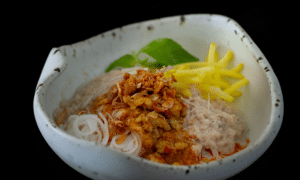
Naam Yaa Neuua – Northern Style Naam Ya according to Lady Plean Passakornrawong (น้ำยาเหนือ)
This fermented rice noodle dish is served with a slow-cooked, chili-less broth made from pounded fish meat and aromatics cooked in coconut cream. Creamy in color and velvety in texture, the broth is seasoned either with fish sauce, fermented fish or salted fish according to one’s preferences. The broth is allowed to slow-cook, achieving its full richness over a couple of hours. Once ready, the broth is poured over the noodles, which are then topped with a glossy-orangey layer of minced shrimp meat fried with their tomalley in pork lard. Complementing this richness are crunchy yellowish bean sprouts blanched in turmeric-tinted water, a sprinkle of sweet, golden crispy-fried shallots and, finally, green lemon basil leaves that endow the dish with a unique, rustic herbal persona.
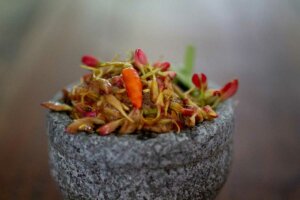
Tamarind flower chili relish inspired by Princess Jongjittanom Dissakul (น้ำพริกดอกมะขาม อย่าง หม่อมเจ้าหญิงจงจิตรถนอม ดิศกุล ; naam phrik daawk makhaam)
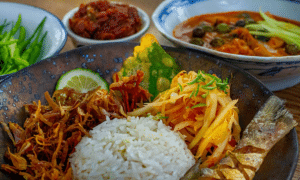
Khaao man sohm dtam and the first-ever recorded recipe for papaya salad (ข้าวมันส้มตำ)
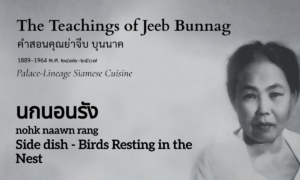
Side dish - Birds Resting in the Nest (นกนอนรัง; nohk naawn rang)
Birds Resting in the Nest, baya weavers stuffed with peppery pork and draped in fine duck egg threads. From Jeeb Bunnag, 1933.
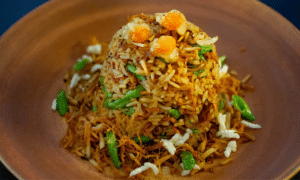
Crispy Rice - Khaao Graawp (ข้าวกรอบ อย่างหม่อมเจ้าสาย ลดาวัลย์)
Suan Sunandha Palace was the permanent residence of Mom Chao Sai Ladawan (HRH Princess Saisawali Phirom, พระวิมาดาเธอ หม่อมเจ้าสาย ลดาวัลย์), the Royal Consort to Rama V. In the kitchen of Suan Sunandha Palace, the Princess presided over a peak era of culinary innovation until her passing on June 24, 1929. Reflecting her practicality, the Princess’ recipes frequently incorporated the era’s common pantry ingredients in new and surprising combinations.
For example, in her boat-embarking chili relish (น้ำพริกลงเรือ; naam phrik lohng reuua), a relish still enjoyed today, the Princess pairs fermented shrimp paste chili relish with sweet pork, crispy fried fish, salted duck eggs and hairy-fruited eggplant (maeuk) (มะอึก). Another example is her gaaeng ran juaan (แกงรัญจวน) – the Princess prepares a vibrant spicy and sour soup, fragrant with the aroma of Thai basil, from the leftovers of a stir-fried beef dish and fermented shrimp paste chili relish, which she cooked together with lemongrass, shallots and garlic.
Mom Chao Sai Ladawan’s recipes, many already recreated here at Thaifoodmaster, were recorded by Princess Sadap Ladawan (เจ้าจอมหม่อมราชวงศ์สดับลดาวัลย์), a key figure in the Palace’s culinary affairs, and subsequently compiled and published by Suan Sunandha Rajabhat University in a volume dedicated to seasoned rice dishes and chili relishes.
In this dish called khaao graawp (ข้าวกรอบ), or “crispy rice” the Princess seasons cooked jasmine rice with chili jam, and adds four fried components, each highlighting a different element of the crispiness indicated by the dish’s name.
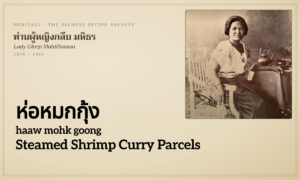
Steamed Shrimp Curry Parcels (ห่อหมกกุ้ง; haaw mohk goong)
Haaw mohk goong — giant freshwater prawns in fish haw mok paste, bound with one egg before wrapping and steaming. Lady Gleep, 1949.

Fried fermented shrimp paste relish with green apples by Princess Jongjittanom Dissakul (น้ำพริกลูกแอปเปิ้ลผัด อย่าง หม่อมเจ้าหญิงจงจิตรถนอม ดิศกุล ; naam phrik luuk aaep bpeern phat)
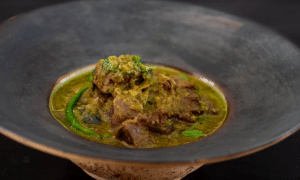
Perfumed Muslim-style Curry of Fresh Chilies with Beef (แกงเขียวหวานเนื้อทรงเครื่อง; Gaaeng Khiaao Waan Neuua Sohng Khreuuang)
The Indian and Muslim cuisines present distinct approaches to using dried spices in curries, both of which influence Siamese cuisine in different ways. Indian-inspired Siamese curries spotlight chilies for their vibrant color, fragrance, flavor and heat, while spices like cumin and coriander play a supporting role. The spices complement and temper the chilies’ intensity, creating a rounded, multi-layered flavor profile; nonetheless, the chilies remain the star ingredient, gently complemented by the spices.
Conversely, Muslim-influenced curries, such as massaman curry, prioritize spices over chilies. Spices like cardamom, nutmeg and mace take center stage, while the chilies provide subtle background heat rather than being the primary flavor. In these curries, the focus is on the rich, warm and complex aromas created by the blend of spices, which is a defining characteristic of many Muslim dishes.
Moreover, Siamese cuisine favors using rehydrated dried chilies in curries for their depth; this depth is highly appreciated, along with the complexity, and comparatively milder heat of the rehydrated dried chilies. As well, the harsh grassy notes of fresh chilies are not favored; they’re referred to in Thai as “green rank” or “men khiaao (เหม็นเขียว)”. Muslim curries often use fresh green chilies, tempering their vibrant, grassy taste with dry spices and thus shifting the flavor from bright and fresh to more subdued and earthy tones, resulting in a dish that is perceived to be layered, despite the burst of fresh chilies.
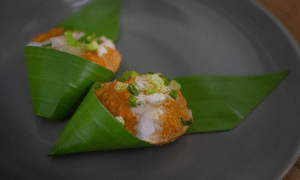
c1908 Haaw Mohk steamed savory curried cakes featuring crab meat, chicken, and pork (ห่อหมกทรงเครื่อง อย่างท่านผู้หญิงเปลี่ยน ภาสกรวงศ์ แม่ครัวหัวป่าก์ พ.ศ. 2451 ; haaw mohk sohng khreuuang)
This festive and rich recipe is for a coconut-based haaw mohk featuring chicken, crab and pork meats. This recipe was chosen from the various versions available at the time by Lady Plean Passakornrawong, for inclusion in her epic cookbook Maae Khruaa Huaa Bpaa (MKHP) (ท่านผู้หญิงเปลี่ยน ภาสกรวงศ์ตำราแม่ครัวหัวป่าก์).
1
2
3
4
5
6
7
8
9
10

Get Access – Join Thaifoodmaster Today
Practical and kitchen-tested recipes with a mix of theory, history, psychology, and Siamese culture tidbits.
-
Get access to everything right away. Unlock more than 50 Masterclasses, over 700 recipes and Articles
Access to Thaifoodmaster’s constantly growing library of prime professional classes, articles, recipes and videos on Siamese culinary topics, available nowhere else in English.
-
GET EXTRA - New Masterclasses and Daily Recipes
Gain access to NEW masterclasses as they become available. Access DAILY translations of heritage-recipes.
-
1-1 support from Hanuman
1-1 support from Hanuman to help you achieve your professional Thai culinary goals
-
Live Q&A Sessions
The opportunity to join a monthly live two-hour videoconference where I can answer your questions.
-
Great Value!
one year access for the price of 3 days in-person training.
You will get everything you need to:
-
To Get inspired
When you design or build a new menu for an event or restaurant or even prepare for dinner with friends.
-
To Satisfy your curiosity.
Finally !
-
To Master Your Craft
Master your Thai cooking skills and expand your repertoire.
It is truly brilliant with a revolutionary approach introducing aspects and concepts never broached by cookbooks.

Ian Westcott
Sourcing Wines for Discerning Private Clients
© 2008 – 2026 Thaifoodmaster


