
Celebrating the Art of Siamese Culinary Wisdom and Thai Cuisine
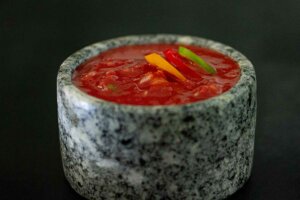
Pickled bean curd chili relish (น้ำพริกเต้าหู้ยี้; naam phrik dtao huu yee)
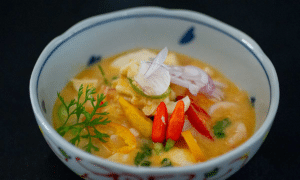
Salted duck eggs and shrimp creamy lohn (หลนไข่เค็ม ; lohn khai khem)
Lohn of salted duck eggs is a smooth, rich and creamy relish with a vibrant three-flavor profile of sour-salty-sweet. Unlike other lohn relishes, it does not contain any overbearing fermented ingredients, making it easy to enjoy, and it does not require an acquired taste.
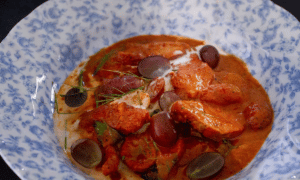
c1941 Roasted Duck Curry with Grapes (Gaaeng Ho) (แกงเป็ดเหาะใส่องุ่น อย่างคุณถนอม ปาลบุตร พ.ศ. 2484; gaaeng bpet haw sai angoon)
Grapes have long been associated with prosperity, fertility and abundance across various cultures and historical periods due to the fruit’s large clusters and bountiful growth. In ancient China, grapes were considered a symbol of wealth and nobility, and often deployed as a status symbol among the elite. In Greek mythology, Dionysus, the god of wine and fertility, was often depicted holding a bunch of grapes, further emphasizing the connection between grapes and abundance. This association is also likely rooted in the fact that grapes were a valuable crop in antiquity – used to produce wine and other fermented products, and an important source of food and nutrition. In Indian Ayurvedic texts, grapes are referred to as vineaksha and utilized in treating a variety of ailments, including fever and indigestion.
From the Siamese perspective, the incorporation of fruits in culinary preparations was viewed as a luxurious indulgence, as many fruits commonly available today were once difficult to obtain. Thus the pairing of an extravagant ingredient – such as fruit – with an equally opulent and exclusive delicacy like roasted duck resulted in a dish fit for royalty.
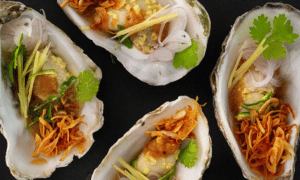
c1949 Quick-cured oysters with ginger and kaffir lime zest by Maawm Ying Soophaa (หอยนางรมดอง โดย หม่อมหญิงสุภา พ.ศ. 2492; haawy naang rohm daawng)
Wild Boar Curry with Salacca (แกงหมูบป่าระกำ; gaaeng muup bpaa ra gam)
Gaaeng muup bpaa ra gam, wild Boar curry with sourness from both tamarind and crushed salacca. From Maawm Ying Soophaa's Divine Dishes, 1949.
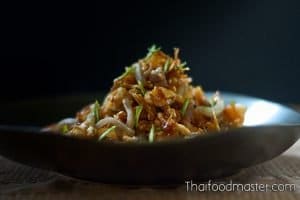
ยำผิวส้มซ่า
พูดถึงอาหารไทยแท้ไทยโบราณ ท่านรู้หรือไม่ว่า พืชชนิดใดที่คนไทยสมัยก่อนนำมาให้รสเปรี้ยวในสำรับอาหารมากที่สุด ? ถ้าเป็นปัจจุบันจะตอบได้ง่าย ๆ ว่าเป็น "มะนาว" แต่สมัยก่อนนั้น ไม่ใช่เลยขอรับ คนไทยอาศัยความเปรี้ยวจาก"มะขาม" มากที่สุด ใช้ทั้งยอดอ่อน ดอก ฝักอ่อน และ โดยเฉพาะมะขามเปียก แต่ทราบไหมขอรับว่า ส่วนใหญ่น้ำมะขามเปียกมักไม่ใช่องค์ ประกอบเด่นในอาหารไทย ตัวมะขามเปียกเอง ก็นำมาทำเป็นอาหารหลักไม่ได้ ไม่เคยมีตำรับ ยำมะขามเปียก แกงมะขามเปียก หรือ มะขามเปียกลอยแก้ว แต่อย่างใดเลย อย่างที่เห็นก็แค่เป็นเครื่องดื่ม ในกลุ่มน้ำปานะ ที่ภิกษุในศาสนาพุทธสามารถฉันได้ในยามวิกาล เช่น น้ำมะขาม
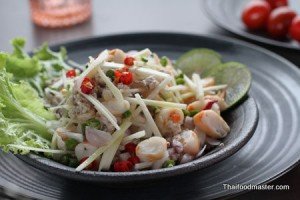
ยำขมิ้นขาวกุ้งเค็ม
This dish brings yet another angle to celebrate the essence of Thai cuisine. The Thais dare pairing ingredients, which at first seem to be unmatchable, strong players with opposite characteristics, white turmeric and salted prawns, and guess what? It works beautifully!
The pairing actually has the intention to enhance the differences in flavor and texture, creating a playful dish, both in taste and in presentation. The delicate thin cut white turmeric juliennes with its crunchy-apple like texture matched well with the just made salted prawns chunks which still maintain some of their intrinsic sweetness.
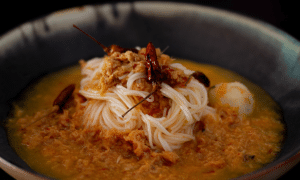
Khanohm Jeen Naam Yaa (ขนมจีนน้ำยา) - Fermented Rice Noodles with Minced Fish in Aromatic Coconut Curry
In the Central Plains of the Kingdom, fermented rice noodles are inextricably linked to a dish known as naam yaa. Composed of a dense, coconut-based minced fish curry, the dish is infused with layers of salted fish and possesses the distinctive, invigorating and purifying notes of fingerroot. Typically, naam yaa is served with fresh lemon basil as the herb of choice along with an array of side dishes collectively known as meuuat khanohm jeen (เหมือดขนมจีน). These include blanched bean sprouts seasoned with a touch of turmeric for color, fresh lemon basil leaves, thinly sliced three colored chilies, and ground chili for added heat. More elaborate versions will add blanched Chinese bitter gourd slices, batter-fried young morning glory shoots, and fresh shrimp minced and fried with its tomalley in pork lard, as well as crispy-fried shallots as the finishing touch.
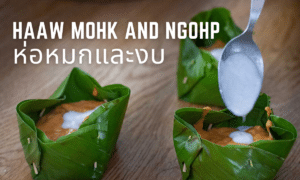
Haaw Mohk and Ngohp (ห่อหมก และ งบ)

แกงเผ็ดปลาไหลทรงเครื่อง
ตำรับปลาไหลนี้ ปัจจุบันมักจะคิดว่าเป็นแต่สำรับของชาวบ้าน หรือเป็นแค่อาหารลูกทุ่งเท่านั้น ความจริงแล้ว อาหารตำรับปลาไหลเป็นอาหารทั่วไปของคนทุกชนชั้น ทั้งไพร่สามัญชน ผู้ดีชาวกรุง หรือเจ้านายในรั้วในวัง ต่างมีตำรับแกงปลาไหลขึ้นสำรับทั้งนั้น ที่มีเขียนบันทึกไว้ก็มีหลายตำรับเลยทีเดียว เช่น ตำรับของหม่อมส้มจีน ตั้งแต่ ร.ศ. 109 มี "ต้มเปรตปลาไหล". ตำรับแม่ครัวหัวป่าก์ ของท่านผู้หญิงเปลี่ยน ภาสกรวงษ์ ตำรับวังมหานาค โดย ม.จ.หญิงวิมลปัทมราช จิรประวัติ ก็มี "แกงปลาไหล" ตำรับที่พิมพ์จำหน่ายในช่วง"รัฐนิยม"สมัยจอมพล ป. พิบุลสงคราม พิมพ์เมื่อ พ.ศ.2485 ก็มี "แกงเผ็ด ปลาไหลซงเครื่อง" หรือแม้แต่ที่เข้ากับสำนวนเกลียดปลาไหลกินน้ำแกงตรงเผง ไม่ชอบปลาไหล แต่อยากกินแกงปลาไหล ชาววังในสำนักพระวิมาดาเธอฯ นิยมใช้ปลาดุกมาแกงแทนปลาไหล ตามที่ม.ล.เนื่อง นิลรัตน์ ข้าหลวงในสมเด็จพระเจ้าบรมวงศ์เธอเจ้าฟ้านิภานภดล วิมลประภาวดีกรมขุนอู่ทองเขตขัตติยนารี บันทึกไว้ถึง "แกงปลาดุกอย่างปลาไหล" เอาใว้ด้วย
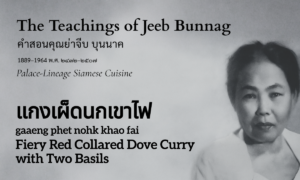
Fiery Red Collared Dove Curry with Two Basils (แกงเผ็ดนกเขาไฟ; gaaeng phet nohk khao fai)
Gaaeng phet nohk khao fai: red collared dove curry with carcass pounded into steamed meatballs, finished with two basils. Jeeb Bunnag, 1933.
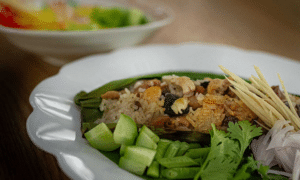
Grilled banana leaf parcels filled with butter-fried rice with chicken, chicken offal and dried spices, served with a sour-sweet coconut-base vegetable relish (ข้าวงบไก่ อาจาดอังวะ ; khaao ngohp gai aajaat angwa)
The khaao ngohp gai (ข้าวงบไก่) recipe by Mom Chao Sai Ladawan (Princess Saisawali Phirom) evokes the flavor and aesthetics of Muslim-style cooking. First, cooked rice, chicken, and chicken offal are fried with butter and perfumed with whole spices. The buttery fried rice is wrapped in banana leaves and then grilled, forming a crispy outer crust of spiced-infused rice grains.
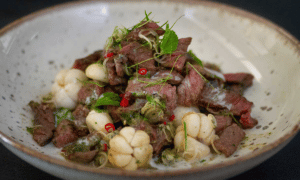
Grilled beef and mangosteen (or grape) salad with mint dressing, by Princess Jongjittanom Dissakul (ยำเนื้อย่างกับมังคุดหรือองุ่น; yam neuua yaang gap mangkhoot reuu angoon)
This grilled beef salad with luscious mangosteen (or grapes) is seasoned with a crisp, cooling dressing of fermented shrimp paste and mint. The mangosteen’s tropical character – a flavor redolent of many other fruits – dominates its fruity essence and is a perfect complement to both the grilled meat and the lingering, sour-salty-sweet, minty dressing. Furthermore, citrusy notes of thinly sliced lemongrass and kaffir lime leaves, coupled with richness of thickened coconut cream, unite the caramelized, meaty elements with the dish’s fruity spectrum.
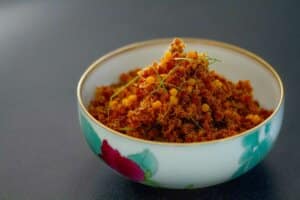
Old-Fashioned Phat Phrik Khing, Yesteryear's Travel Food (ผัดพริกขิง อาหารคนเดินทาง)
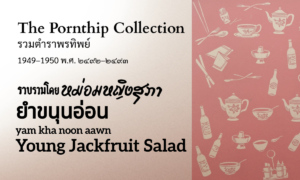
Young Jackfruit Salad (ยำขนุนอ่อน; yam kha noon aawn)
Young Jackfruit Salad featuring tender jackfruit stir-fried with coconut cream and aromatic herbs and dressed with chili jam. From Maawm Ying Soophaa's 1949 manuscript on Thai salad recipes.
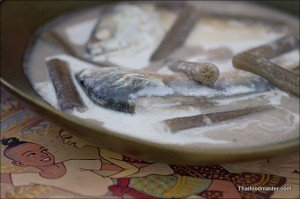
แกงกะทิสายบัวปลาทูนึ่ง
This old-fashioned Thai coconut curry dish is a simple expression made with ingredients commonly available to Thais, it features steamed mackerels - the fish that Thai people probably love the best and the stems of the lotus flowers - one of Buddhism's most recognized motifs.
The fish together with peeled lotus stems are boiled in coconut milk, to which a simple yet very aromatic curry paste, made only of white pepper corns, shallots and fermented shrimp paste is added.
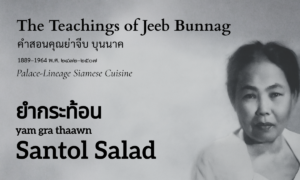
Santol Salad (ยำกระท้อน; yam gra thaawn)
Yam gra thaawn, tart santol salad with pork, shrimp, and crushed peanuts. Fruit is salt-soaked and air-dried to reduce bitterness. Jeeb Bunnag, 1933.

c1949 Salad of grilled pork and coconut-cooked pumpkin by Maawm Ying Soophaa (ยำฟักทองกะทิ ตำราการปรุงอาหารยำ หม่อมหญิงสุภา พ.ศ. 2492; yam fak thaawng Gathi)
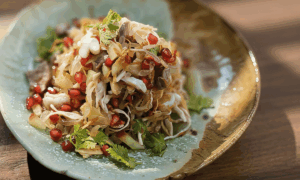
c1935 Trinarong Salad - Thai Three-Fruit Yam from Pathum Thani (ยำตรีณรงค์; yam dtreen rohng)
Central-style Thai salad combining pomelo, rose apple, and pomegranate with shrimp, chicken, and pork. From Ms. Booree Thohnsak's 1935 Pathum Thani memorial cookbook.
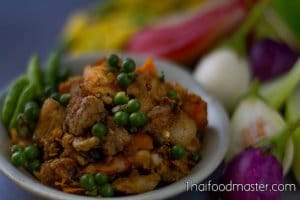
น้ำพริก พริกไทยสด
ตำรับน้ำพริก พริกไทยสด คราวนี้ พบว่าเป็นของ หม่อมหลวงคลอง ไชยันต์ (สกุลเดิม สนิทวงศ์) ชายาใน ม.จ.ถาวรมงคลวงษ์ ไชยันต์ พระเชษฐาของ ม.จ.ประสงค์สม บริพัตร ซึ่งเป็น พระชายาในสมเด็จพระเจ้าบรมวงศ์เธอ เจ้าฟ้าบริพัตรสุขุมพันธุ์ กรมพระนครสวรรค์วรพินิต แห่งวังบางขุนพรหม และ ม.ล.คลอง ไชยันต์ นี้ ท่านก็ได้ถวายตัวเข้ารับราชการฝ่ายใน ปฏิบัติหน้าที่เป็นนางสนองพระโอษฐ์ ในสมเด็จพระนางเจ้ารำไพพรรณี พระบรมราชินี ในรัชกาลที่ ๗ ด้วย จึงไม่แปลกที่ตำรับ น้ำพริก พริกไทยสด นี้ จะได้มีการบันทึกเอาไว้เป็นตำรับหนึ่งในหนังสือ "อาหารของโปรด ของหม่อมเจ้าจงจิตรถนอม ดิศกุล" ทึ่ทรงเคยเป็นข้าหลวงในสมเด็จพระปิจตุฉาเจ้า สุขุมาลมารศรี แห่งวังบางขุนพรหม พระราชมารดาของทูลกระหม่อม เสด็จในกรมฯ
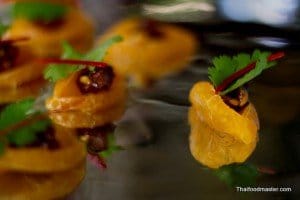
มังกรคาบแก้ว กับ ม้าฮ่อ
เครื่องว่างชนิดนี้ ชื่อ "ม้าฮ่อ" บางคนเขียน "ม้าห้อ" เป็นอาหารว่างสัญชาติมอญ สมาชิกในเรือนเรารู้จักกันดีพอสมควร ถ้าใครไม่รู้จักก็จะได้รู้จักกันล่ะ เห็นจั่วหัวชื่อเป็นสองอย่าง จัดจานแยกกัน ก็เพื่อแบ่งให้เห็นชัด ความจริงก็คืออาหารว่างอย่างเดียวกัน เดิมชาวไทยเชื้อสายมอญจะนิยมทำในงานบุญหรืองานพิธีต่าง ๆ โดยใช้ผลไม้ที่มีรสเปรี้ยวมาโรยด้วย 'พริกกะเกลือ' (อย่าพาลไปนึกถึงพริกกะเกลือสมัยนี้เสียล่ะ คนละแบบกัน) เพื่อให้รับประทานผลไม้เปรี้ยวได้อย่างอร่อยขึ้น ไม่ต้องทิ้งให้เสียของ พริกกะเกลือที่ว่าคือการผัดหมูกุ้ง ใส่น้ำตาลและถั่วลิสงคั่ว ตำรับไทยแท้ไม่มีดอก จะมีก็แต่ 'เมี่ยง'ผลไม้ ที่ดูคล้ายกัน กระนั้นคนไทยก็รับเอามาเหมือนอาหารอีกหลายชนิดหลายสัญชาติ จนได้ชื่อว่าเป็นเครื่องว่างไทยมาแต่โบร่ำโบราณ
1
2
3
4
5
6
7
8
9
10
11
12
13
14


Get Access – Join Thaifoodmaster Today
Practical and kitchen-tested recipes with a mix of theory, history, psychology, and Siamese culture tidbits.
-
Get access to everything right away. Unlock more than 50 Masterclasses, over 700 recipes and Articles
Access to Thaifoodmaster’s constantly growing library of prime professional classes, articles, recipes and videos on Siamese culinary topics, available nowhere else in English.
-
GET EXTRA - New Masterclasses and Daily Recipes
Gain access to NEW masterclasses as they become available. Access DAILY translations of heritage-recipes.
-
1-1 support from Hanuman
1-1 support from Hanuman to help you achieve your professional Thai culinary goals
-
Live Q&A Sessions
The opportunity to join a monthly live two-hour videoconference where I can answer your questions.
-
Great Value!
one year access for the price of 3 days in-person training.
You will get everything you need to:
-
To Get inspired
When you design or build a new menu for an event or restaurant or even prepare for dinner with friends.
-
To Satisfy your curiosity.
Finally !
-
To Master Your Craft
Master your Thai cooking skills and expand your repertoire.
It is truly brilliant with a revolutionary approach introducing aspects and concepts never broached by cookbooks.

Ian Westcott
Sourcing Wines for Discerning Private Clients
© 2008 – 2026 Thaifoodmaster


