
Celebrating the Art of Siamese Culinary Wisdom and Thai Cuisine
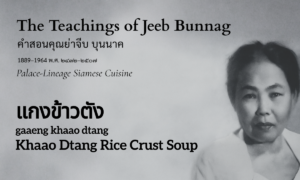
Khaao Dtang Rice Crust Soup (แกงข้าวตัง; gaaeng khaao dtang)
Gaaeng khaao dtang, deep-fried rice crust paired with clear broth and egg-stuffed chicken intestines. From Jeeb Bunnag, 1933.
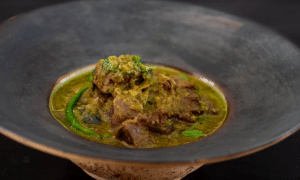
Perfumed Muslim-style Curry of Fresh Chilies with Beef (แกงเขียวหวานเนื้อทรงเครื่อง; Gaaeng Khiaao Waan Neuua Sohng Khreuuang)
The Indian and Muslim cuisines present distinct approaches to using dried spices in curries, both of which influence Siamese cuisine in different ways. Indian-inspired Siamese curries spotlight chilies for their vibrant color, fragrance, flavor and heat, while spices like cumin and coriander play a supporting role. The spices complement and temper the chilies’ intensity, creating a rounded, multi-layered flavor profile; nonetheless, the chilies remain the star ingredient, gently complemented by the spices.
Conversely, Muslim-influenced curries, such as massaman curry, prioritize spices over chilies. Spices like cardamom, nutmeg and mace take center stage, while the chilies provide subtle background heat rather than being the primary flavor. In these curries, the focus is on the rich, warm and complex aromas created by the blend of spices, which is a defining characteristic of many Muslim dishes.
Moreover, Siamese cuisine favors using rehydrated dried chilies in curries for their depth; this depth is highly appreciated, along with the complexity, and comparatively milder heat of the rehydrated dried chilies. As well, the harsh grassy notes of fresh chilies are not favored; they’re referred to in Thai as “green rank” or “men khiaao (เหม็นเขียว)”. Muslim curries often use fresh green chilies, tempering their vibrant, grassy taste with dry spices and thus shifting the flavor from bright and fresh to more subdued and earthy tones, resulting in a dish that is perceived to be layered, despite the burst of fresh chilies.
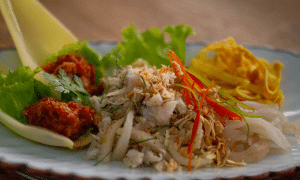
Gaawy goong suay (ก้อยกุ้งเสวย กับ น้ำพริกก้อย) - Old-fashioned chili relish enriched with shrimp tomalley and flaky acid-cooked shrimp meat
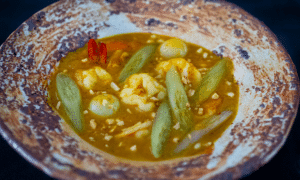
c1920 Sarama Shrimp Curry with White Eggplants and Lotus Stems (แกงสะระหม่ากุ้งกับมะเขือขาว และ สายบัว พ.ศ. 2463; gaaeng saramaa goong gap makheuua khaao reuu saai buaa)
A dish of complex flavors and an aromatic brightness, this Sarama curry features shrimp and the smaller Thai white eggplant, or crunchy lotus stems, in a golden, salty leading broth with clear tangy-sweet notes. The broth is silky and combines the nutty richness of coconut cream with the subtle sweetness of butter, cooked with a blend of dry spices that include coriander, cumin and turmeric. This spice blend evokes the penetrating aroma of curry powder, reflecting Muslim culinary influences.
Unlike spicy gaaeng phet (แกงเผ็ด) curries, which typically deploy dried chilies in the paste, Sarama curry contains fresh chilies. A mix of both red and yellow chili varieties are utilized, fusing the vibrant, fruity piquancy of the fresh chilies with the warm, earthy aromas of the spices. The red chilies contribute a ripe tropical fruitiness while the yellow offer citrusy and floral notes, creating a light yet layered curry with nuanced heat and depth of flavor.
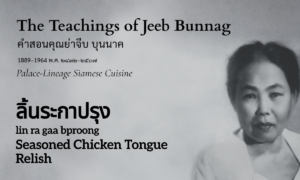
Seasoned Chicken Tongue Relish (ลิ้นระกาปรุง; lin ra gaa bproong)
Lin ra gaa bproong, pounded chicken tongue relish with ruaan shrimp and ginger, from Jeeb Bunnag's 1933 Cookbook of Rice Companion Recipes.
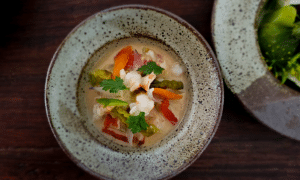
Grilled Eggplant Lohn Relish with Shrimp (หลนมะเขือเผากุ้งสด; Lohn Ma Kheuua Phao Goong Soht)
Lohn relish of grilled eggplant (หลนมะเขือเผากุ้งสด) captivates with its subtle contrasts and complex layering of flavors. Central to this dish is grilled eggplant, which is known for its inherent bitterness due to phenolic compounds like chlorogenic acid. However, this bitterness succumbs to a delightful transformation when the eggplant is simmered in coconut cream. The fats and sugars in the coconut cream effectively mask these bitter notes, resulting in a deep, satisfying savory relish that is both well-balanced and rounded.
Accompanying the eggplant are roasted shallots and garnet-blushed grilled tomatoes. The grilled tomatoes not only add natural sweetness and brightness to the dish, but also contribute to its visual charm via their muted orangey reds. This color palette complements the eggplant’s earthy, slightly sweet taste, represented through rich, velvety white-green hues. The interplay of colors in the dish mirror the complexity of its flavors.
The minced shrimp meat introduces a briny sweetness and a contrasting texture. The relish is seasoned to a sour-sweet leading salty to follow flavor profile, enhancing the smoky sweetness imparted by the grilled ingredients and creating a palette of flavor and color that is as attractive as it is delicious.
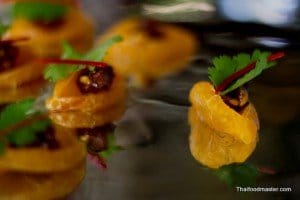
มังกรคาบแก้ว กับ ม้าฮ่อ
เครื่องว่างชนิดนี้ ชื่อ "ม้าฮ่อ" บางคนเขียน "ม้าห้อ" เป็นอาหารว่างสัญชาติมอญ สมาชิกในเรือนเรารู้จักกันดีพอสมควร ถ้าใครไม่รู้จักก็จะได้รู้จักกันล่ะ เห็นจั่วหัวชื่อเป็นสองอย่าง จัดจานแยกกัน ก็เพื่อแบ่งให้เห็นชัด ความจริงก็คืออาหารว่างอย่างเดียวกัน เดิมชาวไทยเชื้อสายมอญจะนิยมทำในงานบุญหรืองานพิธีต่าง ๆ โดยใช้ผลไม้ที่มีรสเปรี้ยวมาโรยด้วย 'พริกกะเกลือ' (อย่าพาลไปนึกถึงพริกกะเกลือสมัยนี้เสียล่ะ คนละแบบกัน) เพื่อให้รับประทานผลไม้เปรี้ยวได้อย่างอร่อยขึ้น ไม่ต้องทิ้งให้เสียของ พริกกะเกลือที่ว่าคือการผัดหมูกุ้ง ใส่น้ำตาลและถั่วลิสงคั่ว ตำรับไทยแท้ไม่มีดอก จะมีก็แต่ 'เมี่ยง'ผลไม้ ที่ดูคล้ายกัน กระนั้นคนไทยก็รับเอามาเหมือนอาหารอีกหลายชนิดหลายสัญชาติ จนได้ชื่อว่าเป็นเครื่องว่างไทยมาแต่โบร่ำโบราณ
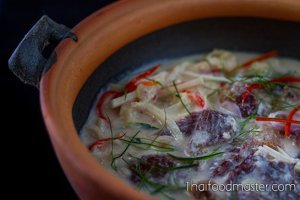
แกงต้มกะทิเนื้อโคเค็ม อย่าง จีบ บุนนาค (พ.ศ. ๒๔๘๔)
ภูมิปัญญาไทยโบราณท่านมีความอัจฉริยะล้ำเลิศ คิดปรุงตำรับอาหารที่ได้ผลออกมาอย่างลงตัว ดังที่กล่าวมาในบทก่อนหน้า วิถีไทยอาศัยการถนอมอาหารด้วยการทำเค็มหรือตากแห้ง และเมื่อจะนำมารับประทาน ความรุ่มรวยทางวัฒนธรรมการกิน บวกกับความมีศิลปะแห่งการปรุง คนสมัยก่อนสามารถรังสรรค์ของใกล้ตัว ให้ออกมาเป็นตำรับที่วิเศษได้โดยง่าย ง่ายด้วยกรรมวิธี ง่ายด้วยวัตถุดิบเครื่องปรุง ให้เป็นของอร่อยแบบไทยแท้ หนึ่งในตำรับนั้นคือ "ต้มกะทิเนื้อโคเค็ม"....
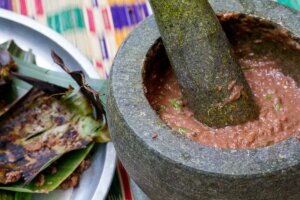
How to prepare the basic fermented shrimp paste chili relish (น้ำพริกกะปิมาตรฐาน ; naam phrik gabpi maatdtrathaan)
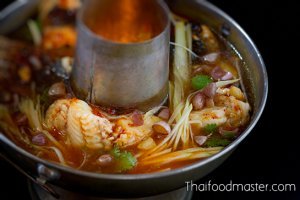
ต้มยำปลาช่อนแบบโบราณ - อย่างหม่อมซ่มจีน (ราชานุประพันธุ์) - ร.ศ.๑๐๙
ตำรับอาหารไทยแท้ที่มีมาแต่โบราณ ปัจจุบันยังคงมีอยู่ หากแต่พัฒนาไปไกลจนแทบไม่มีใครรับรู้ต้นเค้าเก่าก่อน ถ้าให้คนรุ่นปัจจุบันมาลิ้มลองตำรับแบบดั้งเดิม ก็จะมองว่าเป็นของแปลกไปเสียแล้ว ดังนั้น Thaifoodmaster คงจะต้องออกมาอธิบายถึงพัฒนาการของอาหารตำรับน้ำแกงนี้ก่อนไม่มีใครจดจำของเก่าแบบดั้งเดิมได้
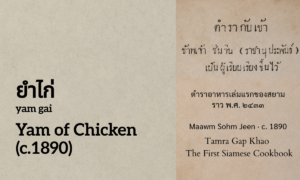
Yam of Chicken (ยำไก่; yam gai)
Yam gai: chicken simmered in coconut milk until dry, then dressed with mint, kaffir lime and green mango. Maawm Sohm Jeen, Tamra Gap Khao, 1890.
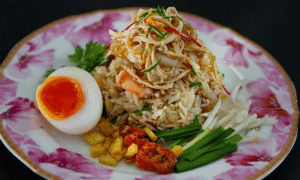
Khao Mee Seasoned Rice (ข้าวหมี่อย่างคลุก; khaao mee yaang khlook)
This article explores two methods of preparing Mee Fried Rice - the traditional Khao Mee Fried Rice and the lighter, seasoned rice alternative known as khaao mee yaang khlook. Discover the flavor chemistry at play and choose your preferred method for a delicious meal.
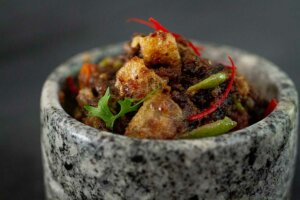
Salted Chinese black olive chili relish (น้ำพริกหนำเลี้ยบ; naam phrik nam liiap)
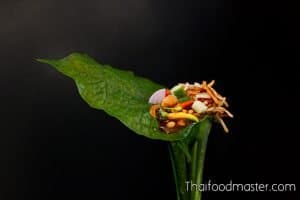
เมี่ยงคำ
ค้นข้อมูลดูว่าตำรับ "เมี่ยงคำ" เริ่มปรากฏมีบันทึกไว้เป็นลายลักษณ์อักษรแต่เมื่อใดกันแน่ สอบทานดูตำราอาหารเก่า ๆ หลายตำรับ ที่ตีพิมพ์ในสมัยรัชกาลที่ ๕ ก็ไม่พบ "เมี่ยงคำ" ในวิถีอาหารไทยโบราณแต่อย่างใด พบแต่ เมี่ยงลาว หรือ เมี่ยงพายัพ ซึ่งหมายถึงเมี่ยงที่มาจากทางเหนือ จากการอ่านหนังสือหลาย ๆ เล่ม เพื่อหาข้อมูลพบว่า "เมี่ยง" ได้เริ่มเป็นที่นิยมแพร่หลายในรั้วในวัง ก็หลังจากที่พระราชชายาเจ้าดารารัศมี ลงมารับราชการในราชสำนักที่กรุงเทพฯ และได้นำวัฒนธรรมการกินเมี่ยง ซึ่งเป็นหนึ่งในวิถีการดำรงชีวิตแบบล้านนาติดมาในหมู่ข้าราชบริพารชาวเหนือในตำหนักของพระองค์ ซึ่งบรรดาชาววังในสมัยนั้นจะเห็นเป็นสิ่งแปลกตาโก้เก๋ และคอยเอาอย่างในบางเรื่อง ทำให้หลังจากนั้นจึงค่อยเริ่มมีตำรับเมี่ยงต่าง ๆ ออกมามากมาย ปรากฏในตำราอาหารหรือเครื่องว่างต่าง ๆ ของไทยในสมัยต่อ ๆ มา สำหรับ "เมี่ยงคำ" นั้น พบว่ามีปรากฏครั้งแรก ในบทกาพย์เห่ชมเครื่องว่าง ของรัชกาลที่ ๖ ที่ใช้เป็นบทนำในตอนต้นบทความนี้ ซึ่งนั่นก็แสดงว่า "เมี่ยงคำ" กลายเป็นเครื่องว่างในวังหลวงเป็นที่นิยมกันมากแล้วในสมัยนั้นถึงสามารถขึ้นโต๊ะเครื่องเสวยได้ จึงเป็นข้อสันนิษฐานว่าน่าจะมีกำเนิดมาไม่เก่าไปกว่าสมัยรัชกาลที่ ๕ เป็นแน่แท้ ตำรับ "เมี่ยงคำ" คงจะเกิดจากการคิดประดิษฐ์ทำนำสิ่งละอันพันละน้อย ใส่ไปในคำเมี่ยง พร้อมใส่น้ำเมี่ยง เพื่อรับประทาน ทีละคำ ๆ จึงได้ชื่อว่า "เมี่ยงคำ" เหมือน ๆ หรือทำนองเดียวกันกับ "เมี่ยงอยาก" ที่ คุณป้า ม.ล. เนื่อง นิลรัตน์ เขียนบันทึกไว้ในหนังสือ "ชีวิตในวัง" ที่ตีพิมพ์มาแล้วหลายครั้ง ว่าเกิดจากความอยากกินเมี่ยง ของกลุ่มข้าหลวงวังสวนสุนันทา เวลามานั่งจับกลุ่มคุยกันยามว่างภารกิจ และไปค้นหาของในครัว ได้ กากหมู น้ำตาลปึก กะปิ ฯลฯ ก็นำมารับประทานกันเป็น"เมี่ยง" ที่อร่อยอย่างง่าย ๆ
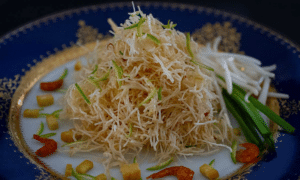
Sour-Sweet Savory Crispy Rice Vermicelli with Bitter Orange (Mee Krob) (หมี่กรอบส้มซ่าทรงเครื่อง ; Mee Graawp)
mee graawp sohng khreuuang (หมี่กรอบทรงเครื่อง), is an exquisitely regal dish of crispy rice vermicelli. The delicate noodles strands are washed and dried, then fried to a crisp light-golden hue. They retain their brittle crunch and airy texture even after being stir-fried with a clinging sticky sauce that encases the noodles in a thin layer of sheen. This sauce, mixed into the noodles together with other ingredients such as thin slices of pickled garlic and bitter orange peel, impart the dish with a light, fresh sweet and sour, and slightly salty and citrusy glaze.
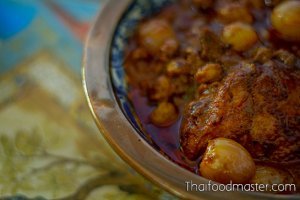
แกงมัสมั่น – แกงมาชะแมน – แกงหมัดสมั่น
อาหารไทยที่เคยได้รับการจัดอันดับว่ามีรสชาติอร่อยที่สุดในโลก และติดอันดับต้น ๆ ในการจัดอันดับ อาหารรสชาติดีที่สุดของโลกหลายครั้งจาก CNN ด้วยความหอมกลิ่นเครื่องเทศ ในกะทิที่เคี่ยวจนข้น จนเป็นที่รู้จักแพร่หลายเป็นสากล
แกงไก่มัสมั่นเนื้อ นพคุณ พี่เอย
หอมยี่หร่ารสฉุน เฉียบร้อน
ชายใดบริโภคภุญช์ พิศวาส หวังนา
แรงอยากยอหัตถ์ข้อน อกให้หวนแสวง
(บทพระราชนิพนธ์ "กาพย์เห่เรือชมเครื่องคาวหวาน" ในรัชกาลที่ ๒)
บทพระราชนิพนธ์นี้ ถือเป็นหลักฐานลายลัษณ์อักษรชิ้นสำคัญที่บ่งชี้ให้ทราบว่า "แกงมัสมั่น" ของไทย เป็นแกงโบราณมาแต่เก่าก่อนไม่ต่ำกว่า ๒๐๐ ปีมาแล้ว จากหลักฐานเชื่อว่า คนไทยรับอิทธิพลแกงชนิดนี้มาจากเปอร์เซีย ตั้งแต่ช่วงปลายสมัยอยุธยาโน่น บางคนอาจจะนึกว่าแกงมัสมั่นนี้เป็นตำรับอาหารที่คนไทยรับอิทธิพลมาจากมลายูเพราะประเทศมาเลเซียและอินโดนีเซียจะอยู่ถ้ดลงไปทางใต้ คนไทยทางภาคใต้ที่ส่วนใหญ่เป็นชาวมุสลิมมักได้รับอิทธิพลหลักจากมุสลิมและด้วยความที่มลายูเป็นชาติมุสลิมมาเนิ่นนานนับพันปี แม้กระทั่งข้อมูลในวิกิพีเดียก็บันทึกไว้อย่างนี้ ข้อมูลจึงขัดแย้งกันอยู่ และบางคนอาจคิดว่า "แกงมัสมั่น" เป็นอาหารดั้งเดิมแต่เฉพาะของในรั้วในวังเท่านั้น ตามปริบทในบทพระราชนิพนธ์ของพระบาทสมเด็จพระพุทธเลิศหล้านภาลัย ที่กล่าวมาข้างต้น
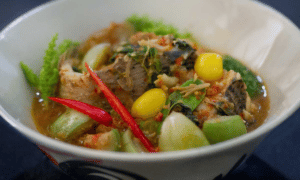
Kanchanaburi-Style Snakehead Fish Jungle Curry with Bitter Yellow Eggplants (แกงป่าปลา ; gaaeng bpaa bplaa)
This recipe is adapted from a recipe I obtained from a jungle food restaurant in Kanchanaburi province. The paste is a downgrade of a phrik khing paste – it omits the coriander roots and shallots. In addition, the recipe substitutes the fermented shrimp paste (kapi) with maawn fermented fish paste (กะปิมอญ; gabpi maawn), which is a popular ingredient among the Mon-Burmese population of the western province. The lack of shallots eliminates any sweetness that might impair the sharpness and heat of the dish. Furthermore, a double hit of citrus notes from holy basil are infused into the dish: from the holy basil flowers added to the paste and the holy basil leaves added to the curry.
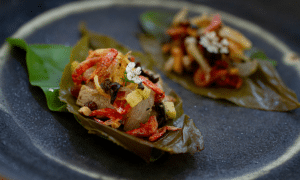
Miang Sot (เมี่ยงซด) - Miiang Soht, circa 1928
The word ‘miang’ is often used to designate Thai hors d’oeuvre-like snacks consisting of various ingredients wrapped in leaves. To chew on a miang parcel delivers a delightful melee of flavors and textures, each triumphing over the other in a continuous transformation, creating a captivating and ever-evolving taste experience throughout the bite.
Miang sot is a fermented leaves dish that appeared in a cookbook published in honor of Thao Suphatigaanapakdee (also known as Prik Sirisamphan) (ท้าวสุภัติการภักดี (ปริก ศิริสัมพันธ์)), in 1928. Titled Gap Khaao Thai (กับข้าวไทย), the book features a collection of recipes that were once prepared and served to King Chulalongkorn Rama V. The author, Sohmboon Sirisamphan (เถ้าแก่ สมบุญ ศิริสัมพันธ์) a respected elder (known as thao gaae (เถ้าแก่) in Thai), was a distinguished businessman of Chinese origins.
The dish is composed of fermented tea leaves; it is perhaps the closest tea leaves wrap to the ‘miang’ style introduced to the Siamese court by Princess Dara Rasami in the late 1800s. The dish gives us a glimpse of flavor of what her household, which participated in the informal marketplace events within the palace, might have to offer.
The popularity of miang in Siamese cuisine is tied to the history of two kingdoms, Siam and Lanna, and the life of one princess, Princess Dara Rasami. The daughter of King Inthawichayanon of Chiang Mai and the fifth consort of King Chulalongkorn, the princess was selected at the age of thirteen, in 1886, to serve as a consort to King Chulalongkorn in the Inner Palace; the decision was shaped by both political strategy and personal transition. At the time, Siam was consolidating its power and extending its influence over neighboring regions, including Lanna. As the ruler of Chiang Mai, Princess Dara Rasami’s father, Intawichayanon, viewed the move as a strategic alliance. In return, King Chulalongkorn presented him with the medal of the Order of Chula Chom Klao, which is the Siamese equivalent of a knighthood.
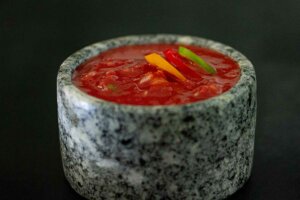
Pickled bean curd chili relish (น้ำพริกเต้าหู้ยี้; naam phrik dtao huu yee)
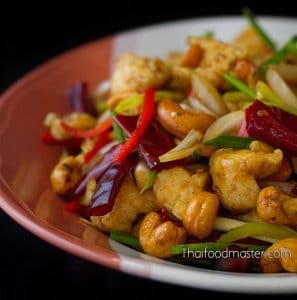
ไก่ผัดเม็ดมะม่วงหิมพานต์
The dish captures the eye with its vivid color – It is beautiful! It is bright! It is happy! - and it fits well within the comfort zone of most westerners. It is not surprising that this dish has made its way to the top of the charts, consistently ranked among the top ten tastiest Thai dishes served abroad.
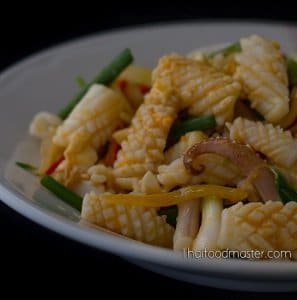
ปลาหมึกผัดไข่เค็ม
In this straightforward and rewarding stir-fried dish, I am using boiled salted duck egg, available from Asian markets, as my flavoring assistant. During stir-frying, the egg yolk dissolves to a velvety sauce that softly coats the squids, and complimenting their ocean’s flavor. The alternate reds and greens strips of the vegetables emerged from the buttery yellow sauce are tempting for a taste.
The original version uses three egg yolks – a bit too much for a health conscious person like me. Therefore, I am using only one whole egg, both the egg white and the egg yolk. I tune down the white’s sharp saltiness with an additional portion of sugar, and compensate for the color lost by adding a spoon of commercial chili sauce to improve. The resulting is a well-balanced dish with the right texture that stands up in this healthy version against its original with a winning smile….
1
2
3
4
5
6
7
8
9
10

Get Access – Join Thaifoodmaster Today
Practical and kitchen-tested recipes with a mix of theory, history, psychology, and Siamese culture tidbits.
-
Get access to everything right away. Unlock more than 50 Masterclasses, over 700 recipes and Articles
Access to Thaifoodmaster’s constantly growing library of prime professional classes, articles, recipes and videos on Siamese culinary topics, available nowhere else in English.
-
GET EXTRA - New Masterclasses and Daily Recipes
Gain access to NEW masterclasses as they become available. Access DAILY translations of heritage-recipes.
-
1-1 support from Hanuman
1-1 support from Hanuman to help you achieve your professional Thai culinary goals
-
Live Q&A Sessions
The opportunity to join a monthly live two-hour videoconference where I can answer your questions.
-
Great Value!
one year access for the price of 3 days in-person training.
You will get everything you need to:
-
To Get inspired
When you design or build a new menu for an event or restaurant or even prepare for dinner with friends.
-
To Satisfy your curiosity.
Finally !
-
To Master Your Craft
Master your Thai cooking skills and expand your repertoire.
It is truly brilliant with a revolutionary approach introducing aspects and concepts never broached by cookbooks.

Ian Westcott
Sourcing Wines for Discerning Private Clients
© 2008 – 2026 Thaifoodmaster


