
Celebrating the Art of Siamese Culinary Wisdom and Thai Cuisine
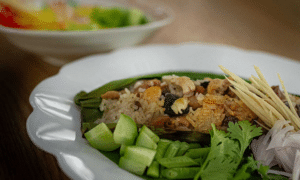
Grilled banana leaf parcels filled with butter-fried rice with chicken, chicken offal and dried spices, served with a sour-sweet coconut-base vegetable relish (ข้าวงบไก่ อาจาดอังวะ ; khaao ngohp gai aajaat angwa)
The khaao ngohp gai (ข้าวงบไก่) recipe by Mom Chao Sai Ladawan (Princess Saisawali Phirom) evokes the flavor and aesthetics of Muslim-style cooking. First, cooked rice, chicken, and chicken offal are fried with butter and perfumed with whole spices. The buttery fried rice is wrapped in banana leaves and then grilled, forming a crispy outer crust of spiced-infused rice grains.
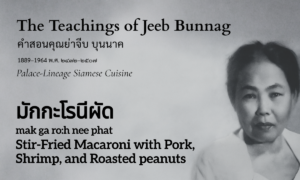
Stir-Fried Macaroni (มักกะโรนีผัด; mak ga ro:h nee phat)
Mak ga ro:h nee phat, macaroni stir-fried with garlic-lard paste, pork, shrimp, and roasted peanuts. From Jeeb Bunnag, 1933.
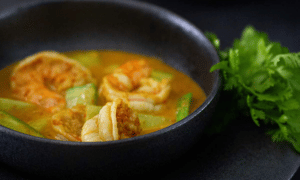
c1889 Garee Curry with Shrimp and Cucumber (แกงกะหรี่กุ้งกับแตงกวา; gaaeng garee goong gap dtaaeng gwaa)
In this old-fashioned coconut-based curry, orangey shrimp and bright green cucumber shine in a golden haze of curry powder, caressed by the light breeze of Indian flare. Cucumbers are used in traditional Ayurvedic medicine as a coolant, to offset internal heat and to resolve fevers. Thus, like a refreshing oasis in the middle of a shimmering desert, the cucumber counterbalances the chili’s internal heat energy and mellows the fragrant, earthy undertones of the spice blend in the dish.
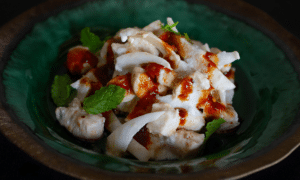
Faux Frog Salad – A Salad of Coconut Braised Chicken with Young Coconut and Chili Jam Dressing (ยำกบเทียม; yam gohp thiiam)
Faux frog salad is a rich, elegant dish featuring tender chicken braised in coconut cream and young coconut flesh with a chili-jam based dressing. Utilizing an old-fashioned salad assembly technique – the ‘mix and layer’ – this is a visually striking salad with alternating layers of reds and whites.
The name of this vintage dish – Faux Frog Salad – could be a reflection of the swinging social norms in Siam during the roaring twenties, a period of significant social change; as the country sought to navigate the challenges of modernization, Siamese society was shifting its dietary preferences away from the frog, once a common, versatile and popular ingredient. Thus, through the desire for distinction, chicken, an ingredient often compared to the taste of everything, was preferable to frog.
Magical Turtle Egg Dumplings (ขนมไข่เต่าวิเศษ; khanohm khai dtao wiset)
Khanohm khai dtao wiset, oval rice flour dumplings in salty coconut cream with shrimp tomalley, from Jeeb Bunnag's 1933 cookbook.
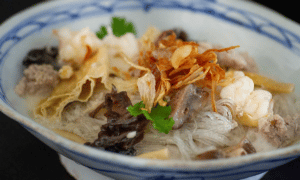
Gaaeng Raawn (แกงร้อน)
Gaaeng raawn (แกงร้อน) is a colloquial Thai term that refers to ‘hot curry’. Today, gaaeng raawn is used to denote soups or curries served with steamed rice. While the precise origin of the term is unclear, gaaeng raawn (แกงร้อน) was deployed in the 1800s for a specific dish – a Siamese soup featuring glass noodles, cooked as either a coconut or a water-based soup with an assortment of dry ingredients revered in Chinese cuisine. The soup’s potential health benefits, combined with its ease of preparation and subtle yet profound flavor, made it a popular choice for entertaining large groups of people, of all ages and backgrounds. The soup is often augmented with fresh proteins: in its more luxurious versions, multiple proteins may be added, including a combination of chicken, pork, shrimp, squid, and crab meat. Thus, over the years, gaaeng raawn (แกงร้อน) was established as a staple source of comfort and warmth for people of all walks of life in Siamese society.
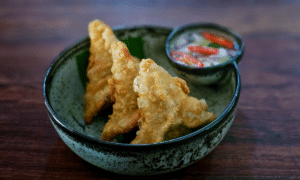
The Elegance of Khanohm Khaang Khaao (ขนมค้างคาว)
If palaces represent grandeur and wealth within a society, and poems often focus on emotional experience or the beauty of language, then the significance of a dumpling may be inferred by its structured elegance and minimalism – each fold and pleat a deliberate act, and each filling a curated experience constructing comfort in its most elemental form.
Khanom khaang khaao (ขนมค้างคาว) is a traditional Siamese fried, triangular-shaped dumpling with obvious Chinese origins. Its earliest recorded recipe can be traced back to Jao Khraawk Thaawng Yuu (เจ้าครอกทองอยู่), a distinguished aristocrat from the royal court of Ayutthaya. Historical records indicate that, from the early days of the Rattanakosin era, her recipe was a favored snack within the Siamese royal court.
These dumplings are shaped like triangles and, according to some, resemble bats: For this reason, they are called khanom khaang khaao (ขนมค้างคาว) – ‘the bat’s treat’. The dumpling’s dough is made from rice and mung bean flours; its filling is prepared by combining grated coconut and shrimp meat, which are cooked together into a dense, flavorful mixture that brings out the nutty-sweet taste of the grated coconut and the savory-sweet flavors of the shrimp. Kaffir lime leaves, sliced into hair-thin juliennes, add a hint of citrus.
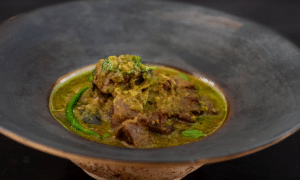
Perfumed Muslim-style Curry of Fresh Chilies with Beef (แกงเขียวหวานเนื้อทรงเครื่อง; Gaaeng Khiaao Waan Neuua Sohng Khreuuang)
The Indian and Muslim cuisines present distinct approaches to using dried spices in curries, both of which influence Siamese cuisine in different ways. Indian-inspired Siamese curries spotlight chilies for their vibrant color, fragrance, flavor and heat, while spices like cumin and coriander play a supporting role. The spices complement and temper the chilies’ intensity, creating a rounded, multi-layered flavor profile; nonetheless, the chilies remain the star ingredient, gently complemented by the spices.
Conversely, Muslim-influenced curries, such as massaman curry, prioritize spices over chilies. Spices like cardamom, nutmeg and mace take center stage, while the chilies provide subtle background heat rather than being the primary flavor. In these curries, the focus is on the rich, warm and complex aromas created by the blend of spices, which is a defining characteristic of many Muslim dishes.
Moreover, Siamese cuisine favors using rehydrated dried chilies in curries for their depth; this depth is highly appreciated, along with the complexity, and comparatively milder heat of the rehydrated dried chilies. As well, the harsh grassy notes of fresh chilies are not favored; they’re referred to in Thai as “green rank” or “men khiaao (เหม็นเขียว)”. Muslim curries often use fresh green chilies, tempering their vibrant, grassy taste with dry spices and thus shifting the flavor from bright and fresh to more subdued and earthy tones, resulting in a dish that is perceived to be layered, despite the burst of fresh chilies.
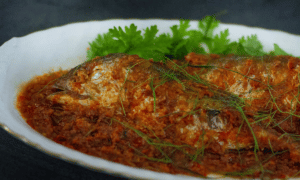
c1908 Chuu Chee with Mackerel (ฉู่ฉี่ปลาทู ; chuu chee bplaa thuu)
A salty-sweet, water-based chuu chee dish that features a thick, almost dry sauce. The deep burnt-red and shiny chuu chee sauce clings to the skin of the crispy mackerel, gold-colored from frying the fish in pork lard. The aromatic profile of the chuu chee complements the mackerel's rich, full-bodied flavor. Although chuu chee is usually made using freshwater fish, saltwater fish, especially mackerel, is featured in chuu chee dishes prepared along the coasts of the Central Plains. This is especially common during the rainy season, when the mackerel is plentiful and of excellent quality.
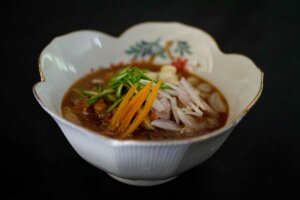
Kapi pla, an old-fashioned fermented shrimp paste relish (กะปิพล่า ; gabpi phlaa)
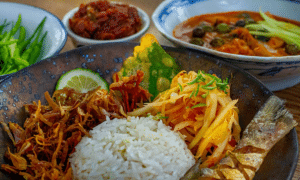
Khaao man sohm dtam and the first-ever recorded recipe for papaya salad (ข้าวมันส้มตำ)
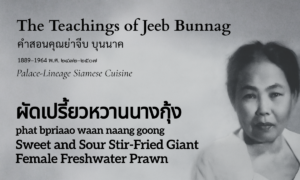
Sweet and Sour Stir-Fried Giant Female Freshwater Prawn (ผัดเปรี้ยวหวานนางกุ้ง; phat bpriaao waan naang goong)
Phat bpriaao waan naang goong, giant female freshwater prawns steamed then stir-fried with a cassava flour sweet-sour glaze. Jeeb Bunnag, 1933.
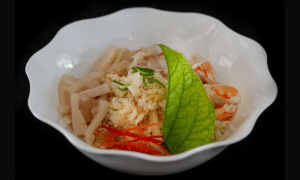
Phra Suli - Three-Flavor Seasoned Rice with Shrimp, Firm Pork Fat and Pork Skin (ข้าวพระศุลี; Khaao Phra Soolee)
Mrs. Paan Nanthaathiwat (คุณปาน นันทาถิวัฒน์) (1893-1955) was known for her kitchen skills. She often cooked for friends and family, spending time in the kitchen with her best friend, Mrs. Yim Pichaiyat Bunnag (คุณยิ้ม พิชัยญาติ บุนนาค (1892-1976). Thus, it was not a surprise when in 1953 she authored a recipe book as part of her merit offering on her 60th birthday. Sadly, Mrs. Paan passed away a year later and the publication, titled Hoong Khaao Dtohm Gaaeng (หุ้งข้าวต้มแกง), was later printed as a memorial book for her funeral. In 1977, the volume was reprinted for the funeral of her best friend, Mrs. Yim.
It is unclear why Mrs. Paan named this citrusy, sour, and salty seasoned rice dish after Lord Shiva, calling it “Phra Suli (พระศุลี ; phra soolee)”. Yet I believe the name of the dish is meant to evoke the elegance and delicacy of the deity rather than to reference cultural authenticity or tradition.

Fried Kaffir Lime Chili Relish (น้ำพริกมะกรูดผัด ; naam phrik magruut phat)
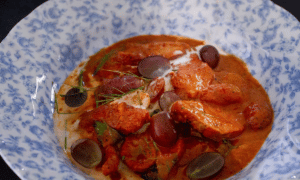
c1941 Roasted Duck Curry with Grapes (Gaaeng Ho) (แกงเป็ดเหาะใส่องุ่น อย่างคุณถนอม ปาลบุตร พ.ศ. 2484; gaaeng bpet haw sai angoon)
Grapes have long been associated with prosperity, fertility and abundance across various cultures and historical periods due to the fruit’s large clusters and bountiful growth. In ancient China, grapes were considered a symbol of wealth and nobility, and often deployed as a status symbol among the elite. In Greek mythology, Dionysus, the god of wine and fertility, was often depicted holding a bunch of grapes, further emphasizing the connection between grapes and abundance. This association is also likely rooted in the fact that grapes were a valuable crop in antiquity – used to produce wine and other fermented products, and an important source of food and nutrition. In Indian Ayurvedic texts, grapes are referred to as vineaksha and utilized in treating a variety of ailments, including fever and indigestion.
From the Siamese perspective, the incorporation of fruits in culinary preparations was viewed as a luxurious indulgence, as many fruits commonly available today were once difficult to obtain. Thus the pairing of an extravagant ingredient – such as fruit – with an equally opulent and exclusive delicacy like roasted duck resulted in a dish fit for royalty.
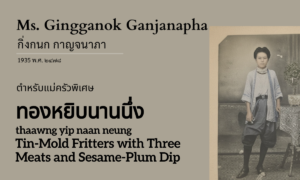
Thong Yip Naan Nueng (ทองหยิบนานนึ่ง; thaawng yip naan neung)
Thong Yip Naan Nueng, mold-fried wheat batter with crab, pork, and chicken, inverted mid-fry until golden. From Gingganok Gaanjanaaphaa, 1935.
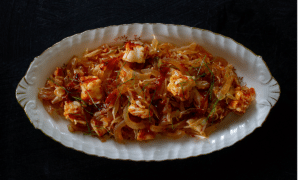
Angel Visiting the Chamber: A Salad of Pomelo, Pork Skin and Shrimp with Chili Jam Dressing, circa 1920s (ยำนางฟ้าเยี่ยมห้อง; yam naang faa yiiam haawng)
The name of this dish, yam naang faa yiiam haawng (ยำนางฟ้าเยี่ยมห้อง), translates to ‘Angel Visiting the Chamber Salad’ in English. This celestial salad, which originated in the 1920s, is a playful chili jam-based salad that combines the textural gradients of pomelo, with its citrusy bursts, chewy cooked pork skin, and the sweet and slightly resilient cooked shrimp meat. The pomelo’s citrusy notes are further amplified with thinly sliced lemongrass and kaffir lime leaves sliced into hair-thin juliennes. I like to adjust the sourness and sweetness of the chili jam-based dressing based on the acidity of the pomelo. As our aim is to achieve a final sour-salty and sweet flavor profile, a sour-salty dressing is suggested if the pomelo is sweet, while a salty-sweet dressing pairs better with a sour pomelo.
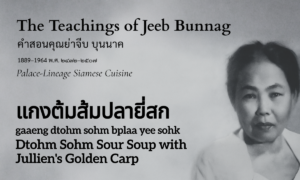
Sour Soup with Jullien's Golden Carp (แกงต้มส้มปลายี่สก; gaaeng dtohm sohm bplaa yee sohk)
Gaaeng dtohm sohm bplaa yee sohk, a tamarind-ginger broth with Jullien's golden carp and pureed Bronze featherback. Jeeb Bunnag, 1933.
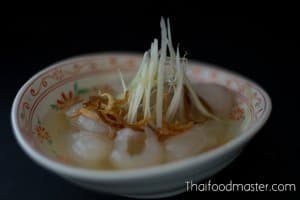
ส้มฉุน
บทความนี้เราจะมาคุยกันต่อถึงอาหารไทยโบราณที่ชื่อ "ส้มฉุน" อีกตำรับหนึ่งที่ต่างไปจากบทที่แล้ว คราวนี้เป็นเครื่องว่างหวาน ตระกูลลอยแก้ว ที่เหมาะกับการรับประทานในหน้าร้อนด้วยเช่นกัน อาหารตำรับนี้มีกล่าวถึงในบทพระราชนิพนธ์ กาพย์เห่ชมเครื่องคาวหวาน ในสมเด็จพระพุทธเลิศหล้านภาลัย รัชกาลที่ ๒ ซึ่งทรงพระราชนิพนธ์มาแต่สมัยรัชกาลที่ ๑ ความว่า...
"ลิ้นจี่มีครุ่นครุ่น เรียกส้มฉุนใช้นามกร
หวนถวิลลิ้นลมงอน ชะอ้อนถ้อยร้อยกระบวน"
ประเด็น ที่น่าสงสัยตั้งคำถาม ก็คือว่า ทำไมถึงเรียกลิ้นจี่ ว่า "ส้มฉุน" ทั้ง ๆ ที่ ศัพท์คำว่า"ส้มฉุน"นี้ เราใช้เรียกมะม่วงดิบฝานล้างน้ำเกลือ ปรุงแบบยำไว้รับประทานช่วงหน้าร้อนอยู่แล้ว

Grilled Catfish Parcels (งบปลาอุย; ngohp bplaa uy)
Ngohp bplaa uy, pla uy catfish sealed in banana leaf with aromatic herb paste and coconut cream, then charcoal-grilled. Jeeb Bunnag, 1933.
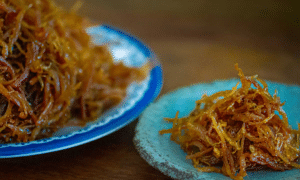
Crispy sweet pork or beef threads (หมูเค็มผัดฝอย ; muu khem phat faawy)
This is a modern version of a classic sweet meat threads condiment that often complements chili relishes or is served as a side dish in classic Siamese samrub meals.
1
2
3
4
5
6
7
8
9
10
11
12
13
14


Get Access – Join Thaifoodmaster Today
Practical and kitchen-tested recipes with a mix of theory, history, psychology, and Siamese culture tidbits.
-
Get access to everything right away. Unlock more than 50 Masterclasses, over 700 recipes and Articles
Access to Thaifoodmaster’s constantly growing library of prime professional classes, articles, recipes and videos on Siamese culinary topics, available nowhere else in English.
-
GET EXTRA - New Masterclasses and Daily Recipes
Gain access to NEW masterclasses as they become available. Access DAILY translations of heritage-recipes.
-
1-1 support from Hanuman
1-1 support from Hanuman to help you achieve your professional Thai culinary goals
-
Live Q&A Sessions
The opportunity to join a monthly live two-hour videoconference where I can answer your questions.
-
Great Value!
one year access for the price of 3 days in-person training.
You will get everything you need to:
-
To Get inspired
When you design or build a new menu for an event or restaurant or even prepare for dinner with friends.
-
To Satisfy your curiosity.
Finally !
-
To Master Your Craft
Master your Thai cooking skills and expand your repertoire.
It is truly brilliant with a revolutionary approach introducing aspects and concepts never broached by cookbooks.

Ian Westcott
Sourcing Wines for Discerning Private Clients
© 2008 – 2026 Thaifoodmaster


