
Celebrating the Art of Siamese Culinary Wisdom and Thai Cuisine
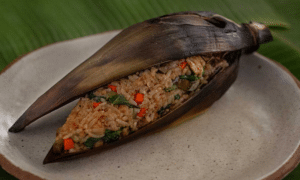
c1935 Char-grilled banana blossom stuffed and baked with tamarind relish fried rice (ข้าวปลี ตำรับสายเยาวภา พ.ศ. 2478 ; khaao bplee)
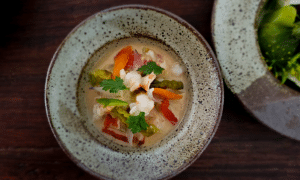
Grilled Eggplant Lohn Relish with Shrimp (หลนมะเขือเผากุ้งสด; Lohn Ma Kheuua Phao Goong Soht)
Lohn relish of grilled eggplant (หลนมะเขือเผากุ้งสด) captivates with its subtle contrasts and complex layering of flavors. Central to this dish is grilled eggplant, which is known for its inherent bitterness due to phenolic compounds like chlorogenic acid. However, this bitterness succumbs to a delightful transformation when the eggplant is simmered in coconut cream. The fats and sugars in the coconut cream effectively mask these bitter notes, resulting in a deep, satisfying savory relish that is both well-balanced and rounded.
Accompanying the eggplant are roasted shallots and garnet-blushed grilled tomatoes. The grilled tomatoes not only add natural sweetness and brightness to the dish, but also contribute to its visual charm via their muted orangey reds. This color palette complements the eggplant’s earthy, slightly sweet taste, represented through rich, velvety white-green hues. The interplay of colors in the dish mirror the complexity of its flavors.
The minced shrimp meat introduces a briny sweetness and a contrasting texture. The relish is seasoned to a sour-sweet leading salty to follow flavor profile, enhancing the smoky sweetness imparted by the grilled ingredients and creating a palette of flavor and color that is as attractive as it is delicious.
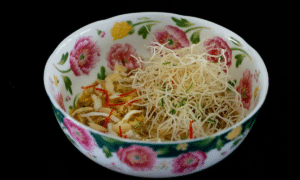
The Ambassador’s House Style Noodle Soup (หมี่น้ำบ้านราชทูต; Mee Naam Baan Raat Thuut)
This soup dish features crispy rice vermicelli noodles, a chicken broth that has a three-flavor profile infused with the aroma of bitter orange, and a plethora of other ingredients such as crispy fried tofu, chicken, pork, crab and pickled garlic.
In Thai, the phrase mee naam baan raat thuut refers to a rice vermicelli noodle soup in the style of the Ambassador’s house. The dish was not new when it appeared in the 1956 book Snacks, Tea Nibbles, Hors D’oeuvres and Drinking Food (ตำราอาหารว่าง - เครื่องน้ำชา และ เครื่องเคี้ยว หรือ กับแกล้ม) by Jeeb Bunnag (จีบ บุนนาค), as noodle dishes were often the preferred ingredient for light meals or snacks. In Grandparents Recipes: 100 Years Old Recipes (จานอร่อยจากปู่ย่า สูตรโบราณ 100 ปี), a volume printed in 2014 that highlights recipes from the kitchens of fifteen prominent families, a similar version of the dish is referred to as mee naam baan bpaak naai leert (หมี่น้ำบ้านปาร์คนายเลิศ) and is associated with Nai Lert.
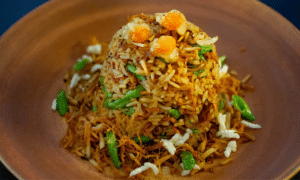
Crispy Rice - Khaao Graawp (ข้าวกรอบ อย่างหม่อมเจ้าสาย ลดาวัลย์)
Suan Sunandha Palace was the permanent residence of Mom Chao Sai Ladawan (HRH Princess Saisawali Phirom, พระวิมาดาเธอ หม่อมเจ้าสาย ลดาวัลย์), the Royal Consort to Rama V. In the kitchen of Suan Sunandha Palace, the Princess presided over a peak era of culinary innovation until her passing on June 24, 1929. Reflecting her practicality, the Princess’ recipes frequently incorporated the era’s common pantry ingredients in new and surprising combinations.
For example, in her boat-embarking chili relish (น้ำพริกลงเรือ; naam phrik lohng reuua), a relish still enjoyed today, the Princess pairs fermented shrimp paste chili relish with sweet pork, crispy fried fish, salted duck eggs and hairy-fruited eggplant (maeuk) (มะอึก). Another example is her gaaeng ran juaan (แกงรัญจวน) – the Princess prepares a vibrant spicy and sour soup, fragrant with the aroma of Thai basil, from the leftovers of a stir-fried beef dish and fermented shrimp paste chili relish, which she cooked together with lemongrass, shallots and garlic.
Mom Chao Sai Ladawan’s recipes, many already recreated here at Thaifoodmaster, were recorded by Princess Sadap Ladawan (เจ้าจอมหม่อมราชวงศ์สดับลดาวัลย์), a key figure in the Palace’s culinary affairs, and subsequently compiled and published by Suan Sunandha Rajabhat University in a volume dedicated to seasoned rice dishes and chili relishes.
In this dish called khaao graawp (ข้าวกรอบ), or “crispy rice” the Princess seasons cooked jasmine rice with chili jam, and adds four fried components, each highlighting a different element of the crispiness indicated by the dish’s name.
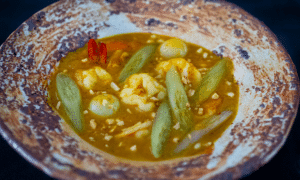
c1920 Sarama Shrimp Curry with White Eggplants and Lotus Stems (แกงสะระหม่ากุ้งกับมะเขือขาว และ สายบัว พ.ศ. 2463; gaaeng saramaa goong gap makheuua khaao reuu saai buaa)
A dish of complex flavors and an aromatic brightness, this Sarama curry features shrimp and the smaller Thai white eggplant, or crunchy lotus stems, in a golden, salty leading broth with clear tangy-sweet notes. The broth is silky and combines the nutty richness of coconut cream with the subtle sweetness of butter, cooked with a blend of dry spices that include coriander, cumin and turmeric. This spice blend evokes the penetrating aroma of curry powder, reflecting Muslim culinary influences.
Unlike spicy gaaeng phet (แกงเผ็ด) curries, which typically deploy dried chilies in the paste, Sarama curry contains fresh chilies. A mix of both red and yellow chili varieties are utilized, fusing the vibrant, fruity piquancy of the fresh chilies with the warm, earthy aromas of the spices. The red chilies contribute a ripe tropical fruitiness while the yellow offer citrusy and floral notes, creating a light yet layered curry with nuanced heat and depth of flavor.
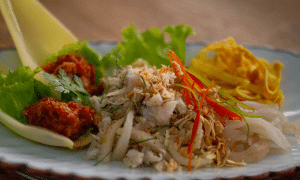
Gaawy goong suay (ก้อยกุ้งเสวย กับ น้ำพริกก้อย) - Old-fashioned chili relish enriched with shrimp tomalley and flaky acid-cooked shrimp meat
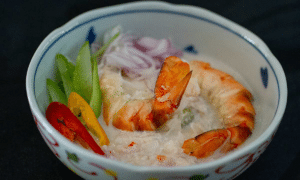
Giant river prawn lohn (กุ้งหลวงหลน ; goong luaang lohn)
This lohn recipe is made using fresh river prawns. The recipe was altered by Lady Plean Passakornrawong (ท่านผู้หญิงเปลี่ยน ภาสกรวงศ์) to provide an alternative to lohn recipes that used pla ra-like fermented shrimp products called กุ้งเจ่า (goong jao) and กุ้งจ่อม (goong jaawm).
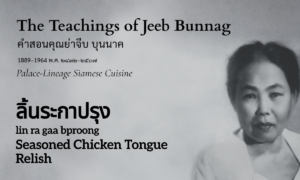
Seasoned Chicken Tongue Relish (ลิ้นระกาปรุง; lin ra gaa bproong)
Lin ra gaa bproong, pounded chicken tongue relish with ruaan shrimp and ginger, from Jeeb Bunnag's 1933 Cookbook of Rice Companion Recipes.
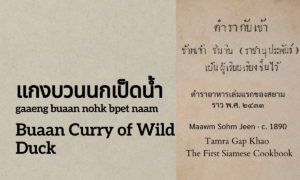
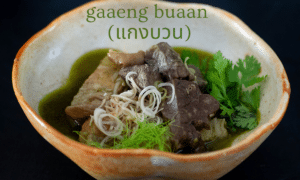
Buaan Curry of Wild Duck (แกงบวนนกเป็ดน้ำ; gaaeng buaan nohk bpet naam)
Gaaeng buaan nohk bpet naam, wild duck fried in lard then boiled in lemongrass leaf juice with no coconut. From Tamra Gap Khao, 1890.
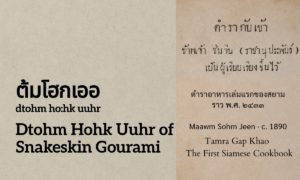
Dtohm Hohk Uuhr of Snakeskin Gourami (ต้มโฮกเออ; dtohm ho:hk uuhr)
Dtohm hohk uuhr, snakeskin gourami soup soured with young tamarind leaves and twenty to thirty bruised bird chilies. From Maawm Sohm Jeen, 1890.
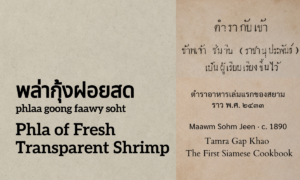
Phla of Fresh Transparent Shrimp (พล่ากุ้งฝอยสด; phlaa goong faawy soht)
Phlaa goong faawy soht, raw transparent shrimp dressed whole and unpeeled with mint, from Maawm Sohm Jeen's Tamra Gap Khao, c. 1890.
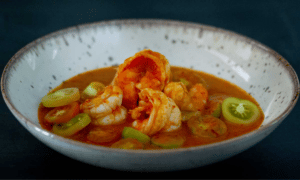
c1937 Shrimp and tomato curry (แกงกุ้งกับมะเขือเทศ คู่มือการครัว นางสาวฉลวย กันตวรรณี พ.ศ. 2480; gaaeng goong gap makheuua thaeht)
Stocked with a contemporary brew of umami-rich ingredients, this ancient, bright and slightly sour coconut-based shrimp and tomato curry demonstrates how simple – yet clever – flavor-layering techniques can spotlight the shrimp and the spectacular savory tomatoes over the curry background.
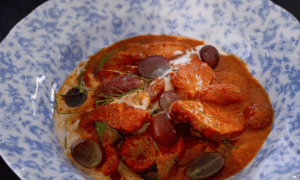
c1941 Roasted Duck Curry with Grapes (Gaaeng Ho) (แกงเป็ดเหาะใส่องุ่น อย่างคุณถนอม ปาลบุตร พ.ศ. 2484; gaaeng bpet haw sai angoon)
Grapes have long been associated with prosperity, fertility and abundance across various cultures and historical periods due to the fruit’s large clusters and bountiful growth. In ancient China, grapes were considered a symbol of wealth and nobility, and often deployed as a status symbol among the elite. In Greek mythology, Dionysus, the god of wine and fertility, was often depicted holding a bunch of grapes, further emphasizing the connection between grapes and abundance. This association is also likely rooted in the fact that grapes were a valuable crop in antiquity – used to produce wine and other fermented products, and an important source of food and nutrition. In Indian Ayurvedic texts, grapes are referred to as vineaksha and utilized in treating a variety of ailments, including fever and indigestion.
From the Siamese perspective, the incorporation of fruits in culinary preparations was viewed as a luxurious indulgence, as many fruits commonly available today were once difficult to obtain. Thus the pairing of an extravagant ingredient – such as fruit – with an equally opulent and exclusive delicacy like roasted duck resulted in a dish fit for royalty.
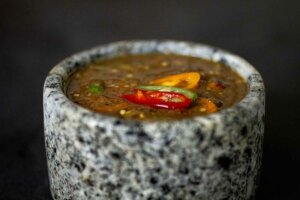
Fermented soybean paste chili relish (น้ำพริกเต้าเจี้ยว; naam phrik dtao jiaao)
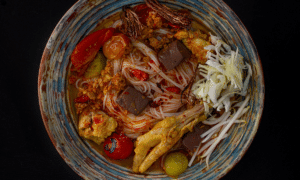
Khanohm Jeen Naam Ngiaao - Shan-Style Tomato Broth over Fermented Rice Noodles with Pork, Chicken Feet and Chicken Blood Cakes (ขนมจีนน้ำเงี้ยว)
A popular noodle dish originating from the Northern region of the Kingdom, khanohm jeen naam ngiaao (ขนมจีนน้ำเงี้ยว) is characterized by its light – yet profound – multi-layered broth. This hearty broth includes an assortment of proteins braised with the dried pollens of cotton tree flowers, and Northern Thai sour cherry tomatoes (มะเขือส้ม); the tomatoes infuse the broth with a subtle tartness that refreshes a full-bodied profile comprising a multitude of fermented ingredients.
The naam ngiaao broth is served over fermented rice noodles and features minced pork, and braised baby back pork ribs with their tender meat clinging to the bone. As well, there are succulent, slow-cooked whole chicken feet, and cubes of slightly bouncy, mauve-hued chicken blood cakes. Served alongside the soup are various toppings, which can include shredded cabbage, bean sprouts, chopped coriander leaves, and spring onions, while dark red chili oil and glossy, charred-fried dried bird’s eye chilies offer a fiery intensity dialed up to your preferred spiciness. In addition, I like to add wok-smoked sour cherry tomatoes and broom-like, crispy-fried dried cotton tree pollen for a surprising textural contrast.
Though the dish is often described as “Shan style”, the word ‘ngiao’ was a derogatory expression for the Shan people. As the disparaging – and outdated – label suggests, the recipe might reflect societal biases and prejudices; thus, at least from the culinary perspective, the ‘ngiao’ in the name of the dish may simply be a nod to the flavors or ingredients favored by The Shan, rather than a claim of authenticity – which could also explain why the dish is based on a Siamese curry paste.
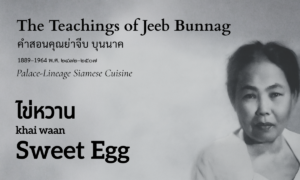
Sweet Egg (ไข่หวาน; khai waan)
Sweet Egg (khai waan): candied salted duck egg yolk encased in floral agar jelly, molded inside an eggshell. Jeeb Bunnag, 1933.
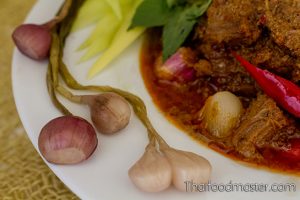
พะแนงเนื้อ อย่าง ม.ล.เติบ ชุมสาย และ ไก่ผะแนง จากตำราอาหารที่เก่าสุดในสยาม
Thaifoodmaster เราภูมิใจ ที่จะนำเสนอหนึ่งในตำรับอาหารของหม่อมซ่มจีน (พ.ศ.๒๔๓๓) เปิดตัวครั้งแรก ที่นี่ และจะได้นำเสนอตำรับอื่น ๆ ที่น่าสนใจ หรือที่ท่านไม่เคยเห็นมาก่อน ในกาลต่อไป การปรุงอาหาร โดยเฉพาะอาหารไทย เป็นศิลปะอย่างหนึ่ง ซึ่งหม่อมท่านน่าจะเป็นอีกผู้หนึ่งที่เข้าใจในความเป็นศิลปะของการปรุงอาหารไทย แม้จะเป็นอาหารอย่างที่คนในสมัยนั้นรับประทานกันทั่วไป หาใช่ตำรับที่ดูเป็นของชนชั้นสูงหรือบรรดาเจ้านายในสมัยนั้น เพราะท่านก็เป็นศิลปินด้วยเช่นกัน ศิลปะกับอาหาร ได้ผ่านการเชื่อมโยงโดยศิลปินผู้ซึ่งคนรุ่นหลังไม่รู้จัก เราจึงอยากแสดงกตเวทิตาคุณและขอบพระคุณในคุณูปการที่ท่านเจ้าของตำรับได้เริ่มบันทึกลายลักษณ์อักษรครั้งแรก ผ่านมาลัยอักษร ณ บันทึกหน้านี้
ในตำราของหม่อมซ่มจีน มีอาหารตำรับหนึ่ง เรียกว่า “ไก่ผะแนง” เป็นตำรับแบบนำไก่ทั้งตัว ผ่าอก แล้วนำไปปิ้งไฟ ทาด้วยพริกขิงผสมน้ำกะทิ ย่างจนเกือบแห้งแล้วทา ๆ จนพริกขิงจับหนาเส้นตอกหนึ่ง ท้ายสุดชะโลมน้ำกะทิที่พริกขิง ก็ถือเป็นเสร็จ รับประทานได้
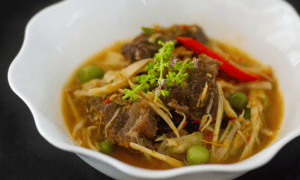
Saen Tung-Style Jungle Curry with Beef and Bamboo Shoots (แกงป่าเนื้อใส่หน่อไม้ แบบแสนตุ้ง; gaaeng bpaa neuua sai naaw mai baaep saaen dtoong)
This is my take on the famous jungle curry from the Saen Tung district in Trat province. In Trat it is usually cooked with game meat and thinly sliced pineapple shoots (แขนงสับปะรด).
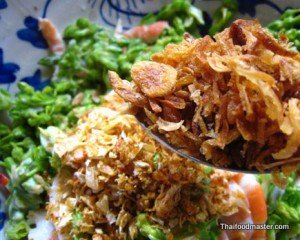
ยำดอกขจร
The first Thai restaurant in London was opened during the 1960's by HRH Princess Jurairat Nasiriman (1910-2000) (พระเจ้าวรวงศ์เธอ พระองค์เจ้าจุไรรัตนศิริมาน), the granddaughter of HRH King Mongkut (Rama IV). Princess Jurairat chose to offer this salad on the menu and named it "Salad of Thai Milkweed Flower". (Other names: Cowslip creeper, Telosma Cordata).
This fresh and tasty salad is so vibrant and easy for us to enjoy, it takes in the very basic flavors, sweet, salty, hot and sour and wrap them in a creamy coat of reduced coconut cream. The milkweed flower buds retain their crunchiness and their pleasant fragrance with only a gentle and very quick blanching in sweet boiling water.
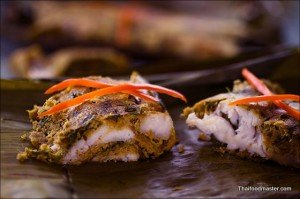
งบปลาช่อน
I love this straightforward grilled Thai fish curry in banana leaves because it packs a punch with its aromatic curry mixture that embrace the white and tender fish meat with great flavors. It is a great addition for any Thai meal and very easy to prepare.
Snakehead fish, traditionally caught from irrigation ditches or flooded rice fields, benefits from the aromatic curry paste because it helps to eliminate unpleasant odors which wild caught fishes might acquire from their muddy habitat. Nowadays though, it is commercially farmed and one can safely cook it in various ways with no risk of those undesirable odors.
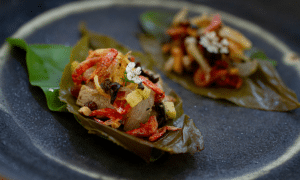
Miang Sot (เมี่ยงซด) - Miiang Soht, circa 1928
The word ‘miang’ is often used to designate Thai hors d’oeuvre-like snacks consisting of various ingredients wrapped in leaves. To chew on a miang parcel delivers a delightful melee of flavors and textures, each triumphing over the other in a continuous transformation, creating a captivating and ever-evolving taste experience throughout the bite.
Miang sot is a fermented leaves dish that appeared in a cookbook published in honor of Thao Suphatigaanapakdee (also known as Prik Sirisamphan) (ท้าวสุภัติการภักดี (ปริก ศิริสัมพันธ์)), in 1928. Titled Gap Khaao Thai (กับข้าวไทย), the book features a collection of recipes that were once prepared and served to King Chulalongkorn Rama V. The author, Sohmboon Sirisamphan (เถ้าแก่ สมบุญ ศิริสัมพันธ์) a respected elder (known as thao gaae (เถ้าแก่) in Thai), was a distinguished businessman of Chinese origins.
The dish is composed of fermented tea leaves; it is perhaps the closest tea leaves wrap to the ‘miang’ style introduced to the Siamese court by Princess Dara Rasami in the late 1800s. The dish gives us a glimpse of flavor of what her household, which participated in the informal marketplace events within the palace, might have to offer.
The popularity of miang in Siamese cuisine is tied to the history of two kingdoms, Siam and Lanna, and the life of one princess, Princess Dara Rasami. The daughter of King Inthawichayanon of Chiang Mai and the fifth consort of King Chulalongkorn, the princess was selected at the age of thirteen, in 1886, to serve as a consort to King Chulalongkorn in the Inner Palace; the decision was shaped by both political strategy and personal transition. At the time, Siam was consolidating its power and extending its influence over neighboring regions, including Lanna. As the ruler of Chiang Mai, Princess Dara Rasami’s father, Intawichayanon, viewed the move as a strategic alliance. In return, King Chulalongkorn presented him with the medal of the Order of Chula Chom Klao, which is the Siamese equivalent of a knighthood.
1
2
3
4
5
6
7
8
9
10

Get Access – Join Thaifoodmaster Today
Practical and kitchen-tested recipes with a mix of theory, history, psychology, and Siamese culture tidbits.
-
Get access to everything right away. Unlock more than 50 Masterclasses, over 700 recipes and Articles
Access to Thaifoodmaster’s constantly growing library of prime professional classes, articles, recipes and videos on Siamese culinary topics, available nowhere else in English.
-
GET EXTRA - New Masterclasses and Daily Recipes
Gain access to NEW masterclasses as they become available. Access DAILY translations of heritage-recipes.
-
1-1 support from Hanuman
1-1 support from Hanuman to help you achieve your professional Thai culinary goals
-
Live Q&A Sessions
The opportunity to join a monthly live two-hour videoconference where I can answer your questions.
-
Great Value!
one year access for the price of 3 days in-person training.
You will get everything you need to:
-
To Get inspired
When you design or build a new menu for an event or restaurant or even prepare for dinner with friends.
-
To Satisfy your curiosity.
Finally !
-
To Master Your Craft
Master your Thai cooking skills and expand your repertoire.
It is truly brilliant with a revolutionary approach introducing aspects and concepts never broached by cookbooks.

Ian Westcott
Sourcing Wines for Discerning Private Clients
© 2008 – 2026 Thaifoodmaster


