
Celebrating the Art of Siamese Culinary Wisdom and Thai Cuisine
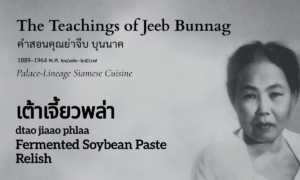
Fermented Soybean Paste Dipping Relish (เต้าเจี้ยวพล่า; dtao jiaao phlaa)
Dtao jiaao phlaa, fermented soybean paste relish bruised with lemongrass, kaffir lime, and tamarind. From Jeeb Bunnag, 1933.
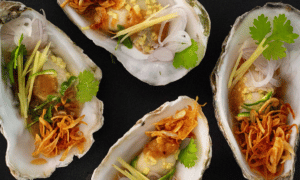
c1949 Quick-cured oysters with ginger and kaffir lime zest by Maawm Ying Soophaa (หอยนางรมดอง โดย หม่อมหญิงสุภา พ.ศ. 2492; haawy naang rohm daawng)
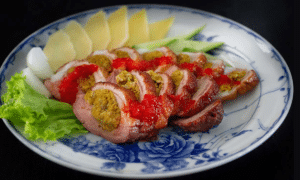
Roasted Stuffed Duck Breast with Chestnuts and Mackerel (เป็ดยัดไส้เกาลัดรมควัน; bpet yat sai gaolat rohm khwan), circa 1935
Smoked duck stuffed with a mackerel and chestnut filling is a dish that defies cultural boundaries. An exemplar of blended culinary influences, featuring inviting colors and an elegant presentation that serve as a prelude to the complex flavors and textures that await, the dish is an eloquent testament to the cooking style of Mrs. Samaknantapol (Jeep Bunnag, who went by the pen name “the granddaughter of Maae Khruaa Huaa Bpaa”). In the 1930s. Mrs. Jeep Bunnag published her first cookbook. Following in the footsteps of her revered grandmother-in-law, Lady Plean Passakornrawong, she continued to document the art of Siamese cuisine through the treasured books she published and was known for her ability to merge culinary traditions into beautiful and innovative dishes that represent an era.
The rich, dark color of the smoked duck’s skin is visually striking and appetizing, evoking a sense of indulgence and luxury. The smoky flavors that permeate the meat reflect our deep connection to primal cooking techniques, a fascinating juxtaposition to the refined presentation of the dish. When the smoked duck is sliced, its succulent pink meat is revealed, surrounding the golden filling of chestnuts and mackerel.
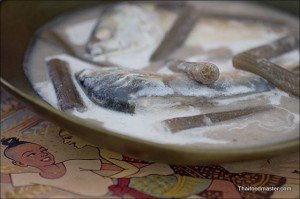
แกงกะทิสายบัวปลาทูนึ่ง
This old-fashioned Thai coconut curry dish is a simple expression made with ingredients commonly available to Thais, it features steamed mackerels - the fish that Thai people probably love the best and the stems of the lotus flowers - one of Buddhism's most recognized motifs.
The fish together with peeled lotus stems are boiled in coconut milk, to which a simple yet very aromatic curry paste, made only of white pepper corns, shallots and fermented shrimp paste is added.
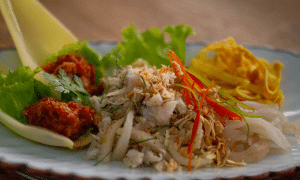
Gaawy goong suay (ก้อยกุ้งเสวย กับ น้ำพริกก้อย) - Old-fashioned chili relish enriched with shrimp tomalley and flaky acid-cooked shrimp meat
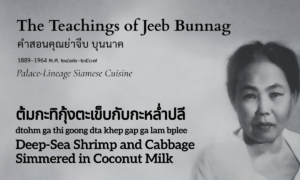
Deep-Sea Shrimp and Cabbage Simmered in Coconut Milk (ต้มกะทิกุ้งตะเข็บกับกะหล่ำปลี; dtohm ga thi goong dta khep gap ga lam bplee)
Dtohm ga thi goong dta khep, shredded cabbage simmered in thin coconut milk with tail-tucked soft-shell shrimp and sour fruit. From Jeeb Bunnag, 1933.
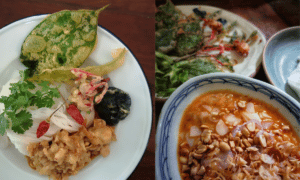
c1949 Fermented rice noodles with multi-sour aromatic chicken sauce by Lady Gleep Mahithaawn (ขนมจีนน้ำพริกไก่ อย่างท่านผู้หญิงกลีบ มหิธร พ.ศ. 2492; khanohm jeen naam phrik gai)
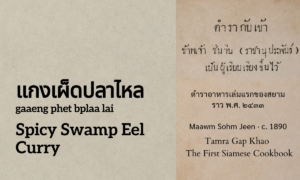
Spicy Swamp Eel Curry (แกงเผ็ดปลาไหล; gaaeng phet bplaa lai)
Gaaeng phet bplaa lai: swamp eel sliced and tossed with its own blood, simmered in a pork-lard-fried red curry paste. Maawm Sohm Jeen, 1890.
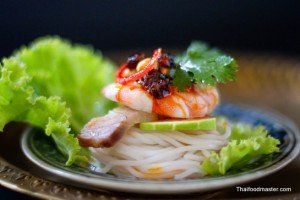
ขนมจีนญี่ปุ่น
สูตรทำขนมจีนญี่ปุ่น - มีตำรับอาหารสมัยก่อนอย่างหนึ่ง เป็นสูตรของ ท่านผู้หญิงกลีบ มหิธร ดูเหมือนจะเป็นอาหารว่างคาว ให้ชื่อว่า “ขนมจีนญี่ปุ่น” ลองมาดูเครื่องปรุง และวิธีทำกัน ผู้อ่านจะบอกได้หรือไม่ว่า ตำรับนี้มีต้นกำเนิดจากดินแดนอาทิตย์อุทัย หรือไม่ประการใด ตำรับของท่านผู้หญิงกลีบ มีดังนี้
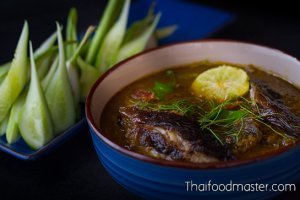
แกงไตปลาปลาดุกย่างโบราณ
แกงไตปลาปลาดุกย่างโบราณ - แกงไตปลา เป็นแกงพื้นเมืองของปักษ์ใต้ ที่มีความหลากหลายพอสมควร คือมีทั้งแกงประเภทใส่กะทิและไม่ใส่กะทิ แต่ที่เหมือนกันทุกท้องถิ่นคือ เครื่องพริกแกงต้องเผ็ด ใส่ทั้งพริกสดและพริกแห้ง และเป็นแกงรสจัด ม.ล.เนื่อง นิลรัตน์ ได้เล่าเอาไว้ว่า "เจ้านครส่งคนครัวมาสอน เดิมจะมีรสชาติเผ็ดมาก เปรี้ยวหูฉี่ พอมาถึงในวัง ก็ต้องแผลงให้เข้ากับภาคกลาง โดยนำมาดัดแปลงใส่ปลากรอบ ปลาย่าง ผักไม่ใส่รวมลงไป เวลาจะรับประทานก็รับกับผักสดที่จัดไว้ มีสะตอ ลูกเนียง...
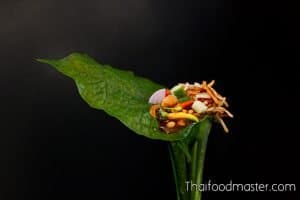
เมี่ยงคำ
ค้นข้อมูลดูว่าตำรับ "เมี่ยงคำ" เริ่มปรากฏมีบันทึกไว้เป็นลายลักษณ์อักษรแต่เมื่อใดกันแน่ สอบทานดูตำราอาหารเก่า ๆ หลายตำรับ ที่ตีพิมพ์ในสมัยรัชกาลที่ ๕ ก็ไม่พบ "เมี่ยงคำ" ในวิถีอาหารไทยโบราณแต่อย่างใด พบแต่ เมี่ยงลาว หรือ เมี่ยงพายัพ ซึ่งหมายถึงเมี่ยงที่มาจากทางเหนือ จากการอ่านหนังสือหลาย ๆ เล่ม เพื่อหาข้อมูลพบว่า "เมี่ยง" ได้เริ่มเป็นที่นิยมแพร่หลายในรั้วในวัง ก็หลังจากที่พระราชชายาเจ้าดารารัศมี ลงมารับราชการในราชสำนักที่กรุงเทพฯ และได้นำวัฒนธรรมการกินเมี่ยง ซึ่งเป็นหนึ่งในวิถีการดำรงชีวิตแบบล้านนาติดมาในหมู่ข้าราชบริพารชาวเหนือในตำหนักของพระองค์ ซึ่งบรรดาชาววังในสมัยนั้นจะเห็นเป็นสิ่งแปลกตาโก้เก๋ และคอยเอาอย่างในบางเรื่อง ทำให้หลังจากนั้นจึงค่อยเริ่มมีตำรับเมี่ยงต่าง ๆ ออกมามากมาย ปรากฏในตำราอาหารหรือเครื่องว่างต่าง ๆ ของไทยในสมัยต่อ ๆ มา สำหรับ "เมี่ยงคำ" นั้น พบว่ามีปรากฏครั้งแรก ในบทกาพย์เห่ชมเครื่องว่าง ของรัชกาลที่ ๖ ที่ใช้เป็นบทนำในตอนต้นบทความนี้ ซึ่งนั่นก็แสดงว่า "เมี่ยงคำ" กลายเป็นเครื่องว่างในวังหลวงเป็นที่นิยมกันมากแล้วในสมัยนั้นถึงสามารถขึ้นโต๊ะเครื่องเสวยได้ จึงเป็นข้อสันนิษฐานว่าน่าจะมีกำเนิดมาไม่เก่าไปกว่าสมัยรัชกาลที่ ๕ เป็นแน่แท้ ตำรับ "เมี่ยงคำ" คงจะเกิดจากการคิดประดิษฐ์ทำนำสิ่งละอันพันละน้อย ใส่ไปในคำเมี่ยง พร้อมใส่น้ำเมี่ยง เพื่อรับประทาน ทีละคำ ๆ จึงได้ชื่อว่า "เมี่ยงคำ" เหมือน ๆ หรือทำนองเดียวกันกับ "เมี่ยงอยาก" ที่ คุณป้า ม.ล. เนื่อง นิลรัตน์ เขียนบันทึกไว้ในหนังสือ "ชีวิตในวัง" ที่ตีพิมพ์มาแล้วหลายครั้ง ว่าเกิดจากความอยากกินเมี่ยง ของกลุ่มข้าหลวงวังสวนสุนันทา เวลามานั่งจับกลุ่มคุยกันยามว่างภารกิจ และไปค้นหาของในครัว ได้ กากหมู น้ำตาลปึก กะปิ ฯลฯ ก็นำมารับประทานกันเป็น"เมี่ยง" ที่อร่อยอย่างง่าย ๆ
Gaaeng Mong (Chonburi-Style Curry) (แกงโมง (แกงชาวชลบุรี); gaaeng mo:hng (gaaeng chaao chohn boo ree))
Gaaeng Mong, a Chonburi regional curry with fermented shrimp paste, grilled catfish, and young watermelon. From Mrs. Paan Nanthaaphiwat, 1953.
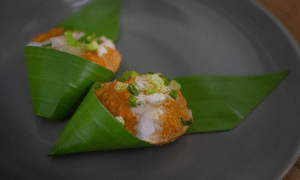
c1908 Haaw Mohk steamed savory curried cakes featuring crab meat, chicken, and pork (ห่อหมกทรงเครื่อง อย่างท่านผู้หญิงเปลี่ยน ภาสกรวงศ์ แม่ครัวหัวป่าก์ พ.ศ. 2451 ; haaw mohk sohng khreuuang)
This festive and rich recipe is for a coconut-based haaw mohk featuring chicken, crab and pork meats. This recipe was chosen from the various versions available at the time by Lady Plean Passakornrawong, for inclusion in her epic cookbook Maae Khruaa Huaa Bpaa (MKHP) (ท่านผู้หญิงเปลี่ยน ภาสกรวงศ์ตำราแม่ครัวหัวป่าก์).
Grilled Seasoned Rice Crust (ข้าวตังปิ้งปรุง; khaao dtang bping bproong)
Khaao dtang bping bproong, rice crust grilled with garlic-lard and fish sauce, brushed on with a banana leaf. Jeeb Bunnag, 1933.
Sweet Egg (ไข่หวาน; khai waan)
Sweet Egg (khai waan): candied salted duck egg yolk encased in floral agar jelly, molded inside an eggshell. Jeeb Bunnag, 1933.
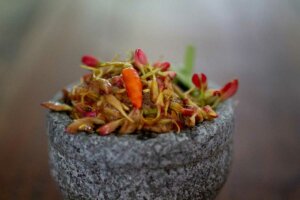
Tamarind flower chili relish inspired by Princess Jongjittanom Dissakul (น้ำพริกดอกมะขาม อย่าง หม่อมเจ้าหญิงจงจิตรถนอม ดิศกุล ; naam phrik daawk makhaam)
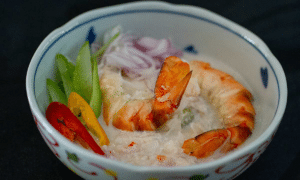
Giant river prawn lohn (กุ้งหลวงหลน ; goong luaang lohn)
This lohn recipe is made using fresh river prawns. The recipe was altered by Lady Plean Passakornrawong (ท่านผู้หญิงเปลี่ยน ภาสกรวงศ์) to provide an alternative to lohn recipes that used pla ra-like fermented shrimp products called กุ้งเจ่า (goong jao) and กุ้งจ่อม (goong jaawm).
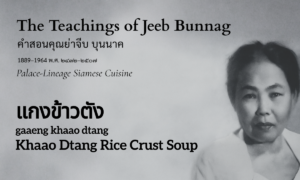
Khaao Dtang Rice Crust Soup (แกงข้าวตัง; gaaeng khaao dtang)
Gaaeng khaao dtang, deep-fried rice crust paired with clear broth and egg-stuffed chicken intestines. From Jeeb Bunnag, 1933.
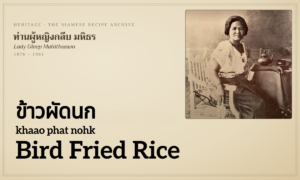
Bird Fried Rice (ข้าวผัดนก; khaao phat nohk)
Khaao phat nohk, field fowl or any small bird stir-fried with pork ham and mustard powder. From Lady Gleep Mahithaawn, 1949.
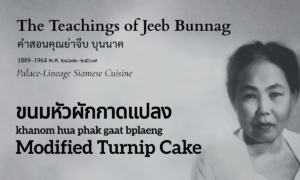
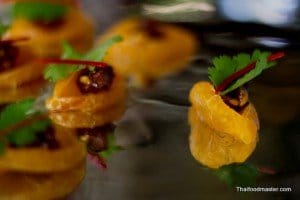
Modified Turnip Cake (ขนมหัวผักกาดแปลง; khanom hua phak gaat bplaeng)
Khanom hua phak gaat bplaeng: steamed turnip cake, deep-fried golden, then stir-fried with shrimp and egg. Jeeb Bunnag, 1933.
มังกรคาบแก้ว กับ ม้าฮ่อ
เครื่องว่างชนิดนี้ ชื่อ "ม้าฮ่อ" บางคนเขียน "ม้าห้อ" เป็นอาหารว่างสัญชาติมอญ สมาชิกในเรือนเรารู้จักกันดีพอสมควร ถ้าใครไม่รู้จักก็จะได้รู้จักกันล่ะ เห็นจั่วหัวชื่อเป็นสองอย่าง จัดจานแยกกัน ก็เพื่อแบ่งให้เห็นชัด ความจริงก็คืออาหารว่างอย่างเดียวกัน เดิมชาวไทยเชื้อสายมอญจะนิยมทำในงานบุญหรืองานพิธีต่าง ๆ โดยใช้ผลไม้ที่มีรสเปรี้ยวมาโรยด้วย 'พริกกะเกลือ' (อย่าพาลไปนึกถึงพริกกะเกลือสมัยนี้เสียล่ะ คนละแบบกัน) เพื่อให้รับประทานผลไม้เปรี้ยวได้อย่างอร่อยขึ้น ไม่ต้องทิ้งให้เสียของ พริกกะเกลือที่ว่าคือการผัดหมูกุ้ง ใส่น้ำตาลและถั่วลิสงคั่ว ตำรับไทยแท้ไม่มีดอก จะมีก็แต่ 'เมี่ยง'ผลไม้ ที่ดูคล้ายกัน กระนั้นคนไทยก็รับเอามาเหมือนอาหารอีกหลายชนิดหลายสัญชาติ จนได้ชื่อว่าเป็นเครื่องว่างไทยมาแต่โบร่ำโบราณ
1
2
3
4
5
6
7
8
9
10

Get Access – Join Thaifoodmaster Today
Practical and kitchen-tested recipes with a mix of theory, history, psychology, and Siamese culture tidbits.
-
Get access to everything right away. Unlock more than 50 Masterclasses, over 700 recipes and Articles
Access to Thaifoodmaster’s constantly growing library of prime professional classes, articles, recipes and videos on Siamese culinary topics, available nowhere else in English.
-
GET EXTRA - New Masterclasses and Daily Recipes
Gain access to NEW masterclasses as they become available. Access DAILY translations of heritage-recipes.
-
1-1 support from Hanuman
1-1 support from Hanuman to help you achieve your professional Thai culinary goals
-
Live Q&A Sessions
The opportunity to join a monthly live two-hour videoconference where I can answer your questions.
-
Great Value!
one year access for the price of 3 days in-person training.
You will get everything you need to:
-
To Get inspired
When you design or build a new menu for an event or restaurant or even prepare for dinner with friends.
-
To Satisfy your curiosity.
Finally !
-
To Master Your Craft
Master your Thai cooking skills and expand your repertoire.
It is truly brilliant with a revolutionary approach introducing aspects and concepts never broached by cookbooks.

Ian Westcott
Sourcing Wines for Discerning Private Clients
© 2008 – 2026 Thaifoodmaster


