
Celebrating the Art of Siamese Culinary Wisdom and Thai Cuisine
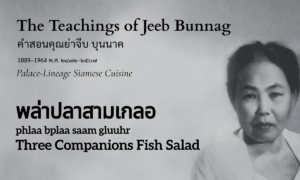
Three Companions Fish Salad (พล่าปลาสามเกลอ; phlaa bplaa saam gluuhr)
Phlaa bplaa saam gluuhr: three grilled fish — smoke-dried, dried, and snakeskin gourami — with a tableside herb dressing. Jeeb Bunnag, 1933.

(c1932) Sour water-based curry of pork, salted fish and vegetables blanched in pork lard (gaaeng sohm raang roong ; แกงส้มร่างรุ้ง แกงส้มหมูกับปลาเค็มใส่ผักตี่น้ำมัน )
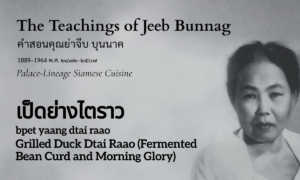
Grilled Duck Dtai Raao - Grilled Duck Stir-Fried with Fermented Bean Curd and Morning Glory (เป็ดย่างไตราว; bpet yaang dtai raao)
Bpet yaang dtai raao: smoky grilled duck stir-fried with fermented bean curd and morning glory, tenderized in papaya leaves. Jeeb Bunnag, 1933.
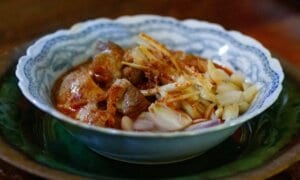
The Three Kings Curry (แกงเผ็ดสามกษัตริย์ ; gaaeng phet saam gasat)
Red Pickled Anchovies with Seasonings (ปลาแดงทรงเครื่อง; bplaa daaeng sohng khreuuang)
Fermented anchovy relish with dual citrus, grilled shrimp, and salt-worked ginger served with raw vegetables and fried catfish. Jeeb Bunnag, 1933.
Roasted Shrimp Paste Relish (เครื่องจิ้ม - กะปิคั่ว; khreuuang jim ga bpi khuaa)
Khreuuang jim ga bpi khuaa, fermented shrimp paste roasted with smoke-dried featherback fish in split coconut cream. Jeeb Bunnag, 1933.
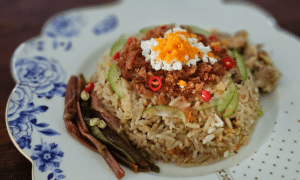
Rice Seasoned with Young Tamarind Relish, Sweetened Fish and Pickled Morning Glory (ข้าวคลุกน้ำพริกมะขามอ่อน ผักบุ้งดอง ปลาแห้งผัดหวาน และ ปลาดุกย่าง; Khaao Khlook Naam Phrik Makhaam Aawn Phakboong Daawng Bplaa Haaeng Phat Waan Lae Bplaa Dook Yaang)
Seasoned rice dishes have been a staple of rice-consuming societies almost since the first grains were cultivated. Adapted according to local resources, traditions and individual preferences, seasoned rice dishes are relished and savored across all walks of life. Within Siamese society, these dishes offer insight into the flavor instincts and eating habits across all demographics, revealing which food items were locally available and valued.
In this delicious seasoned rice recipe from the kitchens of the daughter of King Chulalongkorn, Princess Yaovabha Bongsanid (พระเจ้าบรมวงศ์เธอ พระองค์เจ้าเยาวภาพงศ์สนิท) (1884-1934), the Princess uses a variety of common preserved and inexpensive ingredients, clearly drawing inspiration from the cuisine of the Central Plains with nods to the rural and coastal living atmosphere.
Sour Curry of Climbing Perch with Snap Beans (แกงส้มปลาหมอกับถั่วแขก; gaaeng sohm bplaa maaw gap thuaa khaaek)
Gaaeng sohm bplaa maaw — tamarind-broth sour curry with poached climbing perch, fish flesh pounded into the paste. Jeeb Bunnag, 1933.
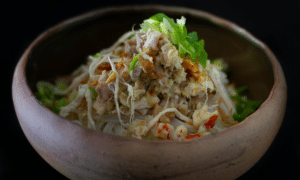
Naam Yaa Jeen - Fermented Rice Noodles with Chinese Sauce by HRH Prince Krom Luang Pitak Montri (น้ำยาจีน อย่างกรมหลวงพิทักษมนตรี)
Among the various curries that can be poured over khanom jeen fermented rice noodles, this broth, known as Chinese-style “naam yaa,” is unique in that it is a water-based curry that does not have chilies. As such, rather than the typical reddish-rust color of most coconut-based naam ya dishes from the Central Plains of the Kingdom, the sauce glows with a soft, light ivory hue, beautifully reflecting the dish’s natural sweet-savoriness, which is derived from slow-braising three proteins – chicken, pork and shrimp – along with a curry paste galvanized by smoke-dried fish and aromatic roots like galangal, fingerroot and sand ginger. The naam ya broth is served over a bed of fermented rice noodles and garnished with toppings such as delicate pulled chicken breast threads, golden-crispy fried shallots and garlic, and vivid green fresh coriander leaves and spring onion. All these elements add a visual grace and a hint of freshness to the robust broth – the signature dish of Prince Krom Luang Pitak Montri (กรมหลวงพิทักษ์มนตรี).
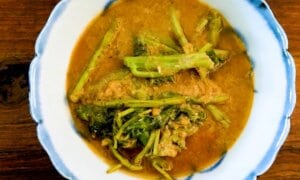
Sour curry with morning glory (gaaeng sohm phak boong ; แกงส้มผักบุ้ง)
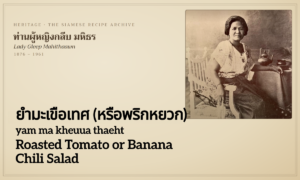
Roasted Tomato Salad, or Banana Chili Salad (ยำมะเขือเทศ (หรือพริกหยวก); yam ma kheuua thaeht)
Yam ma kheuua thaeht: flame-roasted tomatoes, peeled and seeded, dressed with ground dried shrimp and madan. Lady Gleep Mahithaawn, 1949.
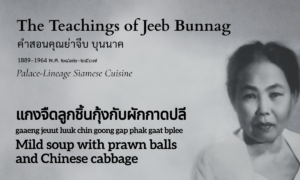
Mild soup with prawn balls and Chinese cabbage (แกงจืดลูกชิ้นกุ้งกับผักกาดปลี; gaaeng jeuut luuk chin goong gap phak gaat bplee)
Gaaeng jeuut with steamed prawn-and-cabbage rolls in a clear shiitake broth with fried garlic, from Jeeb Bunnag's 1933 cookbook.
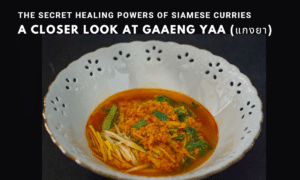
The Secret Healing Powers of Siamese Curries – A Closer Look at Gaaeng Yaa (แกงยา)
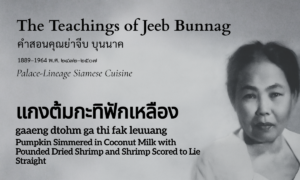
Pumpkin Simmered in Coconut Milk with Pounded Dried Shrimp and Shrimp Scored to Lie Straight (แกงต้มกะทิฟักเหลือง; gaaeng dtohm ga thi fak leuuang)
Pumpkin and shrimp in coconut milk, seasoned with pounded dried shrimp and white pepper, the shrimp scored to stay straight. From Jeeb Bunnag, 1933.
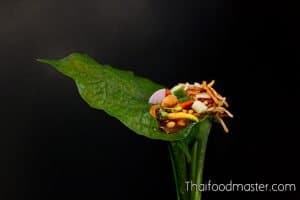
เมี่ยงคำ
ค้นข้อมูลดูว่าตำรับ "เมี่ยงคำ" เริ่มปรากฏมีบันทึกไว้เป็นลายลักษณ์อักษรแต่เมื่อใดกันแน่ สอบทานดูตำราอาหารเก่า ๆ หลายตำรับ ที่ตีพิมพ์ในสมัยรัชกาลที่ ๕ ก็ไม่พบ "เมี่ยงคำ" ในวิถีอาหารไทยโบราณแต่อย่างใด พบแต่ เมี่ยงลาว หรือ เมี่ยงพายัพ ซึ่งหมายถึงเมี่ยงที่มาจากทางเหนือ จากการอ่านหนังสือหลาย ๆ เล่ม เพื่อหาข้อมูลพบว่า "เมี่ยง" ได้เริ่มเป็นที่นิยมแพร่หลายในรั้วในวัง ก็หลังจากที่พระราชชายาเจ้าดารารัศมี ลงมารับราชการในราชสำนักที่กรุงเทพฯ และได้นำวัฒนธรรมการกินเมี่ยง ซึ่งเป็นหนึ่งในวิถีการดำรงชีวิตแบบล้านนาติดมาในหมู่ข้าราชบริพารชาวเหนือในตำหนักของพระองค์ ซึ่งบรรดาชาววังในสมัยนั้นจะเห็นเป็นสิ่งแปลกตาโก้เก๋ และคอยเอาอย่างในบางเรื่อง ทำให้หลังจากนั้นจึงค่อยเริ่มมีตำรับเมี่ยงต่าง ๆ ออกมามากมาย ปรากฏในตำราอาหารหรือเครื่องว่างต่าง ๆ ของไทยในสมัยต่อ ๆ มา สำหรับ "เมี่ยงคำ" นั้น พบว่ามีปรากฏครั้งแรก ในบทกาพย์เห่ชมเครื่องว่าง ของรัชกาลที่ ๖ ที่ใช้เป็นบทนำในตอนต้นบทความนี้ ซึ่งนั่นก็แสดงว่า "เมี่ยงคำ" กลายเป็นเครื่องว่างในวังหลวงเป็นที่นิยมกันมากแล้วในสมัยนั้นถึงสามารถขึ้นโต๊ะเครื่องเสวยได้ จึงเป็นข้อสันนิษฐานว่าน่าจะมีกำเนิดมาไม่เก่าไปกว่าสมัยรัชกาลที่ ๕ เป็นแน่แท้ ตำรับ "เมี่ยงคำ" คงจะเกิดจากการคิดประดิษฐ์ทำนำสิ่งละอันพันละน้อย ใส่ไปในคำเมี่ยง พร้อมใส่น้ำเมี่ยง เพื่อรับประทาน ทีละคำ ๆ จึงได้ชื่อว่า "เมี่ยงคำ" เหมือน ๆ หรือทำนองเดียวกันกับ "เมี่ยงอยาก" ที่ คุณป้า ม.ล. เนื่อง นิลรัตน์ เขียนบันทึกไว้ในหนังสือ "ชีวิตในวัง" ที่ตีพิมพ์มาแล้วหลายครั้ง ว่าเกิดจากความอยากกินเมี่ยง ของกลุ่มข้าหลวงวังสวนสุนันทา เวลามานั่งจับกลุ่มคุยกันยามว่างภารกิจ และไปค้นหาของในครัว ได้ กากหมู น้ำตาลปึก กะปิ ฯลฯ ก็นำมารับประทานกันเป็น"เมี่ยง" ที่อร่อยอย่างง่าย ๆ
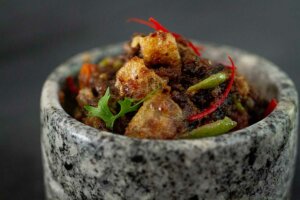
Salted Chinese black olive chili relish (น้ำพริกหนำเลี้ยบ; naam phrik nam liiap)
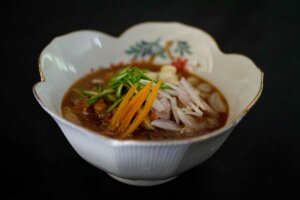
Kapi pla, an old-fashioned fermented shrimp paste relish (กะปิพล่า ; gabpi phlaa)
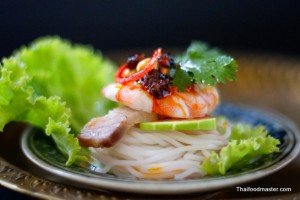
ขนมจีนญี่ปุ่น
สูตรทำขนมจีนญี่ปุ่น - มีตำรับอาหารสมัยก่อนอย่างหนึ่ง เป็นสูตรของ ท่านผู้หญิงกลีบ มหิธร ดูเหมือนจะเป็นอาหารว่างคาว ให้ชื่อว่า “ขนมจีนญี่ปุ่น” ลองมาดูเครื่องปรุง และวิธีทำกัน ผู้อ่านจะบอกได้หรือไม่ว่า ตำรับนี้มีต้นกำเนิดจากดินแดนอาทิตย์อุทัย หรือไม่ประการใด ตำรับของท่านผู้หญิงกลีบ มีดังนี้

Snakehead Fish Curry with Pickled Madan (แกงปลาช่อนมะดันดอง; gaaeng bplaa chaawn ma dan daawng)
Snakehead Fish Curry with Pickled Madan incorporates the fish tail into its curry paste and balances pickled sour cucumber with kaffir lime. From Maawm Ying Soophaa, 1949.
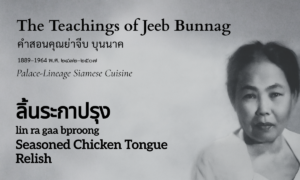
Seasoned Chicken Tongue Relish (ลิ้นระกาปรุง; lin ra gaa bproong)
Lin ra gaa bproong, pounded chicken tongue relish with ruaan shrimp and ginger, from Jeeb Bunnag's 1933 Cookbook of Rice Companion Recipes.
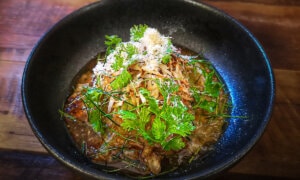
c1889 Faux Rhino Skin Salad (ยำโขนงเนื้อเทียม หรือ ยำหนังหมู ; yam kho:h nohng neuua thiiam reuu yam nang muu)
This old-fashioned Siamese pork skin salad is adapted from an 1889 rhino skin salad recipe. It features thin glossy slices of cooked pork skin, simmered in rich coconut cream, and mixed with dried shrimp, roasted coconut, sour fruits; it is seasoned with chili jam-based dressing.
1
2
3
4
5
6
7
8
9
10
11
12
13
14

Get Access – Join Thaifoodmaster Today
Practical and kitchen-tested recipes with a mix of theory, history, psychology, and Siamese culture tidbits.
-
Get access to everything right away. Unlock more than 50 Masterclasses, over 700 recipes and Articles
Access to Thaifoodmaster’s constantly growing library of prime professional classes, articles, recipes and videos on Siamese culinary topics, available nowhere else in English.
-
GET EXTRA - New Masterclasses and Daily Recipes
Gain access to NEW masterclasses as they become available. Access DAILY translations of heritage-recipes.
-
1-1 support from Hanuman
1-1 support from Hanuman to help you achieve your professional Thai culinary goals
-
Live Q&A Sessions
The opportunity to join a monthly live two-hour videoconference where I can answer your questions.
-
Great Value!
one year access for the price of 3 days in-person training.
You will get everything you need to:
-
To Get inspired
When you design or build a new menu for an event or restaurant or even prepare for dinner with friends.
-
To Satisfy your curiosity.
Finally !
-
To Master Your Craft
Master your Thai cooking skills and expand your repertoire.
It is truly brilliant with a revolutionary approach introducing aspects and concepts never broached by cookbooks.

Ian Westcott
Sourcing Wines for Discerning Private Clients
© 2008 – 2026 Thaifoodmaster


