Online Siamese Culinary Masterclasses for Professional Chefs and Thai food enthusiasts

In my masterclasses, for the first time in the English language, I reveal the culinary secrets hidden in old and hard-to-find Siamese cookbooks and recipes dating from the late 19th century to modern days. 

Get unlimited access to Thaifoodmaster’s constantly growing library of prime professional masterclasses, articles, recipes and videos on Siamese culinary topics, available nowhere else in English.

Online membership: 
Masterclasses, Articles, Recipes, Daily Heritage Translations.
Professional Guides: Siamese Chili Relishes (น้ำพริก และ เครื่องจิ้ม), Thai Curries (แกงไทย), Thai Salads (เรื่องยำๆ) and The art of Siamese old-school menu design (สํารับอาหารไทย).

In-person workshops: 
Chiang Mai, 2026. Limited spaces.

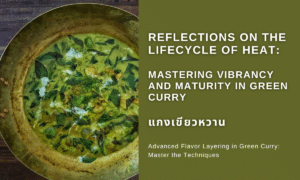
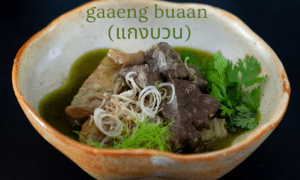
Masterclasses

Practical and kitchen-tested recipes with a mix of theory, history, psychology, and Siamese culture tidbits.
1
2
3
4
5
6

Articles and Recipes

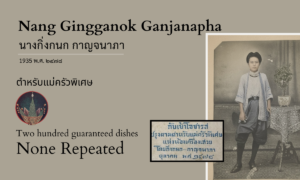
Nang Gingganok Gaanjanaaphaa (กิ่งกนก กาญจนาภา) - None Repeated
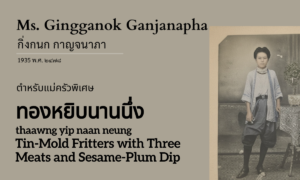
Gingganok Gaanjanaaphaa (กิ่งกนก กาญจนาภา) opened her 1935 cookbook with a complaint: the market was flooded with small recipe pamphlets, each copying the others, changing only the name on the cover. A buyer who purchased two or three books received the contents of one. Her solution was consolidation—recipes from the special cooks of the royal kitchen (แม่ครัวพิเศษแห่งห้องเครื่องเสวย), assembled into a single volume. Over two hundred preparations, none repeated. She wrote from a seaside house in Hua Hin (หัวหิน), completing the manuscript in July 1935 (พ.ศ. ๒๔๗๘). Three women contributed to the compilation: Khun Praphai, Khun Jira, and Khun Noi—thanked for recipes "beyond her own ability to find." The book appeared that October, priced at three baht. No biographical record of Gingganok beyond this text has been located. The royal kitchen staff whose recipes fill the collection are not named. What survives is the cooking itself: technique, proportion, and method as these women understood royal kitchen practice in the mid-1930s.
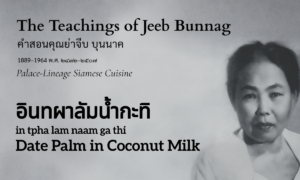
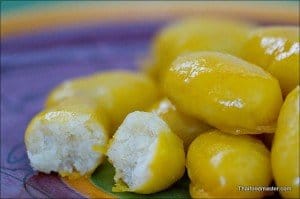
Date Palm in Coconut Milk (อินทผาลัมน้ำกะทิ; in tpha lam naam ga thi)
In tpha lam naam ga thi, date palm hand-torn and served in freshly pressed coconut milk, lightly salted. From Jeeb Bunnag, 1933.
angel
Angel Visiting the Chamber: A Salad of Pomelo, Pork Skin and Shrimp with Chili Jam Dressing, circa 1920s (ยำนางฟ้าเยี่ยมห้อง; yam naang faa yiiam haawng)
The name of this dish, yam naang faa yiiam haawng (ยำนางฟ้าเยี่ยมห้อง), translates to ‘Angel Visiting the Chamber Salad’ in English. This celestial salad, which originated in the 1920s, is a playful chili jam-based salad that combines the textural gradients of pomelo, with its citrusy bursts, chewy cooked pork skin, and the sweet and slightly resilient cooked shrimp meat. The pomelo’s citrusy notes are further amplified with thinly sliced lemongrass and kaffir lime leaves sliced into hair-thin juliennes. I like to adjust the sourness and sweetness of the chili jam-based dressing based on the acidity of the pomelo. As our aim is to achieve a final sour-salty and sweet flavor profile, a sour-salty dressing is suggested if the pomelo is sweet, while a salty-sweet dressing pairs better with a sour pomelo.
Pork Liver Stir-Fried With Flowering Chives ; ดอกกุยช่ายผัดตับหมู ; daawk guy chaai phat dtap muu
ดอกกุยช่ายผัดตับหมู
A quick and tasty dish from the hot mouth of the dragon with only three ingredients! Flowering Chives, Pork Liver and Garlic. Flowering Chives are all year round favorites for their mild garlicky flavor, and can be purchased inexpensively at almost any Asian market. In Thailand we like to fry them with pork, pork liver or shrimp. These flowering chives are actually the unopened bud stems of garlic chives, also known as Chinese chives.
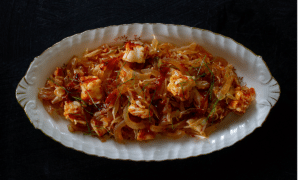
Thong Yip Naan Nueng (ทองหยิบนานนึ่ง; thaawng yip naan neung)
Thong Yip Naan Nueng, mold-fried wheat batter with crab, pork, and chicken, inverted mid-fry until golden. From Gingganok Gaanjanaaphaa, 1935.
Heritage 20: Issue Sunday, May 31, 2026
This week's folios: - แกงจืดปลากะพงแป๊ะฮะ — Mild Soup of Barramundi and Lily Bulbs (Jeeb Bunnag, 1933) - ข้าวต้มกุ้ง — Shrimp Rice Soup (Jeeb Bunnag, 1933) - ไก่สำเร็จ — Stuffed Whole Chicken (Jeeb Bunnag, 1933) - ยำกระท้อน — Santol Salad (Jeeb Bunnag, 1933) - นกนอนรัง — Side dish - Birds Resting in the Nest (Jeeb Bunnag, 1933) - ลิ้นระกาปรุง — Seasoned Chicken Tongue Relish (Jeeb Bunnag, 1933) - ขนมโก๋ถั่ว — Mung Bean khanohm Go (Jeeb Bunnag, 1933)
grilled beef mangosteen salad
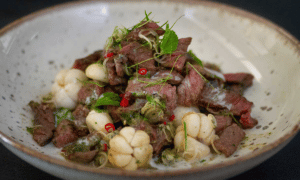
Grilled beef and mangosteen (or grape) salad with mint dressing, by Princess Jongjittanom Dissakul (ยำเนื้อย่างกับมังคุดหรือองุ่น; yam neuua yaang gap mangkhoot reuu angoon)
This grilled beef salad with luscious mangosteen (or grapes) is seasoned with a crisp, cooling dressing of fermented shrimp paste and mint. The mangosteen’s tropical character – a flavor redolent of many other fruits – dominates its fruity essence and is a perfect complement to both the grilled meat and the lingering, sour-salty-sweet, minty dressing. Furthermore, citrusy notes of thinly sliced lemongrass and kaffir lime leaves, coupled with richness of thickened coconut cream, unite the caramelized, meaty elements with the dish’s fruity spectrum.
ขนมเม็ดขนุน

It is believed that this dish was introduced to the Siamese royal cuisine in the middle of the seventeenth century by Portuguese traders. Later, along with other egg yolk-based golden sweets like the golden drops (thong yot ทองหยอด), golden flowers (thong yip ทองหยิบ) and golden threads (foi thong ฝอยทอง), these royal desserts were passed to commoners outside the court.

For the marzipan filling I am using, beside the mung beans, both the flesh and the water of fragrant young coconuts. It gives a rich, sweet and almost nutty flavor which works perfectly with the silky texture of the mung beans and the creamy golden egg yolks coating.

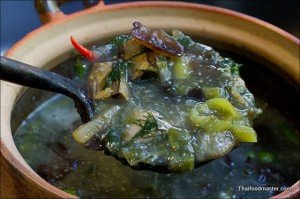
แกงไตปลาปลาดุกย่างโบราณ
แกงไตปลาปลาดุกย่างโบราณ - แกงไตปลา เป็นแกงพื้นเมืองของปักษ์ใต้ ที่มีความหลากหลายพอสมควร คือมีทั้งแกงประเภทใส่กะทิและไม่ใส่กะทิ แต่ที่เหมือนกันทุกท้องถิ่นคือ เครื่องพริกแกงต้องเผ็ด ใส่ทั้งพริกสดและพริกแห้ง และเป็นแกงรสจัด ม.ล.เนื่อง นิลรัตน์ ได้เล่าเอาไว้ว่า "เจ้านครส่งคนครัวมาสอน เดิมจะมีรสชาติเผ็ดมาก เปรี้ยวหูฉี่ พอมาถึงในวัง ก็ต้องแผลงให้เข้ากับภาคกลาง โดยนำมาดัดแปลงใส่ปลากรอบ ปลาย่าง ผักไม่ใส่รวมลงไป เวลาจะรับประทานก็รับกับผักสดที่จัดไว้ มีสะตอ ลูกเนียง...
Heritage: Issue 8, Wednesday, March 4, 2026
This week's folios: - แกงเผ็ด คาวีสวรรค์ — Celestial Beef Curry (กิ่งกนก กาญจนาภา, 1935) - แกงลูกชิ้นกุ้ง — Shrimp Ball Clear Soup (Jeeb Bunnag, 1933) - เครื่องในไก่กรอบ — Side-Dish: Crispy Chicken Offal (Jeeb Bunnag , 1933) - ผัดเปรี้ยวหวานนางกุ้ง — Sweet and Sour Stir-Fried Giant Female Freshwater Prawn (Jeeb Bunnag, 1933) - ยำ โกไลพิเศษ — Yam "Goliath Special" (Gingganok Gaanjanaaphaa, 1935) - ยำ ไวโอเล็ต — "Violet" Yam Salad with Cucumber, Pork and Dried Shrimp (Gingganok Gaanjanaaphaa, 1935) - เยื่อเคยทรงเครื่อง — Side dish: Dressed Fermented Shrimp Paste (Jeeb Bunnag, 1933)
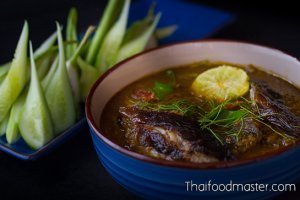
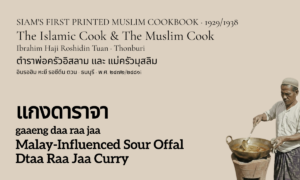
Malay-Influenced Sour Offal Dtaa Raa Jaa Curry (แกงดาราจา; gaaeng daa raa jaa)
Gaaeng daa raa jaa, a Malay-influenced curry featuring beef or goat offal in a sour tamarind-vinegar base with soybeans. From Ibrahim's 1938 Thai Muslim cookbook.
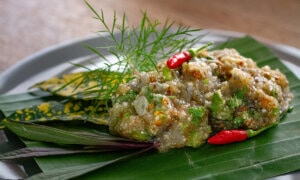
Gooey raw shrimp laap (ลาบเหนียวกุ้ง ; laap niaao goong)
This shrimp laap is often served raw but it can be further cooked by roasting or cooking with some liquids, as well as grilling the fish mixture in a banana leaf wrap.
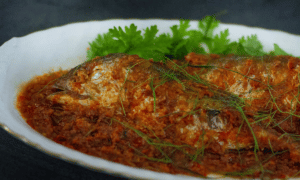
c1908 Chuu Chee with Mackerel (ฉู่ฉี่ปลาทู ; chuu chee bplaa thuu)
A salty-sweet, water-based chuu chee dish that features a thick, almost dry sauce. The deep burnt-red and shiny chuu chee sauce clings to the skin of the crispy mackerel, gold-colored from frying the fish in pork lard. The aromatic profile of the chuu chee complements the mackerel's rich, full-bodied flavor. Although chuu chee is usually made using freshwater fish, saltwater fish, especially mackerel, is featured in chuu chee dishes prepared along the coasts of the Central Plains. This is especially common during the rainy season, when the mackerel is plentiful and of excellent quality.
เอาะหลามไก่ใส่สะค้าน
This Laotian dish is popular in the mountainous region of Luang Prabang, the magical city in the northern part of Central Laos.
lohn
Salted duck eggs and shrimp creamy lohn (หลนไข่เค็ม ; lohn khai khem)
Lohn of salted duck eggs is a smooth, rich and creamy relish with a vibrant three-flavor profile of sour-salty-sweet. Unlike other lohn relishes, it does not contain any overbearing fermented ingredients, making it easy to enjoy, and it does not require an acquired taste.
1
2
3
4
5
6
7
8
9
10
11
12
13
14
15
16
17
18
19
20
21
22
23
24
25
26
27
28
29
30
31
32
33
34
35
36
37

Siamese Culinary Legends of the Rattanakosin period

Siamese cuisine is the accumulated wisdom of cooks at every level of the society – from housewives cooking at home and caring for their families, to cooks in the temple, to the culinary masters who created elaborate dishes behind the palace walls.

In this series of short articles highlighting their lives and work, we salute and pay homage to the most prominent individuals who influenced and shaped the Siamese culinary arts bpaa ga sin (ปากะศิลป์) of the Rattanakosin Era.

These background descriptions will put into perspective the dishes we present and cook here on Thaifoodmaster and will also help you to cook Thai dishes that taste like they have a solid bond to the culture, the land and its people.

Read more

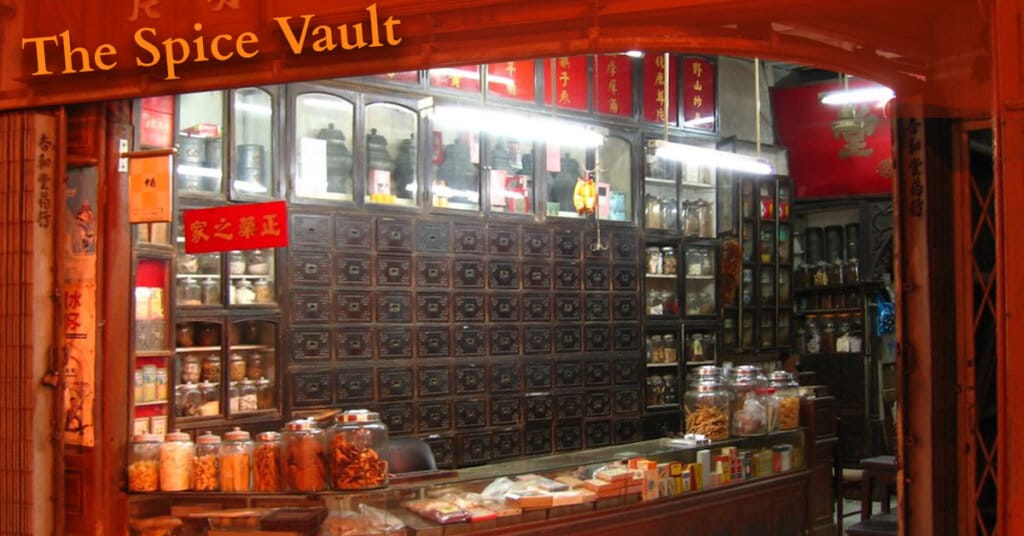
The Spice Vault

Here you will find recipes for popular spice mixes that you can make yourself! Homemade spice blends not only taste better and cost less, but you’ll also be able to create unique spice blends based on your personal preferences. As a bonus, you’ll use spices with no preservatives or artificial colors!

For example, members can explore recipes for Chinese five-spice mix, masalas for khao soi and hang lay curries, homemade Thai curry powder, and a variety of the spice blends used in Northern and Muslim Thai cuisines.

Read more

Get Access – Join Thaifoodmaster Today

Practical and kitchen-tested recipes with a mix of theory, history, psychology, and Siamese culture tidbits.

  • Get access to everything right away. Unlock more than 50 Masterclasses, over 700 recipes and Articles

    Access to Thaifoodmaster’s constantly growing library of prime professional classes, articles, recipes and videos on Siamese culinary topics, available nowhere else in English.

  • GET EXTRA - New Masterclasses and Daily Recipes

    Gain access to NEW masterclasses as they become available. Access DAILY translations of heritage-recipes.

  • 1-1 support from Hanuman

    1-1 support from Hanuman to help you achieve your professional Thai culinary goals

  • Live Q&A Sessions

    The opportunity to join a monthly live two-hour videoconference where I can answer your questions.

  • Great Value!

    one year access for the price of 3 days in-person training.

You will get everything you need to:

  • To Get inspired

    When you design or build a new menu for an event or restaurant or even prepare for dinner with friends.

  • To Satisfy your curiosity.

    Finally !

  • To Master Your Craft

    Master your Thai cooking skills and expand your repertoire.

It is truly brilliant with a revolutionary approach introducing aspects and concepts never broached by cookbooks.
Ian Westcott
Ian Westcott
Sourcing Wines for Discerning Private Clients