Online Siamese Culinary Masterclasses for Professional Chefs and Thai food enthusiasts

In my masterclasses, for the first time in the English language, I reveal the culinary secrets hidden in old and hard-to-find Siamese cookbooks and recipes dating from the late 19th century to modern days. 

Get unlimited access to Thaifoodmaster’s constantly growing library of prime professional masterclasses, articles, recipes and videos on Siamese culinary topics, available nowhere else in English.

Online membership: 
Masterclasses, Articles, Recipes, Daily Heritage Translations.
Professional Guides: Siamese Chili Relishes (น้ำพริก และ เครื่องจิ้ม), Thai Curries (แกงไทย), Thai Salads (เรื่องยำๆ) and The art of Siamese old-school menu design (สํารับอาหารไทย).

In-person workshops: 
Chiang Mai, 2026. Limited spaces.

Masterclasses

Practical and kitchen-tested recipes with a mix of theory, history, psychology, and Siamese culture tidbits.
1
2
3
4
5
6

Articles and Recipes

น้ำพริกนครบาล
Metropolitan Chili Relish: The 20-Ingredient Pinnacle of Thai Relishes (น้ำพริกนครบาล; Naam Phrik Na Khaawn Baan)
Originating in the early 1800s, Metropolitan Chili Relish is cheerful and complex, yet unassuming – a subtly epic relish composed of more than 20 ingredients, some of which are seasonal. The relative absence of this relish from contemporary menus could be attributed to its difficult-to-assemble ingredient list, coupled with a dwindling number of chefs who are adept at its preparation.   However, despite its intricate composition, the relish adheres to the same foundational culinary principles of other shrimp paste (kapi) chili relishes. Here, though, the savoriness is strengthened with smoke-dried fish, grilled shrimp and pork fat crackling; and the relish is seasoned to a citrus-infused, fruity, sour-sweet leading and salty to follow flavor profile, to which numerous sour and sour-sweet elements are mixed in – akin to a deep-rooted tree extending its branches to bear colorful fruits that shine in varying shades of a tartness.
quail curry
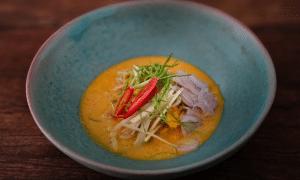
Curry of yellow chilies with whole quail, fresh turmeric and lemon basil (แกงเผ็ดนกกระทาพริกเหลืองสด; gaaeng phet nohk grathaa phrik leuuang soht)
Salty leading and sour-sweet to follow, this coconut-based gaaeng phet spicy curry might be made of chilies, but it is fruitier than it is spicy, and lighter than it is dense. Originally cooked with the meat of game birds, it retains a surprisingly light body that opens space for the birds to fly. The curry is tinted golden orange from a paste imbued with fresh yellow chilies and turmeric; it is perfumed with lemongrass and lemon basil leaves.
Scented Cassava-Starch Diamonds in Coconut Milk (มันสำปะหลังยอหยา; man sam bpa lang yaaw yaa)
Man sam bpa lang yaaw yaa: cassava starch diamonds kneaded with pandan, served in floral-scented coconut milk. Jeeb Bunnag, 1933.
Indian-Style Rice (ข้าวแขก; khaao khaaek)
Khaao khaaek: lightly salted soft rice under a turmeric-tinted, jasmine-scented coconut cream, twice as thick as the rice. Jeeb Bunnag, 1933.
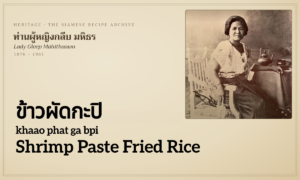
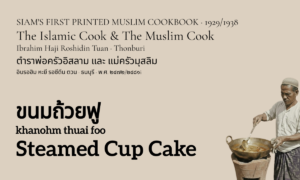
ขนมจีนซาวน้ำ อย่างท่านผู้หญิงกลีบ มหิธร
กลับจากวัดแล้ว เพลาเที่ยงพอดี ท่านขุนฯ ตั้งโต๊ะเลี้ยงสมาชิกบนเรือน ด้วยการทำ "ขนมจีนซาวน้ำ" ตามคำขอ ช่วงนี้จะทำอาหารอย่างขนมจีน สัก ๒ ตำรับ ให้ได้ชิมกันทั่วเรือนเรา แต่อย่าแค่กระนั้นเลย ขึ้นชื่อว่า ขุนวิเสทเลือดเย็น มีหรือจะทำอาหารไทยให้เหมือนคนอื่น ตำรับของเราต้องเป็นไทยแท้ และเป็นตำรับโบราณแบบที่คนปัจจุบันไม่เคยรู้มาก่อน จะทำให้ลูก ๆ หลาน ๆ ของเรางงกันเป็นไก่ตาแตกเลยทีเดียว....
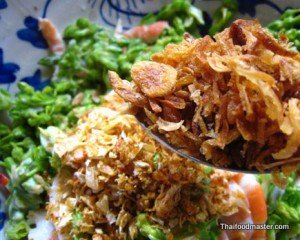
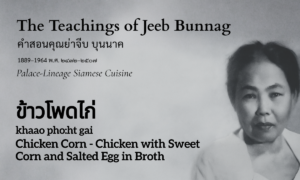
Chicken Corn (ข้าวโพดไก่; khaao pho:ht gai)
Chicken Corn, a delicate Thai snack where thinly sliced corn is simmered in chicken stock with shredded breast meat and salted egg yolk. From Jeeb Bunnag's 1933 cookbook.
สูตรทำน้ำพริกตะไคร้
น้ำพริกเป็นอาหารที่อยู่คู่กับชีวิตคนไทยมาตั้งแต่โบราณ ซึ่งสูตรน้ำพริกต่าง ๆ ที่เรารู้จักกันในปัจจุบันหลาย ๆ สูตรนั้นได้มีการพัฒนามาจากการโขลกพริกกับเกลือในสมัยอยุธยา ในวันนี้หนุมานมานำเสนอสูตร "น้ำพริกตะไคร้" ซึ่งเป็นน้ำพริกโบราณและเป็นอาหารที่รัชกาลที่ 5 ทรงโปรดปราณมากอย่างหนึ่ง
Thong Yip Naan Nueng (ทองหยิบนานนึ่ง; thaawng yip naan neung)
Thong Yip Naan Nueng, mold-fried wheat batter with crab, pork, and chicken, inverted mid-fry until golden. From Gingganok Gaanjanaaphaa, 1935.
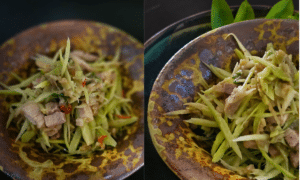
Young Jackfruit Salad (ยำขนุนอ่อน; yam kha noon aawn)
Young Jackfruit Salad featuring tender jackfruit stir-fried with coconut cream and aromatic herbs and dressed with chili jam. From Maawm Ying Soophaa's 1949 manuscript on Thai salad recipes.
Jatturaphan Dumplings — Bird Egg-Shaped Dumplings in Four Complexions (ไข่นกจัตุรพรรณ; khai nohk jat dtoo phan)
Bird's Egg Jatturaphan: tapioca dumplings with salted egg yolk centers in four natural colors, served in chicken broth. From Jeeb Bunnag's 1945 royal court cuisine cookbook.
Yam of Chicken (ยำไก่; yam gai)
Yam gai: chicken simmered in coconut milk until dry, then dressed with mint, kaffir lime and green mango. Maawm Sohm Jeen, Tamra Gap Khao, 1890.
Goon Saa Lime-Cured Pork (กุญซ่า; goon saa)
Goon saa: lean pork cured by lime juice and salt without fire, shredded and tossed with its own reduced pressing liquid. From Maawm Ying Soophaa, 1949.
The Ambassador’s House Style Noodle Soup (หมี่น้ำบ้านราชทูต; Mee Naam Baan Raat Thuut)
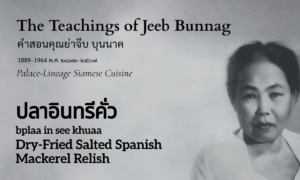
This soup dish features crispy rice vermicelli noodles, a chicken broth that has a three-flavor profile infused with the aroma of bitter orange, and a plethora of other ingredients such as crispy fried tofu, chicken, pork, crab and pickled garlic. In Thai, the phrase mee naam baan raat thuut refers to a rice vermicelli noodle soup in the style of the Ambassador’s house. The dish was not new when it appeared in the 1956 book Snacks, Tea Nibbles, Hors D’oeuvres and Drinking Food (ตำราอาหารว่าง - เครื่องน้ำชา และ เครื่องเคี้ยว หรือ กับแกล้ม) by Jeeb Bunnag (จีบ บุนนาค), as noodle dishes were often the preferred ingredient for light meals or snacks. In Grandparents Recipes: 100 Years Old Recipes (จานอร่อยจากปู่ย่า สูตรโบราณ 100 ปี), a volume printed in 2014 that highlights recipes from the kitchens of fifteen prominent families, a similar version of the dish is referred to as mee naam baan bpaak naai leert (หมี่น้ำบ้านปาร์คนายเลิศ) and is associated with Nai Lert.
ผัดขี้เมาปลาหมึกยัดไส้กุ้งเนื้อหมูและแห้ว
This dish can be found both in Thailand's streets food stalls and in the menus of the high stars restaurants. The spicy stir fried is a perfect choice to the drunken man’s plate, it, with it's kick, helps the whiskey run down the glass and offers a wicked sauce to accompany the sophisticated squid's filling made of airy pork married with sweet shrimp. The mixture of pork and shrimp filling maintains moist and tender texture which is further enhanced by the surprise crunch from water chestnuts.
gaaeng rawaaeng (แกงระแวง)
The Contrasting Histories of Gaaeng Rawaaeng (แกงระแวง) - Turmeric-Infused Coconut-Based Thick Curry of Braised Duck and Lemongrass
Gaeng rawang (แกงระแวง) is a curry bearing an unusual name and contradictory accounts regarding its appearance, lineage and origins. When I cook this dish, it is a rich and thick coconut-based curry made with a paste of fresh chilies, aromatics, spices and generous amounts of fresh turmeric, which adds warmth and gives the green chili color a slightly earthier, muted tone that resonates beautifully with the duck meat. The duck meat is prepared separately and slow-braised in coconut cream before being cooked in the curry. This slow-braising process allows the coconut cream and duck’s fattiness to melt together, resulting in moist and flavorful meat with a hint of sweetness. The curry itself is seasoned to a salty and slightly sweet flavor profile.
1
2
3
4
5
6
7
8
9
10
11
12
13
14
15
16
17
18
19
20
21
22
23
24
25
26
27
28
29
30
31
32
33
34
35
36

Siamese Culinary Legends of the Rattanakosin period

Siamese cuisine is the accumulated wisdom of cooks at every level of the society – from housewives cooking at home and caring for their families, to cooks in the temple, to the culinary masters who created elaborate dishes behind the palace walls.

In this series of short articles highlighting their lives and work, we salute and pay homage to the most prominent individuals who influenced and shaped the Siamese culinary arts bpaa ga sin (ปากะศิลป์) of the Rattanakosin Era.

These background descriptions will put into perspective the dishes we present and cook here on Thaifoodmaster and will also help you to cook Thai dishes that taste like they have a solid bond to the culture, the land and its people.

Read more

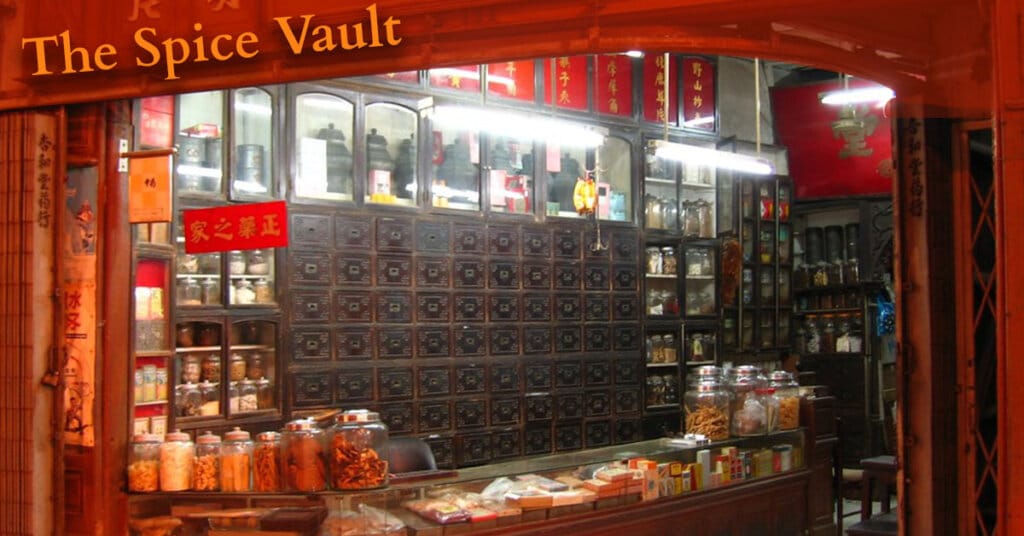
The Spice Vault

Here you will find recipes for popular spice mixes that you can make yourself! Homemade spice blends not only taste better and cost less, but you’ll also be able to create unique spice blends based on your personal preferences. As a bonus, you’ll use spices with no preservatives or artificial colors!

For example, members can explore recipes for Chinese five-spice mix, masalas for khao soi and hang lay curries, homemade Thai curry powder, and a variety of the spice blends used in Northern and Muslim Thai cuisines.

Read more

Get Access – Join Thaifoodmaster Today

Practical and kitchen-tested recipes with a mix of theory, history, psychology, and Siamese culture tidbits.

  • Get access to everything right away. Unlock more than 50 Masterclasses, over 700 recipes and Articles

    Access to Thaifoodmaster’s constantly growing library of prime professional classes, articles, recipes and videos on Siamese culinary topics, available nowhere else in English.

  • GET EXTRA - New Masterclasses and Daily Recipes

    Gain access to NEW masterclasses as they become available. Access DAILY translations of heritage-recipes.

  • 1-1 support from Hanuman

    1-1 support from Hanuman to help you achieve your professional Thai culinary goals

  • Live Q&A Sessions

    The opportunity to join a monthly live two-hour videoconference where I can answer your questions.

  • Great Value!

    one year access for the price of 3 days in-person training.

You will get everything you need to:

  • To Get inspired

    When you design or build a new menu for an event or restaurant or even prepare for dinner with friends.

  • To Satisfy your curiosity.

    Finally !

  • To Master Your Craft

    Master your Thai cooking skills and expand your repertoire.

It is truly brilliant with a revolutionary approach introducing aspects and concepts never broached by cookbooks.
Ian Westcott
Ian Westcott
Sourcing Wines for Discerning Private Clients