
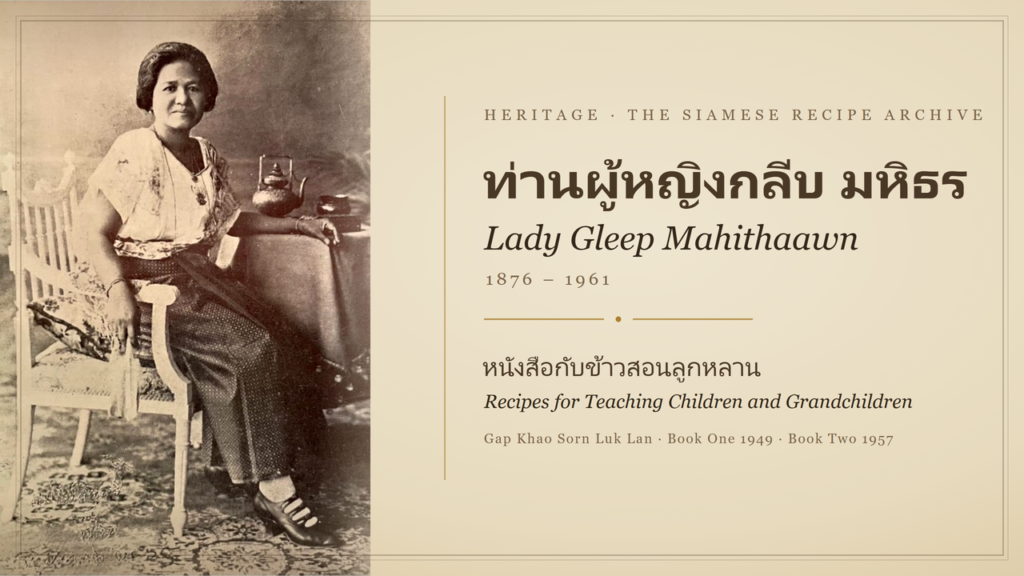
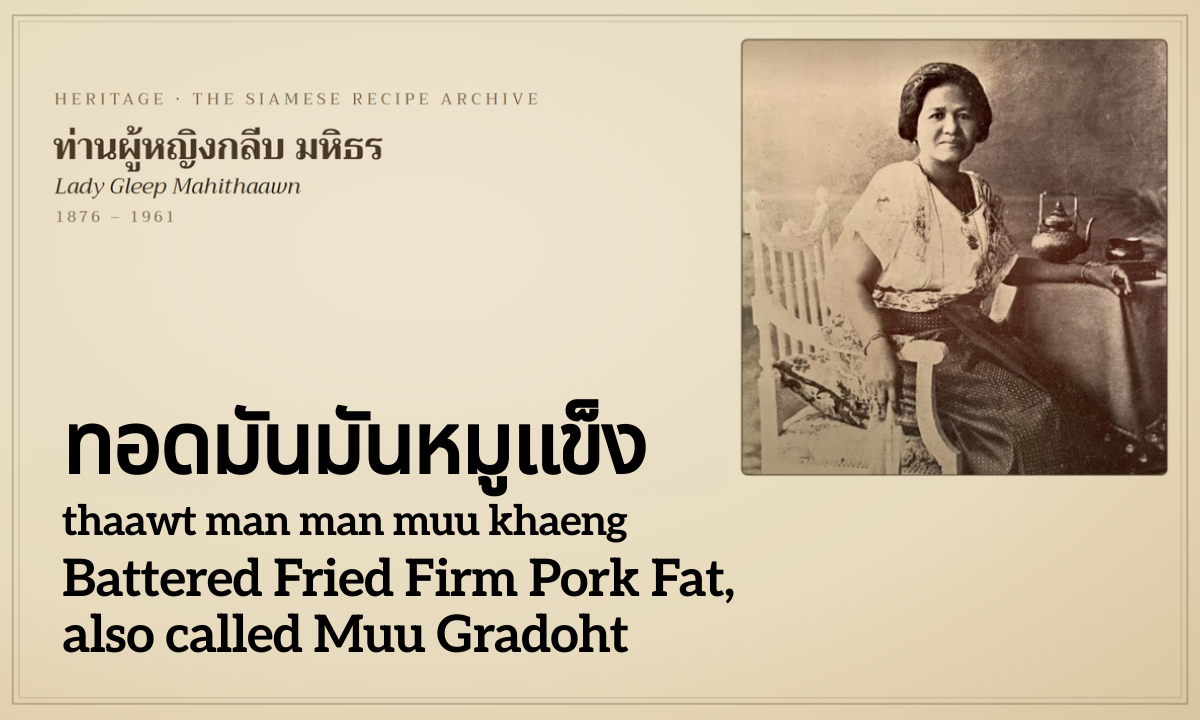
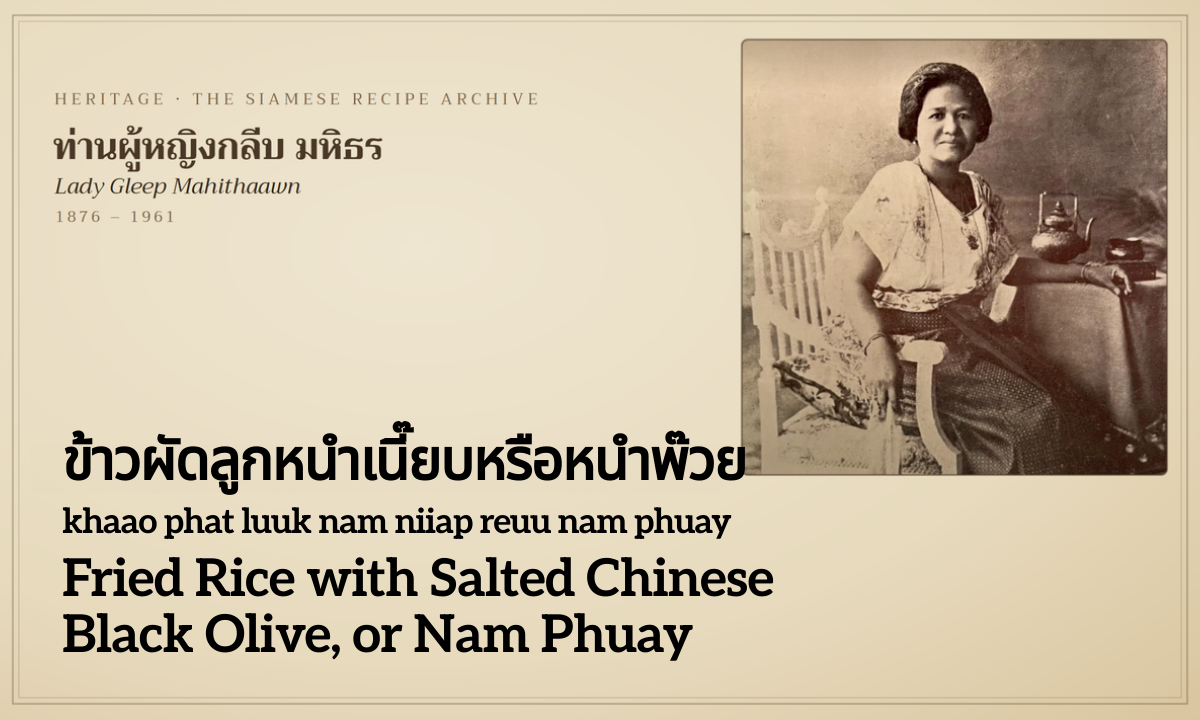
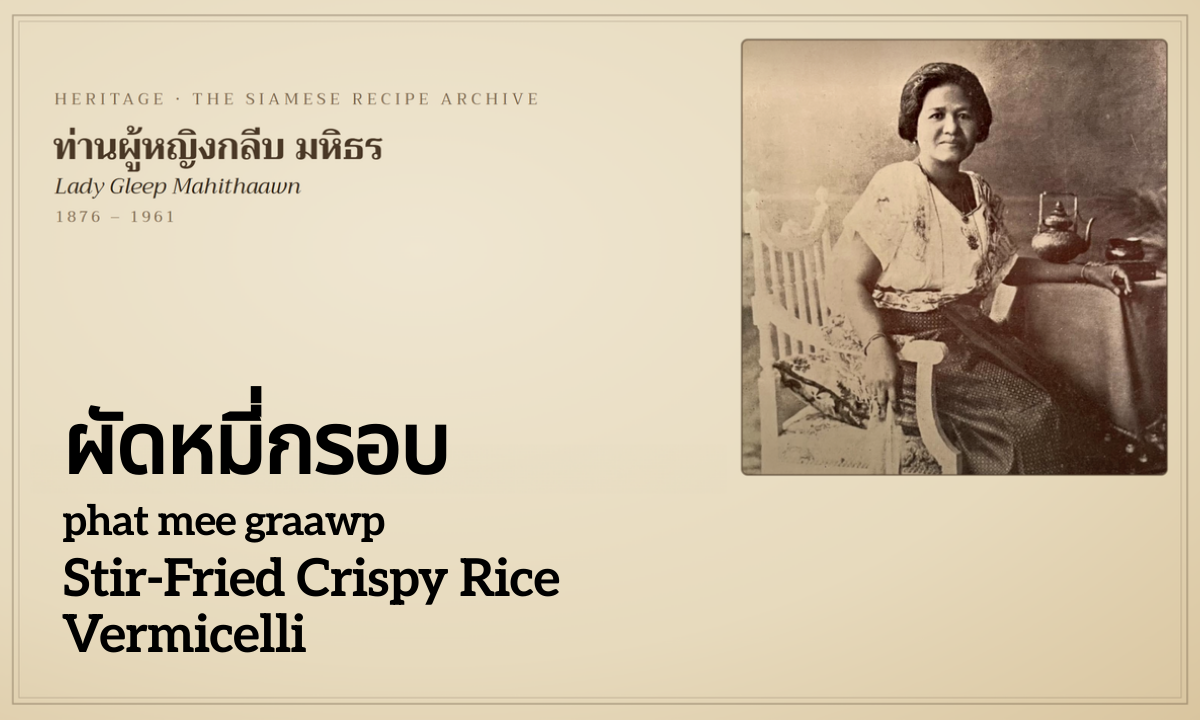
Lady Gleep Mahithaawn (ท่านผู้หญิงกลีบ มหิธร)
Thanphuying Gleep Mahithaawn (ท่านผู้หญิงกลีบ มหิธร) | 1949–1957 | Aristocratic Siamese Home Cooking
Siamese Recipe Archive — Heritage Collection
Dictated to the Grandchildren
Lady Gleep Mahithaawn (ท่านผู้หญิงกลีบ มหิธร) set down this cookbook by voice, near the end of a long life. She was in her seventies, and she gave the recipes aloud for her grandchildren to write, dish by dish, as she had cooked them for a large household. The first book was printed in 1949 to mark her seventy-second birthday; a second book, on fruit, savory snacks, and sweets, followed in 1957 by the same method. Both were gathered in the volume printed for her cremation in 1961. The title she chose — Recipes for Teaching Children and Grandchildren (หนังสือกับข้าวสอนลูกหลาน) — names the book’s purpose and its method together.
Introduction
Lady Gleep was born in 1876 into an aristocratic Bangkok family and entered the Grand Palace at the age of seven, raised among the ladies-in-waiting of Queen Saovabha Phongsri. There she was trained in court etiquette, household management, and the running of a kitchen that fed rank. She married Chao Phraya Mahithon (เจ้าพระยามหิธร), and the title Thanphuying (ท่านผู้หญิง) that precedes her name marks that standing. Her cooking carried the detail of palace training and a frugal, exact hand.
Her books belong to a period when kitchen knowledge held inside palace and aristocratic households moved into print. Former palace residents and noblewomen issued their recipes commercially or through cremation-memorial volumes, and a reading public took up the books. Lady Gleep’s volumes reached print through this same channel — a family record, printed first for a birthday and again for a funeral, that passed from one household into general circulation.
Lady Gleep on Cooking
The book’s method is its instruction. She dictated; a grandchild wrote. The recipes carry the household measures of the period, and the 1949 preface states that portions were given by estimate, without scales — the amounts a cook holds by hand and judges by eye. The archive keeps those measures as she gave them.
Her range came from two schools. The court kitchen gave her the classical dishes and their finish. Three years spent at the Bang Yi Khan gardens (สวนบางยี่ขัน), where she harvested fruit and herbs herself, gave her the vernacular cooking of the riverbank and the upcountry table. The recipes move between the two.
The Books in This Collection
The archive holds the collection as two books gathered in one memorial volume:
Book One (1949, พ.ศ. 2492) — savory home cooking across fifteen chapters: fermented rice-noodle dishes (ขนมจีน), wheat and rice noodles, fried rice, rice soups, steamed curry parcels (ห่อหมก), fried fish and meat cakes, dishes of beef, pork, and fish, Thai salads (ยำ), curries and soups (แกง), stir-fries, leaf-wrapped morsels (เมี่ยง), egg dishes, and chili relishes (เครื่องจิ้ม).
Book Two (1957, พ.ศ. 2500) — fruit, savory snacks, and sweets, with reference guides for selecting and serving fresh fruit, the varieties of rose apple, the service of Thai snacks and Western tea, and a ceremonial offering set.
The two were combined in the cremation-memorial volume printed after her death in 1961.
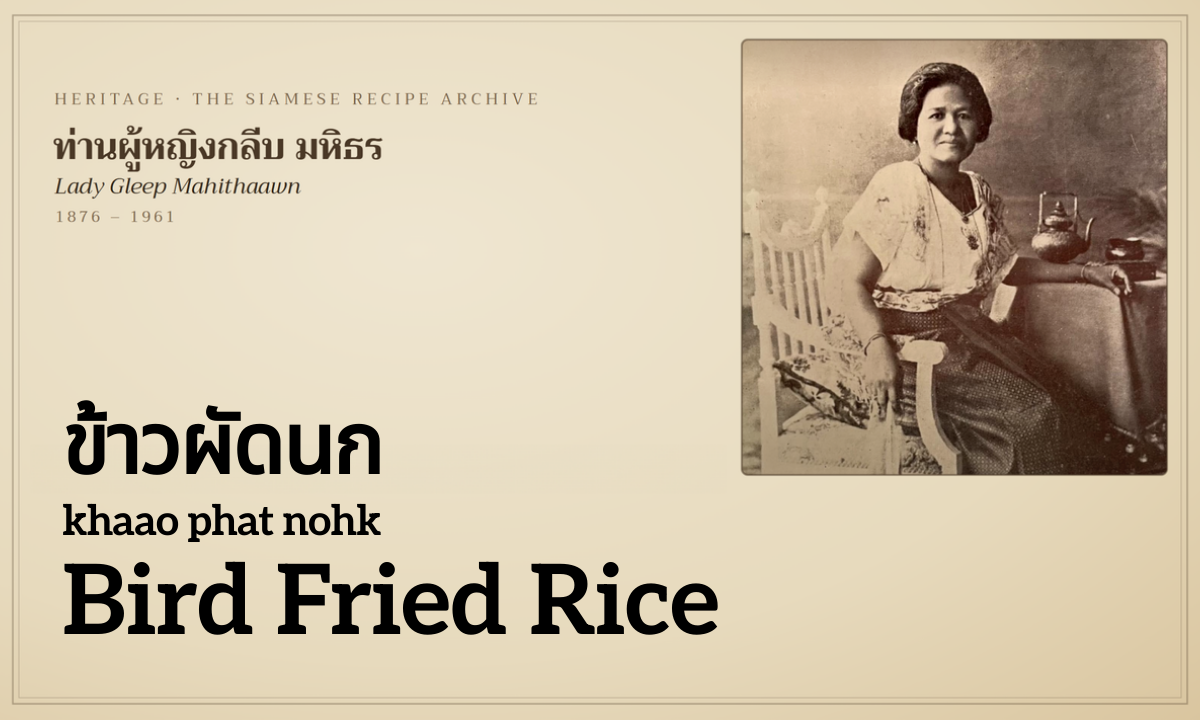
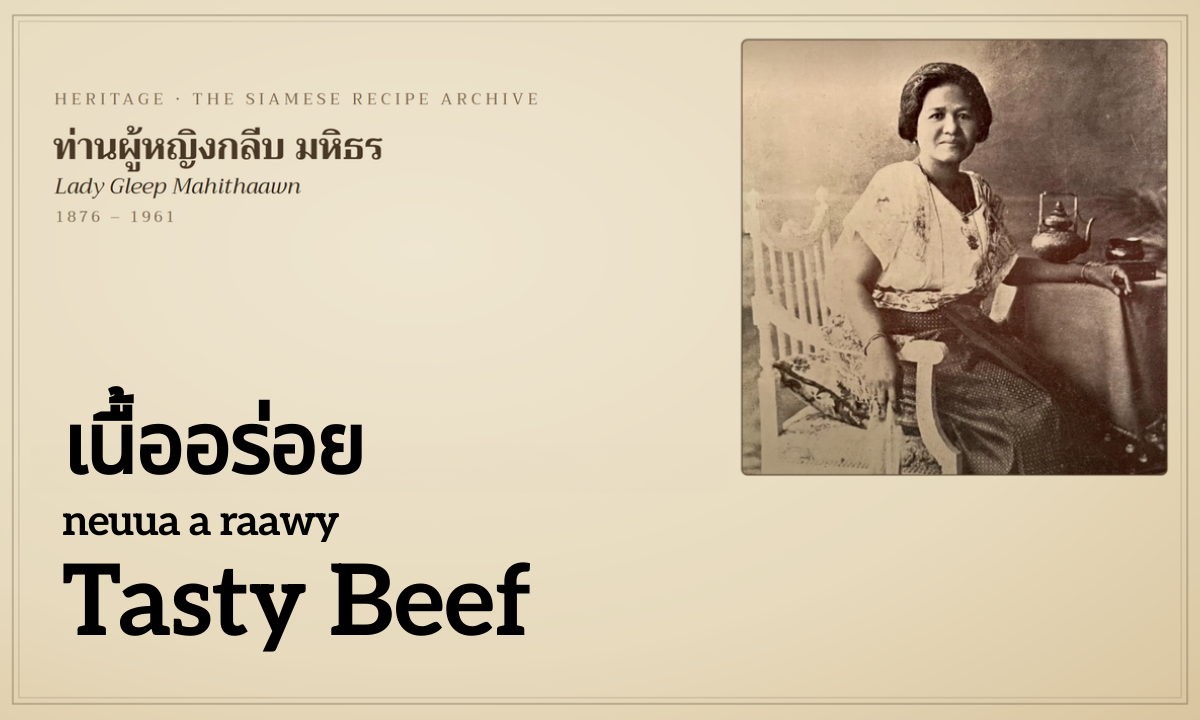
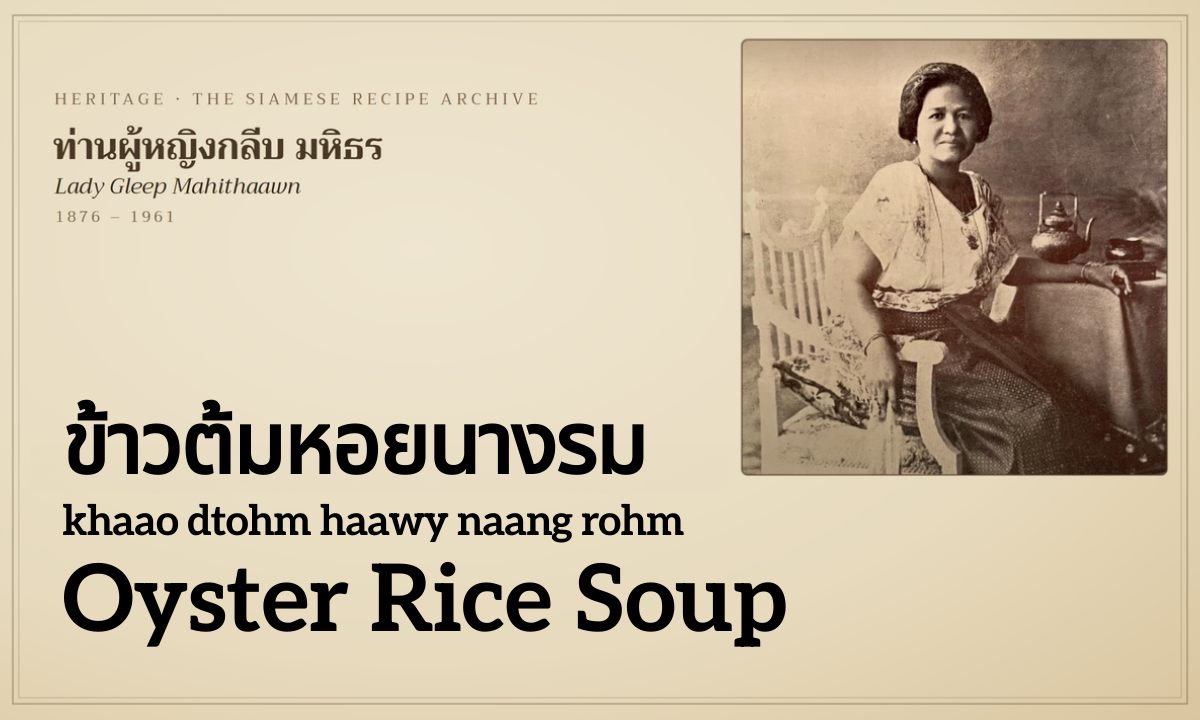
Index of Recipes:
About the Siamese Recipe Archive
The Archive collects and translates historical Thai culinary manuscripts — primary sources written by the cooks, noblewomen, and food professionals who shaped the cuisine of the Rattanakosin era. Each document records practical knowledge shaped by its moment: what was available, what the tradition demanded, what a specific cook decided under real constraints.
Visit Heritage
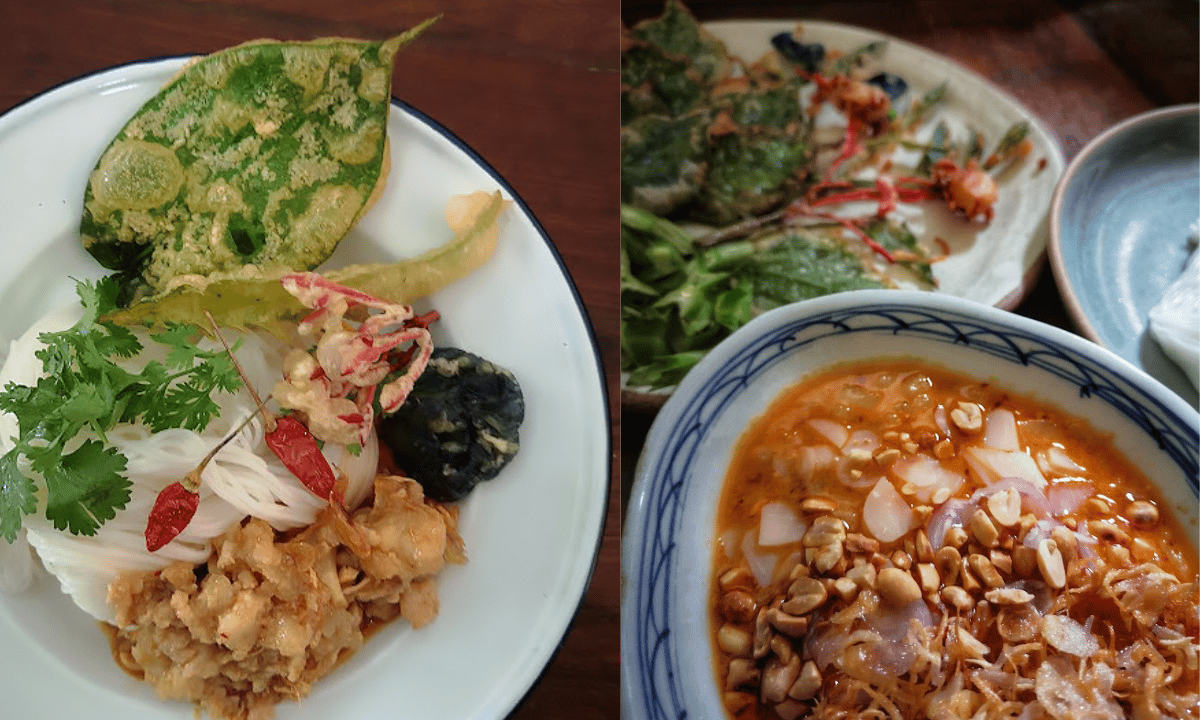
Made with fermented rice […]
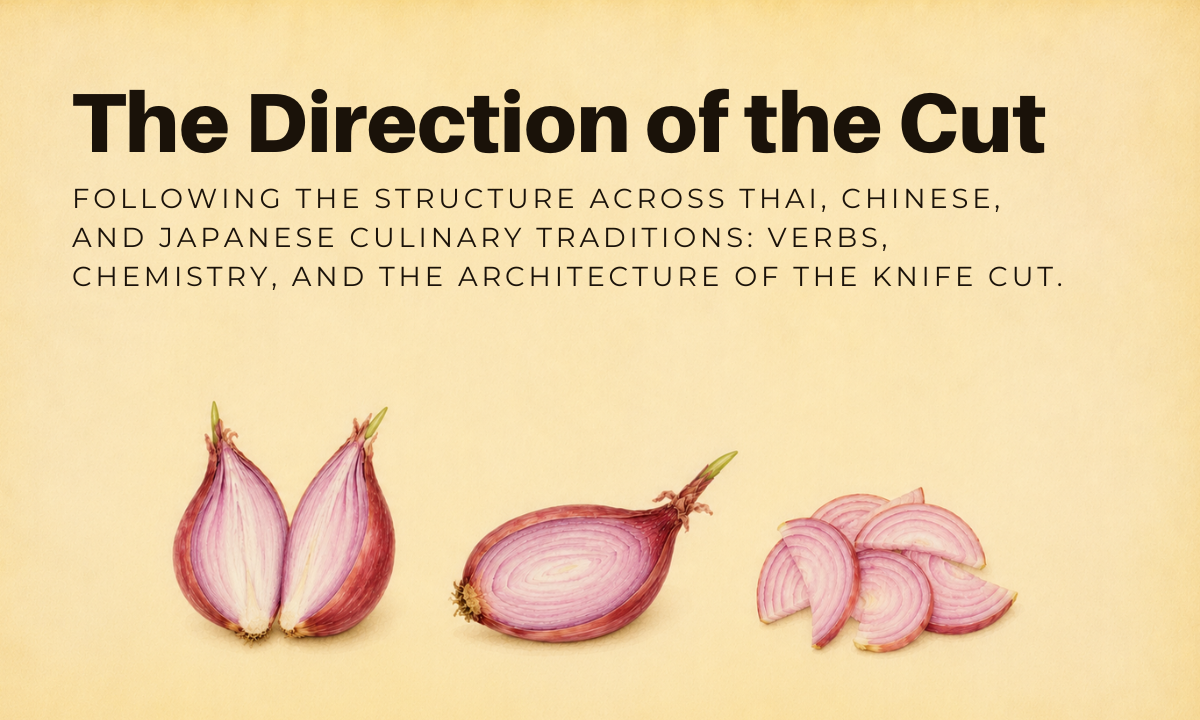
Pick up a shallot. The thin lines running from root to tip are not cosmetic – they are the bulb’s structural axis, the direction along which its cells elongated as it grew. The choice you make at the cutting board is the angle at which your knife will sever those cells. The decision turns out to be governed by the same principle whether you are slicing shallots, butchering meat, preparing sashimi, or scoring squid. This essay follows that principle across the Thai, Chinese, and Japanese culinary traditions – through their verbs, their chemistry, and the architecture of the cut. It is one of the deepest patterns in cooking, and one of the least discussed.
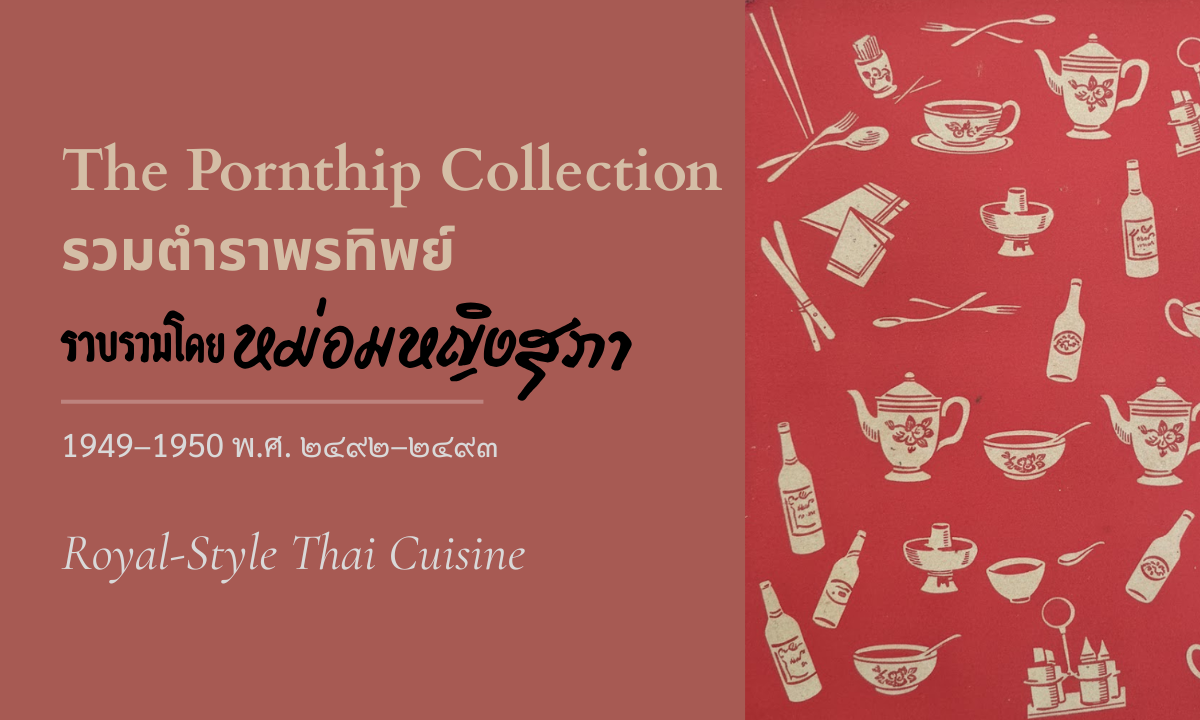
The author published under the name Mom Ying Supha (หม่อมหญิงสุภา), signing one preface as M.L. Ying Supha (ม.ล. หญิงสุภา)—a title indicating royal descent. No further biographical record has been located. On the cover of Pornthip’s Savory Dishes (กับข้าวพรทิพย์), she advertised that her recipes were “Royal kitchen-tested” and had been cooked, savored, and enjoyed by high-ranking members of the Royal family. (เป็นตำรับจากห้องเจ้านายเสวยสบพระทัยมาแล้ว)
In her prefaces, she set out a philosophy: Thai cooking relies on estimation, on tasting and adjusting, on what she called roht meuu (รสมือ)—one’s delectable hands. Some cooks possess skill and knowledge of all ingredients, she wrote, yet lack “charm in the touch” (เสน่ห์ในรสมือ). Their cooking lacks deliciousness, lacks thoughtfulness, and fails to win appreciation from family and society.
Between 1949 and 1950, she published four books through Chamroen Sueksa (จำเริญศึกษา) in Bangkok: Thai salads, savory dishes, sweets, and a five-volume set spanning Thai, Chinese, and Western cooking. The table of contents reveal dishes with names shaped by court culture—Egg of the Moon (เครื่องเคียงไข่ดวงเดือน), Three Kings (เครื่องเคียงสามกษัตริย์), Pretending to Be Delicious (เครื่องจิ้มแสร้งว่าอร่อย). The identity behind the pen name may remain unknown. The recipes do not.
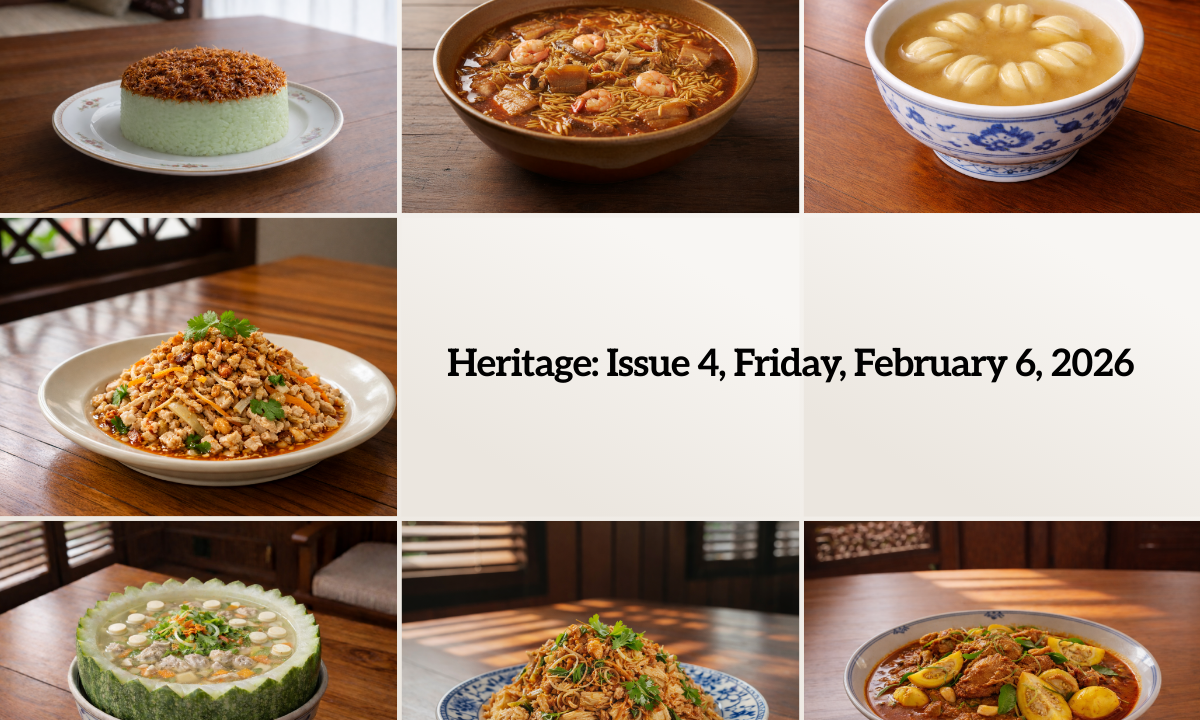
This week’s folios:
– ข้าวเหนียวนึ่งหน้าเนื้อ — Steamed Gelatinous Rice with Beef Topping (Jeeb Bunnak, 1945)
– แกงพวงพยอม — Shorea Flower Curry (Maawm Ying Soopha, 1949)
– ลูกรอกไส้ไก่ — Egg Sausage in Chicken Intestine (Jeeb Bunnag, 1933)
– ยำผิวส้มจีน — Mandarine Orange Peel Salad (Maawm Ying Soophaa, 1949)
– แกงจืดฟักเขียวตุ๋น — Steamed Stuffed Winter Melon Clear Soup with Crab, Pork and Egg Sausage (Jeeb Bunnag, 1933)
– ยำขนุนอ่อน — Young Jackfruit Salad (Maawm Ying Soophaa, 1949)
– แกงเป็ดสวรรค์ — Heavenly Duck Curry (Maawm Ying Soophaa, 1949)
This week’s folios:
– ข้าวเหนียวนึ่งหน้าเนื้อ — Steamed Gelatinous Rice with Beef Topping (Jeeb Bunnak, 1945)
– แกงพวงพยอม — Shorea Flower Curry (Maawm Ying Soopha, 1949)
– ลูกรอกไส้ไก่ — Egg Sausage in Chicken Intestine (Jeeb Bunnag, 1933)
– ยำผิวส้มจีน — Mandarine Orange Peel Salad (Maawm Ying Soophaa, 1949)
– แกงจืดฟักเขียวตุ๋น — Steamed Stuffed Winter Melon Clear Soup with Crab, Pork and Egg Sausage (Jeeb Bunnag, 1933)
– ยำขนุนอ่อน — Young Jackfruit Salad (Maawm Ying Soophaa, 1949)
– แกงเป็ดสวรรค์ — Heavenly Duck Curry (Maawm Ying Soophaa, 1949)


