Online Siamese Culinary Masterclasses for Professional Chefs and Thai food enthusiasts

In my masterclasses, for the first time in the English language, I reveal the culinary secrets hidden in old and hard-to-find Siamese cookbooks and recipes dating from the late 19th century to modern days. 

Get unlimited access to Thaifoodmaster’s constantly growing library of prime professional masterclasses, articles, recipes and videos on Siamese culinary topics, available nowhere else in English.

Online membership: 
Masterclasses, Articles, Recipes, Daily Heritage Translations.
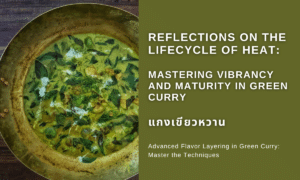
Professional Guides: Siamese Chili Relishes (น้ำพริก และ เครื่องจิ้ม), Thai Curries (แกงไทย), Thai Salads (เรื่องยำๆ) and The art of Siamese old-school menu design (สํารับอาหารไทย).

In-person workshops: 
Chiang Mai, 2026. Limited spaces.

Masterclasses

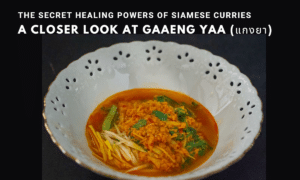
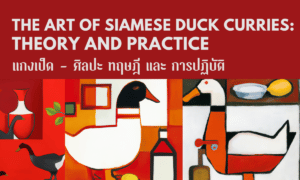
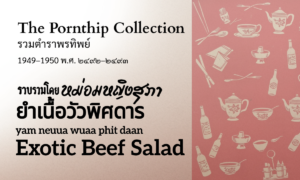
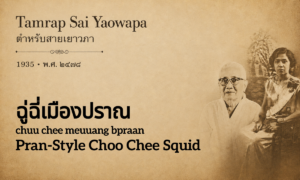
Practical and kitchen-tested recipes with a mix of theory, history, psychology, and Siamese culture tidbits.
1
2
3
4
5
6

Articles and Recipes

Crispy Cooked Liver (ตับสุกกรอบ; dtap sook graawp)
Dtap sook graawp, pork liver boiled then deep-fried in a coconut cream batter with garlic and coriander root. Jeeb Bunnag, 1933.
peanut-bar-salad
c1933 Sour bilimbi fruit and crispy candied peanut salad with pork, shrimp and pork fat (ยำตะลิงปลิง ; yam dtaling bpling)
A candied peanut bar might be considered an unlikely ingredient for an old-fashioned Siamese-style salad. Yet, peanut bars were familiar to the Siamese as early as the Ayutthaya period and were part of a broader set of Teochew Chinese sweets called, in Thai, “khanohm janap (ขนมจันอับ)”.
น้ำพริกนครบาล
Metropolitan Chili Relish: The 20-Ingredient Pinnacle of Thai Relishes (น้ำพริกนครบาล; Naam Phrik Na Khaawn Baan)
Originating in the early 1800s, Metropolitan Chili Relish is cheerful and complex, yet unassuming – a subtly epic relish composed of more than 20 ingredients, some of which are seasonal. The relative absence of this relish from contemporary menus could be attributed to its difficult-to-assemble ingredient list, coupled with a dwindling number of chefs who are adept at its preparation.   However, despite its intricate composition, the relish adheres to the same foundational culinary principles of other shrimp paste (kapi) chili relishes. Here, though, the savoriness is strengthened with smoke-dried fish, grilled shrimp and pork fat crackling; and the relish is seasoned to a citrus-infused, fruity, sour-sweet leading and salty to follow flavor profile, to which numerous sour and sour-sweet elements are mixed in – akin to a deep-rooted tree extending its branches to bear colorful fruits that shine in varying shades of a tartness.
c1935 Stuffed Potatoes with Bitter Orange Fragrant Beef Gaaeng Garee (แกงกะหรี่บรรจุมัน ม.ล. เติบ กำภู ; gaaeng garee ban joo man)
In Anglo-Indian cuisine, potatoes were used liberally in the curries; alongside the favorite sour chutneys, curries were also accompanied by fried, baked, boiled or mashed potatoes. Although the potato gradually found its way into many iconic Indian dishes, and even into Siamese cuisine, the tuber never replaced the rice of South Asia, despite the intentions of both the British and East Indian company officials. In the 1935 book Sai Yaowapa (ตำรับสายเยาวภา), Princess Yaovabha Bongsanid (พระเจ้าบรมวงศ์เธอ พระองค์เจ้าเยาวภาพงศ์สนิท) reflects the Anglo-Indian style gaaeng garee in her composition of bitter orange-fragrant beef gaaeng garee, which she serves in individual bowls made of fried potatoes, per a recipe recorded by M.L. Terb Gamphu (ม.ล. เติบ กำภู) and M.R. Tuang Sanitwong (ม.ร.ว.เตื้อง สนิทวงศ์).
Fermented Soybean Paste Dipping Relish (เต้าเจี้ยวพล่า; dtao jiaao phlaa)
Dtao jiaao phlaa, fermented soybean paste relish bruised with lemongrass, kaffir lime, and tamarind. From Jeeb Bunnag, 1933.
Siamese Fireback Chicken (ไก่พระยาลอ; gai phra yaa laaw)
Siamese Fireback Chicken, a deboned whole chicken stuffed with aromatic phrik khing (พริกขิง) paste and mung beans. From Jeeb Bunnak's 1945 royal Thai cookbook.
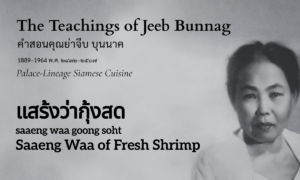
Jeeb Bunnag - The Teacher Who Preserved a Culinary Empire - A Biography of Mrs. Samaknantapol
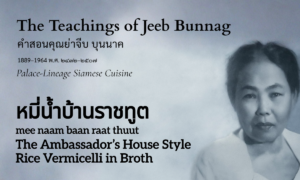
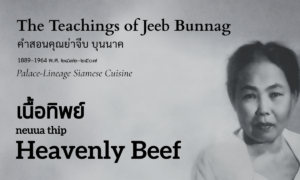
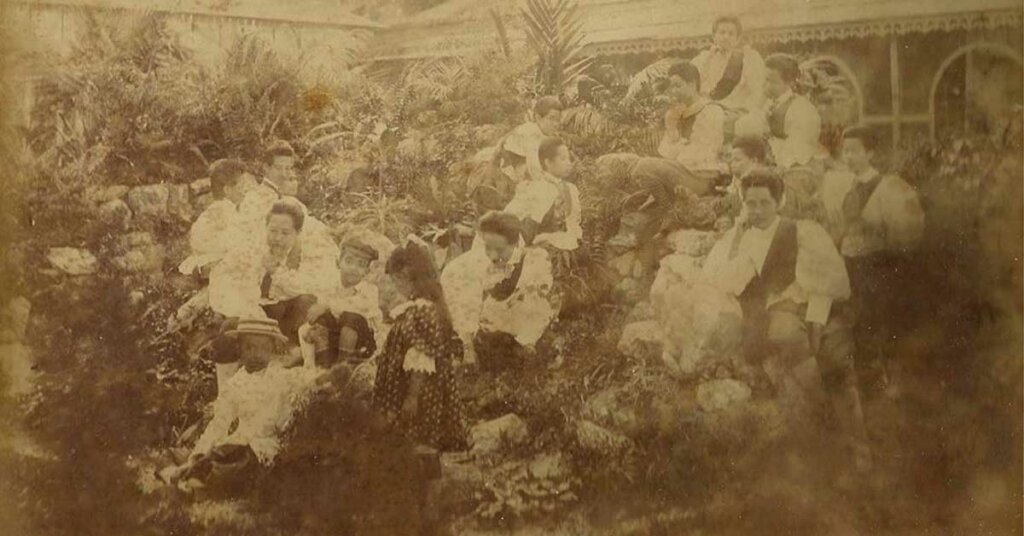
The life of Mrs. Samaknantapol (Jeeb Bunnag) (นางสมรรคนันทพล (จีบ บุนนาค)) offers a direct view into the transmission of Thai culinary knowledge across a century of change. Her teaching, writing, and documentation preserved the structures of palace cuisine while shaping methods that could be studied and applied in classrooms throughout modern Bangkok. Her 1933 work Samrub Raawp Bpee (สำรับรอบปี) remains an unparalleled record: 365 complete Samrub, old style Siamese meal sets, arranged with precision, reflecting daily rhythms of eating that were already disappearing from common practice. Through her work, we can study not only individual dishes but also the organization of meals and the cultural reasoning that guided them. As someone who follows her teaching, I approach this story with both historical and practical attention. Her writing has informed my own study of Thai cuisine, and years of cooking from her instructions have shown me the clarity and discipline of her teaching. This account presents her life within its contexts—family, education, print culture, and the evolving society of twentieth-century Siam—while also acknowledging how her work continues to guide readers today.
Potato Rice Soup (ข้าวต้มันฝรั่ง; khaao dtohm man farang)
Potato Khao dtohm Rice Soup, featuring a clear seafood broth with pork meatballs, served with crispy fried potatoes on the side. From Gingganok's 'Delicious Side Dishes,' 1935.
ส้มตำไทยข้าวโพด
Bangkok's markets are busy from dawn until dusk, sometime even stay open when most of the city is asleep. Normally, the traffic of shoppers and crowds of office workers hurrying their way masks the busy stretch of shops and food stalls, making it difficult to pay close attention to details. Earlier this year, however, a strange silence had fallen on the city, civil unrest brought life in the city of angels to an eerie standstill, Bangkokians elected to stay home, and shops closed their doors.
naam phrik roy rot
Chili relish of coriander leaves (น้ำพริกผักชี ; naam phrik phak chee)
naam phrik roy rot
Tamarind flower chili relish inspired by Princess Jongjittanom Dissakul (น้ำพริกดอกมะขาม อย่าง หม่อมเจ้าหญิงจงจิตรถนอม ดิศกุล ; naam phrik daawk makhaam)
khanohm jeen naam ngiaao (ขนมจีนน้ำเงี้ยว)
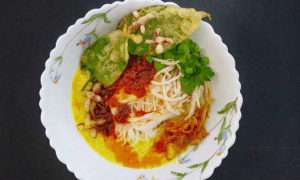
Khanohm Jeen Naam Ngiaao - Shan-Style Tomato Broth over Fermented Rice Noodles with Pork, Chicken Feet and Chicken Blood Cakes (ขนมจีนน้ำเงี้ยว)
A popular noodle dish originating from the Northern region of the Kingdom, khanohm jeen naam ngiaao (ขนมจีนน้ำเงี้ยว) is characterized by its light – yet profound – multi-layered broth. This hearty broth includes an assortment of proteins braised with the dried pollens of cotton tree flowers, and Northern Thai sour cherry tomatoes (มะเขือส้ม); the tomatoes infuse the broth with a subtle tartness that refreshes a full-bodied profile comprising a multitude of fermented ingredients. The naam ngiaao broth is served over fermented rice noodles and features minced pork, and braised baby back pork ribs with their tender meat clinging to the bone. As well, there are succulent, slow-cooked whole chicken feet, and cubes of slightly bouncy, mauve-hued chicken blood cakes. Served alongside the soup are various toppings, which can include shredded cabbage, bean sprouts, chopped coriander leaves, and spring onions, while dark red chili oil and glossy, charred-fried dried bird’s eye chilies offer a fiery intensity dialed up to your preferred spiciness. In addition, I like to add wok-smoked sour cherry tomatoes and broom-like, crispy-fried dried cotton tree pollen for a surprising textural contrast. Though the dish is often described as “Shan style”, the word ‘ngiao’ was a derogatory expression for the Shan people. As the disparaging – and outdated – label suggests, the recipe might reflect societal biases and prejudices; thus, at least from the culinary perspective, the ‘ngiao’ in the name of the dish may simply be a nod to the flavors or ingredients favored by The Shan, rather than a claim of authenticity – which could also explain why the dish is based on a Siamese curry paste.
Rice Crackers with Sichuan Style Naa Dtang Savory Topping (น่าตั้งเสฉวน; naa dtang saeh chuaan)
Naa dtang saeh chuaan, a seafood-meat umami topping served with assorted crispy accompaniments. From Jeeb Bunnag's 1945 cookbook of Thai appetizers.
Three Noodle Bundles (เส้นสามแซ่; sen saam saae)
Three Noodle Bundles feature rice vermicelli, Chinese egg noodles (mee sua), and glass noodles wrapped around mustard greens and bound with seasoned pork in Pumpkin Broth. From Jeeb Bunnag's 1945 cookbook.
Torpedo Fish - Torpedo Fish - Steamed Stuffed Squid (ปลาตอปิโดตุ๋น; bplaa dtaaw bpi do:h dtoon)
Torpedo Fish - Steamed Stuffed Squid features small squid filled with crab-pork mixture and sweet corn. From Jeeb Bunnag's 1945 cookbook of Thai appetizers.
1
2
3
4
5
6
7
8
9
10
11
12
13
14
15
16
17
18
19
20
21
22
23
24
25
26
27
28
29
30
31
32
33
34
35

Siamese Culinary Legends of the Rattanakosin period

Siamese cuisine is the accumulated wisdom of cooks at every level of the society – from housewives cooking at home and caring for their families, to cooks in the temple, to the culinary masters who created elaborate dishes behind the palace walls.

In this series of short articles highlighting their lives and work, we salute and pay homage to the most prominent individuals who influenced and shaped the Siamese culinary arts bpaa ga sin (ปากะศิลป์) of the Rattanakosin Era.

These background descriptions will put into perspective the dishes we present and cook here on Thaifoodmaster and will also help you to cook Thai dishes that taste like they have a solid bond to the culture, the land and its people.

Read more

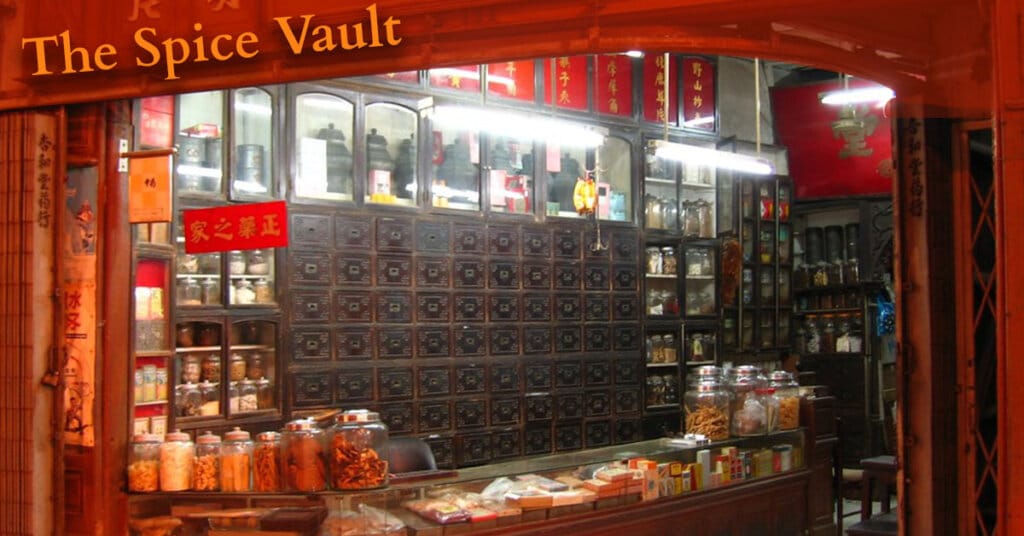
The Spice Vault

Here you will find recipes for popular spice mixes that you can make yourself! Homemade spice blends not only taste better and cost less, but you’ll also be able to create unique spice blends based on your personal preferences. As a bonus, you’ll use spices with no preservatives or artificial colors!

For example, members can explore recipes for Chinese five-spice mix, masalas for khao soi and hang lay curries, homemade Thai curry powder, and a variety of the spice blends used in Northern and Muslim Thai cuisines.

Read more

Get Access – Join Thaifoodmaster Today

Practical and kitchen-tested recipes with a mix of theory, history, psychology, and Siamese culture tidbits.

  • Get access to everything right away. Unlock more than 50 Masterclasses, over 700 recipes and Articles

    Access to Thaifoodmaster’s constantly growing library of prime professional classes, articles, recipes and videos on Siamese culinary topics, available nowhere else in English.

  • GET EXTRA - New Masterclasses and Daily Recipes

    Gain access to NEW masterclasses as they become available. Access DAILY translations of heritage-recipes.

  • 1-1 support from Hanuman

    1-1 support from Hanuman to help you achieve your professional Thai culinary goals

  • Live Q&A Sessions

    The opportunity to join a monthly live two-hour videoconference where I can answer your questions.

  • Great Value!

    one year access for the price of 3 days in-person training.

You will get everything you need to:

  • To Get inspired

    When you design or build a new menu for an event or restaurant or even prepare for dinner with friends.

  • To Satisfy your curiosity.

    Finally !

  • To Master Your Craft

    Master your Thai cooking skills and expand your repertoire.

It is truly brilliant with a revolutionary approach introducing aspects and concepts never broached by cookbooks.
Ian Westcott
Ian Westcott
Sourcing Wines for Discerning Private Clients