
Celebrating the Art of Siamese Culinary Wisdom and Thai Cuisine
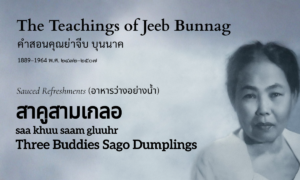
Three Buddies Sago Dumplings (สาคูสามเกลอ; saa khuu saam gluuhr)
Three Buddies Sago Dumplings combine chicken, pork, and shrimp coated in translucent sago pearls and served in clear broth. From Jeeb Bunnag's 1945 cookbook.
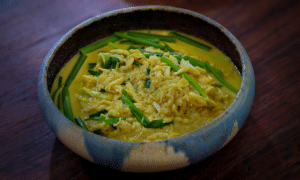
Crab and Spring Onion Coconut-Based Curry (แกงคั่วปูกับต้นหอม; Gaaeng Khuaa Bpuu Gap Dtohn Haawm)
Preparing a crab curry is an exercise in culinary diplomacy, wherein the challenge lies in negotiating the distinct flavors of land and sea into a cohesive understanding and capturing the perfect balance. This golden gastronomic horizon is where the delicate whispers of the ocean meet earth’s bold declarations – and at its core is a straightforward question: How do we craft a curry that testifies, via crab, to the ocean’s bounty, yet remains grounded in the earth’s aromatic flora, with roots like galangal and turmeric?
In addition, it is challenging to create a curry that is luxuriously creamy, yet light and not too greasy; where the crab’s delicate natural sweetness surfaces as a pleasant sea breeze, levitating above the pitfalls of being too fishy or overly sweetened. Another hurdle is achieving the precise color – produced by red chilies, golden turmeric and peppercorns – that reflects the culinary traditions of southern seashore fishing communities. I like mine set to about a 70:30 ratio of yellow to red and, if using black peppercorns, with a deep brown undertone.
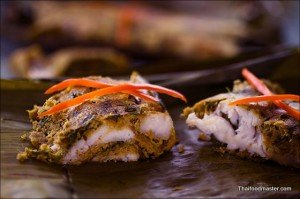
งบปลาช่อน
I love this straightforward grilled Thai fish curry in banana leaves because it packs a punch with its aromatic curry mixture that embrace the white and tender fish meat with great flavors. It is a great addition for any Thai meal and very easy to prepare.
Snakehead fish, traditionally caught from irrigation ditches or flooded rice fields, benefits from the aromatic curry paste because it helps to eliminate unpleasant odors which wild caught fishes might acquire from their muddy habitat. Nowadays though, it is commercially farmed and one can safely cook it in various ways with no risk of those undesirable odors.
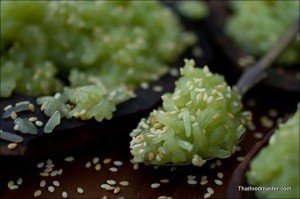
ข้าวเหนียวแก้ว
One of the charms of street food is that it finds you rather than you finding it. Therefore you are usually in the perfect mood to embrace it.
This treat along with other sweets are traditionally presented on tricycle drawn trays that are protected from insects and pollution by a transparent nylon tent and light up by a single light bulb.
Goon Saa Lime-Cured Pork (กุญซ่า; goon saa)
Goon saa: lean pork cured by lime juice and salt without fire, shredded and tossed with its own reduced pressing liquid. From Maawm Ying Soophaa, 1949.
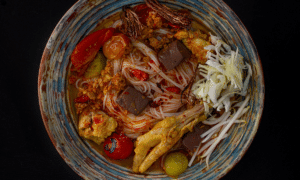
Khanohm Jeen Naam Ngiaao - Shan-Style Tomato Broth over Fermented Rice Noodles with Pork, Chicken Feet and Chicken Blood Cakes (ขนมจีนน้ำเงี้ยว)
A popular noodle dish originating from the Northern region of the Kingdom, khanohm jeen naam ngiaao (ขนมจีนน้ำเงี้ยว) is characterized by its light – yet profound – multi-layered broth. This hearty broth includes an assortment of proteins braised with the dried pollens of cotton tree flowers, and Northern Thai sour cherry tomatoes (มะเขือส้ม); the tomatoes infuse the broth with a subtle tartness that refreshes a full-bodied profile comprising a multitude of fermented ingredients.
The naam ngiaao broth is served over fermented rice noodles and features minced pork, and braised baby back pork ribs with their tender meat clinging to the bone. As well, there are succulent, slow-cooked whole chicken feet, and cubes of slightly bouncy, mauve-hued chicken blood cakes. Served alongside the soup are various toppings, which can include shredded cabbage, bean sprouts, chopped coriander leaves, and spring onions, while dark red chili oil and glossy, charred-fried dried bird’s eye chilies offer a fiery intensity dialed up to your preferred spiciness. In addition, I like to add wok-smoked sour cherry tomatoes and broom-like, crispy-fried dried cotton tree pollen for a surprising textural contrast.
Though the dish is often described as “Shan style”, the word ‘ngiao’ was a derogatory expression for the Shan people. As the disparaging – and outdated – label suggests, the recipe might reflect societal biases and prejudices; thus, at least from the culinary perspective, the ‘ngiao’ in the name of the dish may simply be a nod to the flavors or ingredients favored by The Shan, rather than a claim of authenticity – which could also explain why the dish is based on a Siamese curry paste.
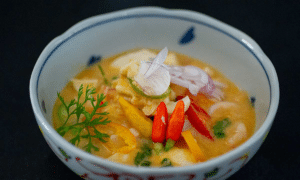
Salted duck eggs and shrimp creamy lohn (หลนไข่เค็ม ; lohn khai khem)
Lohn of salted duck eggs is a smooth, rich and creamy relish with a vibrant three-flavor profile of sour-salty-sweet. Unlike other lohn relishes, it does not contain any overbearing fermented ingredients, making it easy to enjoy, and it does not require an acquired taste.

Fried fermented shrimp paste relish with green apples by Princess Jongjittanom Dissakul (น้ำพริกลูกแอปเปิ้ลผัด อย่าง หม่อมเจ้าหญิงจงจิตรถนอม ดิศกุล ; naam phrik luuk aaep bpeern phat)
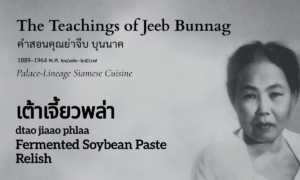
Fermented Soybean Paste Dipping Relish (เต้าเจี้ยวพล่า; dtao jiaao phlaa)
Dtao jiaao phlaa, fermented soybean paste relish bruised with lemongrass, kaffir lime, and tamarind. From Jeeb Bunnag, 1933.
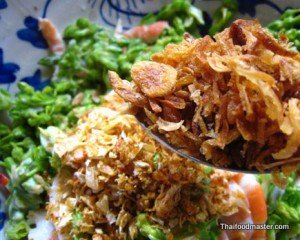
ยำดอกขจร
The first Thai restaurant in London was opened during the 1960's by HRH Princess Jurairat Nasiriman (1910-2000) (พระเจ้าวรวงศ์เธอ พระองค์เจ้าจุไรรัตนศิริมาน), the granddaughter of HRH King Mongkut (Rama IV). Princess Jurairat chose to offer this salad on the menu and named it "Salad of Thai Milkweed Flower". (Other names: Cowslip creeper, Telosma Cordata).
This fresh and tasty salad is so vibrant and easy for us to enjoy, it takes in the very basic flavors, sweet, salty, hot and sour and wrap them in a creamy coat of reduced coconut cream. The milkweed flower buds retain their crunchiness and their pleasant fragrance with only a gentle and very quick blanching in sweet boiling water.
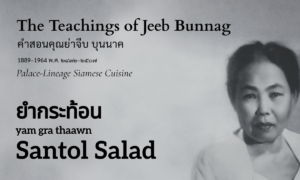
Santol Salad (ยำกระท้อน; yam gra thaawn)
Yam gra thaawn, tart santol salad with pork, shrimp, and crushed peanuts. Fruit is salt-soaked and air-dried to reduce bitterness. Jeeb Bunnag, 1933.
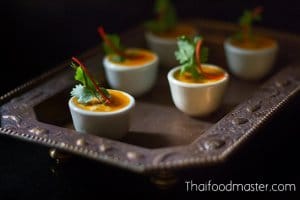
ม้าอ้วน
ตำรับ "ม้าอ้วน" นอกจากจะเป็นเครื่องว่าง หรือ อาหารเรียกน้ำย่อย (Starter หรือ hors d'oeuvres) ยังจัดเป็นอาหารจานเคียง หรือเครื่องแนม ใช้รับประทานกับอาหารพวกแกงต่าง ๆ ท่านผู้หญิงเปลี่ยน ได้บันทึกตำรับเอาไว้ใน ปริเฉจที่ ๔ ของตำรา"แม่ครัวหัวป่าก์" ของท่าน ลักษณะอาหาร จะเป็นเนื้อหมูสับผสมกับกุ้ง ปรุงรสด้วย รากผักชี กระเทียม พริกไทย เกลือ เคล้าใส่ไข่เป็ด และกะทิเล็กน้อย นำใส่ถ้วยตะไลนึ่งจนสุก
ข้าวเม่าบด
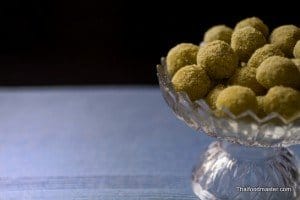
การดัดแปลงตำรับของหวานจากข้าวเม่า ท่านขุนฯ ว่า "ข้าวเม่าบด" นี่แหละคลาสสิกที่สุด ใช้ศิลปะ ในการปรุงแบบไทย ๆ มากที่สุด เพราะมีการนำข้าวเม่ามาบด มาคลุก มาปั้น ผ่านส่วนผสมแค่น้ำตาล และมะพร้าว ซึ่งเป็นหัวใจหลักของการทำขนมไทย พร้อมอบควันเทียนและร่ำกลิ่นดอกไม้ ที่เป็นขั้นตอนสุดท้ายของขนมไทย ตำรับข้าวเม่าชนิดอื่น ไม่มีอย่างนี้
ส่วนผสมใน "ข้าวเม่าบด" จึงมีแค่ 3 อย่าง คือ ข้าวเม่า น้ำตาล มะพร้าวห้าวคั้นกะทิ และ มะพร้าวทึนทึกขูด แค่นี้ก็ทำให้ขนมมีเสน่ห์ได้ขอรับ !!!
ปลาร้าผัดทรงเครื่องสูตรสายเยาวภา
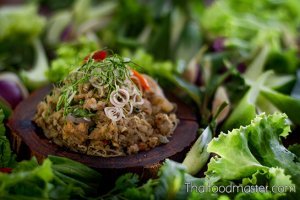
ถ้าจะพูดถึงวัฒนธรรมอาหารที่ยั่งยืนผ่านยุคผ่านสมัยยาวนานต่อเนื่องกันมาจนปัจจุบันสำหรับคนไทย เห็นจะไม่พ้น "ปลาร้า" ไปได้ หลักฐานทางประวัติศาสตร์มากมายชี้ชัดว่า วัฒนธรรมปลาร้าเป็นวัฒนธรรมร่วมของผู้คนในดินแดนอุษาคเนย์เป็นอาหารของชนในวัฒนธรรม มอญ-เขมร หรือในดินแดนสุวรรณภูมิแห่งนี้ ม.ร.ว.คึกฤทธิ์ ปราโมช ซึ่งเป็นปราชญ์ทางด้านอาหารผู้หนึ่งถึงกับกล่าวไว้ว่า ปลาร้าเป็นวัฒนธรรมอาหารของมอญตั้งแต่สมัยทวารวดี ทวารวดีไปถึงที่ไหนก็จะมีปลาร้าไปถึงที่นั่น คงเช่นเดียวกับวัฒนธรรมของขอมล่ะกระมัง อิทธิพลขอมไปถึงทีไหนก็มีปลาร้าไปถึงที่นั่น และสำหรับคนไทยปัจจุบันแถบภาคเหนือและอีสาน ซึ่งสืบสานอยู่ในกลุ่มชาติพันธุ์ไท-ลาว มาแต่เดิม รวมทั้งคนไทยในภาคกลางที่ความจริงก็คือกลุ่มคนจากทางลาวจากการถูกกวาดต้อนมาครั้งสงครามสมัยก่อน หรือจะมีเชื้อสายคนพื้นถิ่นดั้งเดิมมาแต่ครั้งอู่ทอง อยุธยาก็เถอะ ก็นับเนื่องเป็นคนสืบสายวัฒนธรรมทวารวดีอยู่ดีนั่นแหละ จึงไม่แปลกที่คนในภูมิภาคที่กล่าวมานี้จะคุ้นเคยกับปลาร้ามานาน และด้วยภูมิภาคที่ราบลุ่มแม่น้ำ และการตั้งถิ่นฐานของคนสมัยก่อนต้องอิงอยู่กับแหล่งน้ำธรรมชาติ สัตว์น้ำจึงเป็นอาหารหลัก วัฒนธรรมปลาร้าจึงเป็นวัฒนธรรมที่อยู่ร่วมและยั่งยืนนานมาเป็นพัน ๆ ปี
Tom Yam of Snakehead Fish (ต้มยำปลาช่อน; dtohm yam bplaa chaawn)
Dtohm yam bplaa chaawn: snakehead fish in milled-rice broth, the chili jam pounded off the fire and dissolved in the bowl. Tamra Gap Khao, 1890.
Pickled bean curd chili relish (น้ำพริกเต้าหู้ยี้; naam phrik dtao huu yee)
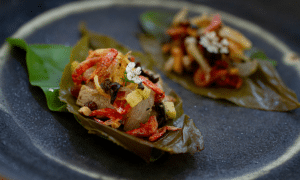
Miang Sot (เมี่ยงซด) - Miiang Soht, circa 1928
The word ‘miang’ is often used to designate Thai hors d’oeuvre-like snacks consisting of various ingredients wrapped in leaves. To chew on a miang parcel delivers a delightful melee of flavors and textures, each triumphing over the other in a continuous transformation, creating a captivating and ever-evolving taste experience throughout the bite.
Miang sot is a fermented leaves dish that appeared in a cookbook published in honor of Thao Suphatigaanapakdee (also known as Prik Sirisamphan) (ท้าวสุภัติการภักดี (ปริก ศิริสัมพันธ์)), in 1928. Titled Gap Khaao Thai (กับข้าวไทย), the book features a collection of recipes that were once prepared and served to King Chulalongkorn Rama V. The author, Sohmboon Sirisamphan (เถ้าแก่ สมบุญ ศิริสัมพันธ์) a respected elder (known as thao gaae (เถ้าแก่) in Thai), was a distinguished businessman of Chinese origins.
The dish is composed of fermented tea leaves; it is perhaps the closest tea leaves wrap to the ‘miang’ style introduced to the Siamese court by Princess Dara Rasami in the late 1800s. The dish gives us a glimpse of flavor of what her household, which participated in the informal marketplace events within the palace, might have to offer.
The popularity of miang in Siamese cuisine is tied to the history of two kingdoms, Siam and Lanna, and the life of one princess, Princess Dara Rasami. The daughter of King Inthawichayanon of Chiang Mai and the fifth consort of King Chulalongkorn, the princess was selected at the age of thirteen, in 1886, to serve as a consort to King Chulalongkorn in the Inner Palace; the decision was shaped by both political strategy and personal transition. At the time, Siam was consolidating its power and extending its influence over neighboring regions, including Lanna. As the ruler of Chiang Mai, Princess Dara Rasami’s father, Intawichayanon, viewed the move as a strategic alliance. In return, King Chulalongkorn presented him with the medal of the Order of Chula Chom Klao, which is the Siamese equivalent of a knighthood.
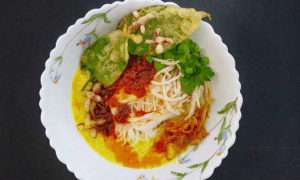
c1908 Fermented rice noodles and golden coconut chicken sauce with an Indian flair (ขนมจีนแขก หรือ ไก่ต้มขนมจีน ; khanohm jeen khaaek)
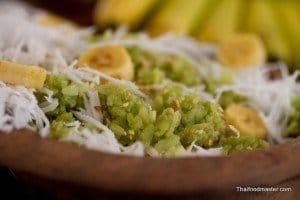
ข้าวเม่าคลุก
รู้หรือไม่ว่า..ก็เป็นด้วย "ข้าวเม่าคลุกกับกล้วยไข่" ธรรมดา ๆ นี่แหละ ถึงได้พัฒนาตำรับไปเป็น "ข้าวเม่าทอด" แพงามน่ากิน และพอถูกนำพาเข้าเมือง ข้าวเม่าที่โดน "ราง" จนกรอบพอง เพื่อให้เก็บได้นาน ก็ได้รับการยกระดับ ถูกจับแต่งเติมเสริมสวย กลายเป็น "ข้าวเม่าหมี่" เพราะดัดแปลงจากผัดหมี่กรอบบ้าง "ข้าวเม่าเบื้อง"ที่ดัดแปลงจากขนมเบื้องบ้าง ดูหรูหราเจริญหูเจริญตา เป็นสาวชาวกรุงไปเสียเลย
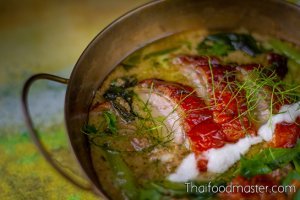
แกงเขียวหวานเป็ดย่าง
ตำรับแกงแบบไทยแท้ ๆ นั้น ไม่ใช่แกงเข้ากะทิดอกขอรับ ถ้าจะนับความเป็นไทยแท้ ๆ แบบที่เรียกว่า ไทยแท้ (Authentic) นั้นเห็นจะหายากเสียแล้ว คงต้องกลับไปรับประทานพวกต้มปลาร้า หรือแกงเลียง แกงต้มส้ม ไปโน่นล่ะขอรับ ด้วยพริกที่เราเคยชินกินแล้วเผ็ดร้อนกันในปัจจุบันนี้ หาใช่ของพื้นเมืองไทยแท้มาแต่เดิมไม่ พวกฝรั่งเพิ่งนำเข้ามาในสมัยอยุธยานี่เอง ส่วนแกงแบบเข้ากะทิ เราก็รับมาจากแขกมลายูหรือแขกเปอร์เซีย ในสมัยอยุธยาเช่นกันแล้วค่อยมาพลิกแพลงดัดแปลงให้เป็นแกงแบบไทย ๆ
ดังนั้น คนสมัยก่อนถึงได้เรียกพริกสีแดง ๆ เขียว ๆ นี่ว่า พริกเทศ ส่วนเครื่องปรุงที่ให้รสเผ็ดร้อนมาแต่เดิมนั้น เรามักเรียกใช้ พริกไทย ตะไคร้ ขิง ข่า กระชาย เสียมากกว่า จึงเห็นได้ว่าแกงเลียง แกงต้มส้ม แกงต้มปลาร้า ถึงไม่มีพริกเทศเป็นเครื่องปรุงหลัก ภายหลังต่อมาคนไทยจึงมีวัฒนธรรมอาหารพวกต้มแกงดัดแปลงให้ถูกปากถูกลิ้น ใส่พริกเทศ ใส่กะทิ เข้าสมุนไพร พัฒนามาเป็นแกงส้ม ต้มยำ ต้มโคล้ง ต้มข่า แกงเผ็ด แกงคั่ว แกงฉู่ฉี่ แกงพะแนง แกงมัสมั่น ฯลฯ กันสืบมา ซึ่งก็ว่าเป็นแกงออกสีพริกแดงกันเป็นส่วนใหญ่ หากก็มีคนถามว่า แล้วแกงเขียวหวานล่ะ มีมาแต่เมื่อใดกันเล่า เรื่องนี้เห็นทีจะสืบค้นสืบเค้ายากหน่อย เพราะไม่มีบันทึกเป็นลายลักษณ์อักษรแน่ชัด ได้แต่สันนิษฐานและอนุมานเอา
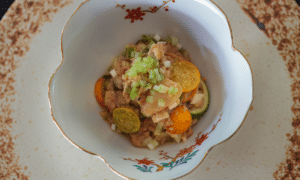
Metropolitan Chili Relish: The 20-Ingredient Pinnacle of Thai Relishes (น้ำพริกนครบาล; Naam Phrik Na Khaawn Baan)
Originating in the early 1800s, Metropolitan Chili Relish is cheerful and complex, yet unassuming – a subtly epic relish composed of more than 20 ingredients, some of which are seasonal. The relative absence of this relish from contemporary menus could be attributed to its difficult-to-assemble ingredient list, coupled with a dwindling number of chefs who are adept at its preparation.
However, despite its intricate composition, the relish adheres to the same foundational culinary principles of other shrimp paste (kapi) chili relishes. Here, though, the savoriness is strengthened with smoke-dried fish, grilled shrimp and pork fat crackling; and the relish is seasoned to a citrus-infused, fruity, sour-sweet leading and salty to follow flavor profile, to which numerous sour and sour-sweet elements are mixed in – akin to a deep-rooted tree extending its branches to bear colorful fruits that shine in varying shades of a tartness.
1
2
3
4
5
6
7
8
9
10

Get Access – Join Thaifoodmaster Today
Practical and kitchen-tested recipes with a mix of theory, history, psychology, and Siamese culture tidbits.
-
Get access to everything right away. Unlock more than 50 Masterclasses, over 700 recipes and Articles
Access to Thaifoodmaster’s constantly growing library of prime professional classes, articles, recipes and videos on Siamese culinary topics, available nowhere else in English.
-
GET EXTRA - New Masterclasses and Daily Recipes
Gain access to NEW masterclasses as they become available. Access DAILY translations of heritage-recipes.
-
1-1 support from Hanuman
1-1 support from Hanuman to help you achieve your professional Thai culinary goals
-
Live Q&A Sessions
The opportunity to join a monthly live two-hour videoconference where I can answer your questions.
-
Great Value!
one year access for the price of 3 days in-person training.
You will get everything you need to:
-
To Get inspired
When you design or build a new menu for an event or restaurant or even prepare for dinner with friends.
-
To Satisfy your curiosity.
Finally !
-
To Master Your Craft
Master your Thai cooking skills and expand your repertoire.
It is truly brilliant with a revolutionary approach introducing aspects and concepts never broached by cookbooks.

Ian Westcott
Sourcing Wines for Discerning Private Clients
© 2008 – 2026 Thaifoodmaster


