
Celebrating the Art of Siamese Culinary Wisdom and Thai Cuisine
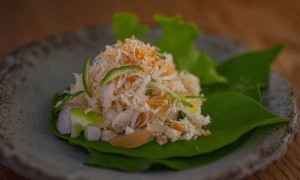
bplaa naaem (ปลาแนม) - A Siamese aristocratic small plate snack
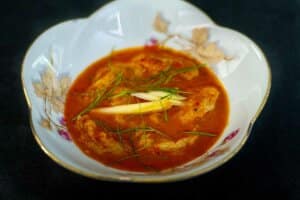
c1933 An Auspicious fish ball curry with two basils (แกงเผ็ดปลาเล็กปลาน้อย; gaaeng phet bplaa lek bplaa naawy)
Typically, in Central-style curries, different types of basil are not used together. In higher cuisine, it is an unstated – but understood – practice to avoid blending the definitive scents of various basils. A curry’s final herbal identity is intended to remain definitively with its basil: the citrus notes of holy basil; the spicy-woody and pungent flavor of tree basil; the tart fragrance of lemon basil; or the cooling anise sensation of Thai basil.
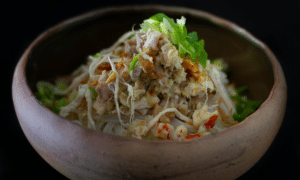
Naam Yaa Jeen - Fermented Rice Noodles with Chinese Sauce by HRH Prince Krom Luang Pitak Montri (น้ำยาจีน อย่างกรมหลวงพิทักษมนตรี)
Among the various curries that can be poured over khanom jeen fermented rice noodles, this broth, known as Chinese-style “naam yaa,” is unique in that it is a water-based curry that does not have chilies. As such, rather than the typical reddish-rust color of most coconut-based naam ya dishes from the Central Plains of the Kingdom, the sauce glows with a soft, light ivory hue, beautifully reflecting the dish’s natural sweet-savoriness, which is derived from slow-braising three proteins – chicken, pork and shrimp – along with a curry paste galvanized by smoke-dried fish and aromatic roots like galangal, fingerroot and sand ginger. The naam ya broth is served over a bed of fermented rice noodles and garnished with toppings such as delicate pulled chicken breast threads, golden-crispy fried shallots and garlic, and vivid green fresh coriander leaves and spring onion. All these elements add a visual grace and a hint of freshness to the robust broth – the signature dish of Prince Krom Luang Pitak Montri (กรมหลวงพิทักษ์มนตรี).
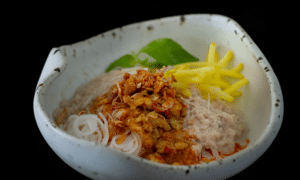
Naam Yaa Neuua – Northern Style Naam Ya according to Lady Plean Passakornrawong (น้ำยาเหนือ)
This fermented rice noodle dish is served with a slow-cooked, chili-less broth made from pounded fish meat and aromatics cooked in coconut cream. Creamy in color and velvety in texture, the broth is seasoned either with fish sauce, fermented fish or salted fish according to one’s preferences. The broth is allowed to slow-cook, achieving its full richness over a couple of hours. Once ready, the broth is poured over the noodles, which are then topped with a glossy-orangey layer of minced shrimp meat fried with their tomalley in pork lard. Complementing this richness are crunchy yellowish bean sprouts blanched in turmeric-tinted water, a sprinkle of sweet, golden crispy-fried shallots and, finally, green lemon basil leaves that endow the dish with a unique, rustic herbal persona.
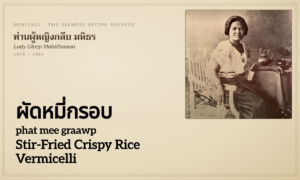
Stir-Fried Crispy Rice Vermicelli (ผัดหมี่กรอบ; phat mee graawp)
Phat mee graawp, rice vermicelli fried crisp in pork lard, seasoned salty–sweet–sour, finished with slivered bitter orange. Lady Gleep Mahithaawn, 1949.
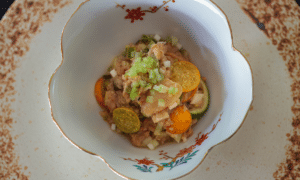
Metropolitan Chili Relish: The 20-Ingredient Pinnacle of Thai Relishes (น้ำพริกนครบาล; Naam Phrik Na Khaawn Baan)
Originating in the early 1800s, Metropolitan Chili Relish is cheerful and complex, yet unassuming – a subtly epic relish composed of more than 20 ingredients, some of which are seasonal. The relative absence of this relish from contemporary menus could be attributed to its difficult-to-assemble ingredient list, coupled with a dwindling number of chefs who are adept at its preparation.
However, despite its intricate composition, the relish adheres to the same foundational culinary principles of other shrimp paste (kapi) chili relishes. Here, though, the savoriness is strengthened with smoke-dried fish, grilled shrimp and pork fat crackling; and the relish is seasoned to a citrus-infused, fruity, sour-sweet leading and salty to follow flavor profile, to which numerous sour and sour-sweet elements are mixed in – akin to a deep-rooted tree extending its branches to bear colorful fruits that shine in varying shades of a tartness.
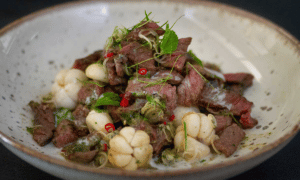
Grilled beef and mangosteen (or grape) salad with mint dressing, by Princess Jongjittanom Dissakul (ยำเนื้อย่างกับมังคุดหรือองุ่น; yam neuua yaang gap mangkhoot reuu angoon)
This grilled beef salad with luscious mangosteen (or grapes) is seasoned with a crisp, cooling dressing of fermented shrimp paste and mint. The mangosteen’s tropical character – a flavor redolent of many other fruits – dominates its fruity essence and is a perfect complement to both the grilled meat and the lingering, sour-salty-sweet, minty dressing. Furthermore, citrusy notes of thinly sliced lemongrass and kaffir lime leaves, coupled with richness of thickened coconut cream, unite the caramelized, meaty elements with the dish’s fruity spectrum.
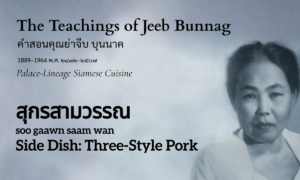
Three-Style Pork (สุกรสามวรรณ; soo gaawn saam wan)
Soo gaawn saam wan: fatty pork reduced three ways—fish sauce with palm sugar, garcinia leaf juice, and fermented bean curd. Jeeb Bunnag, 1933.
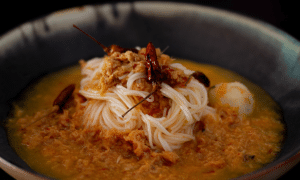
Khanohm Jeen Naam Yaa (ขนมจีนน้ำยา) - Fermented Rice Noodles with Minced Fish in Aromatic Coconut Curry
In the Central Plains of the Kingdom, fermented rice noodles are inextricably linked to a dish known as naam yaa. Composed of a dense, coconut-based minced fish curry, the dish is infused with layers of salted fish and possesses the distinctive, invigorating and purifying notes of fingerroot. Typically, naam yaa is served with fresh lemon basil as the herb of choice along with an array of side dishes collectively known as meuuat khanohm jeen (เหมือดขนมจีน). These include blanched bean sprouts seasoned with a touch of turmeric for color, fresh lemon basil leaves, thinly sliced three colored chilies, and ground chili for added heat. More elaborate versions will add blanched Chinese bitter gourd slices, batter-fried young morning glory shoots, and fresh shrimp minced and fried with its tomalley in pork lard, as well as crispy-fried shallots as the finishing touch.
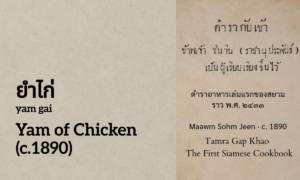
Yam of Chicken (ยำไก่; yam gai)
Yam gai: chicken simmered in coconut milk until dry, then dressed with mint, kaffir lime and green mango. Maawm Sohm Jeen, Tamra Gap Khao, 1890.
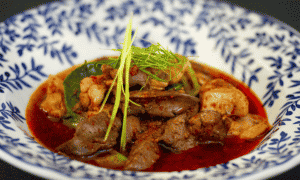
c1933 Water-based spicy curry of fatty chicken and seven spices (แกงเผ็ดไก่น้ำมัน พ.ศ. 2476; gaaeng phet gai naam man)
This water-based, spicy chicken curry is made with corn-yellow rendered chicken fat instead of coconut cream. Dark reddish-brown in color, this full-bodied and fatty beak-to-tail curry presents the chicken identity and personality in both a corporeal and tasty manner. Spices such as cardamom, nutmeg, mace and clove are added into the curry paste to temper the gamey-irony flavor of the offal and deodorize the meat, resulting in a luscious dish that is beautifully layered with textures and flavors.
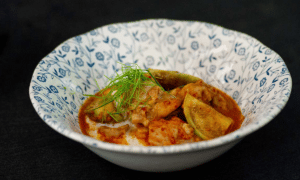
Chiang Mai-Style Chicken Gaaeng Garee (แกงเผ็ดกะหรี่เชียงใหม่ ; gaaeng phet garee chiang mai)
I discovered this unusual curry recipe hidden in a 1970 memorial book for Ms. Bootree Gralaksa. Born in Bangkok in 1898, Ms. Bootree spent her entire life, from childhood on, in a wooden house on Maha Chak Road (Pra Nakorn). One could say that she was born to be a great cook; just fourteen years old when her mother died, Ms. Bootree became the sole caregiver for her four siblings, a duty that she performed with a love and attention that endowed her with remarkable cooking skills. Her memorial book showcases now-forgotten dishes that were popular in the Bangkok of the early 1900s, such as Beautiful Curry (แกงหงษา ; Gaaeng Hohng Saa), and also includes some of her one-of-a-kind culinary creations – such as this dish, which she dubbed “Chiang Mai-Style Spicy Curry”.
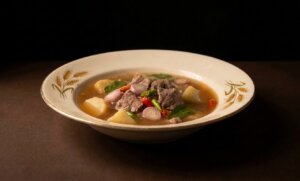
Dtohm Jiu Beef Soup (แกงต้มจิ๋ว; gaaeng dtohm jiu)
Dtohm Jiu Beef Soup: sirloin simmered soft with sweet potato, soured with tamarind, finished with bird's eye chili and lime. Tamrap Sai Yaowapa, 1935.
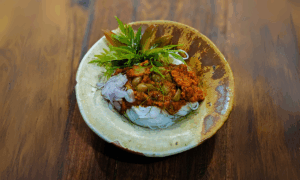
c1933 Khuaa Curry with Bang Chang Chilies (แกงคั่วพริกขี้หนูหรือพริกชี้ฟ้า; gaaeng khuaa phrik baang chaang): Princess Dissakul's Smoky Fish Curry Recipe
Princess Dissakul's 1933 royal Thai curry featuring secretly pounded smoked fish in rich coconut cream with Bang Chang chilies and aromatic phrik khing paste. This complex, smoky curry builds layers of earth and ember, traditionally served over khanom jeen fermented rice noodles and topped with tangy pickled garlic for a perfect balance of smoke, spice, and tang.
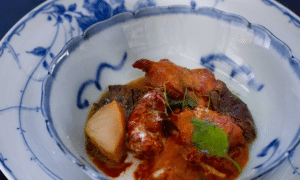
Duck Curry with Prunes and Apples (แกงเป็ดกับพรูนและแอปเปิ้ล อย่าง ม.ล. เติบ ชุมสาย; gaaeng bpet gap phruun lae aaep bpeern)
When it comes to pairing fruits with meats in savory dishes, it’s hard to match the bold tangy-luscious combination of apples and prunes in this old-fashioned coconut-based spicy curry with braised duck. The dish is seasoned to a spicy, salty, and sour-sweet flavor profile, which is further intensified by the prunes’ subtle nectareous, savory-sweetness and the apples’ fruity, sweet-tartness. This curry is a perfect example of how fruits can complement the already complex and profound aromatic relationships between meaty-savory flavors, the curry paste’s aromatic identity, and the dish’s herbal character of Thai basil and fresh peppercorns – creating a most memorable flavor impression.
Bite-Sized Fried Shrimp-Rice Cake Parcels Wrapped With Fresh Garnishes in Cabbage Leaves (ส้มผักสด; sohm phak soht)
Sohm phak soht: coconut-battered fried shrimp-rice cakes wrapped in Chinese cabbage with pickled ginger, peanuts, shallots, lime and bitter orange. Jeeb Bunnag, 1945.
Seasoned Chicken Tongue Relish (ลิ้นระกาปรุง; lin ra gaa bproong)
Lin ra gaa bproong, pounded chicken tongue relish with ruaan shrimp and ginger, from Jeeb Bunnag's 1933 Cookbook of Rice Companion Recipes.
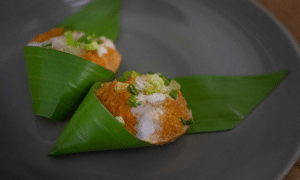
c1908 Haaw Mohk steamed savory curried cakes featuring crab meat, chicken, and pork (ห่อหมกทรงเครื่อง อย่างท่านผู้หญิงเปลี่ยน ภาสกรวงศ์ แม่ครัวหัวป่าก์ พ.ศ. 2451 ; haaw mohk sohng khreuuang)
This festive and rich recipe is for a coconut-based haaw mohk featuring chicken, crab and pork meats. This recipe was chosen from the various versions available at the time by Lady Plean Passakornrawong, for inclusion in her epic cookbook Maae Khruaa Huaa Bpaa (MKHP) (ท่านผู้หญิงเปลี่ยน ภาสกรวงศ์ตำราแม่ครัวหัวป่าก์).
Stir-Fried Macaroni (มักกะโรนีผัด; mak ga ro:h nee phat)
Mak ga ro:h nee phat, macaroni stir-fried with garlic-lard paste, pork, shrimp, and roasted peanuts. From Jeeb Bunnag, 1933.
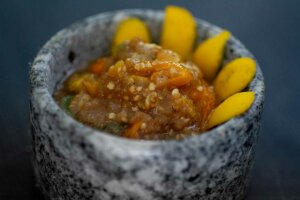
Fermented shrimp paste relish with bitter eggplant seeds (น้ำพริกมะเขือขื่น หรือ มะเขือเหลือง ; naam phrik makheuua kheuun)
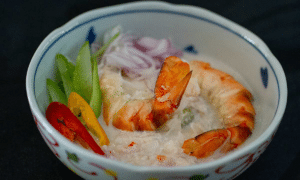
Giant river prawn lohn (กุ้งหลวงหลน ; goong luaang lohn)
This lohn recipe is made using fresh river prawns. The recipe was altered by Lady Plean Passakornrawong (ท่านผู้หญิงเปลี่ยน ภาสกรวงศ์) to provide an alternative to lohn recipes that used pla ra-like fermented shrimp products called กุ้งเจ่า (goong jao) and กุ้งจ่อม (goong jaawm).
1
2
3
4
5
6
7
8
9
10
11
12
13
14

Get Access – Join Thaifoodmaster Today
Practical and kitchen-tested recipes with a mix of theory, history, psychology, and Siamese culture tidbits.
-
Get access to everything right away. Unlock more than 50 Masterclasses, over 700 recipes and Articles
Access to Thaifoodmaster’s constantly growing library of prime professional classes, articles, recipes and videos on Siamese culinary topics, available nowhere else in English.
-
GET EXTRA - New Masterclasses and Daily Recipes
Gain access to NEW masterclasses as they become available. Access DAILY translations of heritage-recipes.
-
1-1 support from Hanuman
1-1 support from Hanuman to help you achieve your professional Thai culinary goals
-
Live Q&A Sessions
The opportunity to join a monthly live two-hour videoconference where I can answer your questions.
-
Great Value!
one year access for the price of 3 days in-person training.
You will get everything you need to:
-
To Get inspired
When you design or build a new menu for an event or restaurant or even prepare for dinner with friends.
-
To Satisfy your curiosity.
Finally !
-
To Master Your Craft
Master your Thai cooking skills and expand your repertoire.
It is truly brilliant with a revolutionary approach introducing aspects and concepts never broached by cookbooks.

Ian Westcott
Sourcing Wines for Discerning Private Clients
© 2008 – 2026 Thaifoodmaster


