
Celebrating the Art of Siamese Culinary Wisdom and Thai Cuisine
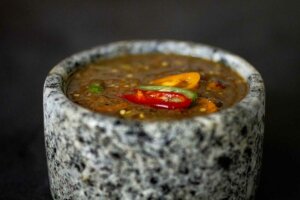
Fermented soybean paste chili relish (น้ำพริกเต้าเจี้ยว; naam phrik dtao jiaao)
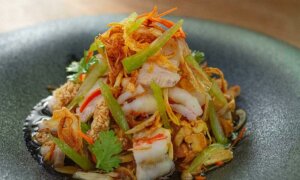
c1933 Sour bilimbi fruit and crispy candied peanut salad with pork, shrimp and pork fat (ยำตะลิงปลิง ; yam dtaling bpling)
A candied peanut bar might be considered an unlikely ingredient for an old-fashioned Siamese-style salad. Yet, peanut bars were familiar to the Siamese as early as the Ayutthaya period and were part of a broader set of Teochew Chinese sweets called, in Thai, “khanohm janap (ขนมจันอับ)”.
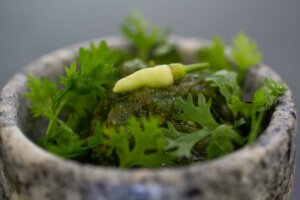
Chili relish of coriander leaves (น้ำพริกผักชี ; naam phrik phak chee)
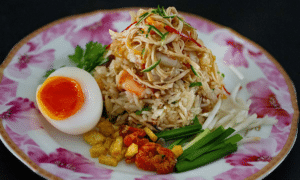
Khao Mee Seasoned Rice (ข้าวหมี่อย่างคลุก; khaao mee yaang khlook)
This article explores two methods of preparing Mee Fried Rice - the traditional Khao Mee Fried Rice and the lighter, seasoned rice alternative known as khaao mee yaang khlook. Discover the flavor chemistry at play and choose your preferred method for a delicious meal.
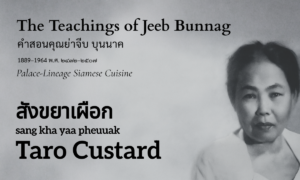
Taro Custard (สังขยาเผือก; sang kha yaa pheuuak)
Sang kha yaa pheuuak, a steamed coconut cream custard with mold-pressed taro slices, from Jeeb Bunnag's 1933 Cookbook of Rice Companion Recipes.
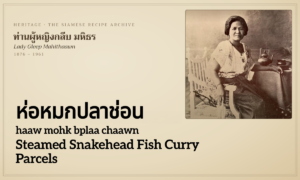
Steamed Snakehead Fish Curry Parcels (ห่อหมกปลาช่อน; haaw mohk bplaa chaawn)
haaw mohk pla chon: snakehead fish steamed in banana leaf with one coconut pressed into three grades of milk. Lady Gleep Mahithaawn, 1949.

Snakehead Fish Curry with Pickled Madan (แกงปลาช่อนมะดันดอง; gaaeng bplaa chaawn ma dan daawng)
Snakehead Fish Curry with Pickled Madan incorporates the fish tail into its curry paste and balances pickled sour cucumber with kaffir lime. From Maawm Ying Soophaa, 1949.

phrik Khing Phukam (พริกขิงภุกาม; phrik khing phoo gaam)
Phrik khing phukam, a crispy phrik khing (พริกขิง) of deep-fried smoke-dried fish and shrimp with lemongrass, bound in a fish sauce glaze. Jeeb Bunnag, 1933.
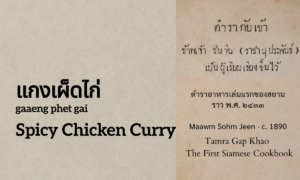
Spicy Chicken Curry (แกงเผ็ดไก่; gaaeng phet gai)
Gaaeng phet gai, chicken simmered in a pork-lard-fried red curry paste with optional brandy or sherry. From Maawm Sohm Jeen's Tamra Gap Khao, c. 1890.

(c1908) nohpa gaao sour curry (gaaeng nohp pha gaao ; แกงนพเก้า)
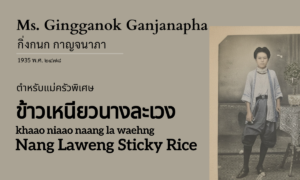
Nang Laweng Sticky Rice (ข้าวเหนียวนางละเวง; khaao niaao naang la waehng)
Khaao niaao naang la waehng, black glutinous rice balls deep-fried in lard with spiced beef and potato filling. Delicious Side Dishes, 1935.
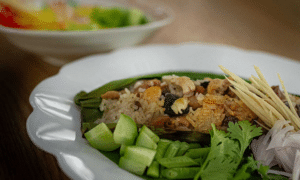
Grilled banana leaf parcels filled with butter-fried rice with chicken, chicken offal and dried spices, served with a sour-sweet coconut-base vegetable relish (ข้าวงบไก่ อาจาดอังวะ ; khaao ngohp gai aajaat angwa)
The khaao ngohp gai (ข้าวงบไก่) recipe by Mom Chao Sai Ladawan (Princess Saisawali Phirom) evokes the flavor and aesthetics of Muslim-style cooking. First, cooked rice, chicken, and chicken offal are fried with butter and perfumed with whole spices. The buttery fried rice is wrapped in banana leaves and then grilled, forming a crispy outer crust of spiced-infused rice grains.

Fried Kaffir Lime Chili Relish (น้ำพริกมะกรูดผัด ; naam phrik magruut phat)
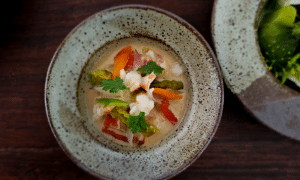
Grilled Eggplant Lohn Relish with Shrimp (หลนมะเขือเผากุ้งสด; Lohn Ma Kheuua Phao Goong Soht)
Lohn relish of grilled eggplant (หลนมะเขือเผากุ้งสด) captivates with its subtle contrasts and complex layering of flavors. Central to this dish is grilled eggplant, which is known for its inherent bitterness due to phenolic compounds like chlorogenic acid. However, this bitterness succumbs to a delightful transformation when the eggplant is simmered in coconut cream. The fats and sugars in the coconut cream effectively mask these bitter notes, resulting in a deep, satisfying savory relish that is both well-balanced and rounded.
Accompanying the eggplant are roasted shallots and garnet-blushed grilled tomatoes. The grilled tomatoes not only add natural sweetness and brightness to the dish, but also contribute to its visual charm via their muted orangey reds. This color palette complements the eggplant’s earthy, slightly sweet taste, represented through rich, velvety white-green hues. The interplay of colors in the dish mirror the complexity of its flavors.
The minced shrimp meat introduces a briny sweetness and a contrasting texture. The relish is seasoned to a sour-sweet leading salty to follow flavor profile, enhancing the smoky sweetness imparted by the grilled ingredients and creating a palette of flavor and color that is as attractive as it is delicious.
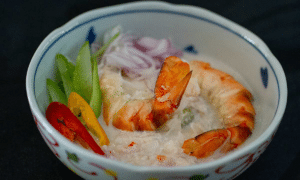
Giant river prawn lohn (กุ้งหลวงหลน ; goong luaang lohn)
This lohn recipe is made using fresh river prawns. The recipe was altered by Lady Plean Passakornrawong (ท่านผู้หญิงเปลี่ยน ภาสกรวงศ์) to provide an alternative to lohn recipes that used pla ra-like fermented shrimp products called กุ้งเจ่า (goong jao) and กุ้งจ่อม (goong jaawm).
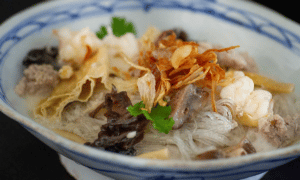
Gaaeng Raawn (แกงร้อน)
Gaaeng raawn (แกงร้อน) is a colloquial Thai term that refers to ‘hot curry’. Today, gaaeng raawn is used to denote soups or curries served with steamed rice. While the precise origin of the term is unclear, gaaeng raawn (แกงร้อน) was deployed in the 1800s for a specific dish – a Siamese soup featuring glass noodles, cooked as either a coconut or a water-based soup with an assortment of dry ingredients revered in Chinese cuisine. The soup’s potential health benefits, combined with its ease of preparation and subtle yet profound flavor, made it a popular choice for entertaining large groups of people, of all ages and backgrounds. The soup is often augmented with fresh proteins: in its more luxurious versions, multiple proteins may be added, including a combination of chicken, pork, shrimp, squid, and crab meat. Thus, over the years, gaaeng raawn (แกงร้อน) was established as a staple source of comfort and warmth for people of all walks of life in Siamese society.
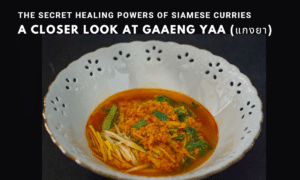
The Secret Healing Powers of Siamese Curries – A Closer Look at Gaaeng Yaa (แกงยา)
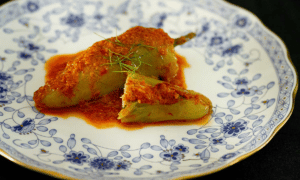
Chuu Chee Curry of Stuffed Banana Chilies with Pork, Shrimp and Crab Meat (ฉู่ฉี่พริกสอดไส้ ; chuu chee phrik yuaak saawt sai)
This chuu chee features avocado-green banana chilies and the pinkish mixture of pork, shrimp and crab meats. The chilies are sliced open and stuffed with a mixture of the meats, which is seasoned with the basic saam gluuhr (สามเกลอ) paste – the Siamese trio of coriander roots, Thai garlic and white peppercorns. The stuffed chilies are then steamed before being cooked in a thick, reddish, coconut cream-based curry. The liquids collected in the tray during the steaming process are packed with the light sweet fruitiness of the banana chilies; these liquids are reserved and added to the broth, producing a bright and light-bodied dish.
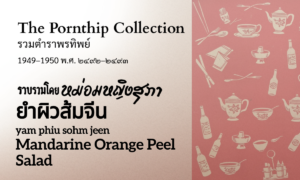
Mandarine Orange Peel Salad (ยำผิวส้มจีน; yam phiu sohm jeen)
Yam phiu sohm jeen features carefully prepared mandarine orange peel combined with minced shrimp and pork. From Maawm Ying Soophaa's 1949 royal Thai culinary manuscript.

Krayathip (กระยาทิพย์; gra yaa thip)
Krayathip, spiced pork and coconut parcels wrapped in banana leaves and grilled. From Jeeb Bunnag's 1945 cookbook of Thai snacks and desserts.
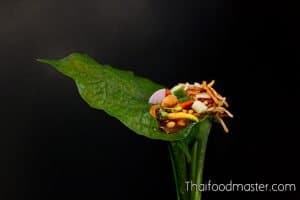
เมี่ยงคำ
ค้นข้อมูลดูว่าตำรับ "เมี่ยงคำ" เริ่มปรากฏมีบันทึกไว้เป็นลายลักษณ์อักษรแต่เมื่อใดกันแน่ สอบทานดูตำราอาหารเก่า ๆ หลายตำรับ ที่ตีพิมพ์ในสมัยรัชกาลที่ ๕ ก็ไม่พบ "เมี่ยงคำ" ในวิถีอาหารไทยโบราณแต่อย่างใด พบแต่ เมี่ยงลาว หรือ เมี่ยงพายัพ ซึ่งหมายถึงเมี่ยงที่มาจากทางเหนือ จากการอ่านหนังสือหลาย ๆ เล่ม เพื่อหาข้อมูลพบว่า "เมี่ยง" ได้เริ่มเป็นที่นิยมแพร่หลายในรั้วในวัง ก็หลังจากที่พระราชชายาเจ้าดารารัศมี ลงมารับราชการในราชสำนักที่กรุงเทพฯ และได้นำวัฒนธรรมการกินเมี่ยง ซึ่งเป็นหนึ่งในวิถีการดำรงชีวิตแบบล้านนาติดมาในหมู่ข้าราชบริพารชาวเหนือในตำหนักของพระองค์ ซึ่งบรรดาชาววังในสมัยนั้นจะเห็นเป็นสิ่งแปลกตาโก้เก๋ และคอยเอาอย่างในบางเรื่อง ทำให้หลังจากนั้นจึงค่อยเริ่มมีตำรับเมี่ยงต่าง ๆ ออกมามากมาย ปรากฏในตำราอาหารหรือเครื่องว่างต่าง ๆ ของไทยในสมัยต่อ ๆ มา สำหรับ "เมี่ยงคำ" นั้น พบว่ามีปรากฏครั้งแรก ในบทกาพย์เห่ชมเครื่องว่าง ของรัชกาลที่ ๖ ที่ใช้เป็นบทนำในตอนต้นบทความนี้ ซึ่งนั่นก็แสดงว่า "เมี่ยงคำ" กลายเป็นเครื่องว่างในวังหลวงเป็นที่นิยมกันมากแล้วในสมัยนั้นถึงสามารถขึ้นโต๊ะเครื่องเสวยได้ จึงเป็นข้อสันนิษฐานว่าน่าจะมีกำเนิดมาไม่เก่าไปกว่าสมัยรัชกาลที่ ๕ เป็นแน่แท้ ตำรับ "เมี่ยงคำ" คงจะเกิดจากการคิดประดิษฐ์ทำนำสิ่งละอันพันละน้อย ใส่ไปในคำเมี่ยง พร้อมใส่น้ำเมี่ยง เพื่อรับประทาน ทีละคำ ๆ จึงได้ชื่อว่า "เมี่ยงคำ" เหมือน ๆ หรือทำนองเดียวกันกับ "เมี่ยงอยาก" ที่ คุณป้า ม.ล. เนื่อง นิลรัตน์ เขียนบันทึกไว้ในหนังสือ "ชีวิตในวัง" ที่ตีพิมพ์มาแล้วหลายครั้ง ว่าเกิดจากความอยากกินเมี่ยง ของกลุ่มข้าหลวงวังสวนสุนันทา เวลามานั่งจับกลุ่มคุยกันยามว่างภารกิจ และไปค้นหาของในครัว ได้ กากหมู น้ำตาลปึก กะปิ ฯลฯ ก็นำมารับประทานกันเป็น"เมี่ยง" ที่อร่อยอย่างง่าย ๆ
1
2
3
4
5
6
7
8
9
10
11
12
13
14

Get Access – Join Thaifoodmaster Today
Practical and kitchen-tested recipes with a mix of theory, history, psychology, and Siamese culture tidbits.
-
Get access to everything right away. Unlock more than 50 Masterclasses, over 700 recipes and Articles
Access to Thaifoodmaster’s constantly growing library of prime professional classes, articles, recipes and videos on Siamese culinary topics, available nowhere else in English.
-
GET EXTRA - New Masterclasses and Daily Recipes
Gain access to NEW masterclasses as they become available. Access DAILY translations of heritage-recipes.
-
1-1 support from Hanuman
1-1 support from Hanuman to help you achieve your professional Thai culinary goals
-
Live Q&A Sessions
The opportunity to join a monthly live two-hour videoconference where I can answer your questions.
-
Great Value!
one year access for the price of 3 days in-person training.
You will get everything you need to:
-
To Get inspired
When you design or build a new menu for an event or restaurant or even prepare for dinner with friends.
-
To Satisfy your curiosity.
Finally !
-
To Master Your Craft
Master your Thai cooking skills and expand your repertoire.
It is truly brilliant with a revolutionary approach introducing aspects and concepts never broached by cookbooks.

Ian Westcott
Sourcing Wines for Discerning Private Clients
© 2008 – 2026 Thaifoodmaster


