
Celebrating the Art of Siamese Culinary Wisdom and Thai Cuisine
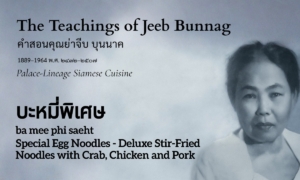
Special Egg Noodles (บะหมี่พิเศษ; ba mee phi saeht)
Ba mee phi saeht, egg noodles stir-fried with crab, chicken, and pork, garnished with scored carrots. From Jeeb Bunnag's 1945 cookbook.
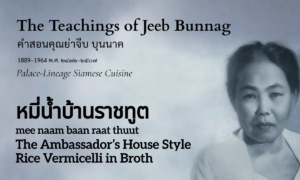
The Ambassador’s House Style Rice Vermicelli in Broth (หมี่น้ำบ้านราชทูต; mee naam baan raat thuut)
The Ambassador's House Style Rice Vermicelli features crispy rice noodles in a complex sweet-sour broth with multiple proteins. From Jeeb Bunnag, 1945.
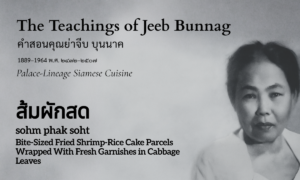
Bite-Sized Fried Shrimp-Rice Cake Parcels Wrapped With Fresh Garnishes in Cabbage Leaves (ส้มผักสด; sohm phak soht)
Sohm phak soht: coconut-battered fried shrimp-rice cakes wrapped in Chinese cabbage with pickled ginger, peanuts, shallots, lime and bitter orange. Jeeb Bunnag, 1945.
Baked Massaman (มัสหมั่นขาวอบ; mat man khaao ohp)
Baked Massaman, a molded rice dish with spiced beef and pickled garnishes. From Jeeb Bunnag's 1945 cookbook of Thai tea accompaniments and snacks.
Sticky Rice with Golden Fish Topping (ข้าวเหนียวหน้าปลาทอง; khaao niaao naa plaa thaawng)
Sticky Rice with Golden Fish Topping features coconut-infused glutinous rice topped with crispy sweet-savory fish floss and fried shallots. From Jeeb Bunnak's 1945 cookbook of Thai desserts.
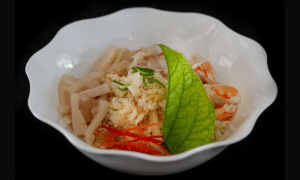
Phra Suli - Three-Flavor Seasoned Rice with Shrimp, Firm Pork Fat and Pork Skin (ข้าวพระศุลี; Khaao Phra Soolee)
Mrs. Paan Nanthaathiwat (คุณปาน นันทาถิวัฒน์) (1893-1955) was known for her kitchen skills. She often cooked for friends and family, spending time in the kitchen with her best friend, Mrs. Yim Pichaiyat Bunnag (คุณยิ้ม พิชัยญาติ บุนนาค (1892-1976). Thus, it was not a surprise when in 1953 she authored a recipe book as part of her merit offering on her 60th birthday. Sadly, Mrs. Paan passed away a year later and the publication, titled Hoong Khaao Dtohm Gaaeng (หุ้งข้าวต้มแกง), was later printed as a memorial book for her funeral. In 1977, the volume was reprinted for the funeral of her best friend, Mrs. Yim.
It is unclear why Mrs. Paan named this citrusy, sour, and salty seasoned rice dish after Lord Shiva, calling it “Phra Suli (พระศุลี ; phra soolee)”. Yet I believe the name of the dish is meant to evoke the elegance and delicacy of the deity rather than to reference cultural authenticity or tradition.

Capital-Style Sausage (ไส้กรอกกรุง; sai graawk groong)
Capital-Style Sausage combines crab meat and pork with cinnamon and nutmeg, smoked over sugarcane peels and coconut husks. From Jeeb Bunnag's 1945 cookbook.
Thong Yip Naan Nueng (ทองหยิบนานนึ่ง; thaawng yip naan neung)
Thong Yip Naan Nueng, mold-fried wheat batter with crab, pork, and chicken, inverted mid-fry until golden. From Gingganok Gaanjanaaphaa, 1935.
Khanohm Jeen with Hindu Style Nam Ya Sauce (น้ำยาฮินดู; naam yaa hin duu)
Naam yaa hin duu, a coconut curry sauce with red and white beans, flavored with fermented soybean paste. From Jeeb Bunnag's 1945 cookbook.
Siamese Fireback Chicken (ไก่พระยาลอ; gai phra yaa laaw)
Siamese Fireback Chicken, a deboned whole chicken stuffed with aromatic phrik khing (พริกขิง) paste and mung beans. From Jeeb Bunnak's 1945 royal Thai cookbook.
Taro and Crab Fritters (ทอดมันปูเผือก; thaawt man bpuu pheuuak)
Thaawt man bpuu pheuuak: finely shredded taro and sea crab in coconut-cream batter, fried in flat molds. From Jeeb Bunnag, 1933.

Three Noodle Bundles (เส้นสามแซ่; sen saam saae)
Three Noodle Bundles feature rice vermicelli, Chinese egg noodles (mee sua), and glass noodles wrapped around mustard greens and bound with seasoned pork in Pumpkin Broth. From Jeeb Bunnag's 1945 cookbook.
Decorated Corn (ข้าวโพดประดับ; khaao pho:ht bpra dap)
Decorated Corn, a palace-style appetizer featuring spiced chicken molded around baby corn and adorned with kernels. From Jeeb Bunnak's 1945 Thai cookbook.
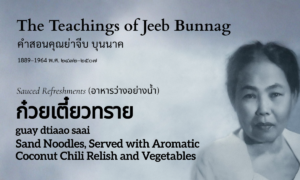
Sand Noodles (ก๋วยเตี๋ยวทราย; guay dtiaao saai)
Sand Noodles (guay dtiaao saai), featuring rice noodles cut fine as sand with aromatic coconut chili relish. From Jeeb Bunnag's 1945 cookbook.
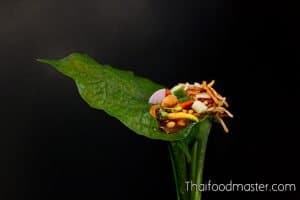
เมี่ยงคำ
ค้นข้อมูลดูว่าตำรับ "เมี่ยงคำ" เริ่มปรากฏมีบันทึกไว้เป็นลายลักษณ์อักษรแต่เมื่อใดกันแน่ สอบทานดูตำราอาหารเก่า ๆ หลายตำรับ ที่ตีพิมพ์ในสมัยรัชกาลที่ ๕ ก็ไม่พบ "เมี่ยงคำ" ในวิถีอาหารไทยโบราณแต่อย่างใด พบแต่ เมี่ยงลาว หรือ เมี่ยงพายัพ ซึ่งหมายถึงเมี่ยงที่มาจากทางเหนือ จากการอ่านหนังสือหลาย ๆ เล่ม เพื่อหาข้อมูลพบว่า "เมี่ยง" ได้เริ่มเป็นที่นิยมแพร่หลายในรั้วในวัง ก็หลังจากที่พระราชชายาเจ้าดารารัศมี ลงมารับราชการในราชสำนักที่กรุงเทพฯ และได้นำวัฒนธรรมการกินเมี่ยง ซึ่งเป็นหนึ่งในวิถีการดำรงชีวิตแบบล้านนาติดมาในหมู่ข้าราชบริพารชาวเหนือในตำหนักของพระองค์ ซึ่งบรรดาชาววังในสมัยนั้นจะเห็นเป็นสิ่งแปลกตาโก้เก๋ และคอยเอาอย่างในบางเรื่อง ทำให้หลังจากนั้นจึงค่อยเริ่มมีตำรับเมี่ยงต่าง ๆ ออกมามากมาย ปรากฏในตำราอาหารหรือเครื่องว่างต่าง ๆ ของไทยในสมัยต่อ ๆ มา สำหรับ "เมี่ยงคำ" นั้น พบว่ามีปรากฏครั้งแรก ในบทกาพย์เห่ชมเครื่องว่าง ของรัชกาลที่ ๖ ที่ใช้เป็นบทนำในตอนต้นบทความนี้ ซึ่งนั่นก็แสดงว่า "เมี่ยงคำ" กลายเป็นเครื่องว่างในวังหลวงเป็นที่นิยมกันมากแล้วในสมัยนั้นถึงสามารถขึ้นโต๊ะเครื่องเสวยได้ จึงเป็นข้อสันนิษฐานว่าน่าจะมีกำเนิดมาไม่เก่าไปกว่าสมัยรัชกาลที่ ๕ เป็นแน่แท้ ตำรับ "เมี่ยงคำ" คงจะเกิดจากการคิดประดิษฐ์ทำนำสิ่งละอันพันละน้อย ใส่ไปในคำเมี่ยง พร้อมใส่น้ำเมี่ยง เพื่อรับประทาน ทีละคำ ๆ จึงได้ชื่อว่า "เมี่ยงคำ" เหมือน ๆ หรือทำนองเดียวกันกับ "เมี่ยงอยาก" ที่ คุณป้า ม.ล. เนื่อง นิลรัตน์ เขียนบันทึกไว้ในหนังสือ "ชีวิตในวัง" ที่ตีพิมพ์มาแล้วหลายครั้ง ว่าเกิดจากความอยากกินเมี่ยง ของกลุ่มข้าหลวงวังสวนสุนันทา เวลามานั่งจับกลุ่มคุยกันยามว่างภารกิจ และไปค้นหาของในครัว ได้ กากหมู น้ำตาลปึก กะปิ ฯลฯ ก็นำมารับประทานกันเป็น"เมี่ยง" ที่อร่อยอย่างง่าย ๆ
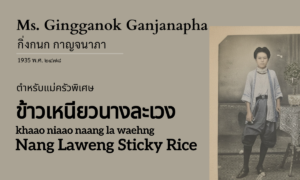
Nang Laweng Sticky Rice (ข้าวเหนียวนางละเวง; khaao niaao naang la waehng)
Khaao niaao naang la waehng, black glutinous rice balls deep-fried in lard with spiced beef and potato filling. Delicious Side Dishes, 1935.
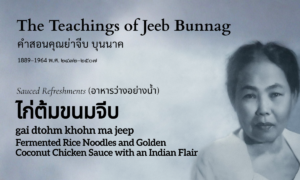
Fermented Rice Noodles and Golden Coconut Chicken Sauce with an Indian Flair (ไก่ต้มขนมจีบ; gai dtohm khohn ma jeep)
Gai dtohm khohn ma jeep, a coconut-simmered chicken sauce with Indian influences served with fermented rice noodles. From Jeeb Bunnag's 1945 cookbook.
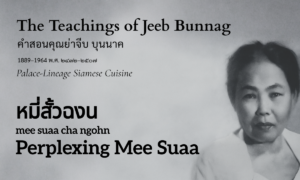
Perplexing Mee Suaa (หมี่สั้วฉงน; mee suaa cha ngohn)
Mee suaa cha ngohn: wheat noodle bundles bound with shrimp-corn paste, steamed, served in clear pork-crab broth. Jeeb Bunnag, 1933.

Savory Filled Cockle Shell Dumplings (คลางแคลงทรงเครื่อง; khlaang khlaaeng sohng khreuuang)
Savory Filled Cockle Shell Dumplings, translucent palace-style dumplings with seafood and pork filling. From Jeeb Bunnag's 1945 Thai cookbook of appetizers.
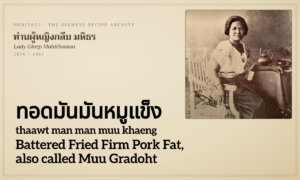
Battered Fried Firm Pork Fat, also called Muu Gradoht (ทอดมันมันหมูแข็ง; thaawt man man muu khaeng)
Muu gradoht — firm pork fat boiled, sliced, and fried in a rice-flour coconut batter tinted with red limestone solution. Lady Gleep Mahithaawn, 1949.
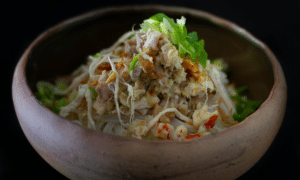
Naam Yaa Jeen - Fermented Rice Noodles with Chinese Sauce by HRH Prince Krom Luang Pitak Montri (น้ำยาจีน อย่างกรมหลวงพิทักษมนตรี)
Among the various curries that can be poured over khanom jeen fermented rice noodles, this broth, known as Chinese-style “naam yaa,” is unique in that it is a water-based curry that does not have chilies. As such, rather than the typical reddish-rust color of most coconut-based naam ya dishes from the Central Plains of the Kingdom, the sauce glows with a soft, light ivory hue, beautifully reflecting the dish’s natural sweet-savoriness, which is derived from slow-braising three proteins – chicken, pork and shrimp – along with a curry paste galvanized by smoke-dried fish and aromatic roots like galangal, fingerroot and sand ginger. The naam ya broth is served over a bed of fermented rice noodles and garnished with toppings such as delicate pulled chicken breast threads, golden-crispy fried shallots and garlic, and vivid green fresh coriander leaves and spring onion. All these elements add a visual grace and a hint of freshness to the robust broth – the signature dish of Prince Krom Luang Pitak Montri (กรมหลวงพิทักษ์มนตรี).
1
2
3
4
5

Get Access – Join Thaifoodmaster Today
Practical and kitchen-tested recipes with a mix of theory, history, psychology, and Siamese culture tidbits.
-
Get access to everything right away. Unlock more than 50 Masterclasses, over 700 recipes and Articles
Access to Thaifoodmaster’s constantly growing library of prime professional classes, articles, recipes and videos on Siamese culinary topics, available nowhere else in English.
-
GET EXTRA - New Masterclasses and Daily Recipes
Gain access to NEW masterclasses as they become available. Access DAILY translations of heritage-recipes.
-
1-1 support from Hanuman
1-1 support from Hanuman to help you achieve your professional Thai culinary goals
-
Live Q&A Sessions
The opportunity to join a monthly live two-hour videoconference where I can answer your questions.
-
Great Value!
one year access for the price of 3 days in-person training.
You will get everything you need to:
-
To Get inspired
When you design or build a new menu for an event or restaurant or even prepare for dinner with friends.
-
To Satisfy your curiosity.
Finally !
-
To Master Your Craft
Master your Thai cooking skills and expand your repertoire.
It is truly brilliant with a revolutionary approach introducing aspects and concepts never broached by cookbooks.

Ian Westcott
Sourcing Wines for Discerning Private Clients
© 2008 – 2026 Thaifoodmaster


