
Celebrating the Art of Siamese Culinary Wisdom and Thai Cuisine
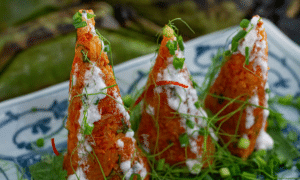
Grilled banana leaf parcels filled with curried rice, shrimp meat grated coconut, and herbs. (ข้าวงบกุ้ง อย่างพระวิมาดาเธอ หม่อมเจ้าสาย ลดาวัลย์ ; khaao ngohp goong)
The khaao ngohp goong (ข้าวงบกุ้ง) of Mom Chao Sai Ladawan (Princess Saisawali Phirom) is a dish of seasoned curried rice mixed with shrimp meat, shrimp tomalley, grated coconut, and herbs. The rice mix is then wrapped in banana leaves and grilled. Unwrapping the parcel reveals an intense orange- and russet-brown colored rice cake that is rich, savory and naturally sweet. It is served with a drizzle of thickened coconut cream and herbs.
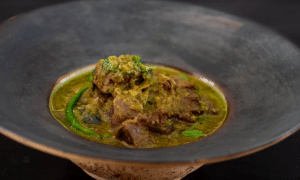
Perfumed Muslim-style Curry of Fresh Chilies with Beef (แกงเขียวหวานเนื้อทรงเครื่อง; Gaaeng Khiaao Waan Neuua Sohng Khreuuang)
The Indian and Muslim cuisines present distinct approaches to using dried spices in curries, both of which influence Siamese cuisine in different ways. Indian-inspired Siamese curries spotlight chilies for their vibrant color, fragrance, flavor and heat, while spices like cumin and coriander play a supporting role. The spices complement and temper the chilies’ intensity, creating a rounded, multi-layered flavor profile; nonetheless, the chilies remain the star ingredient, gently complemented by the spices.
Conversely, Muslim-influenced curries, such as massaman curry, prioritize spices over chilies. Spices like cardamom, nutmeg and mace take center stage, while the chilies provide subtle background heat rather than being the primary flavor. In these curries, the focus is on the rich, warm and complex aromas created by the blend of spices, which is a defining characteristic of many Muslim dishes.
Moreover, Siamese cuisine favors using rehydrated dried chilies in curries for their depth; this depth is highly appreciated, along with the complexity, and comparatively milder heat of the rehydrated dried chilies. As well, the harsh grassy notes of fresh chilies are not favored; they’re referred to in Thai as “green rank” or “men khiaao (เหม็นเขียว)”. Muslim curries often use fresh green chilies, tempering their vibrant, grassy taste with dry spices and thus shifting the flavor from bright and fresh to more subdued and earthy tones, resulting in a dish that is perceived to be layered, despite the burst of fresh chilies.
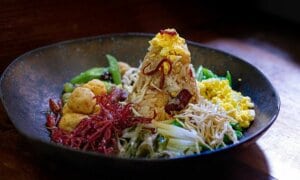
c1901 Siamese seasoned mix rice Javanese style (ข้าวนาซิประจิต หรือ ข้าวประดับ ; khaao naasi prajit or khaao bpradap)
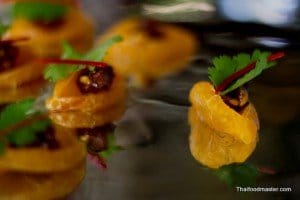
มังกรคาบแก้ว กับ ม้าฮ่อ
เครื่องว่างชนิดนี้ ชื่อ "ม้าฮ่อ" บางคนเขียน "ม้าห้อ" เป็นอาหารว่างสัญชาติมอญ สมาชิกในเรือนเรารู้จักกันดีพอสมควร ถ้าใครไม่รู้จักก็จะได้รู้จักกันล่ะ เห็นจั่วหัวชื่อเป็นสองอย่าง จัดจานแยกกัน ก็เพื่อแบ่งให้เห็นชัด ความจริงก็คืออาหารว่างอย่างเดียวกัน เดิมชาวไทยเชื้อสายมอญจะนิยมทำในงานบุญหรืองานพิธีต่าง ๆ โดยใช้ผลไม้ที่มีรสเปรี้ยวมาโรยด้วย 'พริกกะเกลือ' (อย่าพาลไปนึกถึงพริกกะเกลือสมัยนี้เสียล่ะ คนละแบบกัน) เพื่อให้รับประทานผลไม้เปรี้ยวได้อย่างอร่อยขึ้น ไม่ต้องทิ้งให้เสียของ พริกกะเกลือที่ว่าคือการผัดหมูกุ้ง ใส่น้ำตาลและถั่วลิสงคั่ว ตำรับไทยแท้ไม่มีดอก จะมีก็แต่ 'เมี่ยง'ผลไม้ ที่ดูคล้ายกัน กระนั้นคนไทยก็รับเอามาเหมือนอาหารอีกหลายชนิดหลายสัญชาติ จนได้ชื่อว่าเป็นเครื่องว่างไทยมาแต่โบร่ำโบราณ
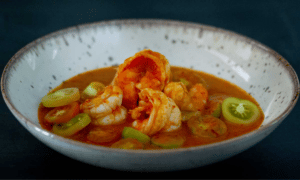
c1937 Shrimp and tomato curry (แกงกุ้งกับมะเขือเทศ คู่มือการครัว นางสาวฉลวย กันตวรรณี พ.ศ. 2480; gaaeng goong gap makheuua thaeht)
Stocked with a contemporary brew of umami-rich ingredients, this ancient, bright and slightly sour coconut-based shrimp and tomato curry demonstrates how simple – yet clever – flavor-layering techniques can spotlight the shrimp and the spectacular savory tomatoes over the curry background.
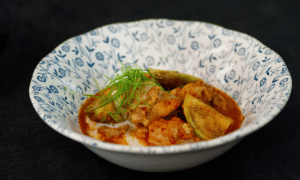
Chiang Mai-Style Chicken Gaaeng Garee (แกงเผ็ดกะหรี่เชียงใหม่ ; gaaeng phet garee chiang mai)
I discovered this unusual curry recipe hidden in a 1970 memorial book for Ms. Bootree Gralaksa. Born in Bangkok in 1898, Ms. Bootree spent her entire life, from childhood on, in a wooden house on Maha Chak Road (Pra Nakorn). One could say that she was born to be a great cook; just fourteen years old when her mother died, Ms. Bootree became the sole caregiver for her four siblings, a duty that she performed with a love and attention that endowed her with remarkable cooking skills. Her memorial book showcases now-forgotten dishes that were popular in the Bangkok of the early 1900s, such as Beautiful Curry (แกงหงษา ; Gaaeng Hohng Saa), and also includes some of her one-of-a-kind culinary creations – such as this dish, which she dubbed “Chiang Mai-Style Spicy Curry”.
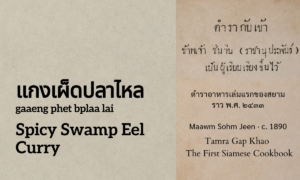
Spicy Swamp Eel Curry (แกงเผ็ดปลาไหล; gaaeng phet bplaa lai)
Gaaeng phet bplaa lai: swamp eel sliced and tossed with its own blood, simmered in a pork-lard-fried red curry paste. Maawm Sohm Jeen, 1890.
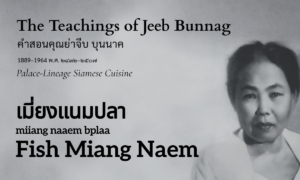
Fish Miang Naem (เมี่ยงแนมปลา; miiang naaem bplaa)
Miiang naaem bplaa, grilled snakehead fish with fire-roasted galangal juice and bitter orange, served in lettuce cups. Jeeb Bunnag, 1933.
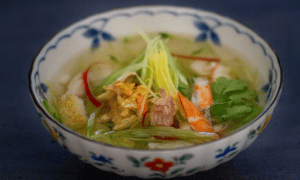
Mixed Clear Shrimp Soup with Salted Fish, Shrimp, Cucumber, Mango and Pickled Garlic (แกงนอกหม้อ ; gaaeng naawk maaw)
Gaaeng naawk maaw is a light and refreshing soup served at room temperature. The ingredients are meticulously sliced as if for a salad, placed in a serving bowl, and covered with a salty and naturally sweet shrimp broth. At the table, diners can adjust the soup to their preferred flavor profile using granulated sugar, lime juice, or pickled garlic brine; hence the name – gaaeng naawk maaw – which literally means "a curry dish outside the pot" or "to cook curry outside the pot". (Note: The word gaaeng (แกง) in Thai is both a verb and a noun).
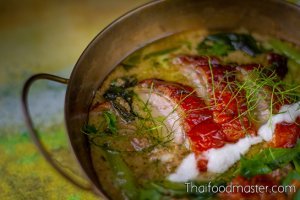
แกงเขียวหวานเป็ดย่าง
ตำรับแกงแบบไทยแท้ ๆ นั้น ไม่ใช่แกงเข้ากะทิดอกขอรับ ถ้าจะนับความเป็นไทยแท้ ๆ แบบที่เรียกว่า ไทยแท้ (Authentic) นั้นเห็นจะหายากเสียแล้ว คงต้องกลับไปรับประทานพวกต้มปลาร้า หรือแกงเลียง แกงต้มส้ม ไปโน่นล่ะขอรับ ด้วยพริกที่เราเคยชินกินแล้วเผ็ดร้อนกันในปัจจุบันนี้ หาใช่ของพื้นเมืองไทยแท้มาแต่เดิมไม่ พวกฝรั่งเพิ่งนำเข้ามาในสมัยอยุธยานี่เอง ส่วนแกงแบบเข้ากะทิ เราก็รับมาจากแขกมลายูหรือแขกเปอร์เซีย ในสมัยอยุธยาเช่นกันแล้วค่อยมาพลิกแพลงดัดแปลงให้เป็นแกงแบบไทย ๆ
ดังนั้น คนสมัยก่อนถึงได้เรียกพริกสีแดง ๆ เขียว ๆ นี่ว่า พริกเทศ ส่วนเครื่องปรุงที่ให้รสเผ็ดร้อนมาแต่เดิมนั้น เรามักเรียกใช้ พริกไทย ตะไคร้ ขิง ข่า กระชาย เสียมากกว่า จึงเห็นได้ว่าแกงเลียง แกงต้มส้ม แกงต้มปลาร้า ถึงไม่มีพริกเทศเป็นเครื่องปรุงหลัก ภายหลังต่อมาคนไทยจึงมีวัฒนธรรมอาหารพวกต้มแกงดัดแปลงให้ถูกปากถูกลิ้น ใส่พริกเทศ ใส่กะทิ เข้าสมุนไพร พัฒนามาเป็นแกงส้ม ต้มยำ ต้มโคล้ง ต้มข่า แกงเผ็ด แกงคั่ว แกงฉู่ฉี่ แกงพะแนง แกงมัสมั่น ฯลฯ กันสืบมา ซึ่งก็ว่าเป็นแกงออกสีพริกแดงกันเป็นส่วนใหญ่ หากก็มีคนถามว่า แล้วแกงเขียวหวานล่ะ มีมาแต่เมื่อใดกันเล่า เรื่องนี้เห็นทีจะสืบค้นสืบเค้ายากหน่อย เพราะไม่มีบันทึกเป็นลายลักษณ์อักษรแน่ชัด ได้แต่สันนิษฐานและอนุมานเอา
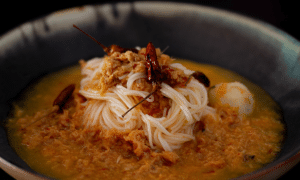
Khanohm Jeen Naam Yaa (ขนมจีนน้ำยา) - Fermented Rice Noodles with Minced Fish in Aromatic Coconut Curry
In the Central Plains of the Kingdom, fermented rice noodles are inextricably linked to a dish known as naam yaa. Composed of a dense, coconut-based minced fish curry, the dish is infused with layers of salted fish and possesses the distinctive, invigorating and purifying notes of fingerroot. Typically, naam yaa is served with fresh lemon basil as the herb of choice along with an array of side dishes collectively known as meuuat khanohm jeen (เหมือดขนมจีน). These include blanched bean sprouts seasoned with a touch of turmeric for color, fresh lemon basil leaves, thinly sliced three colored chilies, and ground chili for added heat. More elaborate versions will add blanched Chinese bitter gourd slices, batter-fried young morning glory shoots, and fresh shrimp minced and fried with its tomalley in pork lard, as well as crispy-fried shallots as the finishing touch.
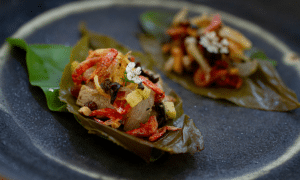
Miang Sot (เมี่ยงซด) - Miiang Soht, circa 1928
The word ‘miang’ is often used to designate Thai hors d’oeuvre-like snacks consisting of various ingredients wrapped in leaves. To chew on a miang parcel delivers a delightful melee of flavors and textures, each triumphing over the other in a continuous transformation, creating a captivating and ever-evolving taste experience throughout the bite.
Miang sot is a fermented leaves dish that appeared in a cookbook published in honor of Thao Suphatigaanapakdee (also known as Prik Sirisamphan) (ท้าวสุภัติการภักดี (ปริก ศิริสัมพันธ์)), in 1928. Titled Gap Khaao Thai (กับข้าวไทย), the book features a collection of recipes that were once prepared and served to King Chulalongkorn Rama V. The author, Sohmboon Sirisamphan (เถ้าแก่ สมบุญ ศิริสัมพันธ์) a respected elder (known as thao gaae (เถ้าแก่) in Thai), was a distinguished businessman of Chinese origins.
The dish is composed of fermented tea leaves; it is perhaps the closest tea leaves wrap to the ‘miang’ style introduced to the Siamese court by Princess Dara Rasami in the late 1800s. The dish gives us a glimpse of flavor of what her household, which participated in the informal marketplace events within the palace, might have to offer.
The popularity of miang in Siamese cuisine is tied to the history of two kingdoms, Siam and Lanna, and the life of one princess, Princess Dara Rasami. The daughter of King Inthawichayanon of Chiang Mai and the fifth consort of King Chulalongkorn, the princess was selected at the age of thirteen, in 1886, to serve as a consort to King Chulalongkorn in the Inner Palace; the decision was shaped by both political strategy and personal transition. At the time, Siam was consolidating its power and extending its influence over neighboring regions, including Lanna. As the ruler of Chiang Mai, Princess Dara Rasami’s father, Intawichayanon, viewed the move as a strategic alliance. In return, King Chulalongkorn presented him with the medal of the Order of Chula Chom Klao, which is the Siamese equivalent of a knighthood.
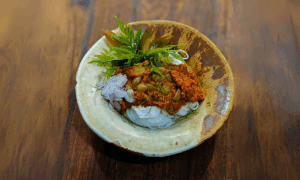
c1933 Khuaa Curry with Bang Chang Chilies (แกงคั่วพริกขี้หนูหรือพริกชี้ฟ้า; gaaeng khuaa phrik baang chaang): Princess Dissakul's Smoky Fish Curry Recipe
Princess Dissakul's 1933 royal Thai curry featuring secretly pounded smoked fish in rich coconut cream with Bang Chang chilies and aromatic phrik khing paste. This complex, smoky curry builds layers of earth and ember, traditionally served over khanom jeen fermented rice noodles and topped with tangy pickled garlic for a perfect balance of smoke, spice, and tang.
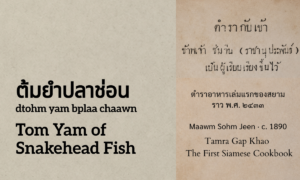
Tom Yam of Snakehead Fish (ต้มยำปลาช่อน; dtohm yam bplaa chaawn)
Dtohm yam bplaa chaawn: snakehead fish in milled-rice broth, the chili jam pounded off the fire and dissolved in the bowl. Tamra Gap Khao, 1890.
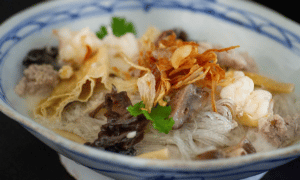
Gaaeng Raawn (แกงร้อน)
Gaaeng raawn (แกงร้อน) is a colloquial Thai term that refers to ‘hot curry’. Today, gaaeng raawn is used to denote soups or curries served with steamed rice. While the precise origin of the term is unclear, gaaeng raawn (แกงร้อน) was deployed in the 1800s for a specific dish – a Siamese soup featuring glass noodles, cooked as either a coconut or a water-based soup with an assortment of dry ingredients revered in Chinese cuisine. The soup’s potential health benefits, combined with its ease of preparation and subtle yet profound flavor, made it a popular choice for entertaining large groups of people, of all ages and backgrounds. The soup is often augmented with fresh proteins: in its more luxurious versions, multiple proteins may be added, including a combination of chicken, pork, shrimp, squid, and crab meat. Thus, over the years, gaaeng raawn (แกงร้อน) was established as a staple source of comfort and warmth for people of all walks of life in Siamese society.
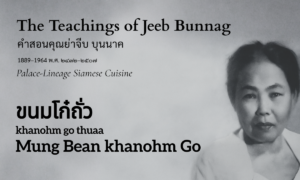
Mung Bean khanohm Go (ขนมโก๋ถั่ว; khanohm go thuaa)
Khanohm go thuaa, a molded palace confection of dry-roasted mung bean flour and coarse-grain sugar, scented with jasmine and ylang-ylang. Jeeb Bunnag, 1933.
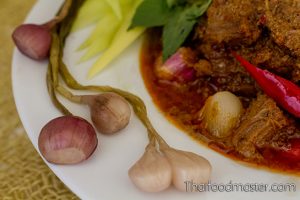
พะแนงเนื้อ อย่าง ม.ล.เติบ ชุมสาย และ ไก่ผะแนง จากตำราอาหารที่เก่าสุดในสยาม
Thaifoodmaster เราภูมิใจ ที่จะนำเสนอหนึ่งในตำรับอาหารของหม่อมซ่มจีน (พ.ศ.๒๔๓๓) เปิดตัวครั้งแรก ที่นี่ และจะได้นำเสนอตำรับอื่น ๆ ที่น่าสนใจ หรือที่ท่านไม่เคยเห็นมาก่อน ในกาลต่อไป การปรุงอาหาร โดยเฉพาะอาหารไทย เป็นศิลปะอย่างหนึ่ง ซึ่งหม่อมท่านน่าจะเป็นอีกผู้หนึ่งที่เข้าใจในความเป็นศิลปะของการปรุงอาหารไทย แม้จะเป็นอาหารอย่างที่คนในสมัยนั้นรับประทานกันทั่วไป หาใช่ตำรับที่ดูเป็นของชนชั้นสูงหรือบรรดาเจ้านายในสมัยนั้น เพราะท่านก็เป็นศิลปินด้วยเช่นกัน ศิลปะกับอาหาร ได้ผ่านการเชื่อมโยงโดยศิลปินผู้ซึ่งคนรุ่นหลังไม่รู้จัก เราจึงอยากแสดงกตเวทิตาคุณและขอบพระคุณในคุณูปการที่ท่านเจ้าของตำรับได้เริ่มบันทึกลายลักษณ์อักษรครั้งแรก ผ่านมาลัยอักษร ณ บันทึกหน้านี้
ในตำราของหม่อมซ่มจีน มีอาหารตำรับหนึ่ง เรียกว่า “ไก่ผะแนง” เป็นตำรับแบบนำไก่ทั้งตัว ผ่าอก แล้วนำไปปิ้งไฟ ทาด้วยพริกขิงผสมน้ำกะทิ ย่างจนเกือบแห้งแล้วทา ๆ จนพริกขิงจับหนาเส้นตอกหนึ่ง ท้ายสุดชะโลมน้ำกะทิที่พริกขิง ก็ถือเป็นเสร็จ รับประทานได้
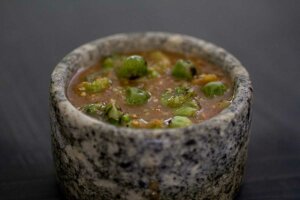
Fermented shrimp paste relish with grilled pea eggplants (น้ำพริกมะเขือพวง ; naam phrik ma kheuua phuaang)
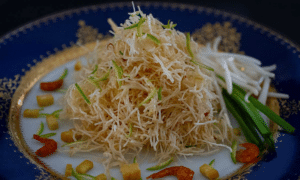
Sour-Sweet Savory Crispy Rice Vermicelli with Bitter Orange (Mee Krob) (หมี่กรอบส้มซ่าทรงเครื่อง ; Mee Graawp)
mee graawp sohng khreuuang (หมี่กรอบทรงเครื่อง), is an exquisitely regal dish of crispy rice vermicelli. The delicate noodles strands are washed and dried, then fried to a crisp light-golden hue. They retain their brittle crunch and airy texture even after being stir-fried with a clinging sticky sauce that encases the noodles in a thin layer of sheen. This sauce, mixed into the noodles together with other ingredients such as thin slices of pickled garlic and bitter orange peel, impart the dish with a light, fresh sweet and sour, and slightly salty and citrusy glaze.
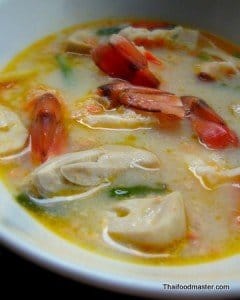
ต้มยำกุ้ง
Tom Yam is a type of soup with distinct sharp hot and sour flavors, scented with pleasant citrusy aroma.
Tom Yam is known to seduce many westerners to fall in love with Thailand, its people and food. Many trips memories to Thailand were written in diaries, others are etched on film but all are stained by the Tom Yam charm.
I still remember with vivid colors my first bowl of Tom Yam, in the night market of the old neighborhood on a hot night in a ragged, unfashionable part of Bangkok. Where the smell of cooking and the glare of florescent lights decorated the alley where JeMoi used to own a restaurant, a very simple and very good one, decorated with cheap bamboo chairs and peeling orange walls. I would enjoy watching the streets of the early night turning into mornings, eating, drinking and sweating. It was hard to say if I was sweating from the hot and humid weather, the cheap whiskey or JeMoi’s spicy food. I still smile when I think of her, standing by my table with a winning smile, as if she knew how much I enjoy the food.
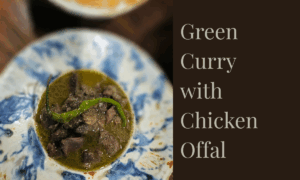
Yogurt-Based Ancient Green Curry with Chicken Offal (แกงเขียว; gaaeng khiaao)
Mrs. Yim Pichaiyat Bunnag (คุณยิ้ม พิชัยญาติ บุนนาค)'s 1920s aristocratic green curry reveals a forgotten chapter in Thai culinary history. This Muslim-style recipe uses ghee and yogurt instead of coconut milk, featuring chicken offal—liver, gizzard, and heart—each contributing distinct textures and concentrated flavors. Roasted spices like cinnamon, clove, and cardamom create warming aromatics, while fresh chilies provide signature heat. The dish documents how Bangkok's noble kitchens adapted Islamic cooking techniques before democratization, preserving methods that would shape modern Thai cuisine.
1
2
3
4
5
6
7
8
9
10

Get Access – Join Thaifoodmaster Today
Practical and kitchen-tested recipes with a mix of theory, history, psychology, and Siamese culture tidbits.
-
Get access to everything right away. Unlock more than 50 Masterclasses, over 700 recipes and Articles
Access to Thaifoodmaster’s constantly growing library of prime professional classes, articles, recipes and videos on Siamese culinary topics, available nowhere else in English.
-
GET EXTRA - New Masterclasses and Daily Recipes
Gain access to NEW masterclasses as they become available. Access DAILY translations of heritage-recipes.
-
1-1 support from Hanuman
1-1 support from Hanuman to help you achieve your professional Thai culinary goals
-
Live Q&A Sessions
The opportunity to join a monthly live two-hour videoconference where I can answer your questions.
-
Great Value!
one year access for the price of 3 days in-person training.
You will get everything you need to:
-
To Get inspired
When you design or build a new menu for an event or restaurant or even prepare for dinner with friends.
-
To Satisfy your curiosity.
Finally !
-
To Master Your Craft
Master your Thai cooking skills and expand your repertoire.
It is truly brilliant with a revolutionary approach introducing aspects and concepts never broached by cookbooks.

Ian Westcott
Sourcing Wines for Discerning Private Clients
© 2008 – 2026 Thaifoodmaster


