
Celebrating the Art of Siamese Culinary Wisdom and Thai Cuisine
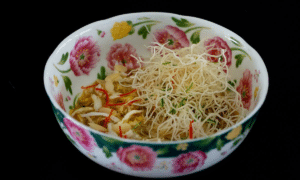
The Ambassador’s House Style Noodle Soup (หมี่น้ำบ้านราชทูต; Mee Naam Baan Raat Thuut)
This soup dish features crispy rice vermicelli noodles, a chicken broth that has a three-flavor profile infused with the aroma of bitter orange, and a plethora of other ingredients such as crispy fried tofu, chicken, pork, crab and pickled garlic.
In Thai, the phrase mee naam baan raat thuut refers to a rice vermicelli noodle soup in the style of the Ambassador’s house. The dish was not new when it appeared in the 1956 book Snacks, Tea Nibbles, Hors D’oeuvres and Drinking Food (ตำราอาหารว่าง - เครื่องน้ำชา และ เครื่องเคี้ยว หรือ กับแกล้ม) by Jeeb Bunnag (จีบ บุนนาค), as noodle dishes were often the preferred ingredient for light meals or snacks. In Grandparents Recipes: 100 Years Old Recipes (จานอร่อยจากปู่ย่า สูตรโบราณ 100 ปี), a volume printed in 2014 that highlights recipes from the kitchens of fifteen prominent families, a similar version of the dish is referred to as mee naam baan bpaak naai leert (หมี่น้ำบ้านปาร์คนายเลิศ) and is associated with Nai Lert.

แกงเผ็ดปลาไหลทรงเครื่อง
ตำรับปลาไหลนี้ ปัจจุบันมักจะคิดว่าเป็นแต่สำรับของชาวบ้าน หรือเป็นแค่อาหารลูกทุ่งเท่านั้น ความจริงแล้ว อาหารตำรับปลาไหลเป็นอาหารทั่วไปของคนทุกชนชั้น ทั้งไพร่สามัญชน ผู้ดีชาวกรุง หรือเจ้านายในรั้วในวัง ต่างมีตำรับแกงปลาไหลขึ้นสำรับทั้งนั้น ที่มีเขียนบันทึกไว้ก็มีหลายตำรับเลยทีเดียว เช่น ตำรับของหม่อมส้มจีน ตั้งแต่ ร.ศ. 109 มี "ต้มเปรตปลาไหล". ตำรับแม่ครัวหัวป่าก์ ของท่านผู้หญิงเปลี่ยน ภาสกรวงษ์ ตำรับวังมหานาค โดย ม.จ.หญิงวิมลปัทมราช จิรประวัติ ก็มี "แกงปลาไหล" ตำรับที่พิมพ์จำหน่ายในช่วง"รัฐนิยม"สมัยจอมพล ป. พิบุลสงคราม พิมพ์เมื่อ พ.ศ.2485 ก็มี "แกงเผ็ด ปลาไหลซงเครื่อง" หรือแม้แต่ที่เข้ากับสำนวนเกลียดปลาไหลกินน้ำแกงตรงเผง ไม่ชอบปลาไหล แต่อยากกินแกงปลาไหล ชาววังในสำนักพระวิมาดาเธอฯ นิยมใช้ปลาดุกมาแกงแทนปลาไหล ตามที่ม.ล.เนื่อง นิลรัตน์ ข้าหลวงในสมเด็จพระเจ้าบรมวงศ์เธอเจ้าฟ้านิภานภดล วิมลประภาวดีกรมขุนอู่ทองเขตขัตติยนารี บันทึกไว้ถึง "แกงปลาดุกอย่างปลาไหล" เอาใว้ด้วย
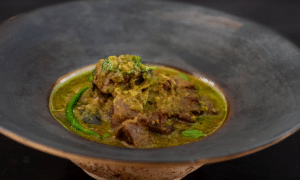
Perfumed Muslim-style Curry of Fresh Chilies with Beef (แกงเขียวหวานเนื้อทรงเครื่อง; Gaaeng Khiaao Waan Neuua Sohng Khreuuang)
The Indian and Muslim cuisines present distinct approaches to using dried spices in curries, both of which influence Siamese cuisine in different ways. Indian-inspired Siamese curries spotlight chilies for their vibrant color, fragrance, flavor and heat, while spices like cumin and coriander play a supporting role. The spices complement and temper the chilies’ intensity, creating a rounded, multi-layered flavor profile; nonetheless, the chilies remain the star ingredient, gently complemented by the spices.
Conversely, Muslim-influenced curries, such as massaman curry, prioritize spices over chilies. Spices like cardamom, nutmeg and mace take center stage, while the chilies provide subtle background heat rather than being the primary flavor. In these curries, the focus is on the rich, warm and complex aromas created by the blend of spices, which is a defining characteristic of many Muslim dishes.
Moreover, Siamese cuisine favors using rehydrated dried chilies in curries for their depth; this depth is highly appreciated, along with the complexity, and comparatively milder heat of the rehydrated dried chilies. As well, the harsh grassy notes of fresh chilies are not favored; they’re referred to in Thai as “green rank” or “men khiaao (เหม็นเขียว)”. Muslim curries often use fresh green chilies, tempering their vibrant, grassy taste with dry spices and thus shifting the flavor from bright and fresh to more subdued and earthy tones, resulting in a dish that is perceived to be layered, despite the burst of fresh chilies.
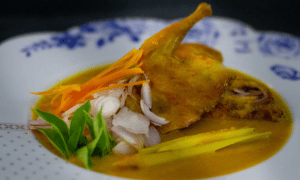
Curry of yellow chilies with whole quail, fresh turmeric and lemon basil (แกงเผ็ดนกกระทาพริกเหลืองสด; gaaeng phet nohk grathaa phrik leuuang soht)
Salty leading and sour-sweet to follow, this coconut-based gaaeng phet spicy curry might be made of chilies, but it is fruitier than it is spicy, and lighter than it is dense. Originally cooked with the meat of game birds, it retains a surprisingly light body that opens space for the birds to fly. The curry is tinted golden orange from a paste imbued with fresh yellow chilies and turmeric; it is perfumed with lemongrass and lemon basil leaves.
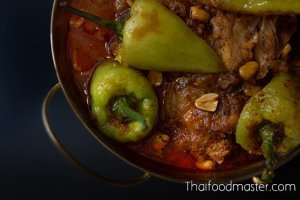
แกงเผ็ดไก่จี่จ๋วน, แกงจีนจ๊วน, แกงจ๋วน
แกงเผ็ดไก่จี่จ๋วน หรือ แกงจีนจ๊วน หรือ แกงจ๋วน ชื่อนั้นสำคัญไฉน ???
อาหารไทย ชื่อว่าจีน แต่ได้มาจากแขก... ปักหมุดอาหารในยุคแห่งการเปลี่ยนแปลงสู่ทันสมัย สะท้อนสยามอารยะ ที่นำสิ่งดีงามที่มีในวัฒนธรรมอื่นมาดัดแปลงให้เข้ากับความเป็นไทย หากถูกเลือกสรรผ่านกระบวนการทางสังคม ก่อนจะลับเลือนหาย...
สมัยผู้เขียนเรียนอยู่ชั้นมัธยมปลาย ได้เคยเข้าพบและสนทนากับผู้อำนวยการโรงเรียนครั้งหนึ่ง ท่านเป็นสุภาพสตรีร่างเล็ก ได้รับพระราชทานเครื่องราช อิสริยาภรณ์ มีตำแหน่งนำหน้าว่าคุณหญิง รู้สึกเกรงขามในบุคลิกที่สง่าน่าเคารพ แฝงไว้ซึ่งความใจดี เกิดเป็นภาพประทับใจมาจนโต ครั้นเรียนจบและได้ทำงาน มีโอกาสได้พบกับท่านอีกหลายครั้งจากการเข้าช่วยงานทำกิจกรรมองค์กรการกุศลของ "มูลนิธิร่วมจิตต์น้อมเกล้าเพื่อเยาวชน" ที่ให้ทุนการศึกษาเพื่อเด็กยากจนในถิ่นกันดาร จึงได้มีโอกาสได้สนองงานท่านอาจารย์ และรับรู้ว่าท่านเป็นหลานสาวของคุณ"พระสุจริตสุดา (เปรื่อง สุจริตกุล)" พระสนมเอกในพระบาทสมเด็จพระมงกุฎเกล้าเจ้าอยู่หัว รัชกาลที่ ๖ และเป็นสุภาพสตรีไทยคนแรกที่ได้รับพระราชทานบรรดาศักดิ์เป็น "คุณพระ" เมื่อปี พ.ศ.๒๔๖๔ อดีตผู้อำนวยการโรงเรียนมัธยมของผู้เขียนเป็นบุตรีของพระพิบูลย์ไอยสวรรย์ (เปรียบ สุจริตกุล) น้องชายคุณพระสุจริตสุดา
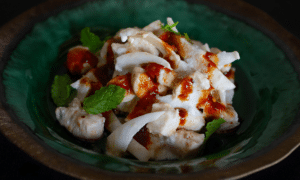
Faux Frog Salad – A Salad of Coconut Braised Chicken with Young Coconut and Chili Jam Dressing (ยำกบเทียม; yam gohp thiiam)
Faux frog salad is a rich, elegant dish featuring tender chicken braised in coconut cream and young coconut flesh with a chili-jam based dressing. Utilizing an old-fashioned salad assembly technique – the ‘mix and layer’ – this is a visually striking salad with alternating layers of reds and whites.
The name of this vintage dish – Faux Frog Salad – could be a reflection of the swinging social norms in Siam during the roaring twenties, a period of significant social change; as the country sought to navigate the challenges of modernization, Siamese society was shifting its dietary preferences away from the frog, once a common, versatile and popular ingredient. Thus, through the desire for distinction, chicken, an ingredient often compared to the taste of everything, was preferable to frog.

(c1908) nohpa gaao sour curry (gaaeng nohp pha gaao ; แกงนพเก้า)
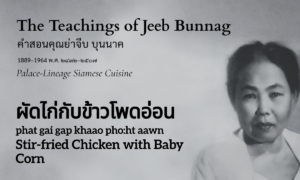
Stir-fried Chicken with Baby Corn (ผัดไก่กับข้าวโพดอ่อน; phat gai gap khaao pho:ht aawn)
Phat gai gap khaao phoht aawn, chicken and baby corn stir-fried with garlic, sauce thickened by pounded corn kernels. Jeeb Bunnag, 1933.
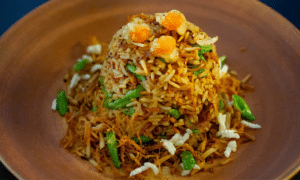
Crispy Rice - Khaao Graawp (ข้าวกรอบ อย่างหม่อมเจ้าสาย ลดาวัลย์)
Suan Sunandha Palace was the permanent residence of Mom Chao Sai Ladawan (HRH Princess Saisawali Phirom, พระวิมาดาเธอ หม่อมเจ้าสาย ลดาวัลย์), the Royal Consort to Rama V. In the kitchen of Suan Sunandha Palace, the Princess presided over a peak era of culinary innovation until her passing on June 24, 1929. Reflecting her practicality, the Princess’ recipes frequently incorporated the era’s common pantry ingredients in new and surprising combinations.
For example, in her boat-embarking chili relish (น้ำพริกลงเรือ; naam phrik lohng reuua), a relish still enjoyed today, the Princess pairs fermented shrimp paste chili relish with sweet pork, crispy fried fish, salted duck eggs and hairy-fruited eggplant (maeuk) (มะอึก). Another example is her gaaeng ran juaan (แกงรัญจวน) – the Princess prepares a vibrant spicy and sour soup, fragrant with the aroma of Thai basil, from the leftovers of a stir-fried beef dish and fermented shrimp paste chili relish, which she cooked together with lemongrass, shallots and garlic.
Mom Chao Sai Ladawan’s recipes, many already recreated here at Thaifoodmaster, were recorded by Princess Sadap Ladawan (เจ้าจอมหม่อมราชวงศ์สดับลดาวัลย์), a key figure in the Palace’s culinary affairs, and subsequently compiled and published by Suan Sunandha Rajabhat University in a volume dedicated to seasoned rice dishes and chili relishes.
In this dish called khaao graawp (ข้าวกรอบ), or “crispy rice” the Princess seasons cooked jasmine rice with chili jam, and adds four fried components, each highlighting a different element of the crispiness indicated by the dish’s name.
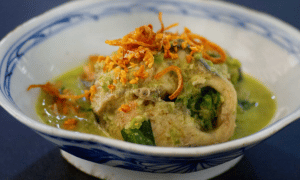
History's first-ever recorded recipe for jungle curry by Lady Plean Passakornrawong, circa 1908 (ปลาดุกแกงป่า อย่าง ท่านผู้หญิงเปลี่ยน ภาสกรวงศ์ ตำราแม่ครัวหัวป่าก์; bplaa duuk gaaeng bpaa)
This is a coconut-based jungle curry of catfish featuring fresh green chilies, sand ginger and an upcountry herbal charm.
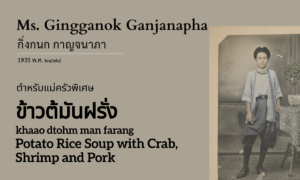
Potato Rice Soup (ข้าวต้มันฝรั่ง; khaao dtohm man farang)
Potato Khao dtohm Rice Soup, featuring a clear seafood broth with pork meatballs, served with crispy fried potatoes on the side. From Gingganok's 'Delicious Side Dishes,' 1935.
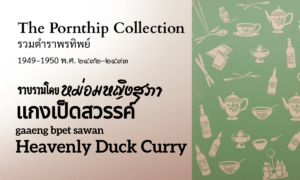
Heavenly Duck Curry (แกงเป็ดสวรรค์; gaaeng bpet sawan)
Gaaeng bpet sawan, a luxurious duck curry with salacca fruit and hairy-fruited eggplant. From Maawm Ying Soophaa's 'Divine Dishes' cookbook, 1949.
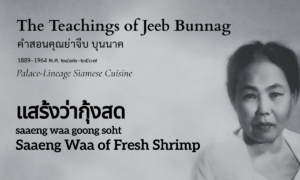
Saaeng Waa Shrimp (แสร้งว่ากุ้งสด; saaeng waa goong soht)
Saaeng waa goong soht, a shrimp relish of hand-torn just-cooked shrimp with pink ginger and kaffir lime. From Jeeb Bunnag, 1933.

Roasted Fish Pae Sa (แป๊ะซะปลาเผา; bpae sa bplaa phao)
Bpae sa bplaa phao: clay-roasted snakehead fish with chili jam and tamarind dressing, from Jeeb Bunnag's 1933 palace-style manuscript.

Crispy Chicken Offal (เครื่องในไก่กรอบ; khreuuang nai gai graawp)
Khreuuang nai gai graawp, chicken offal spiced with white pepper and nutmeg, deep-fried and served with kapi relish. Jeeb Bunnag, 1933.
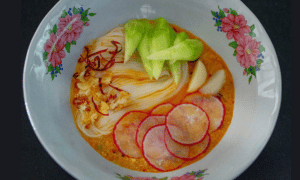
c1936 Arabian noodles – Princess Maao Thongthaem’s Siamese-Orientalist fermented rice noodles light meal (ขนมจีนอาหรับ อย่าง เม้า ทองแถม; khanohm jeen aarap)
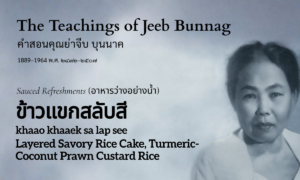
Layered Savory Rice Cake (ข้าวแขกสลับสี; khaao khaaek sa lap see)
Layered Savory Rice Cake features steamed rice, seasoned prawn filling, and golden turmeric-coconut custard. From Mrs. Samakkhanatthon's 1945 Thai cookbook.
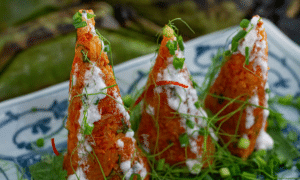
Grilled banana leaf parcels filled with curried rice, shrimp meat grated coconut, and herbs. (ข้าวงบกุ้ง อย่างพระวิมาดาเธอ หม่อมเจ้าสาย ลดาวัลย์ ; khaao ngohp goong)
The khaao ngohp goong (ข้าวงบกุ้ง) of Mom Chao Sai Ladawan (Princess Saisawali Phirom) is a dish of seasoned curried rice mixed with shrimp meat, shrimp tomalley, grated coconut, and herbs. The rice mix is then wrapped in banana leaves and grilled. Unwrapping the parcel reveals an intense orange- and russet-brown colored rice cake that is rich, savory and naturally sweet. It is served with a drizzle of thickened coconut cream and herbs.

Matsya Avatara (The Fish Incarnation) (มัสยาวตาร; mat saya aa waa dtaan)
Matsya Avatara: deboned whole red snapper filled with a roasted seven-spice paste, steamed in banana leaf, then fried golden. Jeeb Bunnag, 1933.
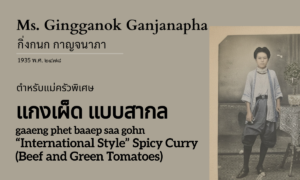
“International Style” Spicy Curry (แกงเผ็ด แบบสากล; gaaeng phet baaep saa gohn)
Gaeng phet baaep saa gohn — beef pre-seared with fish sauce, curry paste bloomed in cracked coconut cream. green tomatoes or hairy-fruited eggplant (maeuk) and dual basils - Gingganok Gaanjanaaphaa, 1935.
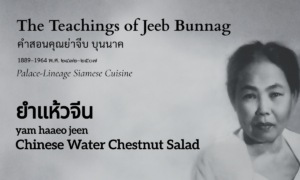
Chinese Water Chestnut Salad (ยำแห้วจีน; yam haaeo jeen)
Chinese Water Chestnut Salad combining crisp water chestnuts with seafood and pork in a salty-sweet-sour dressing. From Jeeb Bunnag's 1933 cookbook.
1
2
3
4
5
6
7
8
9
10
11
12
13
14

Get Access – Join Thaifoodmaster Today
Practical and kitchen-tested recipes with a mix of theory, history, psychology, and Siamese culture tidbits.
-
Get access to everything right away. Unlock more than 50 Masterclasses, over 700 recipes and Articles
Access to Thaifoodmaster’s constantly growing library of prime professional classes, articles, recipes and videos on Siamese culinary topics, available nowhere else in English.
-
GET EXTRA - New Masterclasses and Daily Recipes
Gain access to NEW masterclasses as they become available. Access DAILY translations of heritage-recipes.
-
1-1 support from Hanuman
1-1 support from Hanuman to help you achieve your professional Thai culinary goals
-
Live Q&A Sessions
The opportunity to join a monthly live two-hour videoconference where I can answer your questions.
-
Great Value!
one year access for the price of 3 days in-person training.
You will get everything you need to:
-
To Get inspired
When you design or build a new menu for an event or restaurant or even prepare for dinner with friends.
-
To Satisfy your curiosity.
Finally !
-
To Master Your Craft
Master your Thai cooking skills and expand your repertoire.
It is truly brilliant with a revolutionary approach introducing aspects and concepts never broached by cookbooks.

Ian Westcott
Sourcing Wines for Discerning Private Clients
© 2008 – 2026 Thaifoodmaster


