
Celebrating the Art of Siamese Culinary Wisdom and Thai Cuisine
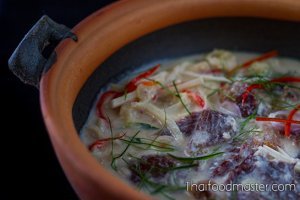
แกงต้มกะทิเนื้อโคเค็ม อย่าง จีบ บุนนาค (พ.ศ. ๒๔๘๔)
ภูมิปัญญาไทยโบราณท่านมีความอัจฉริยะล้ำเลิศ คิดปรุงตำรับอาหารที่ได้ผลออกมาอย่างลงตัว ดังที่กล่าวมาในบทก่อนหน้า วิถีไทยอาศัยการถนอมอาหารด้วยการทำเค็มหรือตากแห้ง และเมื่อจะนำมารับประทาน ความรุ่มรวยทางวัฒนธรรมการกิน บวกกับความมีศิลปะแห่งการปรุง คนสมัยก่อนสามารถรังสรรค์ของใกล้ตัว ให้ออกมาเป็นตำรับที่วิเศษได้โดยง่าย ง่ายด้วยกรรมวิธี ง่ายด้วยวัตถุดิบเครื่องปรุง ให้เป็นของอร่อยแบบไทยแท้ หนึ่งในตำรับนั้นคือ "ต้มกะทิเนื้อโคเค็ม"....
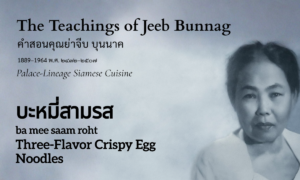
Three-Flavor Crispy Egg Noodles (บะหมี่สามรส; ba mee saam roht)
Ba mee saam roht: deep-fried egg noodles topped with shrimp, pork fat, jicama, and pineapple in a sour-sweet-salty sauce. Jeeb Bunnag, 1945.
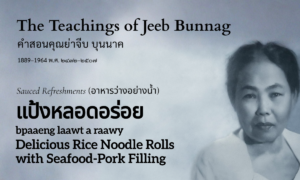
Delicious Rice Noodle Rolls (แป้งหลอดอร่อย; tham raae yam sa bpaaeng laawt a raawy)
Delicious Rice Noodle Rolls, a Thai appetizer of rice sheets wrapped around seafood-pork filling and tied with spring onion. From Jeeb Bunnag's 1945 cookbook.
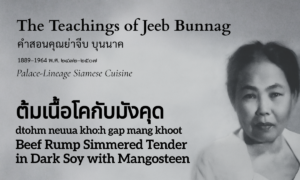
Beef Rump Simmered Tender in Dark Soy with Mangosteen Flesh and Seeds (ต้มเนื้อโคกับมังคุด; dtohm neuua kho:h gap mang khoot)
Dtohm neuua kho:h gap mang khoot, lard-fried beef rump simmered in dark soy with peeled mangosteen, seeds and all. From Jeeb Bunnag, 1933.
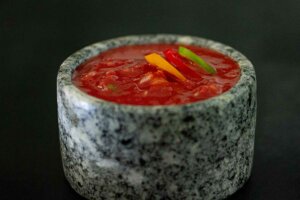
Pickled bean curd chili relish (น้ำพริกเต้าหู้ยี้; naam phrik dtao huu yee)
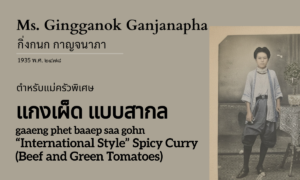
“International Style” Spicy Curry (แกงเผ็ด แบบสากล; gaaeng phet baaep saa gohn)
Gaeng phet baaep saa gohn — beef pre-seared with fish sauce, curry paste bloomed in cracked coconut cream. green tomatoes or hairy-fruited eggplant (maeuk) and dual basils - Gingganok Gaanjanaaphaa, 1935.
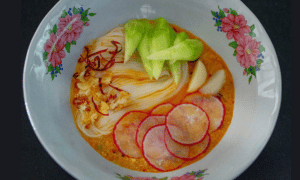
c1936 Arabian noodles – Princess Maao Thongthaem’s Siamese-Orientalist fermented rice noodles light meal (ขนมจีนอาหรับ อย่าง เม้า ทองแถม; khanohm jeen aarap)
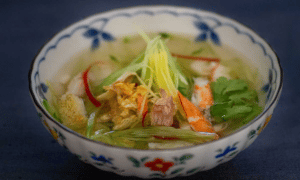
Mixed Clear Shrimp Soup with Salted Fish, Shrimp, Cucumber, Mango and Pickled Garlic (แกงนอกหม้อ ; gaaeng naawk maaw)
Gaaeng naawk maaw is a light and refreshing soup served at room temperature. The ingredients are meticulously sliced as if for a salad, placed in a serving bowl, and covered with a salty and naturally sweet shrimp broth. At the table, diners can adjust the soup to their preferred flavor profile using granulated sugar, lime juice, or pickled garlic brine; hence the name – gaaeng naawk maaw – which literally means "a curry dish outside the pot" or "to cook curry outside the pot". (Note: The word gaaeng (แกง) in Thai is both a verb and a noun).

Emperor's Hong Te Rice Vermicelli (หมี่ฮ่องเต้; mee haawng dteh)
Emperor's Hong Te Rice Vermicelli, a royal Thai dish combining delicate shredded chicken and crab meat over rice noodles. From Jeeb Bunnag's 1945 cookbook.
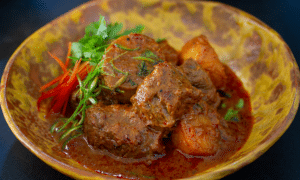
Perfumed Braised Beef and Potato Curry with Three Gingers, Thai Basil and Bitter Orange (แกงเนื้อใส่เปราะหอมสดและส้มซ่า; Gaaeng Neuua Sai Bpraw Haawm Soht Lae Sohm Saa)
Discovered in a memorial book for the funeral of SubLt. Soophoht Jeungpraphaa (ร.ต. สุพจน์ จึงประภา) (1925-1966), this beef and potato curry dish unites two distinct curry styles: Massaman curry, known for its sweet and warming complexity of dry spices, punctuated by the vibrancy of bitter orange juice; and gaaeng phet (แกงเผ็ด) spicy curry, dominated by a basil herbal identity. The recipe maintains a sense of traditional elegance despite the startlingly unusual culinary fusion; as these two cooking styles are woven together, their spiced comfort, earthy warmth, citrusy freshness, and cool herbaceous notes meld in a gentle refinement. Drawing upon familiar and novel elements, this curry is both comforting and stimulating.
Massaman curry typically presents as a deep, rich dish. Its unique flavor profile is derived predominantly from a range of dry spices that point to its Persian-inspired roots in Siamese cuisine, along with a curry paste that exudes a sense of freshness. The dried chilis are roasted to deepen their color; the rest of the ingredients, such as the shallots, garlic and dry spices, are roasted too, individually, before being pounded into the paste. Conversely, the gaaeng phet (แกงเผ็ด) curry integrates dry spices more sparingly and is known for flavor qualities that are based on a phrik khing (พริกขิง) paste made of fresh aromatics and a basil herbal identity.
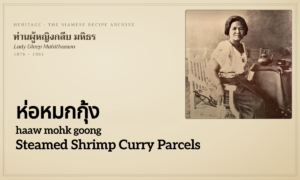
Steamed Shrimp Curry Parcels (ห่อหมกกุ้ง; haaw mohk goong)
Haaw mohk goong — giant freshwater prawns in fish haw mok paste, bound with one egg before wrapping and steaming. Lady Gleep, 1949.
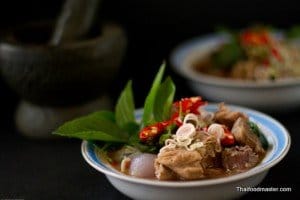
แกงรัญจวน
แกงโบราณชนิดนี้ เริ่มกลับมาเป็นที่นิยมอีกครั้งหนึ่ง หลังจากพอมีร้านอาหารไทยบางร้านนำตำรับนี้ไปบรรจุเป็นหนึ่งในเมนู และจากหนังสืออัตตชีวประวัติของ ม.ล. เนื่อง นิลรัตน์ ผู้เขียนเรื่องราวชีวิตในสำนักพระวิมาดาเธอ กรมพระสุทธาสินีนาฏ ปิยมหาราช ปดิวรัดดา แหล่งขึ้นชื่อเรื่องฝีมือปรุงอาหารในช่วง รัชกาลที่ ๕ ถึงสมัยรัชกาลที่ ๗ และอีกหนึ่งสาเหตุก็มาจากบทละครย้อนยุคยอดนิยม เมื่อไม่นานมานี้ เกี่ยวกับเรื่องคุณชายแห่งราชตระกูลหนึ่ง ๕ คน ที่มีเรื่องราวความรักโรแมนติกในการหาคู่ครอง มีการพิสูจน์คุณสมบัติ ของตัวเอกฝ่ายหญิงที่เหมาะสมจะมาเป็นคู่ครองของคุณชายทั้ง ๕ ซึ่งแบ่งเป็นตอน ๆ ละคน รวม ๕ ตอน และมีตอนหนึ่งกล่าวถึงเรื่องราวที่ทำการพิสูจน์ความสามารถของนางเอกด้วยการทำ “แกงรัญจวน” ซึ่งเป็นอาหารเริ่มต้นจากในวังสวนสุนันทา มาเป็นเนื้อหาของบทละคร บรรดาแฟนละครเลยตามหาสูตรกันใหญ่ ที่พึ่งของแหล่งข้อมูล ก็ดูจะหนีไม่พ้นในกูเกิ้ล ในบางเว็ปไซด์ในอินเตอร์เน็ต
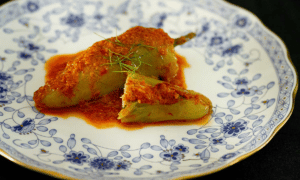
Chuu Chee Curry of Stuffed Banana Chilies with Pork, Shrimp and Crab Meat (ฉู่ฉี่พริกสอดไส้ ; chuu chee phrik yuaak saawt sai)
This chuu chee features avocado-green banana chilies and the pinkish mixture of pork, shrimp and crab meats. The chilies are sliced open and stuffed with a mixture of the meats, which is seasoned with the basic saam gluuhr (สามเกลอ) paste – the Siamese trio of coriander roots, Thai garlic and white peppercorns. The stuffed chilies are then steamed before being cooked in a thick, reddish, coconut cream-based curry. The liquids collected in the tray during the steaming process are packed with the light sweet fruitiness of the banana chilies; these liquids are reserved and added to the broth, producing a bright and light-bodied dish.
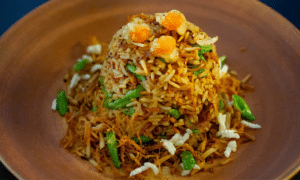
Crispy Rice - Khaao Graawp (ข้าวกรอบ อย่างหม่อมเจ้าสาย ลดาวัลย์)
Suan Sunandha Palace was the permanent residence of Mom Chao Sai Ladawan (HRH Princess Saisawali Phirom, พระวิมาดาเธอ หม่อมเจ้าสาย ลดาวัลย์), the Royal Consort to Rama V. In the kitchen of Suan Sunandha Palace, the Princess presided over a peak era of culinary innovation until her passing on June 24, 1929. Reflecting her practicality, the Princess’ recipes frequently incorporated the era’s common pantry ingredients in new and surprising combinations.
For example, in her boat-embarking chili relish (น้ำพริกลงเรือ; naam phrik lohng reuua), a relish still enjoyed today, the Princess pairs fermented shrimp paste chili relish with sweet pork, crispy fried fish, salted duck eggs and hairy-fruited eggplant (maeuk) (มะอึก). Another example is her gaaeng ran juaan (แกงรัญจวน) – the Princess prepares a vibrant spicy and sour soup, fragrant with the aroma of Thai basil, from the leftovers of a stir-fried beef dish and fermented shrimp paste chili relish, which she cooked together with lemongrass, shallots and garlic.
Mom Chao Sai Ladawan’s recipes, many already recreated here at Thaifoodmaster, were recorded by Princess Sadap Ladawan (เจ้าจอมหม่อมราชวงศ์สดับลดาวัลย์), a key figure in the Palace’s culinary affairs, and subsequently compiled and published by Suan Sunandha Rajabhat University in a volume dedicated to seasoned rice dishes and chili relishes.
In this dish called khaao graawp (ข้าวกรอบ), or “crispy rice” the Princess seasons cooked jasmine rice with chili jam, and adds four fried components, each highlighting a different element of the crispiness indicated by the dish’s name.
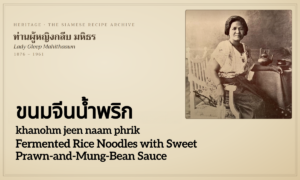
Fermented Rice Noodles with Sweet Prawn-and-Mung-Bean Sauce (ขนมจีนน้ำพริก; khanohm jeen naam phrik)
Khanohm jeen naam phrik: fermented rice noodles with pounded prawn, roasted mung bean and tamarind-coconut sauce. Lady Gleep Mahithaawn, 1949.
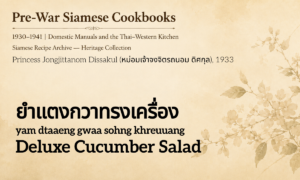
Deluxe Cucumber Salad (ยำแตงกวาทรงเครื่อง; yam dtaaeng gwaa sohng khreuuang)
Deluxe cucumber salad of bias-cut cucumber, boiled pork belly, shrimp, and sea crab in a three-flavor dressing. From Princess Jongjittanom, 1978.
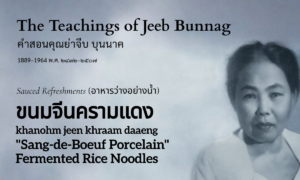
"Sang-de-Boeuf Porcelain" Fermented Rice Noodles (ขนมจีนครามแดง; khanohm jeen khraam daaeng)
Sang-de-Boeuf Porcelain Fermented Rice Noodles featuring a coconut sauce infused with roasted shallots, garlic and mung beans. From Jeeb Bunnag, 1945.
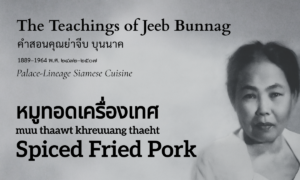
Spiced Fried Pork (หมูทอดเครื่องเทศ; muu thaawt khreuuang thaeht)
Muu thaawt khreuuang thaeht: pork tenderloin scored, rubbed with dry-roasted white peppercorns, coriander, cumin, and nutmeg, then breaded and fried. Jeeb Bunnag, 1933.
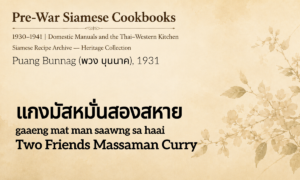
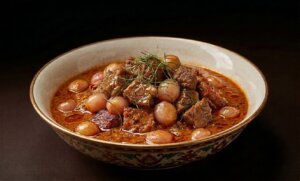
Two Friends Massaman Curry (แกงมัสหมั่นสองสหาย; gaaeng mat man saawng sa haai)
Two Friends Massaman Curry of chicken and beef, seasoned sweet first and sharpened with bitter orange juice. From Puang Bunnag, 1931.
Phanaeng Curry of Grilled Duck Stock with Shallots (แกงพะแนงน้ำเป็ดย่างกับหอมเล็ก; gaaeng pha naaeng naam bpet yaang gap haawm lek)
Phanaeng curry from Mrs Puang Bunnag's 1931 manuscript, built on grilled duck stock and a paste of roasted coriander, cumin, and cinnamon.
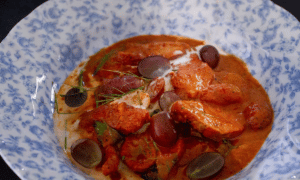
c1941 Roasted Duck Curry with Grapes (Gaaeng Ho) (แกงเป็ดเหาะใส่องุ่น อย่างคุณถนอม ปาลบุตร พ.ศ. 2484; gaaeng bpet haw sai angoon)
Grapes have long been associated with prosperity, fertility and abundance across various cultures and historical periods due to the fruit’s large clusters and bountiful growth. In ancient China, grapes were considered a symbol of wealth and nobility, and often deployed as a status symbol among the elite. In Greek mythology, Dionysus, the god of wine and fertility, was often depicted holding a bunch of grapes, further emphasizing the connection between grapes and abundance. This association is also likely rooted in the fact that grapes were a valuable crop in antiquity – used to produce wine and other fermented products, and an important source of food and nutrition. In Indian Ayurvedic texts, grapes are referred to as vineaksha and utilized in treating a variety of ailments, including fever and indigestion.
From the Siamese perspective, the incorporation of fruits in culinary preparations was viewed as a luxurious indulgence, as many fruits commonly available today were once difficult to obtain. Thus the pairing of an extravagant ingredient – such as fruit – with an equally opulent and exclusive delicacy like roasted duck resulted in a dish fit for royalty.
1
2
3
4
5
6
7
8
9
10
11
12
13
14

Get Access – Join Thaifoodmaster Today
Practical and kitchen-tested recipes with a mix of theory, history, psychology, and Siamese culture tidbits.
-
Get access to everything right away. Unlock more than 50 Masterclasses, over 700 recipes and Articles
Access to Thaifoodmaster’s constantly growing library of prime professional classes, articles, recipes and videos on Siamese culinary topics, available nowhere else in English.
-
GET EXTRA - New Masterclasses and Daily Recipes
Gain access to NEW masterclasses as they become available. Access DAILY translations of heritage-recipes.
-
1-1 support from Hanuman
1-1 support from Hanuman to help you achieve your professional Thai culinary goals
-
Live Q&A Sessions
The opportunity to join a monthly live two-hour videoconference where I can answer your questions.
-
Great Value!
one year access for the price of 3 days in-person training.
You will get everything you need to:
-
To Get inspired
When you design or build a new menu for an event or restaurant or even prepare for dinner with friends.
-
To Satisfy your curiosity.
Finally !
-
To Master Your Craft
Master your Thai cooking skills and expand your repertoire.
It is truly brilliant with a revolutionary approach introducing aspects and concepts never broached by cookbooks.

Ian Westcott
Sourcing Wines for Discerning Private Clients
© 2008 – 2026 Thaifoodmaster


