
Celebrating the Art of Siamese Culinary Wisdom and Thai Cuisine
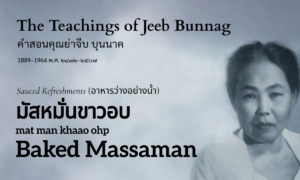
Baked Massaman (มัสหมั่นขาวอบ; mat man khaao ohp)
Baked Massaman, a molded rice dish with spiced beef and pickled garnishes. From Jeeb Bunnag's 1945 cookbook of Thai tea accompaniments and snacks.
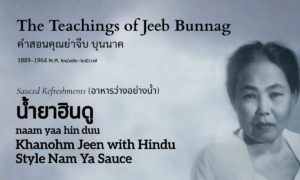
Khanohm Jeen with Hindu Style Nam Ya Sauce (น้ำยาฮินดู; naam yaa hin duu)
Naam yaa hin duu, a coconut curry sauce with red and white beans, flavored with fermented soybean paste. From Jeeb Bunnag's 1945 cookbook.

Capital-Style Sausage (ไส้กรอกกรุง; sai graawk groong)
Capital-Style Sausage combines crab meat and pork with cinnamon and nutmeg, smoked over sugarcane peels and coconut husks. From Jeeb Bunnag's 1945 cookbook.
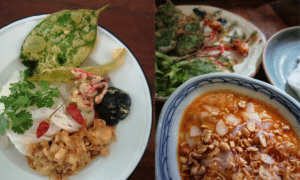
c1949 Fermented rice noodles with multi-sour aromatic chicken sauce by Lady Gleep Mahithaawn (ขนมจีนน้ำพริกไก่ อย่างท่านผู้หญิงกลีบ มหิธร พ.ศ. 2492; khanohm jeen naam phrik gai)
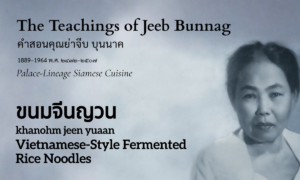
Vietnamese-Style Fermented Rice Noodles (ขนมจีนญวน; khanohm jeen yuaan)
Vietnamese-Style Rice Noodles features fermented rice noodles layered with fresh shrimp, pork, and herbs, dressed with a tangy sauce. From Jeeb Bunnak's 1945 cookbook.
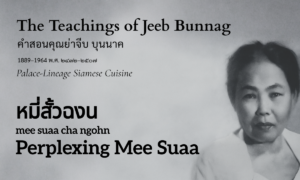
Perplexing Mee Suaa (หมี่สั้วฉงน; mee suaa cha ngohn)
Mee suaa cha ngohn: wheat noodle bundles bound with shrimp-corn paste, steamed, served in clear pork-crab broth. Jeeb Bunnag, 1933.
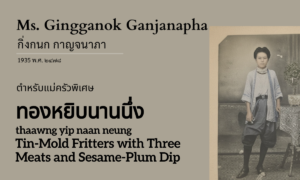
Thong Yip Naan Nueng (ทองหยิบนานนึ่ง; thaawng yip naan neung)
Thong Yip Naan Nueng, mold-fried wheat batter with crab, pork, and chicken, inverted mid-fry until golden. From Gingganok Gaanjanaaphaa, 1935.
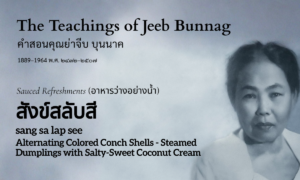
Alternating Colored Conch Shells (สังข์สลับสี; sang sa lap see)
Alternating Colored Conch Shells, multicolored dumplings tinted with natural dyes and shaped like conch shells. From Jeeb Bunnag's 1945 dessert cookbook.
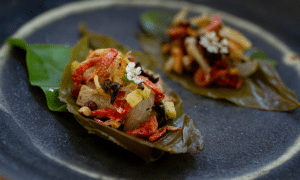
Miang Sot (เมี่ยงซด) - Miiang Soht, circa 1928
The word ‘miang’ is often used to designate Thai hors d’oeuvre-like snacks consisting of various ingredients wrapped in leaves. To chew on a miang parcel delivers a delightful melee of flavors and textures, each triumphing over the other in a continuous transformation, creating a captivating and ever-evolving taste experience throughout the bite.
Miang sot is a fermented leaves dish that appeared in a cookbook published in honor of Thao Suphatigaanapakdee (also known as Prik Sirisamphan) (ท้าวสุภัติการภักดี (ปริก ศิริสัมพันธ์)), in 1928. Titled Gap Khaao Thai (กับข้าวไทย), the book features a collection of recipes that were once prepared and served to King Chulalongkorn Rama V. The author, Sohmboon Sirisamphan (เถ้าแก่ สมบุญ ศิริสัมพันธ์) a respected elder (known as thao gaae (เถ้าแก่) in Thai), was a distinguished businessman of Chinese origins.
The dish is composed of fermented tea leaves; it is perhaps the closest tea leaves wrap to the ‘miang’ style introduced to the Siamese court by Princess Dara Rasami in the late 1800s. The dish gives us a glimpse of flavor of what her household, which participated in the informal marketplace events within the palace, might have to offer.
The popularity of miang in Siamese cuisine is tied to the history of two kingdoms, Siam and Lanna, and the life of one princess, Princess Dara Rasami. The daughter of King Inthawichayanon of Chiang Mai and the fifth consort of King Chulalongkorn, the princess was selected at the age of thirteen, in 1886, to serve as a consort to King Chulalongkorn in the Inner Palace; the decision was shaped by both political strategy and personal transition. At the time, Siam was consolidating its power and extending its influence over neighboring regions, including Lanna. As the ruler of Chiang Mai, Princess Dara Rasami’s father, Intawichayanon, viewed the move as a strategic alliance. In return, King Chulalongkorn presented him with the medal of the Order of Chula Chom Klao, which is the Siamese equivalent of a knighthood.
The Ambassador’s House Style Rice Vermicelli in Broth (หมี่น้ำบ้านราชทูต; mee naam baan raat thuut)
The Ambassador's House Style Rice Vermicelli features crispy rice noodles in a complex sweet-sour broth with multiple proteins. From Jeeb Bunnag, 1945.
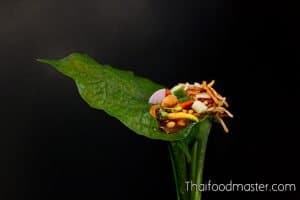
เมี่ยงคำ
ค้นข้อมูลดูว่าตำรับ "เมี่ยงคำ" เริ่มปรากฏมีบันทึกไว้เป็นลายลักษณ์อักษรแต่เมื่อใดกันแน่ สอบทานดูตำราอาหารเก่า ๆ หลายตำรับ ที่ตีพิมพ์ในสมัยรัชกาลที่ ๕ ก็ไม่พบ "เมี่ยงคำ" ในวิถีอาหารไทยโบราณแต่อย่างใด พบแต่ เมี่ยงลาว หรือ เมี่ยงพายัพ ซึ่งหมายถึงเมี่ยงที่มาจากทางเหนือ จากการอ่านหนังสือหลาย ๆ เล่ม เพื่อหาข้อมูลพบว่า "เมี่ยง" ได้เริ่มเป็นที่นิยมแพร่หลายในรั้วในวัง ก็หลังจากที่พระราชชายาเจ้าดารารัศมี ลงมารับราชการในราชสำนักที่กรุงเทพฯ และได้นำวัฒนธรรมการกินเมี่ยง ซึ่งเป็นหนึ่งในวิถีการดำรงชีวิตแบบล้านนาติดมาในหมู่ข้าราชบริพารชาวเหนือในตำหนักของพระองค์ ซึ่งบรรดาชาววังในสมัยนั้นจะเห็นเป็นสิ่งแปลกตาโก้เก๋ และคอยเอาอย่างในบางเรื่อง ทำให้หลังจากนั้นจึงค่อยเริ่มมีตำรับเมี่ยงต่าง ๆ ออกมามากมาย ปรากฏในตำราอาหารหรือเครื่องว่างต่าง ๆ ของไทยในสมัยต่อ ๆ มา สำหรับ "เมี่ยงคำ" นั้น พบว่ามีปรากฏครั้งแรก ในบทกาพย์เห่ชมเครื่องว่าง ของรัชกาลที่ ๖ ที่ใช้เป็นบทนำในตอนต้นบทความนี้ ซึ่งนั่นก็แสดงว่า "เมี่ยงคำ" กลายเป็นเครื่องว่างในวังหลวงเป็นที่นิยมกันมากแล้วในสมัยนั้นถึงสามารถขึ้นโต๊ะเครื่องเสวยได้ จึงเป็นข้อสันนิษฐานว่าน่าจะมีกำเนิดมาไม่เก่าไปกว่าสมัยรัชกาลที่ ๕ เป็นแน่แท้ ตำรับ "เมี่ยงคำ" คงจะเกิดจากการคิดประดิษฐ์ทำนำสิ่งละอันพันละน้อย ใส่ไปในคำเมี่ยง พร้อมใส่น้ำเมี่ยง เพื่อรับประทาน ทีละคำ ๆ จึงได้ชื่อว่า "เมี่ยงคำ" เหมือน ๆ หรือทำนองเดียวกันกับ "เมี่ยงอยาก" ที่ คุณป้า ม.ล. เนื่อง นิลรัตน์ เขียนบันทึกไว้ในหนังสือ "ชีวิตในวัง" ที่ตีพิมพ์มาแล้วหลายครั้ง ว่าเกิดจากความอยากกินเมี่ยง ของกลุ่มข้าหลวงวังสวนสุนันทา เวลามานั่งจับกลุ่มคุยกันยามว่างภารกิจ และไปค้นหาของในครัว ได้ กากหมู น้ำตาลปึก กะปิ ฯลฯ ก็นำมารับประทานกันเป็น"เมี่ยง" ที่อร่อยอย่างง่าย ๆ

Cantonese-Style Tofu (เต้าหู้แคนต้อน; dtao huu khaaen dtaawn)
Cantonese-Style Tofu, an elaborate Thai-Cantonese fusion dish featuring stuffed tofu and squid with pork offal in sweet-sour sauce. From Jeeb Bunnag's 1945 cookbook.

Shanghai-Style Fried Rolls (ทอดมันเซี่ยงไฮ้; thaawt man siiang hai)
Thaawt man siiang hai, pork and crab rolls in tofu skin with five-spice, steamed then fried. From Jeeb Bunnag's 1933 cookbook.
Fish Miang Naem (เมี่ยงแนมปลา; miiang naaem bplaa)
Miiang naaem bplaa, grilled snakehead fish with fire-roasted galangal juice and bitter orange, served in lettuce cups. Jeeb Bunnag, 1933.
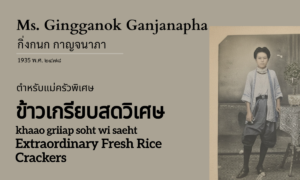
Extraordinary Fresh Rice Crackers (ข้าวเกรียบสดวิเศษ; khaao griiap soht wi saeht)
Khaao griiap soht wi saeht: rice porridge spread thin on a khanom khrok griddle, filled with minced prawn and kaffir lime. Gingganok, 1935.
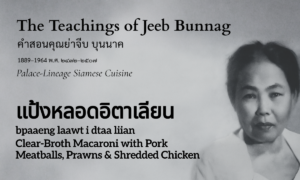
Italian Tube Pasta (แป้งหลอดอิตาเลียน; bpaaeng laawt i dtaa liian)
Bpaaeng laawt i dtaa liian, macaroni in clear bone broth with steamed pork meatballs, prawns, and shredded chicken. Jeeb Bunnag, 1933.
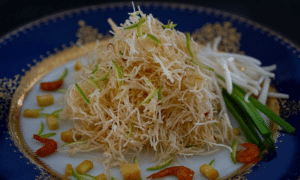
Sour-Sweet Savory Crispy Rice Vermicelli with Bitter Orange (Mee Krob) (หมี่กรอบส้มซ่าทรงเครื่อง ; Mee Graawp)
mee graawp sohng khreuuang (หมี่กรอบทรงเครื่อง), is an exquisitely regal dish of crispy rice vermicelli. The delicate noodles strands are washed and dried, then fried to a crisp light-golden hue. They retain their brittle crunch and airy texture even after being stir-fried with a clinging sticky sauce that encases the noodles in a thin layer of sheen. This sauce, mixed into the noodles together with other ingredients such as thin slices of pickled garlic and bitter orange peel, impart the dish with a light, fresh sweet and sour, and slightly salty and citrusy glaze.

Jatturaphan Dumplings — Bird Egg-Shaped Dumplings in Four Complexions (ไข่นกจัตุรพรรณ; khai nohk jat dtoo phan)
Bird's Egg Jatturaphan: tapioca dumplings with salted egg yolk centers in four natural colors, served in chicken broth. From Jeeb Bunnag's 1945 royal court cuisine cookbook.
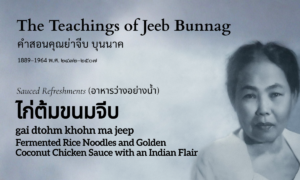
Fermented Rice Noodles and Golden Coconut Chicken Sauce with an Indian Flair (ไก่ต้มขนมจีบ; gai dtohm khohn ma jeep)
Gai dtohm khohn ma jeep, a coconut-simmered chicken sauce with Indian influences served with fermented rice noodles. From Jeeb Bunnag's 1945 cookbook.
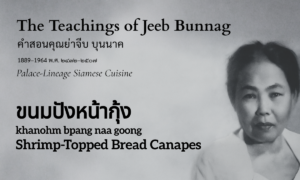
Shrimp-Topped Canapes (ขนมปังหน้ากุ้ง; khanohm bpang naa goong)
Khanohm bpang naa goong: fried bread squares topped with coconut-cream shrimp, garnished with semi-matured coconut in a cross. Jeeb Bunnag, 1933.
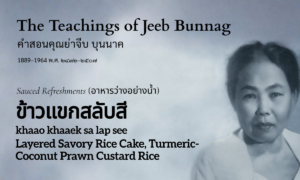
Layered Savory Rice Cake (ข้าวแขกสลับสี; khaao khaaek sa lap see)
Layered Savory Rice Cake features steamed rice, seasoned prawn filling, and golden turmeric-coconut custard. From Mrs. Samakkhanatthon's 1945 Thai cookbook.
1
2
3
4
5

Get Access – Join Thaifoodmaster Today
Practical and kitchen-tested recipes with a mix of theory, history, psychology, and Siamese culture tidbits.
-
Get access to everything right away. Unlock more than 50 Masterclasses, over 700 recipes and Articles
Access to Thaifoodmaster’s constantly growing library of prime professional classes, articles, recipes and videos on Siamese culinary topics, available nowhere else in English.
-
GET EXTRA - New Masterclasses and Daily Recipes
Gain access to NEW masterclasses as they become available. Access DAILY translations of heritage-recipes.
-
1-1 support from Hanuman
1-1 support from Hanuman to help you achieve your professional Thai culinary goals
-
Live Q&A Sessions
The opportunity to join a monthly live two-hour videoconference where I can answer your questions.
-
Great Value!
one year access for the price of 3 days in-person training.
You will get everything you need to:
-
To Get inspired
When you design or build a new menu for an event or restaurant or even prepare for dinner with friends.
-
To Satisfy your curiosity.
Finally !
-
To Master Your Craft
Master your Thai cooking skills and expand your repertoire.
It is truly brilliant with a revolutionary approach introducing aspects and concepts never broached by cookbooks.

Ian Westcott
Sourcing Wines for Discerning Private Clients
© 2008 – 2026 Thaifoodmaster


