
Celebrating the Art of Siamese Culinary Wisdom and Thai Cuisine
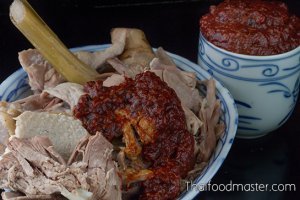
ต้มข่าเป็ด จิ้มน้ำพริกเผาแบบโบราณ อย่างหม่อมซ่มจีน (ราชานุประพันธุ์) ร.ศ.๑๐๙
อาหารโบราณที่ปัจจุบันเปลี่ยนไปจากตำรับเดิมตามรสนิยม ต้มข่าเป็ด จิ้มน้ำพริกเผาแบบโบราณ
"ต้มข่า" แต่เดิม ซึ่งเป็นอาหารของชาวบ้านทั่วไป อาหารชนิดนี้จัดเป็นแกงอย่างหนึ่ง ที่ใช้เนื้อเป็ด เนื้อไก่ หรือ เนื้อปลา ต้มเคี่ยวกับข่าอ่อนในน้ำกะทิ รับประทานกับน้ำพริกหรือน้ำพริกเผา เป็นอาหารพื้น ๆ ของคนไทย ที่เดี๋ยวนี้เปลี่ยนแปลงกลายพันธุ์จนมีลักษณะเข้าใกล้ "ต้มยำกะทิ"
เมื่อราวร้อยกว่าปีก่อนนั้น คนส่วนใหญ่ยังปรุง "ต้มข่า" ในแบบที่ได้เล่ามาอยู่เลย "ตำรากับเข้า" ของ "หม่อมส้มจีน" (ร.ศ.๑๐๙) ก็เขียนถึง "ต้มข่า" ตำรับนี้ เป็นของทำง่ายอย่างสามัญ จะเห็นได้ว่าคนรุ่นเก่าจะเน้นกิน “ต้มข่า” ที่เนื้อสัตว์และข่าอ่อน จิ้มกับน้ำพริกเผาชูรสข้างนอกถ้วย มิใช่ปรุงรสสำเร็จเปรี้ยวเค็มหวานในน้ำแกงอย่างปัจจุบัน
จะเห็นได้ว่าคนรุ่นเก่าจะเน้นกิน "ต้มข่า" ที่เนื้อสัตว์และข่าอ่อน จิ้มกับน้ำพริกเผาชูรสข้างนอกถ้วย มิใช่ปรุงรสสำเร็จเปรี้ยวเค็มหวานในน้ำแกงอย่างปัจจุบัน....
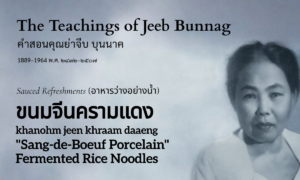
"Sang-de-Boeuf Porcelain" Fermented Rice Noodles (ขนมจีนครามแดง; khanohm jeen khraam daaeng)
Sang-de-Boeuf Porcelain Fermented Rice Noodles featuring a coconut sauce infused with roasted shallots, garlic and mung beans. From Jeeb Bunnag, 1945.
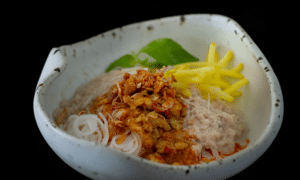
Naam Yaa Neuua – Northern Style Naam Ya according to Lady Plean Passakornrawong (น้ำยาเหนือ)
This fermented rice noodle dish is served with a slow-cooked, chili-less broth made from pounded fish meat and aromatics cooked in coconut cream. Creamy in color and velvety in texture, the broth is seasoned either with fish sauce, fermented fish or salted fish according to one’s preferences. The broth is allowed to slow-cook, achieving its full richness over a couple of hours. Once ready, the broth is poured over the noodles, which are then topped with a glossy-orangey layer of minced shrimp meat fried with their tomalley in pork lard. Complementing this richness are crunchy yellowish bean sprouts blanched in turmeric-tinted water, a sprinkle of sweet, golden crispy-fried shallots and, finally, green lemon basil leaves that endow the dish with a unique, rustic herbal persona.
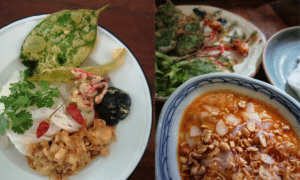
c1949 Fermented rice noodles with multi-sour aromatic chicken sauce by Lady Gleep Mahithaawn (ขนมจีนน้ำพริกไก่ อย่างท่านผู้หญิงกลีบ มหิธร พ.ศ. 2492; khanohm jeen naam phrik gai)
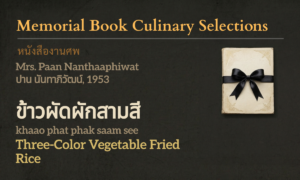
Three-Color Vegetable Fried Rice (ข้าวผัดผักสามสี; khaao phat phak saam see)
Three-color vegetable fried rice with diced chicken, carrot, peas and radish, the beans boiled in ash water to stay green. From Paan Nanthaaphiwat, 1953.
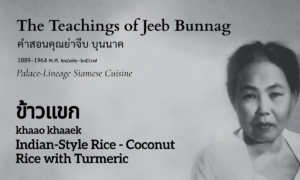
Indian-Style Rice (ข้าวแขก; khaao khaaek)
Khaao khaaek: lightly salted soft rice under a turmeric-tinted, jasmine-scented coconut cream, twice as thick as the rice. Jeeb Bunnag, 1933.
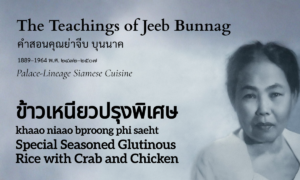
Special Seasoned Glutinous Rice with Crab and Chicken (ข้าวเหนียวปรุงพิเศษ; khaao niaao bproong phi saeht)
Special Seasoned Glutinous Rice, a royal Thai palace dish featuring coconut-infused sticky rice with crab and chicken. From Jeeb Bunnag's cookbook, 1945.
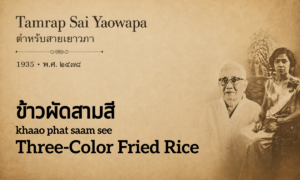
Three-Color Fried Rice (ข้าวผัดสามสี; khaao phat saam see)
Three-color fried rice: pork, shrimp and chicken rices seasoned with fish sauce, tomato sauce and curry powder, plated in sections. From Sai Yaowapa, 1935.
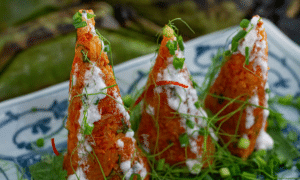
Grilled banana leaf parcels filled with curried rice, shrimp meat grated coconut, and herbs. (ข้าวงบกุ้ง อย่างพระวิมาดาเธอ หม่อมเจ้าสาย ลดาวัลย์ ; khaao ngohp goong)
The khaao ngohp goong (ข้าวงบกุ้ง) of Mom Chao Sai Ladawan (Princess Saisawali Phirom) is a dish of seasoned curried rice mixed with shrimp meat, shrimp tomalley, grated coconut, and herbs. The rice mix is then wrapped in banana leaves and grilled. Unwrapping the parcel reveals an intense orange- and russet-brown colored rice cake that is rich, savory and naturally sweet. It is served with a drizzle of thickened coconut cream and herbs.
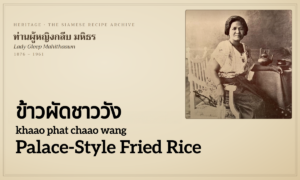
Palace-Style Fried Rice (ข้าวผัดชาววัง; khaao phat chaao wang)
Khao phat chao wang, fried rice cooked in the rendered fat of salt-stewed pork with shrimp and egg. From Lady Gleep Mahithaawn, 1949.
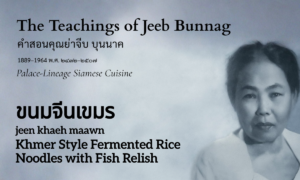
Khmer Rice Noodles with Fish Relish (ขนมจีนเขมร; jeen khaeh maawn)
Khmer Rice Noodles with Fish Relish features smoke-dried barb fish prepared through a four-stage process with aromatic herbs. From Jeeb Bunnak's 1945 cookbook.
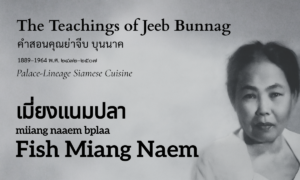
Fish Miang Naem (เมี่ยงแนมปลา; miiang naaem bplaa)
Miiang naaem bplaa, grilled snakehead fish with fire-roasted galangal juice and bitter orange, served in lettuce cups. Jeeb Bunnag, 1933.
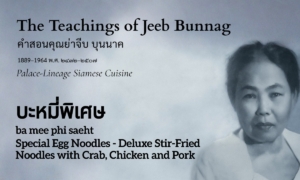
Special Egg Noodles (บะหมี่พิเศษ; ba mee phi saeht)
Ba mee phi saeht, egg noodles stir-fried with crab, chicken, and pork, garnished with scored carrots. From Jeeb Bunnag's 1945 cookbook.
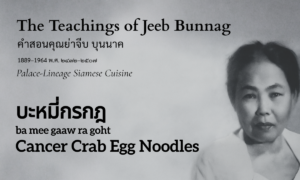
Cancer Crab Egg Noodles (บะหมี่กรกฎ; ba mee gaaw ra goht)
Ba mee gaaw ra goht, puffed deep-fried egg noodles topped with crab, shrimp, and salted duck egg yolk balls. Jeeb Bunnag, 1933.
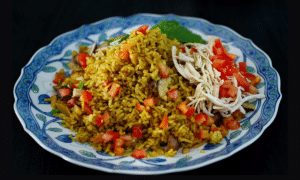
Golden Chestnut Fried Rice with Mint and Tomato (ข้าวผัดกาหรี่; khaao phat garee), circa 1935
Dating from the early 1900s, this tempting fried rice dish highlights how the Siamese aristocracy savored their golden rice, perfumed with an alluring blend of imported spices. The dish can be enjoyed on its own or as part of a larger meal featuring curries and soups.
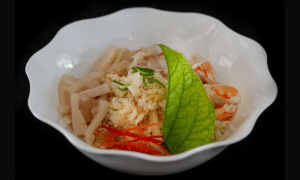
Phra Suli - Three-Flavor Seasoned Rice with Shrimp, Firm Pork Fat and Pork Skin (ข้าวพระศุลี; Khaao Phra Soolee)
Mrs. Paan Nanthaathiwat (คุณปาน นันทาถิวัฒน์) (1893-1955) was known for her kitchen skills. She often cooked for friends and family, spending time in the kitchen with her best friend, Mrs. Yim Pichaiyat Bunnag (คุณยิ้ม พิชัยญาติ บุนนาค (1892-1976). Thus, it was not a surprise when in 1953 she authored a recipe book as part of her merit offering on her 60th birthday. Sadly, Mrs. Paan passed away a year later and the publication, titled Hoong Khaao Dtohm Gaaeng (หุ้งข้าวต้มแกง), was later printed as a memorial book for her funeral. In 1977, the volume was reprinted for the funeral of her best friend, Mrs. Yim.
It is unclear why Mrs. Paan named this citrusy, sour, and salty seasoned rice dish after Lord Shiva, calling it “Phra Suli (พระศุลี ; phra soolee)”. Yet I believe the name of the dish is meant to evoke the elegance and delicacy of the deity rather than to reference cultural authenticity or tradition.
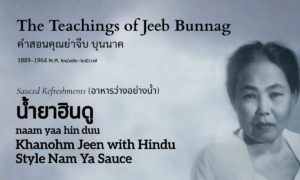
Khanohm Jeen with Hindu Style Nam Ya Sauce (น้ำยาฮินดู; naam yaa hin duu)
Naam yaa hin duu, a coconut curry sauce with red and white beans, flavored with fermented soybean paste. From Jeeb Bunnag's 1945 cookbook.
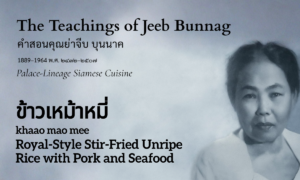
Royal-Style Stir-Fried Unripe Rice with Pork and Seafood (ข้าวเหม้าหมี่; khaao mao mee)
Royal-Style Stir-Fried Unripe Rice with Pork and Seafood, a dry-fried Thai royal dish using pounded unripe rice instead of vermicelli. From Jeeb Bunnak's 1945 cookbook.
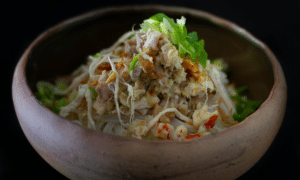
Naam Yaa Jeen - Fermented Rice Noodles with Chinese Sauce by HRH Prince Krom Luang Pitak Montri (น้ำยาจีน อย่างกรมหลวงพิทักษมนตรี)
Among the various curries that can be poured over khanom jeen fermented rice noodles, this broth, known as Chinese-style “naam yaa,” is unique in that it is a water-based curry that does not have chilies. As such, rather than the typical reddish-rust color of most coconut-based naam ya dishes from the Central Plains of the Kingdom, the sauce glows with a soft, light ivory hue, beautifully reflecting the dish’s natural sweet-savoriness, which is derived from slow-braising three proteins – chicken, pork and shrimp – along with a curry paste galvanized by smoke-dried fish and aromatic roots like galangal, fingerroot and sand ginger. The naam ya broth is served over a bed of fermented rice noodles and garnished with toppings such as delicate pulled chicken breast threads, golden-crispy fried shallots and garlic, and vivid green fresh coriander leaves and spring onion. All these elements add a visual grace and a hint of freshness to the robust broth – the signature dish of Prince Krom Luang Pitak Montri (กรมหลวงพิทักษ์มนตรี).
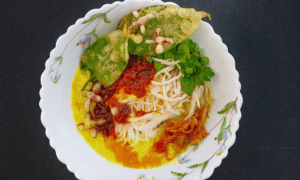
c1908 Fermented rice noodles and golden coconut chicken sauce with an Indian flair (ขนมจีนแขก หรือ ไก่ต้มขนมจีน ; khanohm jeen khaaek)
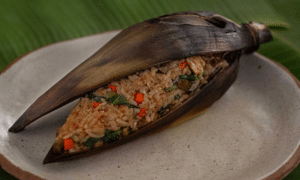
c1935 Char-grilled banana blossom stuffed and baked with tamarind relish fried rice (ข้าวปลี ตำรับสายเยาวภา พ.ศ. 2478 ; khaao bplee)
1
2
3

Get Access – Join Thaifoodmaster Today
Practical and kitchen-tested recipes with a mix of theory, history, psychology, and Siamese culture tidbits.
-
Get access to everything right away. Unlock more than 50 Masterclasses, over 700 recipes and Articles
Access to Thaifoodmaster’s constantly growing library of prime professional classes, articles, recipes and videos on Siamese culinary topics, available nowhere else in English.
-
GET EXTRA - New Masterclasses and Daily Recipes
Gain access to NEW masterclasses as they become available. Access DAILY translations of heritage-recipes.
-
1-1 support from Hanuman
1-1 support from Hanuman to help you achieve your professional Thai culinary goals
-
Live Q&A Sessions
The opportunity to join a monthly live two-hour videoconference where I can answer your questions.
-
Great Value!
one year access for the price of 3 days in-person training.
You will get everything you need to:
-
To Get inspired
When you design or build a new menu for an event or restaurant or even prepare for dinner with friends.
-
To Satisfy your curiosity.
Finally !
-
To Master Your Craft
Master your Thai cooking skills and expand your repertoire.
It is truly brilliant with a revolutionary approach introducing aspects and concepts never broached by cookbooks.

Ian Westcott
Sourcing Wines for Discerning Private Clients
© 2008 – 2026 Thaifoodmaster


