
Celebrating the Art of Siamese Culinary Wisdom and Thai Cuisine
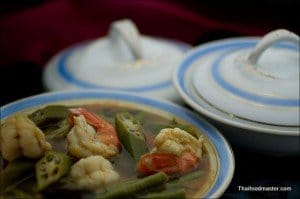
สูตรทำแกงส้มมอญกระเจี๊ยบกุ้ง
Gaeng som recipe: Sour curries are without doubt one of Thai cuisine all-time favorites, free from foreign influence and with many regional variations they present a complex balance of four flavors while using only few ingredients, all find a pleasing harmony in one dish.
There are the sourness of the tamarind paste, the saltiness of the fermented shrimp paste and fish sauce, the natural sweetness of the prawns and the vegetables and of course the peppery heat from the chilies. This easy curry paste is as rich as it is simple; the flavor offers a world of depth in a truly innovative combination of flavors.
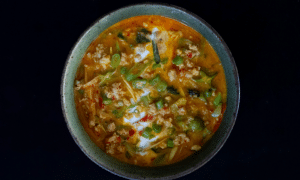
Pork and Three Beans Minced-Bird Style Curry with Fingerroot and Holy Basil (แกงคั่วหมูสับถั่วพู; Gaaeng Muu Sap Thuaa Phuu)
This contemporary minced-bird style curry uses pork rather than bird. However, since thicker, meatier curries have become associated in modern Thai cuisine with the bold presence of fingerroot – for example, in dishes such as fermented rice noodles in naam yaa thick fish curry (khanohm jeen naam yaa (ขนมจีนน้ำยา)) – this dish adopts the penetrating aromatic character of fingerroot along with the clove-like warmth of holy basil.
Like crisp footsteps in a forest, this satisfyingly meaty curry features vibrant fresh red chilies and thinly sliced yardlong beans and winged beans. It is suitable to serve with rice or with fermented rice noodles (khanom jeen paeng mak), conveying an aromatic upcountry flair.
Curry Paste Permeability
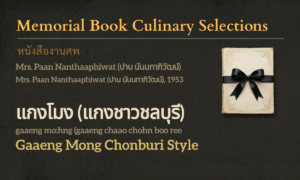
Gaaeng Mong (Chonburi-Style Curry) (แกงโมง (แกงชาวชลบุรี); gaaeng mo:hng (gaaeng chaao chohn boo ree))
Gaaeng Mong, a Chonburi regional curry with fermented shrimp paste, grilled catfish, and young watermelon. From Mrs. Paan Nanthaaphiwat, 1953.
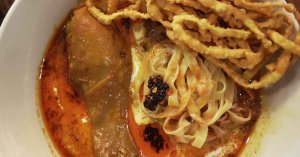
ข้าวซอยไก่
This dish (Khao Soi Recipe) takes us back in time to the mid-19th century. The trade caravans were trailing the jungles of northern Thailand along the ancient routes between India and China. Those long caravans were carrying wealth of exotic goods, leaving rich aroma of spices and the sweet scent of opium as they passed.
The men on this long line of between fifty and one hundred mules would be Yunnanese Muslim Chinese, who dominated the trade routes and began to settle in Chiang Mai and the main towns of north Thailand at that time.
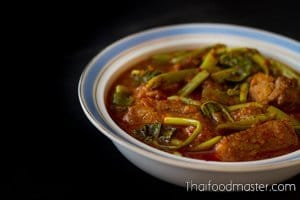
แกงหมูเทโพใส่ผักบุ้ง
"แกงหมูเทโพ" จึงจัดเป็นแกงที่ใส่กะทิก็ได้ หรือไม่ใส่ก็ได้ และเป็นแกงที่เน้นพริกแกงแบบแกงคั่ว (ไม่ใส่เครื่องเทศ แต่เพิ่มเนื้อปลากรอบลงในเครื่องน้ำพริก เพื่อให้น้ำแกงข้น) ตำรับที่นำเสนอวันนี้ จะเป็นตำรับของท่านผู้หญิงเปลี่ยน เป็นแบบไม่ใส่กะทิ แกงกับผักบุ้ง เพื่อให้แปลกไปจากที่ท่านคุ้นเคยเล็กน้อย และเพื่อสำหรับผู้ที่ต้องการจำกัดไขมันในอาหาร ขอนำตำรับมาบันทึกไว้เพื่อให้ท่านได้ศึกษาเปรียบเทียบและได้สังเกตแนวทางการปรุงพริกแกงและขั้นตอนวิธีแกงแบบดั้งเดิม
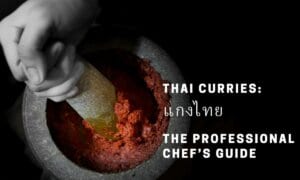
Thai Curries: The Professional Chef's Guide - แกงไทย
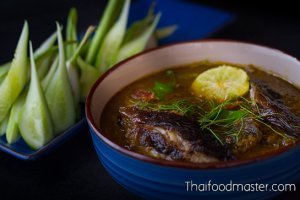
แกงไตปลาปลาดุกย่างโบราณ
แกงไตปลาปลาดุกย่างโบราณ - แกงไตปลา เป็นแกงพื้นเมืองของปักษ์ใต้ ที่มีความหลากหลายพอสมควร คือมีทั้งแกงประเภทใส่กะทิและไม่ใส่กะทิ แต่ที่เหมือนกันทุกท้องถิ่นคือ เครื่องพริกแกงต้องเผ็ด ใส่ทั้งพริกสดและพริกแห้ง และเป็นแกงรสจัด ม.ล.เนื่อง นิลรัตน์ ได้เล่าเอาไว้ว่า "เจ้านครส่งคนครัวมาสอน เดิมจะมีรสชาติเผ็ดมาก เปรี้ยวหูฉี่ พอมาถึงในวัง ก็ต้องแผลงให้เข้ากับภาคกลาง โดยนำมาดัดแปลงใส่ปลากรอบ ปลาย่าง ผักไม่ใส่รวมลงไป เวลาจะรับประทานก็รับกับผักสดที่จัดไว้ มีสะตอ ลูกเนียง...
Chili Choices in Curry - Crafting Flavor, Heat, and Aroma
The type of chilies – fresh, dried or rehydrated – and how they are processed into the curry paste have a significant influence on the dish’s flavor, color, aroma and heat profile. Fresh chilies inject an immediate, sharp spike of heat that rushes in with a piercing, punctuating intensity, a grassy aroma and fruity liveliness. Dried chilies, on the other hand, impart a subtle warmth alongside rich, earthy notes that gradually build up into a steady, lingering burn. The choice of the chili variety will also shape the curry’s flavor. Through an informed selection and processing of chilies, cooks can navigate between mild and spicy, fruity and earthy, and bright and mellow flavors, creating a complex and nuanced heart for their curries.
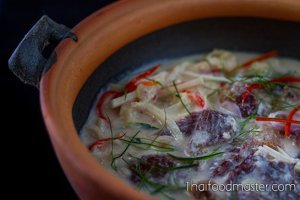
แกงต้มกะทิเนื้อโคเค็ม อย่าง จีบ บุนนาค (พ.ศ. ๒๔๘๔)
ภูมิปัญญาไทยโบราณท่านมีความอัจฉริยะล้ำเลิศ คิดปรุงตำรับอาหารที่ได้ผลออกมาอย่างลงตัว ดังที่กล่าวมาในบทก่อนหน้า วิถีไทยอาศัยการถนอมอาหารด้วยการทำเค็มหรือตากแห้ง และเมื่อจะนำมารับประทาน ความรุ่มรวยทางวัฒนธรรมการกิน บวกกับความมีศิลปะแห่งการปรุง คนสมัยก่อนสามารถรังสรรค์ของใกล้ตัว ให้ออกมาเป็นตำรับที่วิเศษได้โดยง่าย ง่ายด้วยกรรมวิธี ง่ายด้วยวัตถุดิบเครื่องปรุง ให้เป็นของอร่อยแบบไทยแท้ หนึ่งในตำรับนั้นคือ "ต้มกะทิเนื้อโคเค็ม"....
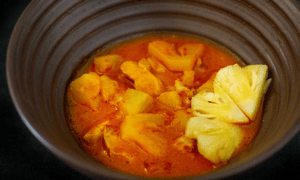
c1933 Manifold flavors curry – a chicken and pineapple spicy curry (แกงเผ็ดหลากหลายรส; gaaeng phet laak laai roht)
At first glance, this chicken and pineapple curry might seem ordinary or plain. After all, even though spicy curries with sour notes have been relished for ages, they feature repetitive patterns that could be viewed as common and perhaps uninteresting. However, with a calculated yet simple approach, this curry turns corners – quite literally – into a dish with a new flavor melody. It is thus referred to by its author, Mrs. Samaknantapol (Jeep Bunnag) (นางสมรรคนันทพล, จีบ บุนนาค), as laak laai roht, a “curry with manifold flavors (หลากหลายรส)”.
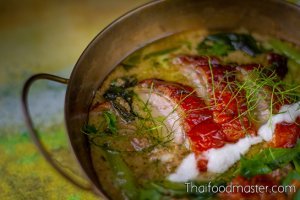
แกงเขียวหวานเป็ดย่าง
ตำรับแกงแบบไทยแท้ ๆ นั้น ไม่ใช่แกงเข้ากะทิดอกขอรับ ถ้าจะนับความเป็นไทยแท้ ๆ แบบที่เรียกว่า ไทยแท้ (Authentic) นั้นเห็นจะหายากเสียแล้ว คงต้องกลับไปรับประทานพวกต้มปลาร้า หรือแกงเลียง แกงต้มส้ม ไปโน่นล่ะขอรับ ด้วยพริกที่เราเคยชินกินแล้วเผ็ดร้อนกันในปัจจุบันนี้ หาใช่ของพื้นเมืองไทยแท้มาแต่เดิมไม่ พวกฝรั่งเพิ่งนำเข้ามาในสมัยอยุธยานี่เอง ส่วนแกงแบบเข้ากะทิ เราก็รับมาจากแขกมลายูหรือแขกเปอร์เซีย ในสมัยอยุธยาเช่นกันแล้วค่อยมาพลิกแพลงดัดแปลงให้เป็นแกงแบบไทย ๆ
ดังนั้น คนสมัยก่อนถึงได้เรียกพริกสีแดง ๆ เขียว ๆ นี่ว่า พริกเทศ ส่วนเครื่องปรุงที่ให้รสเผ็ดร้อนมาแต่เดิมนั้น เรามักเรียกใช้ พริกไทย ตะไคร้ ขิง ข่า กระชาย เสียมากกว่า จึงเห็นได้ว่าแกงเลียง แกงต้มส้ม แกงต้มปลาร้า ถึงไม่มีพริกเทศเป็นเครื่องปรุงหลัก ภายหลังต่อมาคนไทยจึงมีวัฒนธรรมอาหารพวกต้มแกงดัดแปลงให้ถูกปากถูกลิ้น ใส่พริกเทศ ใส่กะทิ เข้าสมุนไพร พัฒนามาเป็นแกงส้ม ต้มยำ ต้มโคล้ง ต้มข่า แกงเผ็ด แกงคั่ว แกงฉู่ฉี่ แกงพะแนง แกงมัสมั่น ฯลฯ กันสืบมา ซึ่งก็ว่าเป็นแกงออกสีพริกแดงกันเป็นส่วนใหญ่ หากก็มีคนถามว่า แล้วแกงเขียวหวานล่ะ มีมาแต่เมื่อใดกันเล่า เรื่องนี้เห็นทีจะสืบค้นสืบเค้ายากหน่อย เพราะไม่มีบันทึกเป็นลายลักษณ์อักษรแน่ชัด ได้แต่สันนิษฐานและอนุมานเอา

แกงเผ็ดปลาไหลทรงเครื่อง
ตำรับปลาไหลนี้ ปัจจุบันมักจะคิดว่าเป็นแต่สำรับของชาวบ้าน หรือเป็นแค่อาหารลูกทุ่งเท่านั้น ความจริงแล้ว อาหารตำรับปลาไหลเป็นอาหารทั่วไปของคนทุกชนชั้น ทั้งไพร่สามัญชน ผู้ดีชาวกรุง หรือเจ้านายในรั้วในวัง ต่างมีตำรับแกงปลาไหลขึ้นสำรับทั้งนั้น ที่มีเขียนบันทึกไว้ก็มีหลายตำรับเลยทีเดียว เช่น ตำรับของหม่อมส้มจีน ตั้งแต่ ร.ศ. 109 มี "ต้มเปรตปลาไหล". ตำรับแม่ครัวหัวป่าก์ ของท่านผู้หญิงเปลี่ยน ภาสกรวงษ์ ตำรับวังมหานาค โดย ม.จ.หญิงวิมลปัทมราช จิรประวัติ ก็มี "แกงปลาไหล" ตำรับที่พิมพ์จำหน่ายในช่วง"รัฐนิยม"สมัยจอมพล ป. พิบุลสงคราม พิมพ์เมื่อ พ.ศ.2485 ก็มี "แกงเผ็ด ปลาไหลซงเครื่อง" หรือแม้แต่ที่เข้ากับสำนวนเกลียดปลาไหลกินน้ำแกงตรงเผง ไม่ชอบปลาไหล แต่อยากกินแกงปลาไหล ชาววังในสำนักพระวิมาดาเธอฯ นิยมใช้ปลาดุกมาแกงแทนปลาไหล ตามที่ม.ล.เนื่อง นิลรัตน์ ข้าหลวงในสมเด็จพระเจ้าบรมวงศ์เธอเจ้าฟ้านิภานภดล วิมลประภาวดีกรมขุนอู่ทองเขตขัตติยนารี บันทึกไว้ถึง "แกงปลาดุกอย่างปลาไหล" เอาใว้ด้วย
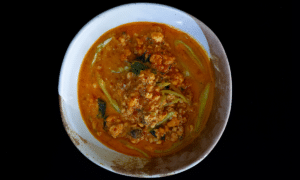
Minced-Bird Curry with Fish (ปลาช่อนแกงนก; Bplaa Chaawn Gaaeng Nohk)
Lady Plean Passakornrawong’s historic, first-ever recipe for minced-bird curry with snakehead fish revives the old minced-bird curry syle. The fish is minced and cooked with the curry paste, producing a hearty and comforting thick-textured curry.
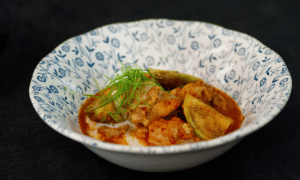
Chiang Mai-Style Chicken Gaaeng Garee (แกงเผ็ดกะหรี่เชียงใหม่ ; gaaeng phet garee chiang mai)
I discovered this unusual curry recipe hidden in a 1970 memorial book for Ms. Bootree Gralaksa. Born in Bangkok in 1898, Ms. Bootree spent her entire life, from childhood on, in a wooden house on Maha Chak Road (Pra Nakorn). One could say that she was born to be a great cook; just fourteen years old when her mother died, Ms. Bootree became the sole caregiver for her four siblings, a duty that she performed with a love and attention that endowed her with remarkable cooking skills. Her memorial book showcases now-forgotten dishes that were popular in the Bangkok of the early 1900s, such as Beautiful Curry (แกงหงษา ; Gaaeng Hohng Saa), and also includes some of her one-of-a-kind culinary creations – such as this dish, which she dubbed “Chiang Mai-Style Spicy Curry”.
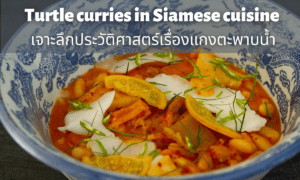
The complete story of turtle curries in Siamese cuisine (เจาะลึกประวัติศาสตร์เรื่องแกงตะพาบน้ำ)
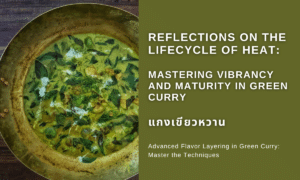
Reflections on the Lifecycle of Heat: Mastering Vibrancy and Maturity in Green Curry (แกงเขียวหวาน)
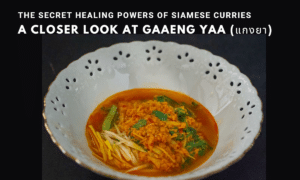
The Secret Healing Powers of Siamese Curries – A Closer Look at Gaaeng Yaa (แกงยา)
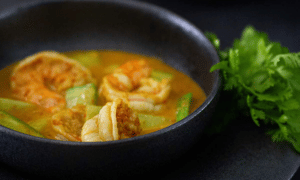
c1889 Garee Curry with Shrimp and Cucumber (แกงกะหรี่กุ้งกับแตงกวา; gaaeng garee goong gap dtaaeng gwaa)
In this old-fashioned coconut-based curry, orangey shrimp and bright green cucumber shine in a golden haze of curry powder, caressed by the light breeze of Indian flare. Cucumbers are used in traditional Ayurvedic medicine as a coolant, to offset internal heat and to resolve fevers. Thus, like a refreshing oasis in the middle of a shimmering desert, the cucumber counterbalances the chili’s internal heat energy and mellows the fragrant, earthy undertones of the spice blend in the dish.
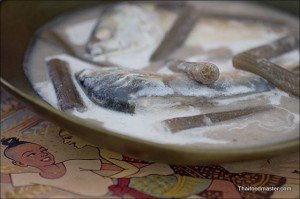
แกงกะทิสายบัวปลาทูนึ่ง
This old-fashioned Thai coconut curry dish is a simple expression made with ingredients commonly available to Thais, it features steamed mackerels - the fish that Thai people probably love the best and the stems of the lotus flowers - one of Buddhism's most recognized motifs.
The fish together with peeled lotus stems are boiled in coconut milk, to which a simple yet very aromatic curry paste, made only of white pepper corns, shallots and fermented shrimp paste is added.
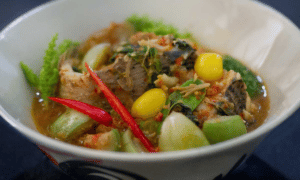
Kanchanaburi-Style Snakehead Fish Jungle Curry with Bitter Yellow Eggplants (แกงป่าปลา ; gaaeng bpaa bplaa)
This recipe is adapted from a recipe I obtained from a jungle food restaurant in Kanchanaburi province. The paste is a downgrade of a phrik khing paste – it omits the coriander roots and shallots. In addition, the recipe substitutes the fermented shrimp paste (kapi) with maawn fermented fish paste (กะปิมอญ; gabpi maawn), which is a popular ingredient among the Mon-Burmese population of the western province. The lack of shallots eliminates any sweetness that might impair the sharpness and heat of the dish. Furthermore, a double hit of citrus notes from holy basil are infused into the dish: from the holy basil flowers added to the paste and the holy basil leaves added to the curry.
1
2
3


Get Access – Join Thaifoodmaster Today
Practical and kitchen-tested recipes with a mix of theory, history, psychology, and Siamese culture tidbits.
-
Get access to everything right away. Unlock more than 50 Masterclasses, over 700 recipes and Articles
Access to Thaifoodmaster’s constantly growing library of prime professional classes, articles, recipes and videos on Siamese culinary topics, available nowhere else in English.
-
GET EXTRA - New Masterclasses and Daily Recipes
Gain access to NEW masterclasses as they become available. Access DAILY translations of heritage-recipes.
-
1-1 support from Hanuman
1-1 support from Hanuman to help you achieve your professional Thai culinary goals
-
Live Q&A Sessions
The opportunity to join a monthly live two-hour videoconference where I can answer your questions.
-
Great Value!
one year access for the price of 3 days in-person training.
You will get everything you need to:
-
To Get inspired
When you design or build a new menu for an event or restaurant or even prepare for dinner with friends.
-
To Satisfy your curiosity.
Finally !
-
To Master Your Craft
Master your Thai cooking skills and expand your repertoire.
It is truly brilliant with a revolutionary approach introducing aspects and concepts never broached by cookbooks.

Ian Westcott
Sourcing Wines for Discerning Private Clients
© 2008 – 2026 Thaifoodmaster


