
Celebrating the Art of Siamese Culinary Wisdom and Thai Cuisine
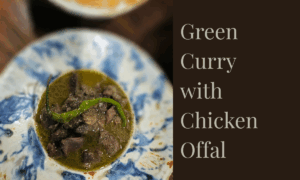
Yogurt-Based Ancient Green Curry with Chicken Offal (แกงเขียว; gaaeng khiaao)
Mrs. Yim Pichaiyat Bunnag (คุณยิ้ม พิชัยญาติ บุนนาค)'s 1920s aristocratic green curry reveals a forgotten chapter in Thai culinary history. This Muslim-style recipe uses ghee and yogurt instead of coconut milk, featuring chicken offal—liver, gizzard, and heart—each contributing distinct textures and concentrated flavors. Roasted spices like cinnamon, clove, and cardamom create warming aromatics, while fresh chilies provide signature heat. The dish documents how Bangkok's noble kitchens adapted Islamic cooking techniques before democratization, preserving methods that would shape modern Thai cuisine.
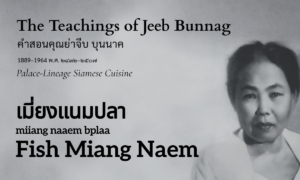
Fish Miang Naem (เมี่ยงแนมปลา; miiang naaem bplaa)
Miiang naaem bplaa, grilled snakehead fish with fire-roasted galangal juice and bitter orange, served in lettuce cups. Jeeb Bunnag, 1933.
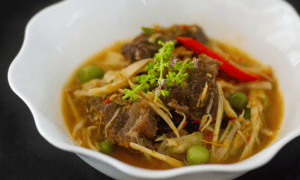
Saen Tung-Style Jungle Curry with Beef and Bamboo Shoots (แกงป่าเนื้อใส่หน่อไม้ แบบแสนตุ้ง; gaaeng bpaa neuua sai naaw mai baaep saaen dtoong)
This is my take on the famous jungle curry from the Saen Tung district in Trat province. In Trat it is usually cooked with game meat and thinly sliced pineapple shoots (แขนงสับปะรด).
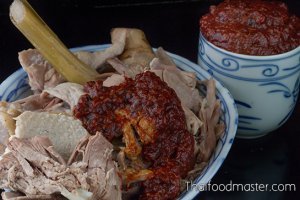
ต้มข่าเป็ด จิ้มน้ำพริกเผาแบบโบราณ อย่างหม่อมซ่มจีน (ราชานุประพันธุ์) ร.ศ.๑๐๙
อาหารโบราณที่ปัจจุบันเปลี่ยนไปจากตำรับเดิมตามรสนิยม ต้มข่าเป็ด จิ้มน้ำพริกเผาแบบโบราณ
"ต้มข่า" แต่เดิม ซึ่งเป็นอาหารของชาวบ้านทั่วไป อาหารชนิดนี้จัดเป็นแกงอย่างหนึ่ง ที่ใช้เนื้อเป็ด เนื้อไก่ หรือ เนื้อปลา ต้มเคี่ยวกับข่าอ่อนในน้ำกะทิ รับประทานกับน้ำพริกหรือน้ำพริกเผา เป็นอาหารพื้น ๆ ของคนไทย ที่เดี๋ยวนี้เปลี่ยนแปลงกลายพันธุ์จนมีลักษณะเข้าใกล้ "ต้มยำกะทิ"
เมื่อราวร้อยกว่าปีก่อนนั้น คนส่วนใหญ่ยังปรุง "ต้มข่า" ในแบบที่ได้เล่ามาอยู่เลย "ตำรากับเข้า" ของ "หม่อมส้มจีน" (ร.ศ.๑๐๙) ก็เขียนถึง "ต้มข่า" ตำรับนี้ เป็นของทำง่ายอย่างสามัญ จะเห็นได้ว่าคนรุ่นเก่าจะเน้นกิน “ต้มข่า” ที่เนื้อสัตว์และข่าอ่อน จิ้มกับน้ำพริกเผาชูรสข้างนอกถ้วย มิใช่ปรุงรสสำเร็จเปรี้ยวเค็มหวานในน้ำแกงอย่างปัจจุบัน
จะเห็นได้ว่าคนรุ่นเก่าจะเน้นกิน "ต้มข่า" ที่เนื้อสัตว์และข่าอ่อน จิ้มกับน้ำพริกเผาชูรสข้างนอกถ้วย มิใช่ปรุงรสสำเร็จเปรี้ยวเค็มหวานในน้ำแกงอย่างปัจจุบัน....
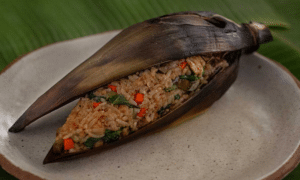
c1935 Char-grilled banana blossom stuffed and baked with tamarind relish fried rice (ข้าวปลี ตำรับสายเยาวภา พ.ศ. 2478 ; khaao bplee)
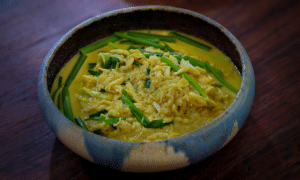
Crab and Spring Onion Coconut-Based Curry (แกงคั่วปูกับต้นหอม; Gaaeng Khuaa Bpuu Gap Dtohn Haawm)
Preparing a crab curry is an exercise in culinary diplomacy, wherein the challenge lies in negotiating the distinct flavors of land and sea into a cohesive understanding and capturing the perfect balance. This golden gastronomic horizon is where the delicate whispers of the ocean meet earth’s bold declarations – and at its core is a straightforward question: How do we craft a curry that testifies, via crab, to the ocean’s bounty, yet remains grounded in the earth’s aromatic flora, with roots like galangal and turmeric?
In addition, it is challenging to create a curry that is luxuriously creamy, yet light and not too greasy; where the crab’s delicate natural sweetness surfaces as a pleasant sea breeze, levitating above the pitfalls of being too fishy or overly sweetened. Another hurdle is achieving the precise color – produced by red chilies, golden turmeric and peppercorns – that reflects the culinary traditions of southern seashore fishing communities. I like mine set to about a 70:30 ratio of yellow to red and, if using black peppercorns, with a deep brown undertone.
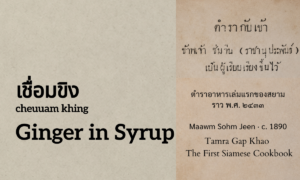
Ginger in Syrup (เชื่อมขิง; cheuuam khing)
Cheuuam khing: young ginger pricked with a needle, steeped six nights in brine and alum, scalded three times before sugar. Tamra Gap Khao, 1890.
Gaaeng Mong (Chonburi-Style Curry) (แกงโมง (แกงชาวชลบุรี); gaaeng mo:hng (gaaeng chaao chohn boo ree))
Gaaeng Mong, a Chonburi regional curry with fermented shrimp paste, grilled catfish, and young watermelon. From Mrs. Paan Nanthaaphiwat, 1953.
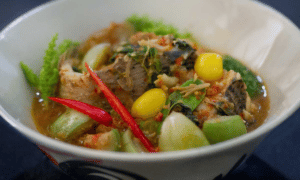
Kanchanaburi-Style Snakehead Fish Jungle Curry with Bitter Yellow Eggplants (แกงป่าปลา ; gaaeng bpaa bplaa)
This recipe is adapted from a recipe I obtained from a jungle food restaurant in Kanchanaburi province. The paste is a downgrade of a phrik khing paste – it omits the coriander roots and shallots. In addition, the recipe substitutes the fermented shrimp paste (kapi) with maawn fermented fish paste (กะปิมอญ; gabpi maawn), which is a popular ingredient among the Mon-Burmese population of the western province. The lack of shallots eliminates any sweetness that might impair the sharpness and heat of the dish. Furthermore, a double hit of citrus notes from holy basil are infused into the dish: from the holy basil flowers added to the paste and the holy basil leaves added to the curry.
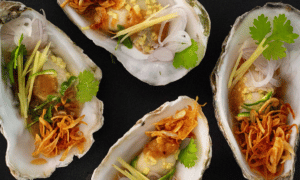
c1949 Quick-cured oysters with ginger and kaffir lime zest by Maawm Ying Soophaa (หอยนางรมดอง โดย หม่อมหญิงสุภา พ.ศ. 2492; haawy naang rohm daawng)
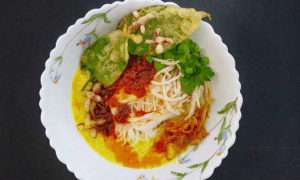
c1908 Fermented rice noodles and golden coconut chicken sauce with an Indian flair (ขนมจีนแขก หรือ ไก่ต้มขนมจีน ; khanohm jeen khaaek)
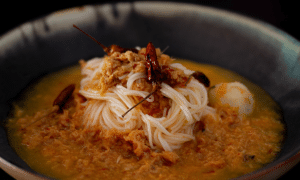
Khanohm Jeen Naam Yaa (ขนมจีนน้ำยา) - Fermented Rice Noodles with Minced Fish in Aromatic Coconut Curry
In the Central Plains of the Kingdom, fermented rice noodles are inextricably linked to a dish known as naam yaa. Composed of a dense, coconut-based minced fish curry, the dish is infused with layers of salted fish and possesses the distinctive, invigorating and purifying notes of fingerroot. Typically, naam yaa is served with fresh lemon basil as the herb of choice along with an array of side dishes collectively known as meuuat khanohm jeen (เหมือดขนมจีน). These include blanched bean sprouts seasoned with a touch of turmeric for color, fresh lemon basil leaves, thinly sliced three colored chilies, and ground chili for added heat. More elaborate versions will add blanched Chinese bitter gourd slices, batter-fried young morning glory shoots, and fresh shrimp minced and fried with its tomalley in pork lard, as well as crispy-fried shallots as the finishing touch.
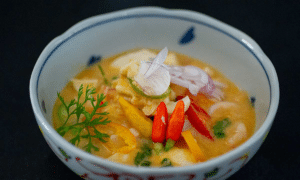
Salted duck eggs and shrimp creamy lohn (หลนไข่เค็ม ; lohn khai khem)
Lohn of salted duck eggs is a smooth, rich and creamy relish with a vibrant three-flavor profile of sour-salty-sweet. Unlike other lohn relishes, it does not contain any overbearing fermented ingredients, making it easy to enjoy, and it does not require an acquired taste.
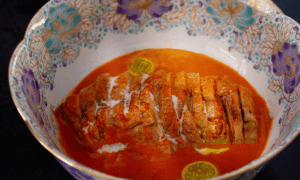
Pan Roasted Duck Breast and Hairy-Fruited Eggplant Curry (แกงเป็ดคั่วมะอึก; gaaeng bpet khuaa maeuk)
The hairy-fruited eggplant, known as ‘maeuk’ in Thai, is similar to the tomato in its unique confluence of sweetness, fruitiness, and savoriness. This ingredient is used in a wide range of Siamese dishes, including curries, salads, relishes, and seasoned rice dishes. This recipe, from the central region of Thailand, is a traditional duck khuaa sohm curry (แกงคั่วส้มเป็ด) that commonly uses garden ingredients to achieve sourness, including the madan (garcinia schomburgkiana) (มะดัน), the sour bilimbi fruit (averrhoa bilimbi) (ตะลิงปลิง), and the hairy-fruited eggplant.
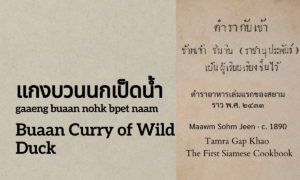
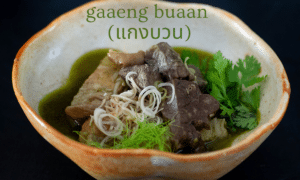
Buaan Curry of Wild Duck (แกงบวนนกเป็ดน้ำ; gaaeng buaan nohk bpet naam)
Gaaeng buaan nohk bpet naam, wild duck fried in lard then boiled in lemongrass leaf juice with no coconut. From Tamra Gap Khao, 1890.
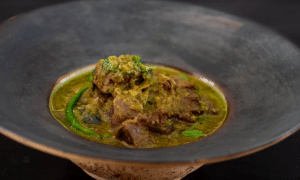
Perfumed Muslim-style Curry of Fresh Chilies with Beef (แกงเขียวหวานเนื้อทรงเครื่อง; Gaaeng Khiaao Waan Neuua Sohng Khreuuang)
The Indian and Muslim cuisines present distinct approaches to using dried spices in curries, both of which influence Siamese cuisine in different ways. Indian-inspired Siamese curries spotlight chilies for their vibrant color, fragrance, flavor and heat, while spices like cumin and coriander play a supporting role. The spices complement and temper the chilies’ intensity, creating a rounded, multi-layered flavor profile; nonetheless, the chilies remain the star ingredient, gently complemented by the spices.
Conversely, Muslim-influenced curries, such as massaman curry, prioritize spices over chilies. Spices like cardamom, nutmeg and mace take center stage, while the chilies provide subtle background heat rather than being the primary flavor. In these curries, the focus is on the rich, warm and complex aromas created by the blend of spices, which is a defining characteristic of many Muslim dishes.
Moreover, Siamese cuisine favors using rehydrated dried chilies in curries for their depth; this depth is highly appreciated, along with the complexity, and comparatively milder heat of the rehydrated dried chilies. As well, the harsh grassy notes of fresh chilies are not favored; they’re referred to in Thai as “green rank” or “men khiaao (เหม็นเขียว)”. Muslim curries often use fresh green chilies, tempering their vibrant, grassy taste with dry spices and thus shifting the flavor from bright and fresh to more subdued and earthy tones, resulting in a dish that is perceived to be layered, despite the burst of fresh chilies.
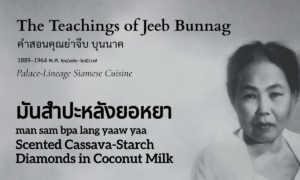
Scented Cassava-Starch Diamonds in Coconut Milk (มันสำปะหลังยอหยา; man sam bpa lang yaaw yaa)
Man sam bpa lang yaaw yaa: cassava starch diamonds kneaded with pandan, served in floral-scented coconut milk. Jeeb Bunnag, 1933.
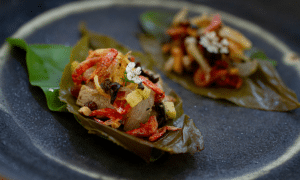
Miang Sot (เมี่ยงซด) - Miiang Soht, circa 1928
The word ‘miang’ is often used to designate Thai hors d’oeuvre-like snacks consisting of various ingredients wrapped in leaves. To chew on a miang parcel delivers a delightful melee of flavors and textures, each triumphing over the other in a continuous transformation, creating a captivating and ever-evolving taste experience throughout the bite.
Miang sot is a fermented leaves dish that appeared in a cookbook published in honor of Thao Suphatigaanapakdee (also known as Prik Sirisamphan) (ท้าวสุภัติการภักดี (ปริก ศิริสัมพันธ์)), in 1928. Titled Gap Khaao Thai (กับข้าวไทย), the book features a collection of recipes that were once prepared and served to King Chulalongkorn Rama V. The author, Sohmboon Sirisamphan (เถ้าแก่ สมบุญ ศิริสัมพันธ์) a respected elder (known as thao gaae (เถ้าแก่) in Thai), was a distinguished businessman of Chinese origins.
The dish is composed of fermented tea leaves; it is perhaps the closest tea leaves wrap to the ‘miang’ style introduced to the Siamese court by Princess Dara Rasami in the late 1800s. The dish gives us a glimpse of flavor of what her household, which participated in the informal marketplace events within the palace, might have to offer.
The popularity of miang in Siamese cuisine is tied to the history of two kingdoms, Siam and Lanna, and the life of one princess, Princess Dara Rasami. The daughter of King Inthawichayanon of Chiang Mai and the fifth consort of King Chulalongkorn, the princess was selected at the age of thirteen, in 1886, to serve as a consort to King Chulalongkorn in the Inner Palace; the decision was shaped by both political strategy and personal transition. At the time, Siam was consolidating its power and extending its influence over neighboring regions, including Lanna. As the ruler of Chiang Mai, Princess Dara Rasami’s father, Intawichayanon, viewed the move as a strategic alliance. In return, King Chulalongkorn presented him with the medal of the Order of Chula Chom Klao, which is the Siamese equivalent of a knighthood.
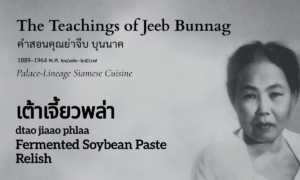
Fermented Soybean Paste Dipping Relish (เต้าเจี้ยวพล่า; dtao jiaao phlaa)
Dtao jiaao phlaa, fermented soybean paste relish bruised with lemongrass, kaffir lime, and tamarind. From Jeeb Bunnag, 1933.
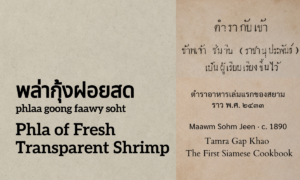
Phla of Fresh Transparent Shrimp (พล่ากุ้งฝอยสด; phlaa goong faawy soht)
Phlaa goong faawy soht, raw transparent shrimp dressed whole and unpeeled with mint, from Maawm Sohm Jeen's Tamra Gap Khao, c. 1890.
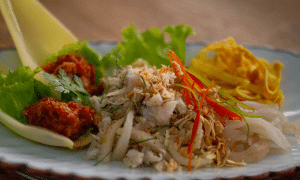
Gaawy goong suay (ก้อยกุ้งเสวย กับ น้ำพริกก้อย) - Old-fashioned chili relish enriched with shrimp tomalley and flaky acid-cooked shrimp meat
1
2
3
4
5
6
7
8
9
10

Get Access – Join Thaifoodmaster Today
Practical and kitchen-tested recipes with a mix of theory, history, psychology, and Siamese culture tidbits.
-
Get access to everything right away. Unlock more than 50 Masterclasses, over 700 recipes and Articles
Access to Thaifoodmaster’s constantly growing library of prime professional classes, articles, recipes and videos on Siamese culinary topics, available nowhere else in English.
-
GET EXTRA - New Masterclasses and Daily Recipes
Gain access to NEW masterclasses as they become available. Access DAILY translations of heritage-recipes.
-
1-1 support from Hanuman
1-1 support from Hanuman to help you achieve your professional Thai culinary goals
-
Live Q&A Sessions
The opportunity to join a monthly live two-hour videoconference where I can answer your questions.
-
Great Value!
one year access for the price of 3 days in-person training.
You will get everything you need to:
-
To Get inspired
When you design or build a new menu for an event or restaurant or even prepare for dinner with friends.
-
To Satisfy your curiosity.
Finally !
-
To Master Your Craft
Master your Thai cooking skills and expand your repertoire.
It is truly brilliant with a revolutionary approach introducing aspects and concepts never broached by cookbooks.

Ian Westcott
Sourcing Wines for Discerning Private Clients
© 2008 – 2026 Thaifoodmaster


