
Celebrating the Art of Siamese Culinary Wisdom and Thai Cuisine
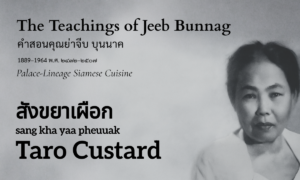
Taro Custard (สังขยาเผือก; sang kha yaa pheuuak)
Sang kha yaa pheuuak, a steamed coconut cream custard with mold-pressed taro slices, from Jeeb Bunnag's 1933 Cookbook of Rice Companion Recipes.
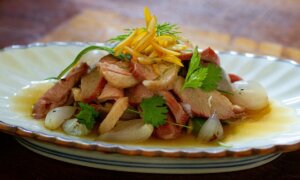
Salad of smoked grilled duck breast with roasted shallots and bitter yellow eggplants (พล่าอกเป็ดรมควันกับมะเขือเหลืองและหอมเผา ; phlaa ohk bpet rohm khwan gap ma kheuua leuuang lae haawm phao)
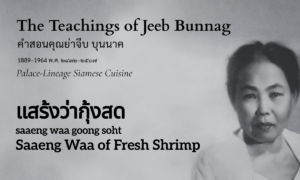
Saaeng Waa Shrimp (แสร้งว่ากุ้งสด; saaeng waa goong soht)
Saaeng waa goong soht, a shrimp relish of hand-torn just-cooked shrimp with pink ginger and kaffir lime. From Jeeb Bunnag, 1933.
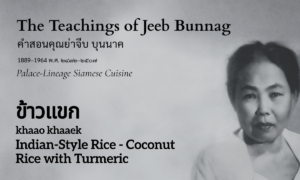
Indian-Style Rice (ข้าวแขก; khaao khaaek)
Khaao khaaek: lightly salted soft rice under a turmeric-tinted, jasmine-scented coconut cream, twice as thick as the rice. Jeeb Bunnag, 1933.
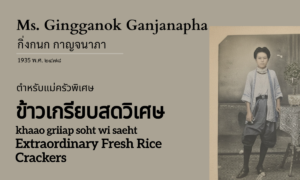
Extraordinary Fresh Rice Crackers (ข้าวเกรียบสดวิเศษ; khaao griiap soht wi saeht)
Khaao griiap soht wi saeht: rice porridge spread thin on a khanom khrok griddle, filled with minced prawn and kaffir lime. Gingganok, 1935.
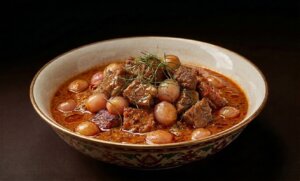
Phanaeng Curry of Grilled Duck Stock with Shallots (แกงพะแนงน้ำเป็ดย่างกับหอมเล็ก; gaaeng pha naaeng naam bpet yaang gap haawm lek)
Phanaeng curry from Mrs Puang Bunnag's 1931 manuscript, built on grilled duck stock and a paste of roasted coriander, cumin, and cinnamon.
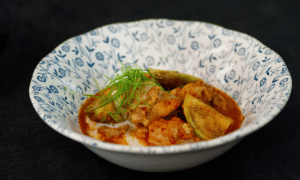
Chiang Mai-Style Chicken Gaaeng Garee (แกงเผ็ดกะหรี่เชียงใหม่ ; gaaeng phet garee chiang mai)
I discovered this unusual curry recipe hidden in a 1970 memorial book for Ms. Bootree Gralaksa. Born in Bangkok in 1898, Ms. Bootree spent her entire life, from childhood on, in a wooden house on Maha Chak Road (Pra Nakorn). One could say that she was born to be a great cook; just fourteen years old when her mother died, Ms. Bootree became the sole caregiver for her four siblings, a duty that she performed with a love and attention that endowed her with remarkable cooking skills. Her memorial book showcases now-forgotten dishes that were popular in the Bangkok of the early 1900s, such as Beautiful Curry (แกงหงษา ; Gaaeng Hohng Saa), and also includes some of her one-of-a-kind culinary creations – such as this dish, which she dubbed “Chiang Mai-Style Spicy Curry”.
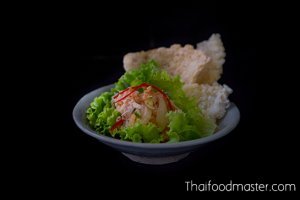
"กุ้งแนม" หรือ "กุ้งซ่อนกลิ่น" - ตำรับเครื่องว่างที่สืบทอดมาตั้งแต่ต้นกรุงรัตนโกสินทร์
ตำรับเครื่องว่างที่สืบทอดมาตั้งแต่ต้นกรุงรัตนโกสินทร์: "กุ้งแนม" หรือ "กุ้งซ่อนกลิ่น". ลักษณะพิเศษของการทำ "กุ้งแนม" นั้น วิธีการหลักคือ การทำให้เนื้อสัตว์สุกโดยใช้น้ำมะนาวหรือน้ำส้ม Thaifoodmaster จะขอนำตำรับของ ท่านผู้หญิงเปลี่ยน ภาสกรวงศ์ มาบันทึกเอาไว้ ณ ที่นี้ สำหรับให้ท่านผู้อ่านลองนำไปทำดูนะขอรับ...
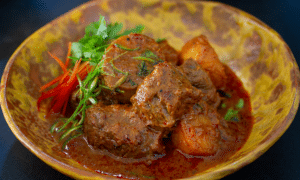
Perfumed Braised Beef and Potato Curry with Three Gingers, Thai Basil and Bitter Orange (แกงเนื้อใส่เปราะหอมสดและส้มซ่า; Gaaeng Neuua Sai Bpraw Haawm Soht Lae Sohm Saa)
Discovered in a memorial book for the funeral of SubLt. Soophoht Jeungpraphaa (ร.ต. สุพจน์ จึงประภา) (1925-1966), this beef and potato curry dish unites two distinct curry styles: Massaman curry, known for its sweet and warming complexity of dry spices, punctuated by the vibrancy of bitter orange juice; and gaaeng phet (แกงเผ็ด) spicy curry, dominated by a basil herbal identity. The recipe maintains a sense of traditional elegance despite the startlingly unusual culinary fusion; as these two cooking styles are woven together, their spiced comfort, earthy warmth, citrusy freshness, and cool herbaceous notes meld in a gentle refinement. Drawing upon familiar and novel elements, this curry is both comforting and stimulating.
Massaman curry typically presents as a deep, rich dish. Its unique flavor profile is derived predominantly from a range of dry spices that point to its Persian-inspired roots in Siamese cuisine, along with a curry paste that exudes a sense of freshness. The dried chilis are roasted to deepen their color; the rest of the ingredients, such as the shallots, garlic and dry spices, are roasted too, individually, before being pounded into the paste. Conversely, the gaaeng phet (แกงเผ็ด) curry integrates dry spices more sparingly and is known for flavor qualities that are based on a phrik khing (พริกขิง) paste made of fresh aromatics and a basil herbal identity.
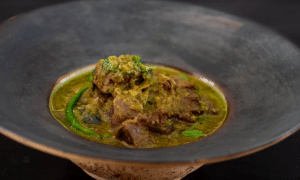
Perfumed Muslim-style Curry of Fresh Chilies with Beef (แกงเขียวหวานเนื้อทรงเครื่อง; Gaaeng Khiaao Waan Neuua Sohng Khreuuang)
The Indian and Muslim cuisines present distinct approaches to using dried spices in curries, both of which influence Siamese cuisine in different ways. Indian-inspired Siamese curries spotlight chilies for their vibrant color, fragrance, flavor and heat, while spices like cumin and coriander play a supporting role. The spices complement and temper the chilies’ intensity, creating a rounded, multi-layered flavor profile; nonetheless, the chilies remain the star ingredient, gently complemented by the spices.
Conversely, Muslim-influenced curries, such as massaman curry, prioritize spices over chilies. Spices like cardamom, nutmeg and mace take center stage, while the chilies provide subtle background heat rather than being the primary flavor. In these curries, the focus is on the rich, warm and complex aromas created by the blend of spices, which is a defining characteristic of many Muslim dishes.
Moreover, Siamese cuisine favors using rehydrated dried chilies in curries for their depth; this depth is highly appreciated, along with the complexity, and comparatively milder heat of the rehydrated dried chilies. As well, the harsh grassy notes of fresh chilies are not favored; they’re referred to in Thai as “green rank” or “men khiaao (เหม็นเขียว)”. Muslim curries often use fresh green chilies, tempering their vibrant, grassy taste with dry spices and thus shifting the flavor from bright and fresh to more subdued and earthy tones, resulting in a dish that is perceived to be layered, despite the burst of fresh chilies.
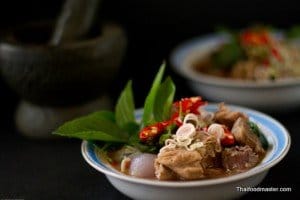
แกงรัญจวน
แกงโบราณชนิดนี้ เริ่มกลับมาเป็นที่นิยมอีกครั้งหนึ่ง หลังจากพอมีร้านอาหารไทยบางร้านนำตำรับนี้ไปบรรจุเป็นหนึ่งในเมนู และจากหนังสืออัตตชีวประวัติของ ม.ล. เนื่อง นิลรัตน์ ผู้เขียนเรื่องราวชีวิตในสำนักพระวิมาดาเธอ กรมพระสุทธาสินีนาฏ ปิยมหาราช ปดิวรัดดา แหล่งขึ้นชื่อเรื่องฝีมือปรุงอาหารในช่วง รัชกาลที่ ๕ ถึงสมัยรัชกาลที่ ๗ และอีกหนึ่งสาเหตุก็มาจากบทละครย้อนยุคยอดนิยม เมื่อไม่นานมานี้ เกี่ยวกับเรื่องคุณชายแห่งราชตระกูลหนึ่ง ๕ คน ที่มีเรื่องราวความรักโรแมนติกในการหาคู่ครอง มีการพิสูจน์คุณสมบัติ ของตัวเอกฝ่ายหญิงที่เหมาะสมจะมาเป็นคู่ครองของคุณชายทั้ง ๕ ซึ่งแบ่งเป็นตอน ๆ ละคน รวม ๕ ตอน และมีตอนหนึ่งกล่าวถึงเรื่องราวที่ทำการพิสูจน์ความสามารถของนางเอกด้วยการทำ “แกงรัญจวน” ซึ่งเป็นอาหารเริ่มต้นจากในวังสวนสุนันทา มาเป็นเนื้อหาของบทละคร บรรดาแฟนละครเลยตามหาสูตรกันใหญ่ ที่พึ่งของแหล่งข้อมูล ก็ดูจะหนีไม่พ้นในกูเกิ้ล ในบางเว็ปไซด์ในอินเตอร์เน็ต
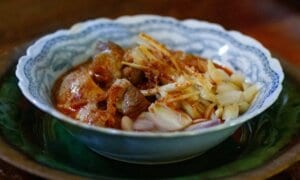
The Three Kings Curry (แกงเผ็ดสามกษัตริย์ ; gaaeng phet saam gasat)
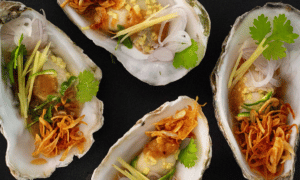
c1949 Quick-cured oysters with ginger and kaffir lime zest by Maawm Ying Soophaa (หอยนางรมดอง โดย หม่อมหญิงสุภา พ.ศ. 2492; haawy naang rohm daawng)
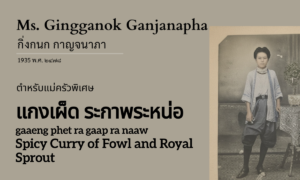
Spicy Curry of Fowl and Royal Sprout (แกงเผ็ด ระกาพระหน่อ; gaaeng phet ra gaap ra naaw)
Gaaeng phet ra gaap ra naaw, a red coconut curry with chicken and bamboo shoot, its name a zodiacal cipher, from Gingganok Gaanjanaaphaa, 1935.

แกงเผ็ดปลาไหลทรงเครื่อง
ตำรับปลาไหลนี้ ปัจจุบันมักจะคิดว่าเป็นแต่สำรับของชาวบ้าน หรือเป็นแค่อาหารลูกทุ่งเท่านั้น ความจริงแล้ว อาหารตำรับปลาไหลเป็นอาหารทั่วไปของคนทุกชนชั้น ทั้งไพร่สามัญชน ผู้ดีชาวกรุง หรือเจ้านายในรั้วในวัง ต่างมีตำรับแกงปลาไหลขึ้นสำรับทั้งนั้น ที่มีเขียนบันทึกไว้ก็มีหลายตำรับเลยทีเดียว เช่น ตำรับของหม่อมส้มจีน ตั้งแต่ ร.ศ. 109 มี "ต้มเปรตปลาไหล". ตำรับแม่ครัวหัวป่าก์ ของท่านผู้หญิงเปลี่ยน ภาสกรวงษ์ ตำรับวังมหานาค โดย ม.จ.หญิงวิมลปัทมราช จิรประวัติ ก็มี "แกงปลาไหล" ตำรับที่พิมพ์จำหน่ายในช่วง"รัฐนิยม"สมัยจอมพล ป. พิบุลสงคราม พิมพ์เมื่อ พ.ศ.2485 ก็มี "แกงเผ็ด ปลาไหลซงเครื่อง" หรือแม้แต่ที่เข้ากับสำนวนเกลียดปลาไหลกินน้ำแกงตรงเผง ไม่ชอบปลาไหล แต่อยากกินแกงปลาไหล ชาววังในสำนักพระวิมาดาเธอฯ นิยมใช้ปลาดุกมาแกงแทนปลาไหล ตามที่ม.ล.เนื่อง นิลรัตน์ ข้าหลวงในสมเด็จพระเจ้าบรมวงศ์เธอเจ้าฟ้านิภานภดล วิมลประภาวดีกรมขุนอู่ทองเขตขัตติยนารี บันทึกไว้ถึง "แกงปลาดุกอย่างปลาไหล" เอาใว้ด้วย
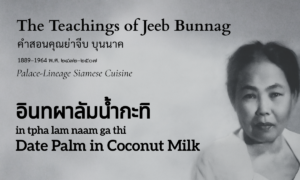
Date Palm in Coconut Milk (อินทผาลัมน้ำกะทิ; in tpha lam naam ga thi)
In tpha lam naam ga thi, date palm hand-torn and served in freshly pressed coconut milk, lightly salted. From Jeeb Bunnag, 1933.
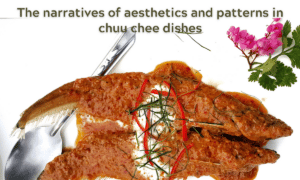
The Narratives of Aesthetics and Patterns in Chuu Chee Dishes (เรื่องฉู่ฉี่)
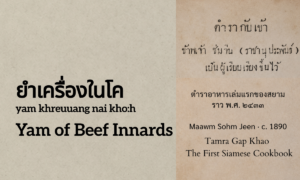
Yam of Beef Innards (ยำเครื่องในโค; yam khreuuang nai kho:h)
Yam khreuuang nai kho:h, beef innards cleaned with slaked lime and dressed without coconut. From Maawm Sohm Jeen's Tamra Gap Khao, c. 1890.
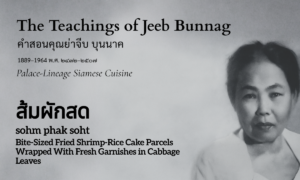
Bite-Sized Fried Shrimp-Rice Cake Parcels Wrapped With Fresh Garnishes in Cabbage Leaves (ส้มผักสด; sohm phak soht)
Sohm phak soht: coconut-battered fried shrimp-rice cakes wrapped in Chinese cabbage with pickled ginger, peanuts, shallots, lime and bitter orange. Jeeb Bunnag, 1945.
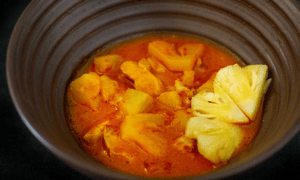
c1933 Manifold flavors curry – a chicken and pineapple spicy curry (แกงเผ็ดหลากหลายรส; gaaeng phet laak laai roht)
At first glance, this chicken and pineapple curry might seem ordinary or plain. After all, even though spicy curries with sour notes have been relished for ages, they feature repetitive patterns that could be viewed as common and perhaps uninteresting. However, with a calculated yet simple approach, this curry turns corners – quite literally – into a dish with a new flavor melody. It is thus referred to by its author, Mrs. Samaknantapol (Jeep Bunnag) (นางสมรรคนันทพล, จีบ บุนนาค), as laak laai roht, a “curry with manifold flavors (หลากหลายรส)”.
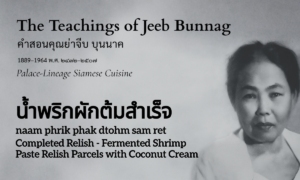
Completed Nam Phrik - Fermented Shrimp Paste Relish Parcels with Coconut Cream (น้ำพริกผักต้มสำเร็จ; naam phrik phak dtohm sam ret)
Naam phrik phak dtohm sam ret: grilled fermented shrimp paste (kapi) relish with blanched vegetables, wrapped in cabbage parcels with coconut cream and salted duck egg yolks. Jeeb Bunnag, 1933.
1
2
3
4
5
6
7
8
9
10
11
12
13

Get Access – Join Thaifoodmaster Today
Practical and kitchen-tested recipes with a mix of theory, history, psychology, and Siamese culture tidbits.
-
Get access to everything right away. Unlock more than 50 Masterclasses, over 700 recipes and Articles
Access to Thaifoodmaster’s constantly growing library of prime professional classes, articles, recipes and videos on Siamese culinary topics, available nowhere else in English.
-
GET EXTRA - New Masterclasses and Daily Recipes
Gain access to NEW masterclasses as they become available. Access DAILY translations of heritage-recipes.
-
1-1 support from Hanuman
1-1 support from Hanuman to help you achieve your professional Thai culinary goals
-
Live Q&A Sessions
The opportunity to join a monthly live two-hour videoconference where I can answer your questions.
-
Great Value!
one year access for the price of 3 days in-person training.
You will get everything you need to:
-
To Get inspired
When you design or build a new menu for an event or restaurant or even prepare for dinner with friends.
-
To Satisfy your curiosity.
Finally !
-
To Master Your Craft
Master your Thai cooking skills and expand your repertoire.
It is truly brilliant with a revolutionary approach introducing aspects and concepts never broached by cookbooks.

Ian Westcott
Sourcing Wines for Discerning Private Clients
© 2008 – 2026 Thaifoodmaster


