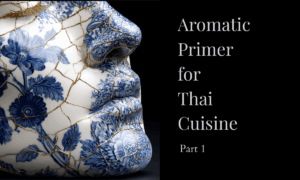

Celebrating the Art of Siamese Culinary Wisdom and Thai Cuisine
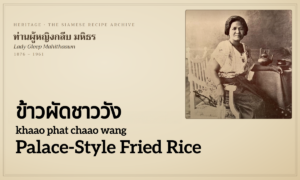
Palace-Style Fried Rice (ข้าวผัดชาววัง; khaao phat chaao wang)
Khao phat chao wang, fried rice cooked in the rendered fat of salt-stewed pork with shrimp and egg. From Lady Gleep Mahithaawn, 1949.
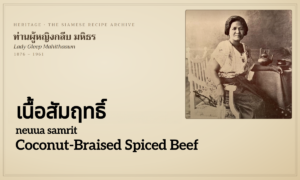
Coconut-Braised Spiced Beef (เนื้อสัมฤทธิ์; neuua samrit)
Neuua samrit — beef tenderloin dry-braised in coconut milk with roasted coriander and cumin, glazed dry. Lady Gleep Mahithaawn, 1949.
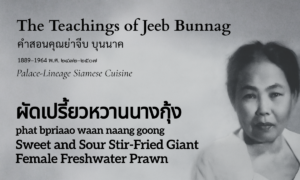
Sweet and Sour Stir-Fried Giant Female Freshwater Prawn (ผัดเปรี้ยวหวานนางกุ้ง; phat bpriaao waan naang goong)
Phat bpriaao waan naang goong, giant female freshwater prawns steamed then stir-fried with a cassava flour sweet-sour glaze. Jeeb Bunnag, 1933.
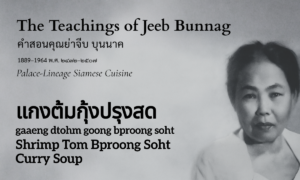
FShrimp Tom Bproong Soht Curry Soup (แกงต้มกุ้งปรุงสด; gaaeng dtohm goong bproong soht)
Gaaeng dtohm goong bproong soht: grilled shrimp with green mango and pickled garlic, seasoned at the bowl. Jeeb Bunnag, 1933.
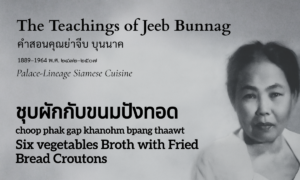
Vegetable Broth with Fried Bread Croutons (ชุบผักกับขนมปังทอด; choop phak gap khanohm bpang thaawt)
Choop phak gap khanohm bpang thaawt, six vegetables simmered and strained to a clear umami broth, topped with fried croutons. Jeeb Bunnag, 1933.
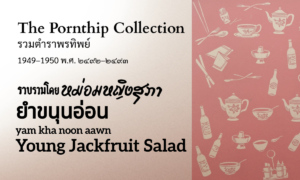
Young Jackfruit Salad (ยำขนุนอ่อน; yam kha noon aawn)
Young Jackfruit Salad featuring tender jackfruit stir-fried with coconut cream and aromatic herbs and dressed with chili jam. From Maawm Ying Soophaa's 1949 manuscript on Thai salad recipes.
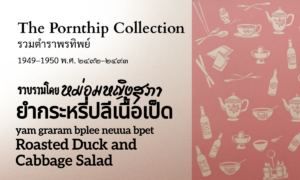
Duck and Cabbage Salad (ยำกระหร่ำปลีเนื้อเป็ด; yam graram bplee neuua bpet)
Duck and Cabbage Salad featuring shredded roasted duck, dried squid, and tender cabbage with a balanced sour-sweet dressing. From Maawm Ying Soophaa's 1949 manuscript.
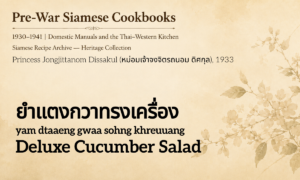
Deluxe Cucumber Salad (ยำแตงกวาทรงเครื่อง; yam dtaaeng gwaa sohng khreuuang)
Deluxe cucumber salad of bias-cut cucumber, boiled pork belly, shrimp, and sea crab in a three-flavor dressing. From Princess Jongjittanom, 1978.
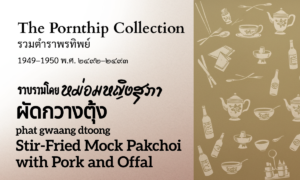
Stir-Fried Mock Pakchoi with Pork and Offal (ผัดกวางตุ้ง; phat gwaang dtoong)
Phat gwaang dtoong: mock pakchoi fried and plated, then covered with pork offal simmered in bone stock until thick. Maawm Ying Soophaa, 1951.
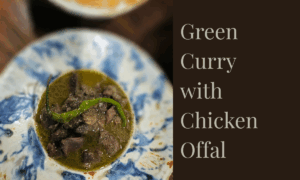
Yogurt-Based Ancient Green Curry with Chicken Offal (แกงเขียว; gaaeng khiaao)
Mrs. Yim Pichaiyat Bunnag (คุณยิ้ม พิชัยญาติ บุนนาค)'s 1920s aristocratic green curry reveals a forgotten chapter in Thai culinary history. This Muslim-style recipe uses ghee and yogurt instead of coconut milk, featuring chicken offal—liver, gizzard, and heart—each contributing distinct textures and concentrated flavors. Roasted spices like cinnamon, clove, and cardamom create warming aromatics, while fresh chilies provide signature heat. The dish documents how Bangkok's noble kitchens adapted Islamic cooking techniques before democratization, preserving methods that would shape modern Thai cuisine.
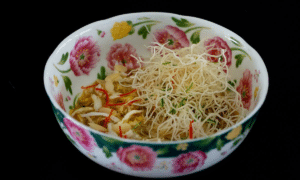
The Ambassador’s House Style Noodle Soup (หมี่น้ำบ้านราชทูต; Mee Naam Baan Raat Thuut)
This soup dish features crispy rice vermicelli noodles, a chicken broth that has a three-flavor profile infused with the aroma of bitter orange, and a plethora of other ingredients such as crispy fried tofu, chicken, pork, crab and pickled garlic.
In Thai, the phrase mee naam baan raat thuut refers to a rice vermicelli noodle soup in the style of the Ambassador’s house. The dish was not new when it appeared in the 1956 book Snacks, Tea Nibbles, Hors D’oeuvres and Drinking Food (ตำราอาหารว่าง - เครื่องน้ำชา และ เครื่องเคี้ยว หรือ กับแกล้ม) by Jeeb Bunnag (จีบ บุนนาค), as noodle dishes were often the preferred ingredient for light meals or snacks. In Grandparents Recipes: 100 Years Old Recipes (จานอร่อยจากปู่ย่า สูตรโบราณ 100 ปี), a volume printed in 2014 that highlights recipes from the kitchens of fifteen prominent families, a similar version of the dish is referred to as mee naam baan bpaak naai leert (หมี่น้ำบ้านปาร์คนายเลิศ) and is associated with Nai Lert.
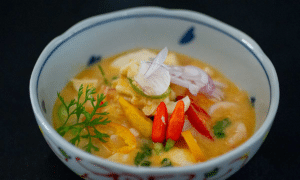
Salted duck eggs and shrimp creamy lohn (หลนไข่เค็ม ; lohn khai khem)
Lohn of salted duck eggs is a smooth, rich and creamy relish with a vibrant three-flavor profile of sour-salty-sweet. Unlike other lohn relishes, it does not contain any overbearing fermented ingredients, making it easy to enjoy, and it does not require an acquired taste.
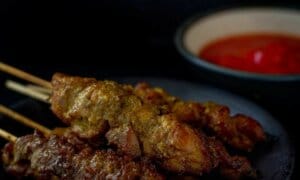
Satay Lue - Grilled beef satay with thick Muslim style peanut sauce (สะเต๊ะลือ กับ น้ำจิ้มอย่างแขก ; sadteh leuu kap naam jim yaang khaaek)
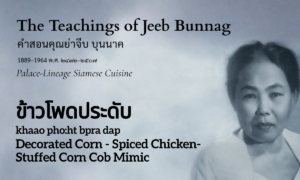
Decorated Corn (ข้าวโพดประดับ; khaao pho:ht bpra dap)
Decorated Corn, a palace-style appetizer featuring spiced chicken molded around baby corn and adorned with kernels. From Jeeb Bunnak's 1945 Thai cookbook.
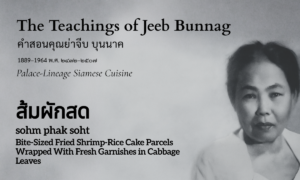
Bite-Sized Fried Shrimp-Rice Cake Parcels Wrapped With Fresh Garnishes in Cabbage Leaves (ส้มผักสด; sohm phak soht)
Sohm phak soht: coconut-battered fried shrimp-rice cakes wrapped in Chinese cabbage with pickled ginger, peanuts, shallots, lime and bitter orange. Jeeb Bunnag, 1945.
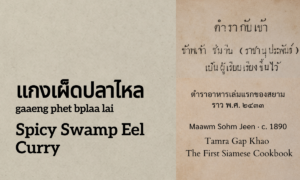
Spicy Swamp Eel Curry (แกงเผ็ดปลาไหล; gaaeng phet bplaa lai)
Gaaeng phet bplaa lai: swamp eel sliced and tossed with its own blood, simmered in a pork-lard-fried red curry paste. Maawm Sohm Jeen, 1890.
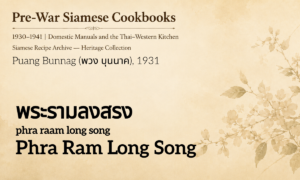
Phra Ram Long Song (Phra Ram Bathing) (พระรามลงสรง; phra raam long song)
Phra Ram Long Song, beef and morning glory blanched in stock over a tableside charcoal brazier, with coconut curry sauce. From Puang Bunnag, 1931.
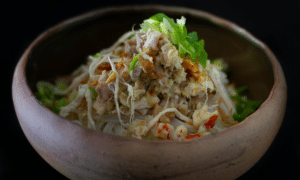
Naam Yaa Jeen - Fermented Rice Noodles with Chinese Sauce by HRH Prince Krom Luang Pitak Montri (น้ำยาจีน อย่างกรมหลวงพิทักษมนตรี)
Among the various curries that can be poured over khanom jeen fermented rice noodles, this broth, known as Chinese-style “naam yaa,” is unique in that it is a water-based curry that does not have chilies. As such, rather than the typical reddish-rust color of most coconut-based naam ya dishes from the Central Plains of the Kingdom, the sauce glows with a soft, light ivory hue, beautifully reflecting the dish’s natural sweet-savoriness, which is derived from slow-braising three proteins – chicken, pork and shrimp – along with a curry paste galvanized by smoke-dried fish and aromatic roots like galangal, fingerroot and sand ginger. The naam ya broth is served over a bed of fermented rice noodles and garnished with toppings such as delicate pulled chicken breast threads, golden-crispy fried shallots and garlic, and vivid green fresh coriander leaves and spring onion. All these elements add a visual grace and a hint of freshness to the robust broth – the signature dish of Prince Krom Luang Pitak Montri (กรมหลวงพิทักษ์มนตรี).
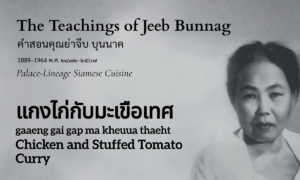
Chicken and Tomato Curry (แกงไก่กับมะเขือเทศ; gaaeng gai gap ma kheuua thaeht)
Gaaeng gai gap ma kheuua thaeht: tomatoes cored and stuffed with pounded chicken neck and corn, simmered in bone stock. Jeeb Bunnag, 1933.
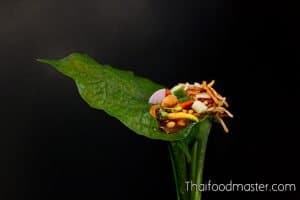
เมี่ยงคำ
ค้นข้อมูลดูว่าตำรับ "เมี่ยงคำ" เริ่มปรากฏมีบันทึกไว้เป็นลายลักษณ์อักษรแต่เมื่อใดกันแน่ สอบทานดูตำราอาหารเก่า ๆ หลายตำรับ ที่ตีพิมพ์ในสมัยรัชกาลที่ ๕ ก็ไม่พบ "เมี่ยงคำ" ในวิถีอาหารไทยโบราณแต่อย่างใด พบแต่ เมี่ยงลาว หรือ เมี่ยงพายัพ ซึ่งหมายถึงเมี่ยงที่มาจากทางเหนือ จากการอ่านหนังสือหลาย ๆ เล่ม เพื่อหาข้อมูลพบว่า "เมี่ยง" ได้เริ่มเป็นที่นิยมแพร่หลายในรั้วในวัง ก็หลังจากที่พระราชชายาเจ้าดารารัศมี ลงมารับราชการในราชสำนักที่กรุงเทพฯ และได้นำวัฒนธรรมการกินเมี่ยง ซึ่งเป็นหนึ่งในวิถีการดำรงชีวิตแบบล้านนาติดมาในหมู่ข้าราชบริพารชาวเหนือในตำหนักของพระองค์ ซึ่งบรรดาชาววังในสมัยนั้นจะเห็นเป็นสิ่งแปลกตาโก้เก๋ และคอยเอาอย่างในบางเรื่อง ทำให้หลังจากนั้นจึงค่อยเริ่มมีตำรับเมี่ยงต่าง ๆ ออกมามากมาย ปรากฏในตำราอาหารหรือเครื่องว่างต่าง ๆ ของไทยในสมัยต่อ ๆ มา สำหรับ "เมี่ยงคำ" นั้น พบว่ามีปรากฏครั้งแรก ในบทกาพย์เห่ชมเครื่องว่าง ของรัชกาลที่ ๖ ที่ใช้เป็นบทนำในตอนต้นบทความนี้ ซึ่งนั่นก็แสดงว่า "เมี่ยงคำ" กลายเป็นเครื่องว่างในวังหลวงเป็นที่นิยมกันมากแล้วในสมัยนั้นถึงสามารถขึ้นโต๊ะเครื่องเสวยได้ จึงเป็นข้อสันนิษฐานว่าน่าจะมีกำเนิดมาไม่เก่าไปกว่าสมัยรัชกาลที่ ๕ เป็นแน่แท้ ตำรับ "เมี่ยงคำ" คงจะเกิดจากการคิดประดิษฐ์ทำนำสิ่งละอันพันละน้อย ใส่ไปในคำเมี่ยง พร้อมใส่น้ำเมี่ยง เพื่อรับประทาน ทีละคำ ๆ จึงได้ชื่อว่า "เมี่ยงคำ" เหมือน ๆ หรือทำนองเดียวกันกับ "เมี่ยงอยาก" ที่ คุณป้า ม.ล. เนื่อง นิลรัตน์ เขียนบันทึกไว้ในหนังสือ "ชีวิตในวัง" ที่ตีพิมพ์มาแล้วหลายครั้ง ว่าเกิดจากความอยากกินเมี่ยง ของกลุ่มข้าหลวงวังสวนสุนันทา เวลามานั่งจับกลุ่มคุยกันยามว่างภารกิจ และไปค้นหาของในครัว ได้ กากหมู น้ำตาลปึก กะปิ ฯลฯ ก็นำมารับประทานกันเป็น"เมี่ยง" ที่อร่อยอย่างง่าย ๆ
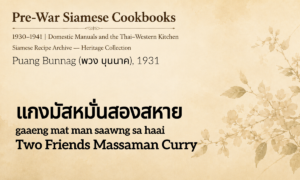
Two Friends Massaman Curry (แกงมัสหมั่นสองสหาย; gaaeng mat man saawng sa haai)
Two Friends Massaman Curry of chicken and beef, seasoned sweet first and sharpened with bitter orange juice. From Puang Bunnag, 1931.
1
2
3
4
5
6
7
8
9
10
11
12
13
14

Get Access – Join Thaifoodmaster Today
Practical and kitchen-tested recipes with a mix of theory, history, psychology, and Siamese culture tidbits.
-
Get access to everything right away. Unlock more than 50 Masterclasses, over 700 recipes and Articles
Access to Thaifoodmaster’s constantly growing library of prime professional classes, articles, recipes and videos on Siamese culinary topics, available nowhere else in English.
-
GET EXTRA - New Masterclasses and Daily Recipes
Gain access to NEW masterclasses as they become available. Access DAILY translations of heritage-recipes.
-
1-1 support from Hanuman
1-1 support from Hanuman to help you achieve your professional Thai culinary goals
-
Live Q&A Sessions
The opportunity to join a monthly live two-hour videoconference where I can answer your questions.
-
Great Value!
one year access for the price of 3 days in-person training.
You will get everything you need to:
-
To Get inspired
When you design or build a new menu for an event or restaurant or even prepare for dinner with friends.
-
To Satisfy your curiosity.
Finally !
-
To Master Your Craft
Master your Thai cooking skills and expand your repertoire.
It is truly brilliant with a revolutionary approach introducing aspects and concepts never broached by cookbooks.

Ian Westcott
Sourcing Wines for Discerning Private Clients
© 2008 – 2026 Thaifoodmaster


