
Celebrating the Art of Siamese Culinary Wisdom and Thai Cuisine
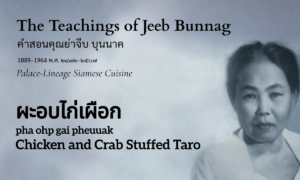
Chicken-Stuffed Taro (ผะอบไก่เผือก; pha ohp gai pheuuak)
Pha ohp gai pheuuak: taro carved into a lidded vessel, filled with phrik khing paste, chicken, and sea crab. Jeeb Bunnag, 1945.
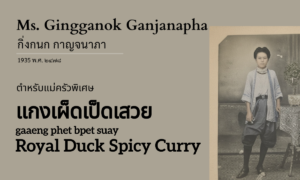
Royal Duck Spicy Curry (แกงเผ็ดเป็ดเสวย; gaaeng phet bpet suay)
Gaaeng phet bpet suay, duck dry-sautéed before simmering, with kaffir lime and optional nutmeg in the paste. Delicious Side Dishes, 1935.
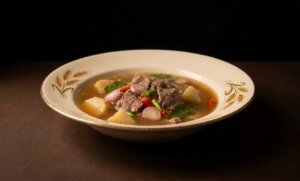
Dtohm Jiu Beef Soup (แกงต้มจิ๋ว; gaaeng dtohm jiu)
Dtohm Jiu Beef Soup: sirloin simmered soft with sweet potato, soured with tamarind, finished with bird's eye chili and lime. Tamrap Sai Yaowapa, 1935.
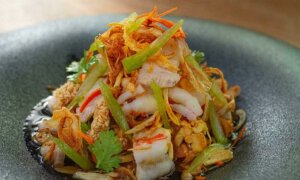
c1933 Sour bilimbi fruit and crispy candied peanut salad with pork, shrimp and pork fat (ยำตะลิงปลิง ; yam dtaling bpling)
A candied peanut bar might be considered an unlikely ingredient for an old-fashioned Siamese-style salad. Yet, peanut bars were familiar to the Siamese as early as the Ayutthaya period and were part of a broader set of Teochew Chinese sweets called, in Thai, “khanohm janap (ขนมจันอับ)”.
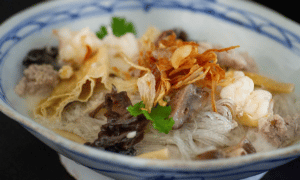
Gaaeng Raawn (แกงร้อน)
Gaaeng raawn (แกงร้อน) is a colloquial Thai term that refers to ‘hot curry’. Today, gaaeng raawn is used to denote soups or curries served with steamed rice. While the precise origin of the term is unclear, gaaeng raawn (แกงร้อน) was deployed in the 1800s for a specific dish – a Siamese soup featuring glass noodles, cooked as either a coconut or a water-based soup with an assortment of dry ingredients revered in Chinese cuisine. The soup’s potential health benefits, combined with its ease of preparation and subtle yet profound flavor, made it a popular choice for entertaining large groups of people, of all ages and backgrounds. The soup is often augmented with fresh proteins: in its more luxurious versions, multiple proteins may be added, including a combination of chicken, pork, shrimp, squid, and crab meat. Thus, over the years, gaaeng raawn (แกงร้อน) was established as a staple source of comfort and warmth for people of all walks of life in Siamese society.
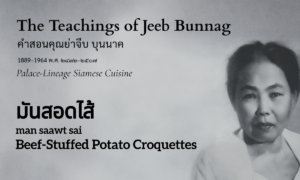
Beef-Stuffed Potato Croquettes (มันสอดไส้; man saawt sai)
Man saawt sai, mashed potato shells encasing a minced-beef filling pounded with ginger, turmeric and coriander, fried golden. Jeeb Bunnag, 1933.
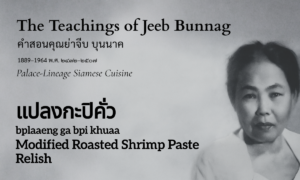
Modified Roasted Shrimp Paste Relish (แปลงกะปิคั่ว; bplaaeng ga bpi khuaa)
Bplaaeng ga bpi khuaa: shrimp paste relish with salted black olive and smoke-dried fish, fried in broken coconut oil. Jeeb Bunnag, 1933.
Surya Rice (ข้าวพระสุรี่ย์; khaao phra soo ree)
Surya Rice, pandan-infused rice served with dried beef, shrimp, fish floss, and chili relish. From Jeeb Bunnak's 1945 Thai cookbook.
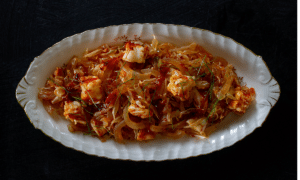
Angel Visiting the Chamber: A Salad of Pomelo, Pork Skin and Shrimp with Chili Jam Dressing, circa 1920s (ยำนางฟ้าเยี่ยมห้อง; yam naang faa yiiam haawng)
The name of this dish, yam naang faa yiiam haawng (ยำนางฟ้าเยี่ยมห้อง), translates to ‘Angel Visiting the Chamber Salad’ in English. This celestial salad, which originated in the 1920s, is a playful chili jam-based salad that combines the textural gradients of pomelo, with its citrusy bursts, chewy cooked pork skin, and the sweet and slightly resilient cooked shrimp meat. The pomelo’s citrusy notes are further amplified with thinly sliced lemongrass and kaffir lime leaves sliced into hair-thin juliennes. I like to adjust the sourness and sweetness of the chili jam-based dressing based on the acidity of the pomelo. As our aim is to achieve a final sour-salty and sweet flavor profile, a sour-salty dressing is suggested if the pomelo is sweet, while a salty-sweet dressing pairs better with a sour pomelo.
Miang on Golden Trays (เมี่ยงถาดทอง; miang thaat thaawng) (กระทงทอง)
Miang thaat thaawng, palm-pressed fried pastry cups filled with crab, pork, pickled garlic, and bitter orange zest. Jeeb Bunnag, 1933.
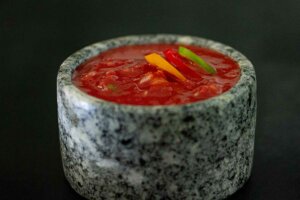
Pickled bean curd chili relish (น้ำพริกเต้าหู้ยี้; naam phrik dtao huu yee)
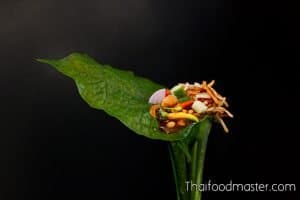
เมี่ยงคำ
ค้นข้อมูลดูว่าตำรับ "เมี่ยงคำ" เริ่มปรากฏมีบันทึกไว้เป็นลายลักษณ์อักษรแต่เมื่อใดกันแน่ สอบทานดูตำราอาหารเก่า ๆ หลายตำรับ ที่ตีพิมพ์ในสมัยรัชกาลที่ ๕ ก็ไม่พบ "เมี่ยงคำ" ในวิถีอาหารไทยโบราณแต่อย่างใด พบแต่ เมี่ยงลาว หรือ เมี่ยงพายัพ ซึ่งหมายถึงเมี่ยงที่มาจากทางเหนือ จากการอ่านหนังสือหลาย ๆ เล่ม เพื่อหาข้อมูลพบว่า "เมี่ยง" ได้เริ่มเป็นที่นิยมแพร่หลายในรั้วในวัง ก็หลังจากที่พระราชชายาเจ้าดารารัศมี ลงมารับราชการในราชสำนักที่กรุงเทพฯ และได้นำวัฒนธรรมการกินเมี่ยง ซึ่งเป็นหนึ่งในวิถีการดำรงชีวิตแบบล้านนาติดมาในหมู่ข้าราชบริพารชาวเหนือในตำหนักของพระองค์ ซึ่งบรรดาชาววังในสมัยนั้นจะเห็นเป็นสิ่งแปลกตาโก้เก๋ และคอยเอาอย่างในบางเรื่อง ทำให้หลังจากนั้นจึงค่อยเริ่มมีตำรับเมี่ยงต่าง ๆ ออกมามากมาย ปรากฏในตำราอาหารหรือเครื่องว่างต่าง ๆ ของไทยในสมัยต่อ ๆ มา สำหรับ "เมี่ยงคำ" นั้น พบว่ามีปรากฏครั้งแรก ในบทกาพย์เห่ชมเครื่องว่าง ของรัชกาลที่ ๖ ที่ใช้เป็นบทนำในตอนต้นบทความนี้ ซึ่งนั่นก็แสดงว่า "เมี่ยงคำ" กลายเป็นเครื่องว่างในวังหลวงเป็นที่นิยมกันมากแล้วในสมัยนั้นถึงสามารถขึ้นโต๊ะเครื่องเสวยได้ จึงเป็นข้อสันนิษฐานว่าน่าจะมีกำเนิดมาไม่เก่าไปกว่าสมัยรัชกาลที่ ๕ เป็นแน่แท้ ตำรับ "เมี่ยงคำ" คงจะเกิดจากการคิดประดิษฐ์ทำนำสิ่งละอันพันละน้อย ใส่ไปในคำเมี่ยง พร้อมใส่น้ำเมี่ยง เพื่อรับประทาน ทีละคำ ๆ จึงได้ชื่อว่า "เมี่ยงคำ" เหมือน ๆ หรือทำนองเดียวกันกับ "เมี่ยงอยาก" ที่ คุณป้า ม.ล. เนื่อง นิลรัตน์ เขียนบันทึกไว้ในหนังสือ "ชีวิตในวัง" ที่ตีพิมพ์มาแล้วหลายครั้ง ว่าเกิดจากความอยากกินเมี่ยง ของกลุ่มข้าหลวงวังสวนสุนันทา เวลามานั่งจับกลุ่มคุยกันยามว่างภารกิจ และไปค้นหาของในครัว ได้ กากหมู น้ำตาลปึก กะปิ ฯลฯ ก็นำมารับประทานกันเป็น"เมี่ยง" ที่อร่อยอย่างง่าย ๆ
Wild Boar Curry with Salacca (แกงหมูบป่าระกำ; gaaeng muup bpaa ra gam)
Gaaeng muup bpaa ra gam, wild Boar curry with sourness from both tamarind and crushed salacca. From Maawm Ying Soophaa's Divine Dishes, 1949.
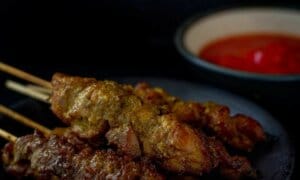
Satay Lue - Grilled beef satay with thick Muslim style peanut sauce (สะเต๊ะลือ กับ น้ำจิ้มอย่างแขก ; sadteh leuu kap naam jim yaang khaaek)
Nang Laweng Sticky Rice (ข้าวเหนียวนางละเวง; khaao niaao naang la waehng)
Khaao niaao naang la waehng, black glutinous rice balls deep-fried in lard with spiced beef and potato filling. Delicious Side Dishes, 1935.
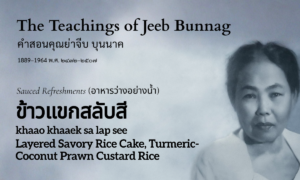
Layered Savory Rice Cake (ข้าวแขกสลับสี; khaao khaaek sa lap see)
Layered Savory Rice Cake features steamed rice, seasoned prawn filling, and golden turmeric-coconut custard. From Mrs. Samakkhanatthon's 1945 Thai cookbook.
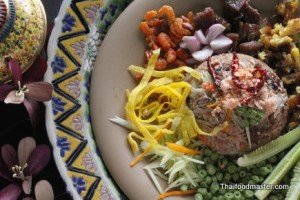
ข้าวคลุกกะปิ อย่างหม่อมเจ้าจงจิตรถนอม ดิศกุล
สูตรการทำข้าวคลุกกะปิของ หม่อมเจ้าจงจิตรถนอม ดิศกุล ซึ่งในสมัยนี้หาทานได้ค่อนข้างยาก โดยความเค็มเราจะได้จากกะปิ ความเปรี้ยวได้จากมะม่วงดิบ หรือ มะดัน ความมันจากปลาดุกย่างทอด และ กุ้งแห้ง ความหวานได้จากหมูหวาน สูตรนี้ มหาเสวกเอก พระยาบุรุษรัตนราชพัลลภ ได้เขียนลงในบันทึกชื่อ "บุรุษรัตน" ว่า ในครั้งสมัยรัชกาลที่ 5 เสด็จประพาสยุโรปครั้งที่สองในปี พ.ศ. ๒๔๕๐ ได้ทรงนำกะปิไปด้วย และรับสั่งกับพระยาบุรุษรัตนราชพัลลภว่า...
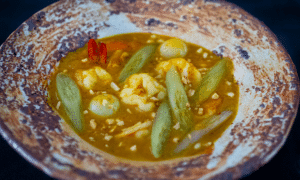
c1920 Sarama Shrimp Curry with White Eggplants and Lotus Stems (แกงสะระหม่ากุ้งกับมะเขือขาว และ สายบัว พ.ศ. 2463; gaaeng saramaa goong gap makheuua khaao reuu saai buaa)
A dish of complex flavors and an aromatic brightness, this Sarama curry features shrimp and the smaller Thai white eggplant, or crunchy lotus stems, in a golden, salty leading broth with clear tangy-sweet notes. The broth is silky and combines the nutty richness of coconut cream with the subtle sweetness of butter, cooked with a blend of dry spices that include coriander, cumin and turmeric. This spice blend evokes the penetrating aroma of curry powder, reflecting Muslim culinary influences.
Unlike spicy gaaeng phet (แกงเผ็ด) curries, which typically deploy dried chilies in the paste, Sarama curry contains fresh chilies. A mix of both red and yellow chili varieties are utilized, fusing the vibrant, fruity piquancy of the fresh chilies with the warm, earthy aromas of the spices. The red chilies contribute a ripe tropical fruitiness while the yellow offer citrusy and floral notes, creating a light yet layered curry with nuanced heat and depth of flavor.
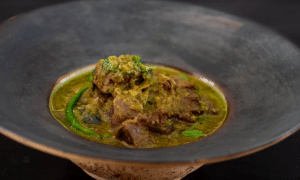
Perfumed Muslim-style Curry of Fresh Chilies with Beef (แกงเขียวหวานเนื้อทรงเครื่อง; Gaaeng Khiaao Waan Neuua Sohng Khreuuang)
The Indian and Muslim cuisines present distinct approaches to using dried spices in curries, both of which influence Siamese cuisine in different ways. Indian-inspired Siamese curries spotlight chilies for their vibrant color, fragrance, flavor and heat, while spices like cumin and coriander play a supporting role. The spices complement and temper the chilies’ intensity, creating a rounded, multi-layered flavor profile; nonetheless, the chilies remain the star ingredient, gently complemented by the spices.
Conversely, Muslim-influenced curries, such as massaman curry, prioritize spices over chilies. Spices like cardamom, nutmeg and mace take center stage, while the chilies provide subtle background heat rather than being the primary flavor. In these curries, the focus is on the rich, warm and complex aromas created by the blend of spices, which is a defining characteristic of many Muslim dishes.
Moreover, Siamese cuisine favors using rehydrated dried chilies in curries for their depth; this depth is highly appreciated, along with the complexity, and comparatively milder heat of the rehydrated dried chilies. As well, the harsh grassy notes of fresh chilies are not favored; they’re referred to in Thai as “green rank” or “men khiaao (เหม็นเขียว)”. Muslim curries often use fresh green chilies, tempering their vibrant, grassy taste with dry spices and thus shifting the flavor from bright and fresh to more subdued and earthy tones, resulting in a dish that is perceived to be layered, despite the burst of fresh chilies.
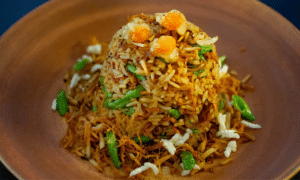
Crispy Rice - Khaao Graawp (ข้าวกรอบ อย่างหม่อมเจ้าสาย ลดาวัลย์)
Suan Sunandha Palace was the permanent residence of Mom Chao Sai Ladawan (HRH Princess Saisawali Phirom, พระวิมาดาเธอ หม่อมเจ้าสาย ลดาวัลย์), the Royal Consort to Rama V. In the kitchen of Suan Sunandha Palace, the Princess presided over a peak era of culinary innovation until her passing on June 24, 1929. Reflecting her practicality, the Princess’ recipes frequently incorporated the era’s common pantry ingredients in new and surprising combinations.
For example, in her boat-embarking chili relish (น้ำพริกลงเรือ; naam phrik lohng reuua), a relish still enjoyed today, the Princess pairs fermented shrimp paste chili relish with sweet pork, crispy fried fish, salted duck eggs and hairy-fruited eggplant (maeuk) (มะอึก). Another example is her gaaeng ran juaan (แกงรัญจวน) – the Princess prepares a vibrant spicy and sour soup, fragrant with the aroma of Thai basil, from the leftovers of a stir-fried beef dish and fermented shrimp paste chili relish, which she cooked together with lemongrass, shallots and garlic.
Mom Chao Sai Ladawan’s recipes, many already recreated here at Thaifoodmaster, were recorded by Princess Sadap Ladawan (เจ้าจอมหม่อมราชวงศ์สดับลดาวัลย์), a key figure in the Palace’s culinary affairs, and subsequently compiled and published by Suan Sunandha Rajabhat University in a volume dedicated to seasoned rice dishes and chili relishes.
In this dish called khaao graawp (ข้าวกรอบ), or “crispy rice” the Princess seasons cooked jasmine rice with chili jam, and adds four fried components, each highlighting a different element of the crispiness indicated by the dish’s name.
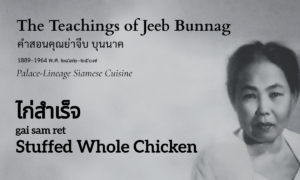
Stuffed Whole Chicken (ไก่สำเร็จ; gai sam ret)
Gai sam ret, whole chicken deboned through the neck, stuffed with pork, shiitake and lotus seeds, glazed with Maggi. Jeeb Bunnag, 1933.
1
2
3
4
5
6
7
8
9
10
11
12
13

Get Access – Join Thaifoodmaster Today
Practical and kitchen-tested recipes with a mix of theory, history, psychology, and Siamese culture tidbits.
-
Get access to everything right away. Unlock more than 50 Masterclasses, over 700 recipes and Articles
Access to Thaifoodmaster’s constantly growing library of prime professional classes, articles, recipes and videos on Siamese culinary topics, available nowhere else in English.
-
GET EXTRA - New Masterclasses and Daily Recipes
Gain access to NEW masterclasses as they become available. Access DAILY translations of heritage-recipes.
-
1-1 support from Hanuman
1-1 support from Hanuman to help you achieve your professional Thai culinary goals
-
Live Q&A Sessions
The opportunity to join a monthly live two-hour videoconference where I can answer your questions.
-
Great Value!
one year access for the price of 3 days in-person training.
You will get everything you need to:
-
To Get inspired
When you design or build a new menu for an event or restaurant or even prepare for dinner with friends.
-
To Satisfy your curiosity.
Finally !
-
To Master Your Craft
Master your Thai cooking skills and expand your repertoire.
It is truly brilliant with a revolutionary approach introducing aspects and concepts never broached by cookbooks.

Ian Westcott
Sourcing Wines for Discerning Private Clients
© 2008 – 2026 Thaifoodmaster


